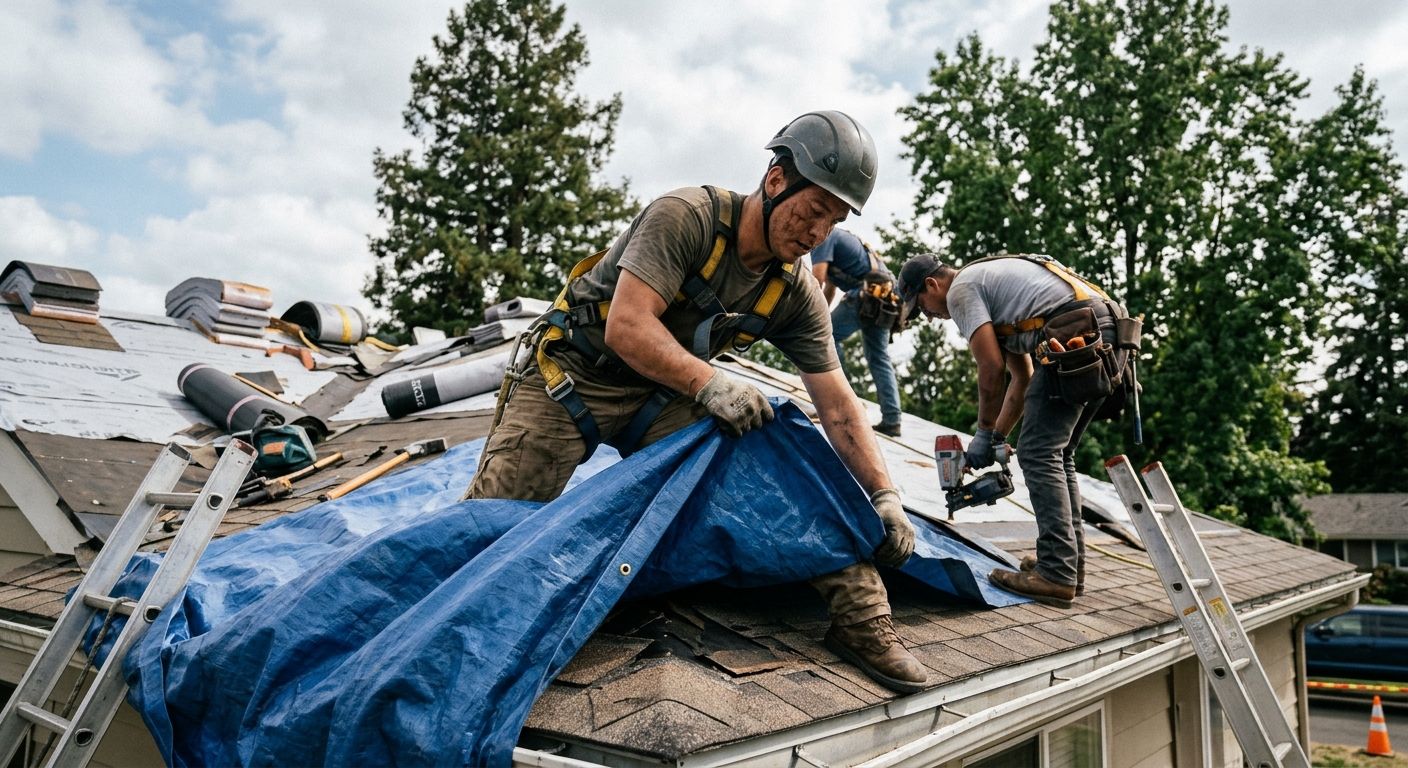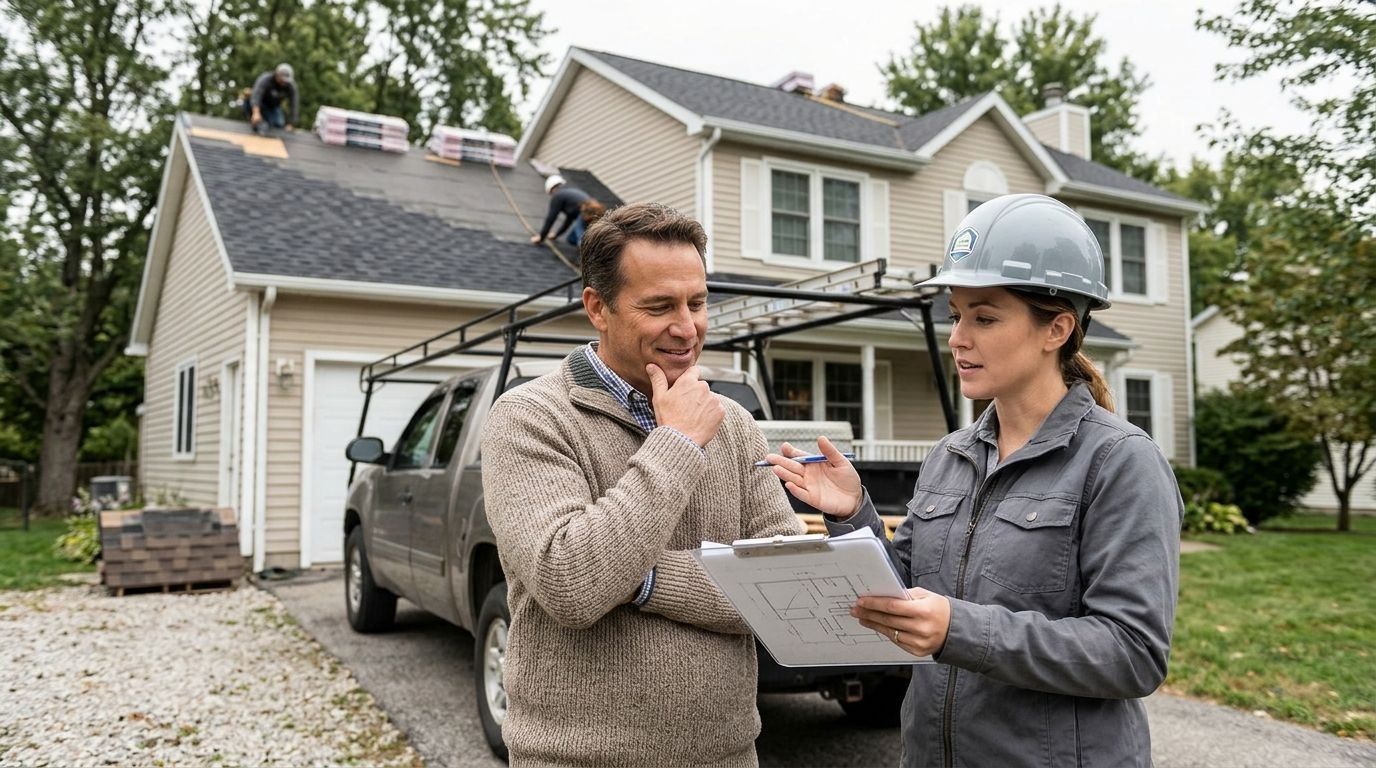
Roof replacement cost by material depends on the complete installed roof system—not just the shingles, panels, or membrane. For a Lincoln or Omaha property, compare the same replacement scope before choosing a material; roof shape, removal work, decking condition, and drainage all affect what belongs in your estimate.
- Roof replacement cost by material is useful only when estimates include the same installation scope.
- Murray Roofing provides residential and commercial roof replacement guidance for Lincoln and Omaha property owners.
- Asphalt shingles, metal, tile, and membranes fit different roof structures; no material wins every project.
- Compare roof inspections, decking allowances, drainage, and warranty terms before signing a replacement contract.
Why this matters
A material-only comparison leaves out work that determines whether your new roof performs as intended. An estimate that includes replacement flashing, removal, and disposal is not equivalent to one that leaves those items outside the contract.
Murray Roofing provides roof inspections and replacement services for homeowners and commercial property decision-makers. Murray Roofing is a fit for Lincoln and Omaha owners who want an inspection-based roof replacement scope before choosing materials.
Roof replacement cost by material: compare the complete system
Use this 2026 comparison to identify what each material requires in an installed estimate. The overall row is your yardstick: every option needs a defined scope, even when the roof covering changes.
| Material or system | Best for | What the estimate must address | Practical advantage | Main limitation |
|---|---|---|---|---|
| Overall: all roof replacements | Owners comparing complete replacement proposals | Measured roof area, removal, decking, flashing, drainage, installation, and cleanup | A consistent scope makes proposals comparable | Material names alone do not describe the work |
| Asphalt shingles | Sloped residential roofs and suitable pitched commercial roofs | Underlayment, flashing, ventilation, starter materials, and roof-edge details | Individual damaged shingles can be replaced when surrounding conditions permit | Shingles are not a substitute for a low-slope roof system |
| Metal roofing | Suitable sloped roofs with a specified panel and attachment system | Panel profile, seams, fasteners, underlayment, movement details, and flashing | Offers several panel and attachment configurations | Different metal systems require different installation details |
| Concrete or clay tile | Structures confirmed suitable for the selected tile system | Structural suitability, underlayment, attachment, flashing, and handling | Provides a distinct roof profile and appearance | Weight and breakage require attention during planning and service |
| Slate | Structures confirmed suitable for slate and owners seeking that appearance | Structural review, flashing, attachment, and specialist installation | Individual pieces can be replaced by qualified roofers | Weight and specialized work affect project suitability |
| TPO membrane | Commercial and residential low-slope roofs suited to the specified assembly | Insulation, attachment, welded seams, penetrations, edges, and drainage | Heat-welded seams form part of the waterproofing system | Performance depends on assembly design and installation details |
| EPDM membrane | Low-slope roofs suited to the specified assembly | Insulation, attachment, seam treatment, penetrations, edges, and drainage | Flexible membrane accommodates roof-system movement | Seams and penetrations need careful detailing and maintenance |
| PVC membrane | Low-slope roofs where the specified membrane fits building conditions | Insulation, welded seams, attachment, chemical compatibility, and drainage | Heat-welded seams form part of the waterproofing system | Suitability requires checking exposure and assembly compatibility |
No material leads on every replacement criterion. Shingles and metal belong in a sloped-roof comparison; TPO, EPDM, and PVC belong in a low-slope assembly comparison. Tile and slate require particular attention to structural suitability before you treat them as alternatives.
This 2026 comparison describes installation scope and material suitability for residential and commercial roof replacements; it is not a regional price survey. Its limitation is that it cannot establish the condition of your decking, existing insulation, or concealed roof components.
How to use these benchmarks
Use the table to organize your estimates, not to pick a material from its name alone. A roof replacement is a building project, and the covering is only part of the specification.
- Separate sloped and low-slope options. Compare systems designed for your roof geometry rather than assuming every material is interchangeable.
- Match the removal scope. Confirm whether each proposal includes the same existing layers, disposal work, and protection of the property.
- Make concealed-work terms explicit. Ask how the contract handles damaged decking or wet insulation discovered during removal.
- Compare written coverage. Separate manufacturer material coverage from contractor workmanship coverage and identify eligibility conditions.
For a 2026 replacement, ask for a written scope detailed enough that another qualified roofer can understand what is included. A short description such as complete new roof does not resolve these differences.
Measure roof area—not the building's floor area
Roofing uses a standard area unit called a square. One roofing square equals 100 square feet, the area of a 10-foot-by-10-foot section. This measurement describes roof area; it does not establish a project's installed price.
Your home's interior floor area is not a reliable substitute for measured roof area. Roof pitch, overhangs, and attached roof sections affect the surface being replaced. Commercial buildings also need measurements that account for parapets, penetrations, and the actual roof configuration.
Ask whether the estimate reports measured roof area or an ordering quantity that includes cutting and waste. Those quantities serve different purposes. Comparing them without an explanation can make equivalent projects look inconsistent.
A useful estimate identifies the measurement basis and the specified system. You do not need to climb onto the roof to check it; ask the contractor to explain the roof plan and quantities during the inspection discussion.
What changes the scope within each material
Asphalt shingles: compare the supporting components
Asphalt shingles are a practical comparison category for suitable sloped roofs, but the shingle selection does not describe the entire assembly. Underlayment, roof edges, valleys, wall intersections, and ventilation still need a written plan.
Ask for the installation components, not just the shingle description. A replacement that leaves damaged flashing unresolved is different from one that includes the necessary flashing work, even if both proposals name the same covering.
Ask how the contractor evaluates existing ventilation rather than assuming every replacement needs the same changes. The roof and attic conditions should guide that decision.
Metal roofing: specify the actual system
Metal roofing is not a single installation method. Exposed-fastener panels and concealed-fastener systems use different attachment and water-management details, so the word metal is insufficient for comparing proposals.
Request the panel profile, attachment method, seam details, and treatment of penetrations. Also ask how the system accommodates thermal movement. Compare a defined metal assembly with another defined assembly—not one broad material label with another.
Metal roofing still needs inspections and maintenance. Its seams, fasteners where present, flashing, and penetrations remain part of the roof's performance.
Tile and slate: resolve structural suitability first
Tile and slate deserve a structural suitability check before material selection becomes a contract decision. Do not assume a building designed for a different covering can accept the selected system without review.
The estimate should explain the proposed underlayment, attachment, flashing, and handling approach. Access for installation and future service also matters because these coverings require careful handling.
Treat structural suitability as a selection requirement, not an afterthought. If the project requires structural work, that work belongs in the comparison before you approve the roof replacement.
Commercial roofing: benchmark the assembly, not the membrane
A commercial roof replacement includes more than a sheet of TPO, EPDM, or PVC. Insulation, attachment, perimeter details, penetrations, and drainage determine what the contractor is proposing to install.
For Lincoln and Omaha commercial properties, compare those components across proposals before selecting the membrane. Apply the same standard to offices, retail buildings, warehouses, restaurants, apartments, churches, and other property types. Building use changes the exposure and access requirements; it does not remove the need for a complete specification.
The commercial roof maintenance guide provides another planning reference for evaluating responsibilities after replacement.
Existing moisture changes the replacement decision
Wet insulation and deteriorated decking require attention before a new assembly is specified. Ask how the contractor assesses existing conditions and documents the findings.
A proposal that assumes existing insulation can remain is not equivalent to one that includes its removal. Make those assumptions visible before comparing totals. If inspection findings change the scope, request a revised written proposal.
Drainage belongs in the contract discussion
Ask whether the replacement addresses roof slope, drains, scuppers, and areas where water collects. Replacing the membrane alone does not describe a drainage solution.
Roof-mounted equipment and penetrations also need coordinated details. The proposal should identify roofing responsibilities around those locations and explain any work that requires another trade.
Lincoln and Omaha: use property conditions to choose
For a Nebraska replacement, ask how the proposed system addresses wind, hail exposure, cold-weather conditions, and water management. Do not accept a broad weatherproof claim as a substitute for a named product rating and installation specification.
A material's hail classification does not guarantee that a roof will escape damage in a future storm. Likewise, a warranty does not automatically mean an insurer will cover a loss. Keep product performance, warranty coverage, and insurance decisions separate.
In your 2026 inspection discussion, request photographs and a plain-language explanation of the roof's condition. Homeowners need that information to weigh repair against replacement; commercial decision-makers need it to plan the assembly and coordinate building operations.
Choose the system that fits the property and documented conditions. Appearance matters, but it should not override roof slope, structural suitability, or drainage requirements.
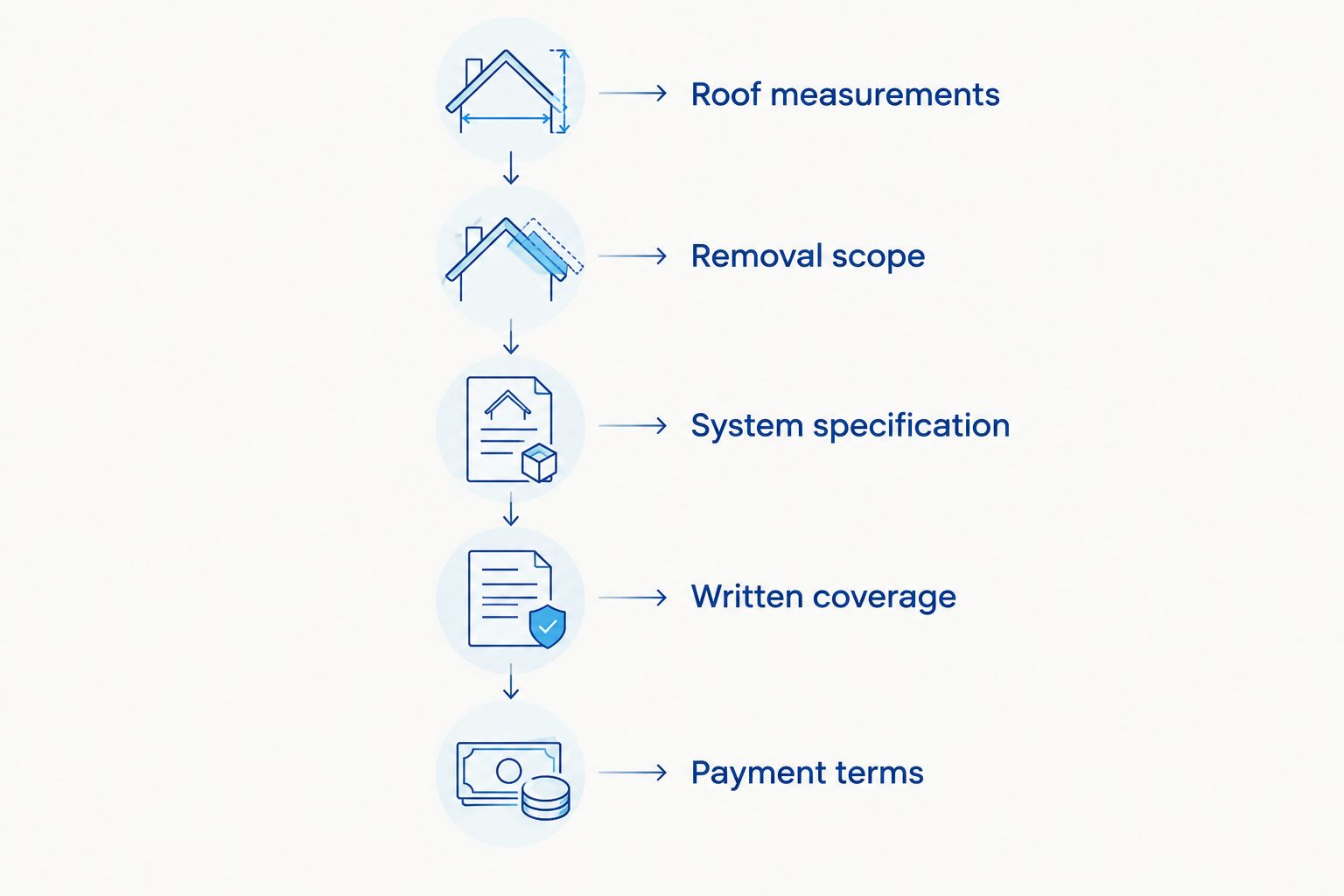
A practical estimate-review sequence
Use this sequence after the inspection and before signing a replacement contract. It keeps the discussion focused on work you can verify rather than broad promises.
- Roof measurements: Confirm the roof area, geometry, and measurement basis.
- Removal scope: Identify existing layers, disposal, site protection, and retained components.
- System specification: Confirm the covering, supporting components, attachment, flashing, and drainage details.
- Written coverage: Review material coverage, workmanship coverage, exclusions, and required maintenance.
- Payment terms: Understand the payment schedule and any financing agreement separately from the roof specification.
For a 2026 replacement, unresolved scope questions belong in writing before the contract is signed. A verbal explanation helps you understand the proposal, but the agreement should identify the actual work and conditions.
Warranties and financing: compare them separately
Murray Roofing's stated trust signals include GAF Master Elite status, a 50-year Golden Pledge warranty, and a 10-year labor warranty. Ask which coverage applies to your proposed roof and request the written eligibility conditions and exclusions. Do not treat the warranty period as a guaranteed roof lifespan.
Murray Roofing also offers financing. Review its terms separately from the replacement specification so the payment arrangement does not obscure differences in materials, installation, or excluded work.
Neither financing nor warranty language replaces an inspection-based scope. Insurance-claim support also does not guarantee coverage; your policy terms and the insurer's decision govern the claim.
FAQ
What determines roof replacement cost by material?
Roof replacement cost by material depends on the covering and the complete installation scope. Roof area, removal, decking condition, flashing, insulation where applicable, drainage, and access all belong in the estimate.
Can I compare roof estimates using only the material name?
No—material names alone do not make roof estimates comparable. Match the removal work, supporting components, installation details, and concealed-damage terms before comparing proposals.
How much roof area is one roofing square?
One roofing square equals 100 square feet of roof area. Ask whether your estimate lists measured roof area or an ordering quantity that includes cutting and waste.
Is metal roofing better than asphalt shingles in Nebraska?
Neither material is better for every Nebraska property. Compare roof slope, the specified system, documented performance ratings, installation details, appearance, and maintenance requirements.
Which membrane is best for a commercial roof replacement?
The best membrane is the one that fits the building’s specified roof assembly and exposure. Compare insulation, attachment, seams, penetrations, chemical compatibility where relevant, and drainage rather than choosing TPO, EPDM, or PVC by name alone.
Does a long roof warranty guarantee the roof will last that long?
No—a warranty period is not a guaranteed service life. Review covered defects, workmanship provisions, exclusions, maintenance requirements, and eligibility for the proposed system.
Will insurance pay for my roof replacement?
Insurance payment depends on your policy, the documented loss, and the insurer’s coverage decision. A contractor can support documentation but cannot guarantee approval or payment.
How do I get a property-specific roof replacement estimate?
Start with a roof inspection and request a written replacement scope. Murray Roofing offers free inspections for homeowners and commercial property decision-makers; discuss the material options and work required for your property.
One last thing
The most revealing estimate detail is often what happens after the old roof comes off. Ask how the contractor documents damaged decking or wet insulation, obtains your authorization, and records changes to the agreement. That answer helps you understand the project beyond its visible covering.
Related guides
- Roof types for Nebraska weather
- Flat roof systems for commercial buildings
- From roof estimate to financing approval
Schedule an inspection with Murray Roofing to get a replacement scope and a property-specific price for your Lincoln or Omaha home or commercial building.
Schedule your roof inspection
Review your roof condition, replacement options, and written project scope.