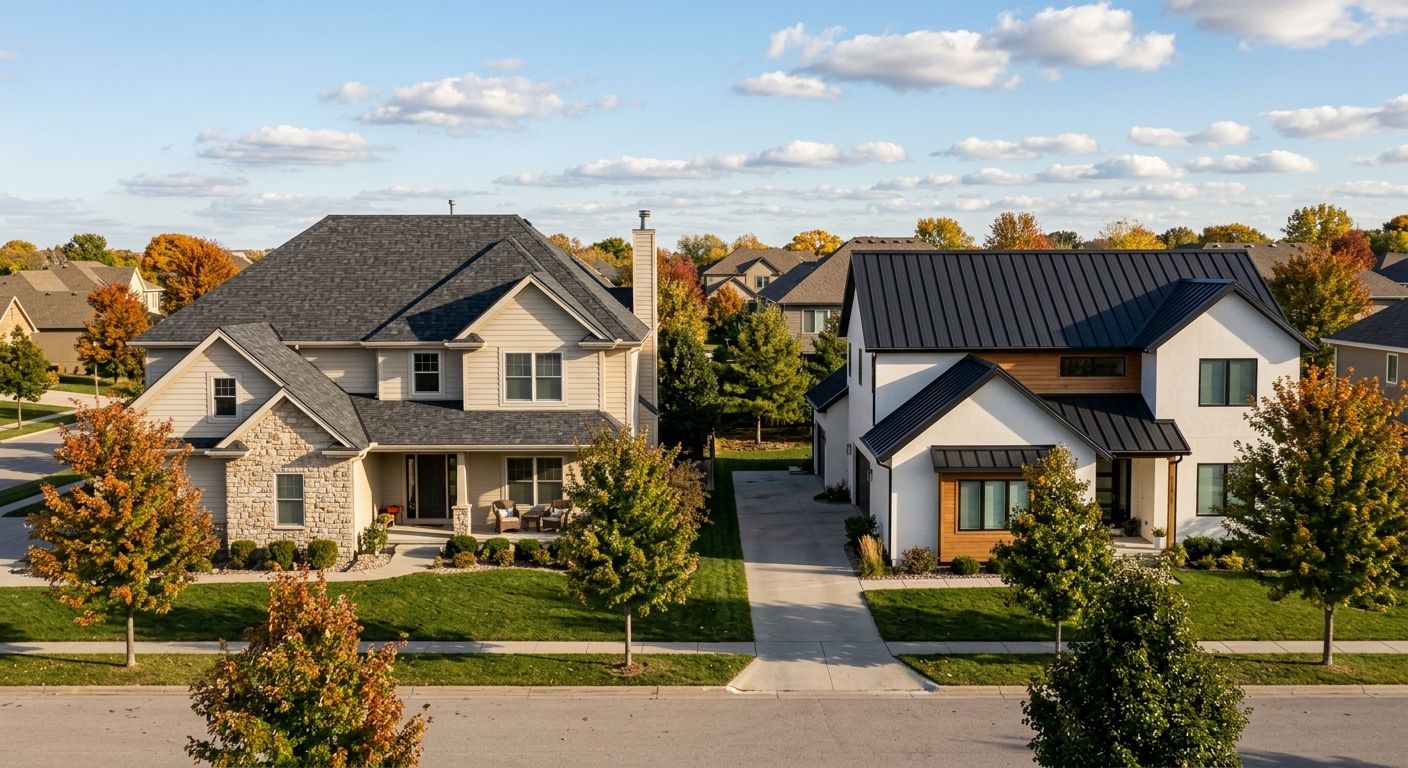
Nebraska roofs deal with 90 mph wind gusts, softball-size hail, and temperature swings from -10°F to 100°F in the same calendar year. The best roof types for Nebraska weather in 2026 are impact-rated systems that handle hail, wind uplift, and freeze-thaw cycling without shortening the roof's life.
- Architectural asphalt shingles are the best overall pick for most Lincoln and Omaha homes in 2026.
- Class 4 impact-resistant shingles are the strongest choice for hail-prone properties and often lower insurance premiums.
- Standing seam metal roofing holds up longest against wind and freeze-thaw cycling but costs more upfront.
- TPO membrane is the standard for commercial flat roofs across Nebraska and Texas markets.
- 3-tab shingles remain the budget option, though they carry the weakest hail rating of the five.
Why this matters
Nebraska sits in Hail Alley. Lincoln and Omaha both log multiple hail events every storm season, and a roof rated for mild coastal weather won't survive a Nebraska summer the same way. Wind isn't a side issue either — gusts above 70 mph aren't rare during spring storm fronts, and a roof with a weak wind rating can lose shingles or seams in a single afternoon.
The material that fits Nebraska hail conditions isn't always the same one that makes sense for a Houston homeowner dealing with heat and hurricanes, or a Denver property facing heavy snow load. Picking a roof type for this state means weighing impact resistance, wind rating, and how the material handles repeated freeze-thaw cycling over a 20-30 year lifespan, not just sticker price.
What makes the best roof type for Nebraska weather
- Impact resistance (UL 2218 Class 4 rating) — the industry-standard test for hail durability
- Wind uplift rating — Nebraska roofs need at least 110 mph wind ratings to hold through spring storm season
- Freeze-thaw tolerance — materials that don't crack or curl after repeated winter cycling
- Warranty backing — labor and material coverage that actually applies to storm damage, not just manufacturing defects
- Local installer track record — a crew that's replaced hundreds of Lincoln and Omaha roofs after real hailstorms, not just trained on a spec sheet
- Snow and ice shedding — steep-slope materials that release snow load instead of holding it
Best roof types for Nebraska weather at a glance
| Roof type | Best for | Standout feature | Key limitation |
|---|---|---|---|
| Architectural asphalt shingles | Most homes, best overall value | Balances impact resistance with familiar installation | Standard grades still dent under large hail |
| Class 4 impact-resistant shingles | Hail-prone properties | Passes UL 2218 impact testing | Heavier, needs a roof structure rated to support it |
| Standing seam metal roofing | Longevity and wind resistance | Interlocking panels resist uplift past 110 mph | Higher upfront installation cost |
| TPO membrane roofing | Commercial flat roofs | Reflective surface reduces summer heat load | Not suited to steep residential slopes |
| 3-tab asphalt shingles | Budget-conscious homeowners | Lowest-cost entry point for basic coverage | Weakest hail and wind rating of the five |
1. Architectural asphalt shingles: best roof type for most Nebraska homes
Architectural (dimensional) shingles are the roofing standard across Lincoln and Omaha because they balance cost, curb appeal, and storm performance. They're heavier than 3-tab shingles, laminated in multiple layers, and rated for wind speeds most standard installations need in this region.
Architectural asphalt shingles pros:
- Available in Class 4 impact-rated versions for hail protection
- Wide range of colors and profiles to match neighborhood style
- Installed by nearly every roofing crew in Nebraska, so labor availability isn't a bottleneck
- Typically backed by manufacturer warranties in the 25-30 year range
Architectural asphalt shingles cons:
- Standard (non-Class 4) grades can still crack under large hailstones
- Heat cycling in Nebraska summers accelerates granule loss over time
Best for: homeowners who want a proven, widely-installed roof without paying for premium metal. Verdict: Buy.
2. Class 4 impact-resistant shingles: best roof type for hail-prone properties
Class 4 shingles pass the UL 2218 impact test, the industry benchmark for hail resistance. Nebraska insurers frequently offer premium discounts for Class 4 installations because claims data shows they hold up better through hailstorms than standard shingles.
Class 4 shingles pros:
- Passes the highest impact-resistance rating available for asphalt shingles
- Often qualifies for insurance discounts in hail-heavy counties
- Available in architectural profiles, so appearance isn't a tradeoff
Class 4 shingles cons:
- Costs more per square than standard architectural shingles
- Not every insurer's discount program covers every ZIP code, so confirm before assuming savings
Best for: anyone who's filed a hail claim in the last five years or lives in a county with frequent hail warnings. Verdict: Buy.
3. Standing seam metal roofing: best roof type for longevity and wind resistance
Standing seam metal panels interlock along raised seams, which is what gives the system its wind resistance. Nebraska installations commonly carry wind ratings above 110 mph, and the panels don't absorb moisture the way shingles can during freeze-thaw cycles.
A closer look at metal roofing brands built for residential use shows why this system is gaining ground on steep-slope homes across the Midwest.
Standing seam metal pros:
- Wind ratings that outperform most shingle systems
- Doesn't crack or curl from freeze-thaw cycling the way asphalt can over decades
- Sheds snow and ice faster than shingle roofs
- Often carries 40-50 year material warranties
Standing seam metal cons:
- Higher upfront installation cost than asphalt
- Requires a specialized crew — not every roofer installs metal correctly
Best for: homeowners planning to stay in the property long-term and willing to pay more upfront for a system that outlasts two or three shingle roofs. Verdict: Buy.
4. TPO membrane roofing: best roof type for commercial flat roofs
TPO (thermoplastic polyolefin) is the dominant flat-roof material for commercial buildings across Nebraska. The white reflective surface cuts summer rooftop temperatures, which matters for HVAC load on retail, office, and warehouse buildings alike.
Property owners comparing options should review flat roof systems built for commercial buildings before choosing between TPO, EPDM, or modified bitumen.
TPO membrane pros:
- Reflective surface reduces cooling costs in summer
- Seams are heat-welded, which holds up well against Nebraska wind
- Widely used, so replacement and repair crews are easy to find
TPO membrane cons:
- Not an option for steep-slope residential roofs
- Membrane thickness varies by manufacturer, and thinner options puncture more easily
Best for: commercial property owners — retail, office, industrial, or multi-family — managing a flat or low-slope roof. Verdict: Buy.
5. 3-tab asphalt shingles: best budget roof type for basic coverage
3-tab shingles are the entry-level asphalt option — flat, single-layer, and the least expensive shingle system on the market in 2026. They still meet basic building code requirements, but they're not built for Nebraska's hail frequency.
3-tab shingles pros:
- Lowest material cost among the five options
- Lightweight, so most roof structures handle them without reinforcement
- Straightforward installation keeps labor time down
3-tab shingles cons:
- Weakest wind and impact rating of any option on this list
- Shorter lifespan than architectural or Class 4 shingles
- Rarely eligible for insurance impact-resistance discounts
Best for: rental properties or short-hold buildings where minimizing upfront cost matters more than storm durability. Verdict: Hold — only if budget is the deciding factor.
How this ranking works
Each roof type above is scored against the same six criteria: impact resistance, wind rating, freeze-thaw tolerance, warranty backing, installer availability, and snow/ice shedding. No two items compete for the same use case — a homeowner choosing between architectural shingles and standing seam metal is really choosing between value and longevity, not comparing apples to apples on price alone.
“If your roof is more than 15 years old and hasn’t been inspected since the last hailstorm, get it checked before a small dent turns into a leak.”
Which roof type should you choose for Nebraska weather?
For most Lincoln and Omaha homeowners in 2026, architectural asphalt shingles remain the default choice — they balance cost and hail performance without a specialized installation crew. If your property has a hail claim history, step up to Class 4 impact-resistant shingles and ask your insurer about discount eligibility before the quote. If you're planning to stay in the home for 25+ years and want the lowest long-term maintenance, standing seam metal roofing pays off despite the higher installation cost. Commercial property owners managing flat roofs should default to TPO membrane unless a specific building condition calls for something else.
Get a free roof inspection
See which roof type fits your Lincoln or Omaha property before storm season.
FAQ
What is the best roof type for Nebraska weather in 2026?
Architectural asphalt shingles are the best overall roof type for most Nebraska homes in 2026, balancing hail resistance, wind rating, and cost. Class 4 impact-resistant shingles are the stronger pick for properties with recent hail claims.
Is metal roofing better than shingles for Nebraska hail?
Standing seam metal roofing resists wind uplift and freeze-thaw cycling better than asphalt shingles over a 40-50 year lifespan. Shingles, especially Class 4 rated ones, still perform well against hail and cost less upfront.
Do Class 4 shingles actually lower insurance premiums in Nebraska?
Many Nebraska insurers offer discounts for Class 4 impact-resistant shingles because claims data shows they hold up better through hailstorms. Discount availability varies by insurer and ZIP code, so confirm with your provider before assuming savings.
What roof type is best for commercial buildings in Nebraska?
TPO membrane roofing is the standard choice for commercial flat and low-slope roofs across Nebraska in 2026. Its reflective surface reduces summer cooling costs and its heat-welded seams hold up against wind.
How long does an asphalt shingle roof last in Nebraska?
Architectural asphalt shingles typically carry 25-30 year manufacturer warranties, though hail and wind exposure in Nebraska can shorten actual service life. 3-tab shingles have a shorter expected lifespan than architectural or Class 4 grades.
Is 3-tab shingle roofing a bad choice in Nebraska?
3-tab shingles carry the weakest wind and impact rating of common roof types and rarely qualify for insurance discounts. They’re a reasonable option only when minimizing upfront cost outweighs storm durability, such as on a short-hold rental property.
What wind rating do Nebraska roofs need?
Nebraska roofing systems commonly need wind ratings of at least 110 mph to hold through spring storm season. Standing seam metal and Class 4 shingles typically meet or exceed this threshold.
Does roof warranty coverage differ by roof type?
Yes — material and labor warranty terms vary significantly between asphalt shingles, metal panels, and membrane systems. Compare the terms directly rather than assuming coverage matches across roof types.
One last thing
The roof type that survives a Nebraska hailstorm on paper isn't always the one installed correctly on your house. A Class 4 shingle installed with the wrong nailing pattern performs like a standard shingle in a real storm — the material rating only matters if the installation matches it. Ask any contractor quoting your roof to show proof of manufacturer certification for the specific product they're installing, not just a general roofing license.
Related guides
- Roof warranty types compared for Nebraska homeowners
- How much a new roof costs in Lincoln, NE in 2026