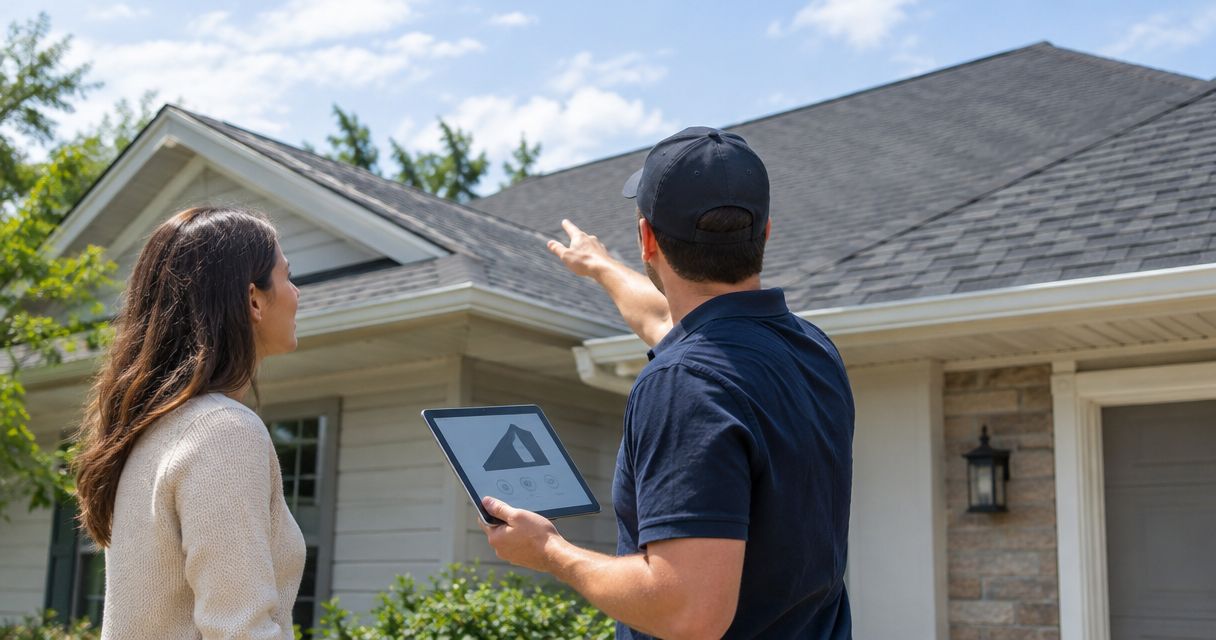
You can plan a roof replacement without a separate inspection appointment, but do not authorize tear-off without a documented assessment of the existing roof. Whether an inspection is legally required depends on your local building department, and an insurance claim introduces separate documentation requirements. Skipping a separate appointment is not the same as skipping the checks that support a replacement decision.
- Roof replacement without inspection does not bypass permit requirements or insurance documentation.
- A contractor assessment, an insurance inspection, and a municipal inspection serve different purposes.
- Ask Murray Inspection Services what the roof assessment covers before authorizing replacement.
- Document existing conditions and agree on how concealed damage will be handled before tear-off.
Can I get a roof replacement without an inspection first?
A separate inspection report is not a universal prerequisite for roof replacement. Your contractor still needs enough information to define the work, while your building department determines applicable permit and inspection requirements. If insurance is involved, ask the insurer what evidence it needs before damaged materials are removed.
When contacting Murray Inspection Services, ask whether the proposed assessment addresses the replacement decision, visible defects, and areas that cannot be evaluated before tear-off. Get the scope in writing rather than relying on the word inspection alone.
For a 2026 project, distinguish these checks before deciding which appointment to skip:
| Check | Best for | What it addresses | Main limitation |
|---|---|---|---|
| Contractor assessment | Defining replacement work | Visible roof condition, measurements, access, and proposed scope | Concealed conditions remain uncertain; the contractor also sells the work |
| Independent roof assessment | Getting a separate condition opinion | Observed defects and the basis for repair or replacement | Scope and access vary; it does not replace permit inspections |
| Insurance inspection | Evaluating a reported loss | Damage evidence relevant to the insurance claim | It is not approval of the contractor's complete construction scope |
| Municipal inspection | Checking regulated construction | Work subject to local permit and code requirements | It does not decide insurance coverage or replace a condition assessment |
These checks are not interchangeable. A contractor's recommendation does not establish insurance coverage, and an insurance adjuster's visit does not establish that every construction requirement has been met.
Why this matters
Replacing the roof removes evidence of its previous condition. Once damaged materials are discarded, documenting their location, appearance, and relationship to the reported problem becomes harder.
The decision also affects what you authorize. A replacement proposal should explain the work and its exclusions; otherwise, you are approving a project without knowing which conditions the agreement addresses.
For your 2026 replacement, ask a narrower question than whether an inspection is mandatory: What must be checked, documented, and approved before this roof comes off? That question separates an unnecessary duplicate appointment from an essential assessment.
Paying yourself: establish the scope before signing
Paying for replacement yourself removes the insurance claim from the decision, not the need to understand the roof. Ask the contractor to explain the observed condition and why replacement is recommended instead of repair.
A useful explanation connects a finding to the proposed work. Photographs of damaged covering, deteriorated flashing, or visible moisture evidence are more informative than an unsupported statement that the roof is old.
Ask for the proposal to identify:
- The roof areas included in the replacement.
- Whether the existing covering will be removed.
- How flashing, penetrations, and roof edges will be addressed.
- What decking evaluation occurs after removal.
- Which ventilation work is included or excluded.
- How changes require your authorization.
The advantage of a contractor assessment is that it connects observed conditions directly to a proposed construction scope. Its limitation is the commercial relationship: the same business evaluating the roof is offering to replace it. Request an independent opinion when the findings are unclear or the proposed remedy does not match the evidence.
Using insurance: preserve evidence before permanent work
An insurance claim requires a separate conversation with your insurer. Ask how to report the damage, what documentation to preserve, and whether the insurer wants an opportunity to examine the roof before permanent replacement.
Do not treat a contractor's statement that damage is covered as a coverage decision. Your policy terms and the insurer's claim determination control that question.
For a 2026 storm claim, keep a dated record of the reported event, observed damage, photographs taken safely, correspondence, and temporary protective work. Separate what you directly observed from what someone later concluded about the cause.
Emergency protection and permanent replacement are different decisions. Address immediate hazards and prevent additional damage safely, while contacting the insurer promptly about its documentation instructions. Do not climb onto a damaged roof to obtain photographs.
The advantage of documenting conditions before tear-off is preserving evidence for the claim. The limitation is that documentation alone does not establish coverage, determine the settlement, or authorize every item in a contractor's proposal.
Local requirements: verify permits and inspection stages
There is no nationwide answer that makes every roof replacement inspection-free. Requirements depend on the jurisdiction and the work involved, so confirm them with the building department responsible for the property.
Ask about both permits and inspections. These are related but different: a permit authorizes regulated work, while an inspection checks work at a required stage.
Before signing, establish:
- Whether the proposed roofing work requires a permit.
- Who applies for the permit and holds responsibility for it.
- Which inspection stages apply to the project.
- Whether any work must remain exposed for inspection.
- What documentation confirms final approval or permit closure.
Use the property's address and describe the actual project when asking. A general answer about minor repairs does not establish the requirements for a complete tear-off or a change in roof assembly.
Verify the rules for your 2026 project before construction starts. Do not assume a neighbor's project, an older permit, or the contractor's customary process establishes the requirements for your property.
Why roof inspection requirements vary
The required checks depend on the project rather than the label attached to an appointment. These factors explain why two homeowners can receive different instructions without either instruction being universally applicable:
- Local jurisdiction: The building department establishes applicable permitting and inspection procedures.
- Work scope: A repair, replacement covering, and structural alteration are different kinds of work.
- Payment route: An insurance claim adds documentation questions that do not arise in the same way when you pay directly.
- Visible condition: Leaks, damaged materials, or apparent movement require investigation relevant to those observations.
- Access limitations: An inaccessible attic or concealed roof assembly limits what an initial assessment can establish.
- Other approvals: An association, lender, or transaction agreement can introduce requirements separate from the building permit.
Ask who requires each check and what decision it supports. This prevents you from confusing a contractor's business process with a legal requirement or an insurer's claim procedure.
What should happen before you authorize tear-off?
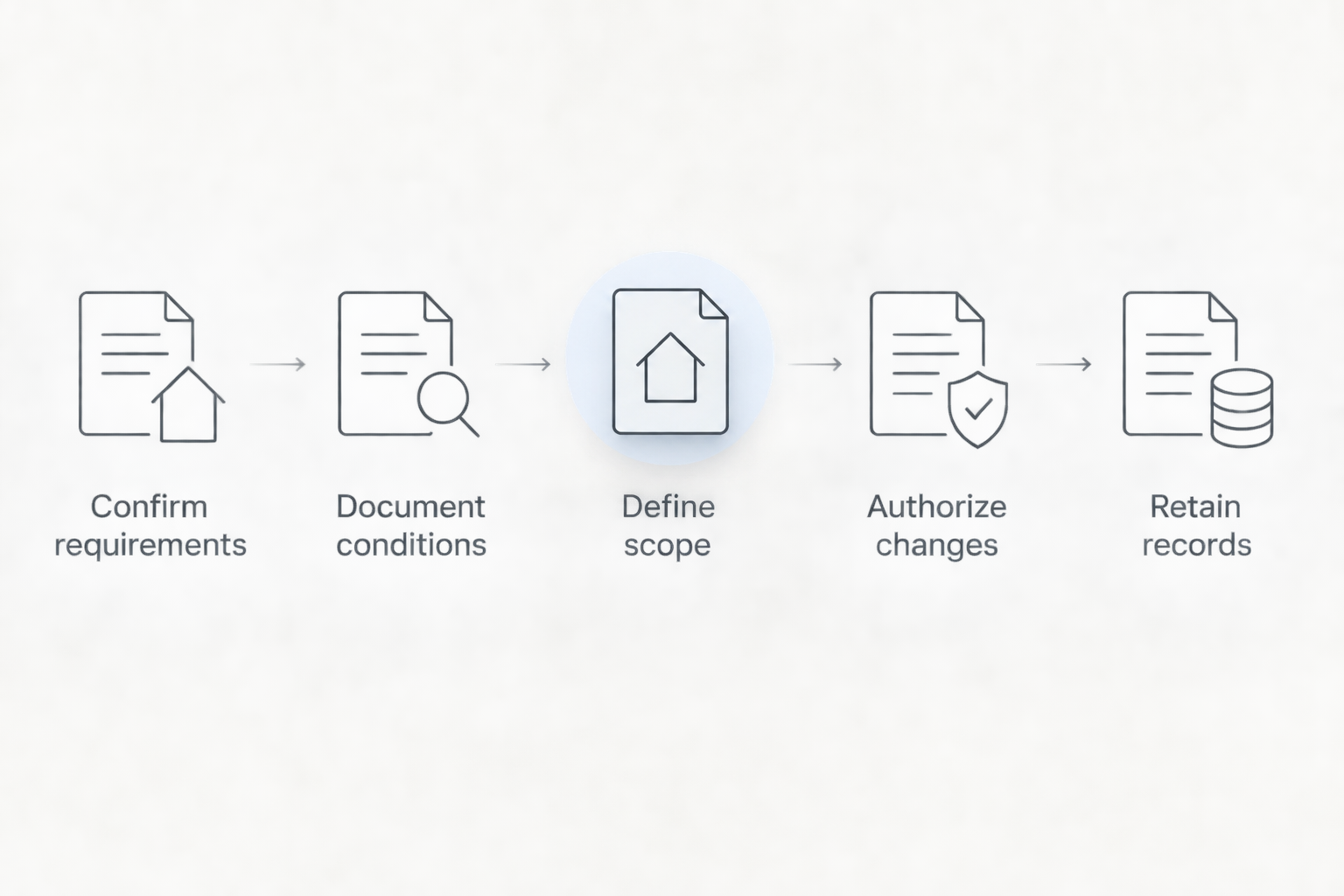
Use this sequence whether the condition assessment is a separate appointment or part of the contractor's proposal process. The important outcome is a documented decision, not a particular appointment name.
- Confirm requirements. Contact the building department and, where relevant, your insurer or property association. Record the instructions that apply to your project.
- Document conditions. Obtain photographs and written observations explaining the replacement recommendation. Identify areas that were not accessible.
- Define scope. Review removal, replacement materials, flashing, ventilation, cleanup, and exclusions. Resolve unclear wording before signing.
- Authorize changes. Agree on how concealed damage will be documented and how you will approve additional work. Establish who can provide that approval if you are unavailable.
- Retain records. Keep the assessment, agreement, change authorizations, permit records, and completion documentation together.
For a 2026 replacement, save documents in a project folder that you can access during construction. An unanswered message about additional work is easier to resolve when the agreement already identifies the decision-maker and approval method.
What can an inspection miss before tear-off?
A non-destructive assessment cannot expose everything beneath an intact roof covering. Concealed decking deterioration, hidden connections, and covered layers can remain unknown until materials are removed.
That does not make the initial assessment useless. It establishes the visible condition, identifies access limitations, and gives the contractor a basis for explaining what remains uncertain.
Ask the assessor to distinguish between observed findings and conditions that require further access. A photograph of staining, for example, records a symptom; identifying the moisture source requires investigation rather than assumption.
Before work starts, agree that newly exposed damage will be photographed and explained before it is covered. Your contract should also explain how additional work receives authorization. An inspection reduces uncertainty; it does not eliminate concealed conditions.
Can I use an estimate instead of an inspection report?
An estimate can support planning when it includes a clear assessment and detailed scope, but an estimate alone is not proof of roof condition. Read what the document actually contains.
A proposal that lists replacement materials without explaining the existing problem leaves the replacement decision unsupported. Ask for the observations, photographs, and access limitations behind the recommendation.
When discussing a roof assessment with Murray Inspection Services, specify the decision you need to make: repair or replacement, documentation before construction, or clarification of an existing recommendation. Ask what written findings you will receive and what falls outside the assessment.
Do I need an independent inspector if a roofer already looked?
You do not automatically need a duplicate assessment just because the first person who examined the roof was a contractor. A separate opinion is useful when recommendations conflict, evidence is unclear, or you want an assessment separate from the replacement sale.
Compare the explanations rather than counting appointments. Ask each evaluator to identify the affected areas, the observed defects, and why the proposed remedy addresses those defects.
An independent assessment has limits too. Confirm the evaluator's scope, qualifications, access methods, and deliverables; independence alone does not guarantee that concealed conditions will be found.
Should I wait for an inspection if the roof is leaking?
An active leak requires prompt attention, but it does not automatically establish that the entire roof needs replacement. Prioritize safety and temporary protection, then obtain an assessment of the source and extent of the problem.
Stay away from visibly sagging ceilings and wet electrical equipment. Use qualified help for roof access or temporary covering rather than attempting hazardous work yourself.
Document conditions from safe locations and retain records of protective work. If you intend to file an insurance claim, notify the insurer promptly and ask how to preserve evidence while limiting further damage.
FAQ
Can I get a roof replacement without inspection if I pay myself?
Paying yourself does not establish whether roof replacement without inspection is allowed. Confirm local permit requirements and obtain a documented assessment supporting the replacement scope before authorizing tear-off.
Does every roof replacement require a separate inspection appointment?
A separate inspection appointment is not a universal requirement. A contractor can assess conditions during project planning, but municipal inspections and insurance procedures remain separate questions.
Can my insurance company require a roof inspection before replacement?
Your insurer can request an inspection or other evidence when evaluating a claim. Ask what it needs before permanent work removes the damaged materials, and follow its instructions for documenting emergency protection.
Does a roofing estimate count as an inspection report?
A roofing estimate is not automatically an inspection report. Check whether it records observed conditions, photographs, access limitations, and the reasoning behind the proposed work.
Will a roof inspection find every problem under the shingles?
A non-destructive roof inspection cannot identify every concealed problem. Agree in advance on how newly exposed damage will be documented and how additional work will receive your approval.
Do I need a permit to replace my roof in 2026?
Your local building department determines whether your 2026 roof replacement requires a permit. Describe the actual work and ask which inspections and completion records apply to your property.
Should I get another opinion before replacing my roof?
Get another opinion when the replacement recommendation lacks clear evidence or conflicts with another assessment. Ask the evaluator to explain the observed defects and why repair or replacement addresses them.
One last thing
The most useful question is what the assessment could not establish. A clear limitations statement tells you which decisions remain open after the initial visit and which conditions require access during construction.
Before asking Murray Inspection Services about your roof replacement assessment, write down the unresolved decision and gather any existing photographs or proposals. A focused question produces a more useful discussion than asking only whether the roof passed.
Related guides
- How to prepare your home for a roof inspection
- From roof inspection to contractor bid comparison
- Is roof replacement covered by homeowners insurance?
- How to choose a roof replacement company