Yes—repairing a commercial roof before selling is worth it when the work corrects a documented defect and leaves the remaining roof serviceable. Do not assume you will recover every expense through the sale: compare the repair scope, the buyer’s requirements, and the alternative of negotiating a roof allowance before authorizing work.
- Is it worth repairing a roof before selling a commercial property? Yes, when documented repairs address defects without masking broader failure.
- Compare targeted repair, replacement, and a negotiated allowance before committing to presale commercial roofing work.
- Murray Roofing provides commercial roof inspections and repairs in Lincoln and Omaha.
- Keep inspection findings, completion photos, invoices, and warranty terms together for buyer review.
Why this matters
A roof decision affects more than the building’s appearance. You need to establish what is wrong, what work addresses it, and what responsibility remains after closing.
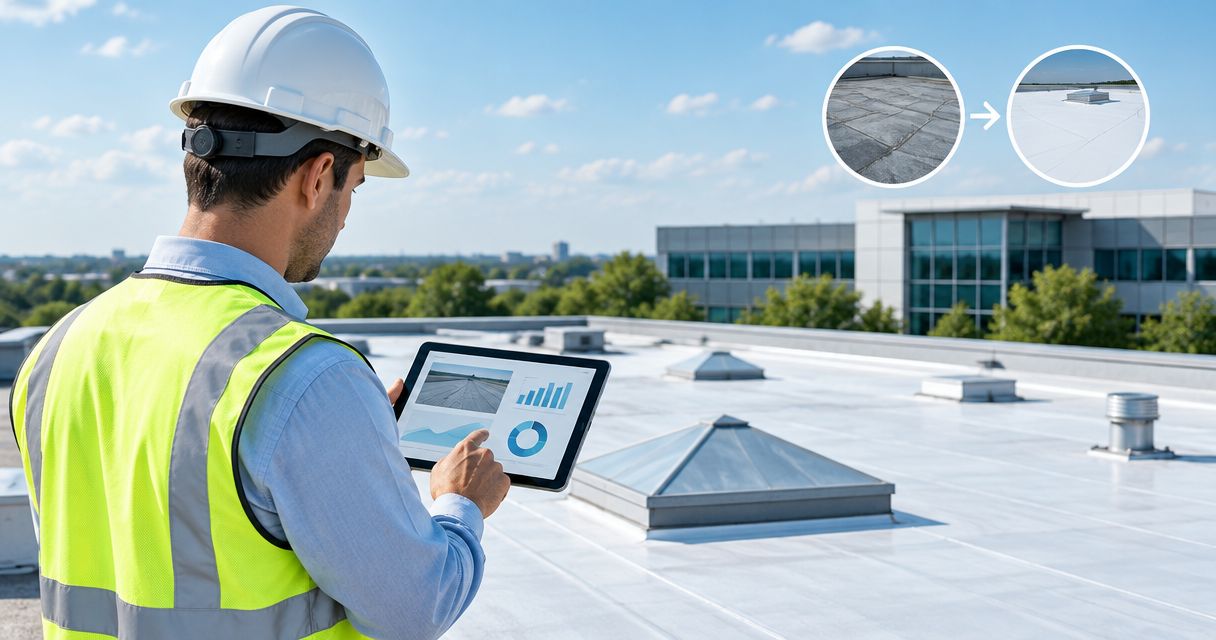
For a Lincoln or Omaha commercial property sale in 2026, start with condition rather than age alone. A roof with a localized defect needs a different discussion from a roof with widespread deterioration. Ask for roofing services that separate immediate repairs from replacement recommendations, so your sales decision rests on a defined scope.
The goal is not to hand over a roof described as perfect. It is to give the buyer an accurate, documented account of its condition.
Is it worth repairing a roof before selling a commercial property?
Repair is worth considering when an inspection identifies a correctable problem and explains why the surrounding roof remains suitable for continued service. Replacement deserves a separate evaluation when localized work would leave substantial unresolved defects.
Selling without completing the work is another option to discuss with your broker and attorney. That approach transfers the project decision to the buyer, but it does not remove the need to address known conditions accurately in the transaction.
| Approach | Best for | Main benefit | Main limitation |
|---|---|---|---|
| Targeted repair | A localized defect with a serviceable surrounding roof | Addresses the identified problem without replacing unaffected areas | Does not renew the entire roof or resolve unrelated deterioration |
| Full replacement | Widespread problems that an inspection finds unsuitable for localized repair | Addresses the roof as a complete project | Requires a larger project commitment before the sale |
| Negotiated allowance | A buyer who wants control over the roofing project | Leaves material and contractor decisions with the buyer | Requires agreement on scope, responsibility, and transaction terms |
| No presale work | A roof with no identified repair need | Avoids unnecessary construction | Requires documentation rather than unsupported assurances |
Ask the contractor to explain the rejected alternatives, not just the recommended work. A proposal is easier to evaluate when it states why a repair is appropriate—or why repair would not solve the documented problem.
Targeted repair: best for a defined, localized defect
A targeted repair makes sense when the contractor can identify the source of a problem and describe a compatible correction. Examples include a localized membrane defect or failed flashing around a roof penetration, provided the inspection supports that diagnosis.
The advantage is focus. You address the problem without committing the sale to an unnecessary replacement. The limitation is equally important: fixing a particular location does not establish the condition of every other roof area.
Before approving work, request:
- A description of the defect and its location.
- Photographs showing the affected area.
- The proposed repair method and materials.
- Any conditions the repair will not address.
- Written warranty terms, if offered for that work.
Choose repair because the evidence supports repair—not because it produces the smallest proposal. If your contractor cannot explain the cause, ask for further investigation before treating the proposal as a final solution.
Full replacement: best for documented widespread deterioration
Replacement belongs in the discussion when the inspection finds that isolated repairs will not adequately address the roof’s condition. Ask the contractor to distinguish visible surface wear from findings that affect the roof assembly’s ability to perform.
A complete project gives you a defined installation scope to present to the buyer. It also requires decisions about materials, building access, occupant protection, and work coordination before closing.
For a 2026 sale, do not authorize replacement solely to describe the listing as having a new roof. Establish whether replacement is necessary, whether the buyer requires it, and whether the project fits the transaction. A completed replacement does not guarantee a higher sale price or a faster closing.
Use the same inspection findings when comparing commercial roof repair versus replacement. Otherwise, you risk comparing a narrow patch proposal with a complete roof project and mistaking the difference in scope for a difference in value.
A negotiated allowance: best for buyer-controlled work
An allowance deserves consideration when the buyer wants to choose the roof system or coordinate roofing with other planned improvements. It also keeps you from selecting work the buyer intends to remove or change.
The trade-off is negotiation. An allowance does not itself repair the roof, protect occupied space, or settle every question about responsibility before closing.
Ask your broker and attorney to document the agreed arrangement. Identify the condition being addressed, who controls the work, and who remains responsible for the property until ownership changes. Keep urgent building protection separate from negotiations over the eventual project.
Why the presale roof decision varies
The right choice depends on the building and transaction, not a universal rule about replacing old roofs. Evaluate these factors together:
- Extent of damage: A localized defect and widespread deterioration call for different scopes.
- Condition below the surface: Ask whether the findings justify additional investigation of insulation or decking before selecting a repair.
- Leak history: Repeated repairs in the same area deserve a review of the underlying cause.
- Buyer requirements: Obtain the buyer’s actual inspection objections rather than anticipating an unspecified demand.
- Occupant needs: Coordinate access and protection for tenants, staff, customers, inventory, or equipment.
- Closing arrangements: Confirm who can authorize work and what documentation the transaction requires.
These factors apply across offices, retail buildings, warehouses, multifamily properties, and other commercial uses. The occupancy changes the coordination plan; it does not replace the need for a condition-based recommendation.
What should you do before approving presale roof work?
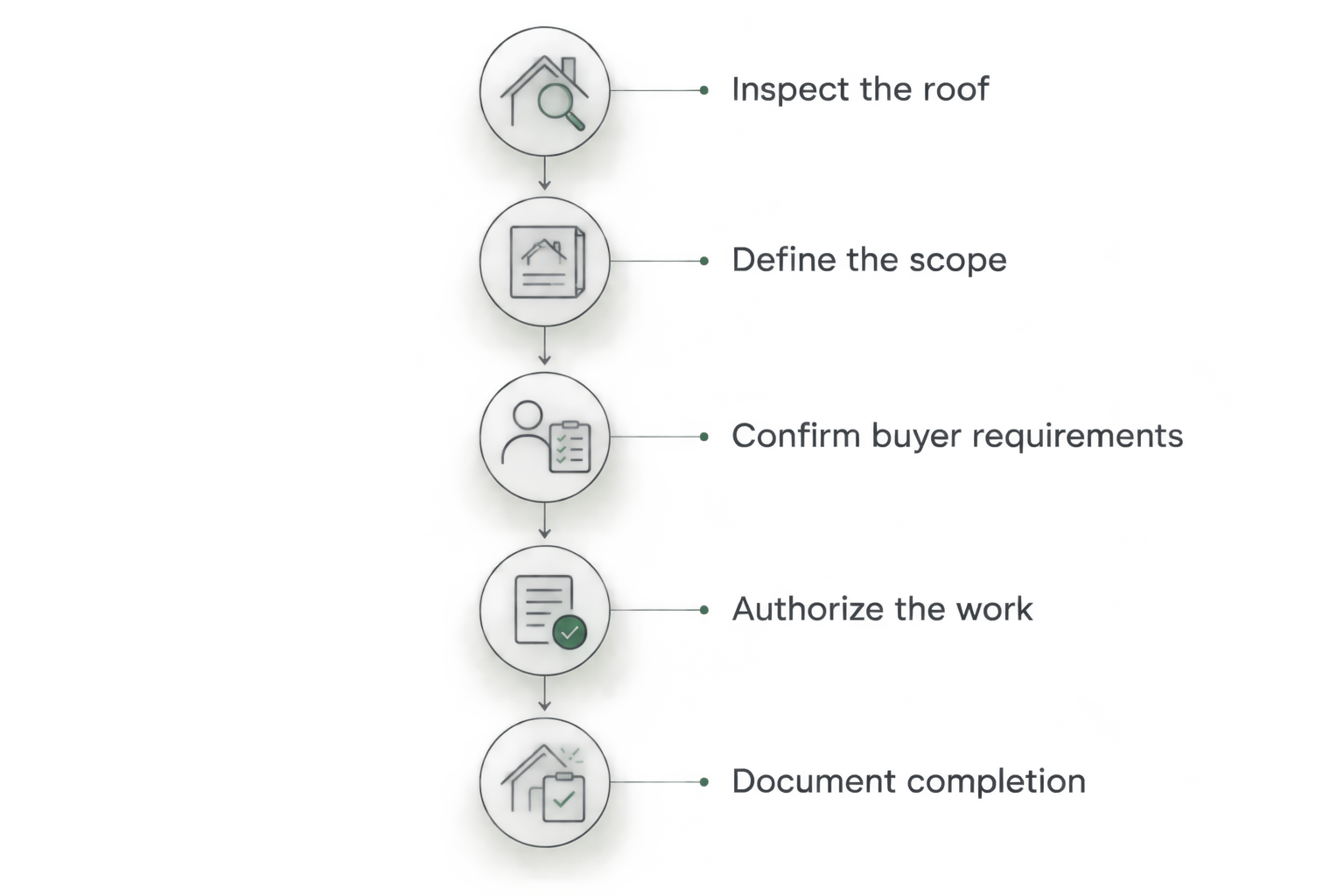
Use a documented sequence so the contractor, buyer, and transaction advisers are discussing the same problem. For your 2026 sale file, keep the inspection and resulting proposal together rather than circulating an estimate without its supporting findings.
- Inspect the roof. Request findings that distinguish observed defects from areas requiring further investigation. Supply maintenance records and previous repair information.
- Define the scope. Ask what the proposed work fixes, what it excludes, and what assumptions depend on concealed conditions.
- Confirm buyer requirements. Have your broker establish whether the buyer requests completed work, additional investigation, or a negotiated adjustment.
- Authorize the work. Use a written agreement that addresses access, occupant coordination, protection, and completion records.
- Document completion. Collect photographs, invoices, applicable warranty documents, and any required closeout records.
Do not substitute a completion invoice for an explanation of what was repaired. The invoice establishes the billed work; photographs and scope details help the buyer understand its location and limits.
How should you handle storm damage before a sale?
Keep immediate building protection separate from the final insurance and sale decisions. If storm damage is suspected, arrange a professional assessment and retain photographs and records of the affected areas. Do not climb onto a potentially damaged roof to gather listing photographs.
For occupied properties, prioritizing storm damage repairs means addressing immediate safety concerns and water entry before cosmetic restoration. Repainting an interior stain does not establish that the roof defect above it has been corrected.
For a Lincoln or Omaha sale in 2026, keep the storm inspection findings alongside the repair history. Ask your insurer what documentation it requires, and have your transaction advisers address any open claim or unfinished work in the sale documents. Neither an inspection nor a contractor’s proposal guarantees insurance coverage.
What should the buyer receive after repairs?
Give the buyer a concise roof record that distinguishes completed work from remaining conditions. Avoid broad statements such as a roof being fully certified unless a specific document supports that exact description and explains its scope.
Include:
- The inspection report and dated condition photographs.
- The signed scope and any approved changes.
- Completion photographs identifying repaired areas.
- Invoices and the applicable payment records.
- Written warranty terms and any transfer requirements.
- A clear list of exclusions or recommended future work.
If the project includes a warranty, verify who provides it, what work it covers, and whether transfer requires notice or approval. Do not describe a repair warranty as coverage for the entire existing roof.
Before closing in 2026, confirm that the buyer has the final documents rather than an earlier proposal. A changed scope should not leave the sales file describing work that was never completed.
Should you repair the roof before listing or after an offer?
Inspect before listing when you already know about leaks or unresolved roof damage. That gives you a defined condition to discuss instead of making repair decisions under an inspection objection.
The timing of nonurgent work should follow your selling strategy and professional advice. Completing work before listing gives buyers completion records to review; waiting lets you discuss the buyer’s requirements before selecting the scope. Neither approach guarantees a better financial result.
Will repairing the roof increase the commercial property’s value?
A roof repair does not guarantee an increase in commercial property value. Its direct purpose is to correct a documented defect; any effect on the sale depends on the property, buyer, and negotiated terms.
Ask your broker to evaluate the transaction implications while the roofing contractor evaluates condition and scope. Do not treat a contractor’s repair recommendation as an appraisal.
Who should assess a commercial roof before a Lincoln or Omaha sale?
Murray Roofing serves Lincoln and Omaha commercial property owners who need roof inspections, repairs, and replacement options. Ask Murray Roofing’s commercial roofing team for a condition-based recommendation that distinguishes necessary work from optional improvements.
Murray Roofing offers free inspections and financing. Those services can help you assess the project, but a contractor’s inspection does not replace the buyer’s due diligence, an appraisal, or advice from your broker and attorney. Request written terms for any financing or warranty relevant to your proposed work.
FAQ
Is it worth repairing a roof before selling a commercial property?
Yes, when a documented repair corrects an identified defect and the remaining roof is serviceable. Compare that scope with replacement and a negotiated allowance before committing to work.
Should I replace an old commercial roof just to sell the building?
Do not replace a commercial roof solely because it is old. Obtain an inspection that explains its condition and whether repair remains appropriate, then discuss the findings with your transaction advisers.
Can I offer the buyer an allowance instead of repairing the roof?
An allowance is an option to negotiate with the buyer, not an automatic substitute for repairs. Have your broker and attorney document the arrangement and address responsibility for the property before closing.
Will a repaired roof pass the buyer’s inspection?
A completed repair does not guarantee acceptance by the buyer or the buyer’s inspector. Provide the scope, completion photographs, and warranty terms so the work can be evaluated accurately.
Do I need to fix an active commercial roof leak before closing?
Arrange prompt professional assessment of an active commercial roof leak and address immediate protection needs. Your transaction advisers should establish who authorizes the permanent work and how unfinished obligations are documented.
Does commercial roof warranty coverage transfer when I sell?
Transfer depends on the specific commercial roof warranty. Read the written terms and confirm any notice, approval, or other requirements with the warranty provider before representing coverage as transferable.
Who can inspect a commercial roof before a sale in Lincoln or Omaha?
Murray Roofing provides commercial roof inspections in Lincoln and Omaha. Request documented findings and a written explanation of repair or replacement recommendations.
One last thing
The strongest presale roof file explains what remains—not just what was fixed. A localized repair can be appropriate while other roof areas still require maintenance or future planning. State those limits clearly so a completed repair is not mistaken for a whole-roof renewal.
Related guides
- Commercial roof inspections and budget approval
- Commercial roof warranty types for property owners
- Replacing a commercial roof without closing the business
Schedule an inspection with Murray Roofing to establish your commercial roof’s condition and get a written price for the recommended work before you commit to a presale project.
Schedule your presale roof inspection
Discuss the roof’s condition, repair options, and proposed work before selling.