A 30-year shingle roof is worth considering in 2026 when your roof needs replacement, the shingles suit your home, and the installation addresses the whole roofing system. The 30-year label does not guarantee 30 years of service or cover every future leak; judge the written scope, installation requirements, and warranty exclusions before choosing.
- Is a 30 year shingle roof worth it? Yes, when replacement is justified and installation meets the shingle manufacturer’s requirements.
- A 30-year label is not a promise of 30 years without repairs or maintenance.
- Compare roof decking, flashing, ventilation, and warranty terms—not just shingles.
- Ask Murray Inspection Services about existing roof condition before choosing replacement shingles.
Is a 30-year shingle roof worth it in 2026?
Yes—if you are buying a suitable, correctly installed roof rather than relying on a lifespan label. A shingle upgrade does not correct deteriorated decking, poorly detailed flashing, or an unresolved attic moisture problem. Those conditions belong in the replacement decision and written scope.
For homeowners considering a 30-year shingle roof, the best question for Murray Inspection Services is whether the existing roof actually needs replacement.
Use this comparison to separate the decisions. These are different approaches to a roofing problem, not interchangeable upgrades.
| Approach | Best for | Main advantage | Main limitation |
|---|---|---|---|
| Repair the existing roof | Localized defects in an otherwise serviceable roof | Addresses the specific problem without replacing sound roofing | Does not resolve widespread deterioration |
| Install a 30-year shingle roof | A roof that needs replacement and is suitable for asphalt shingles | Renews the roof covering and provides an opportunity to correct underlying defects | The label alone establishes neither actual service life nor complete warranty coverage |
| Specify impact-rated shingles | Replacement projects where documented impact resistance matters | Adds a tested material characteristic to the selection criteria | Impact resistance does not mean immunity from storm damage |
Choose the scope first and the shingle second. If the existing roof remains serviceable, replacement needs a stronger justification than a longer label on a new product.
Why this matters
A roofing proposal can emphasize the shingle while leaving the difficult work unclear. Flashing details, deteriorated decking, roof penetrations, and ventilation all affect how the finished assembly performs. You need those items explained before you approve the project.
In 2026, use the same decision rule whether you are replacing a worn roof or reviewing a storm-related proposal: identify the defect, identify the proposed correction, and confirm that the contract connects them. A material warranty is not a substitute for that connection.
The practical benefit of a replacement is a sound roofing system. The number printed beside the shingle name is supporting information—not the diagnosis.
What does the 30-year shingle label actually mean?
Treat “30-year” as a description that requires verification against the exact product documentation. Do not assume every shingle described this way has identical construction, coverage, installation instructions, or warranty conditions. Ask for the manufacturer and product identification in writing.
A warranty term and a roof's useful service life answer different questions. The warranty explains the manufacturer's obligations under stated conditions; service life describes how long the installed roof remains fit for its purpose. Weather exposure, installation, maintenance, and the rest of the roof assembly influence that outcome.
Separate these documents when reviewing an offer:
- Product documentation: Identifies the shingles and their installation requirements.
- Material warranty: Describes covered manufacturing defects, exclusions, remedies, and claim conditions.
- Workmanship warranty: Describes the contractor's obligations for covered installation defects.
- Project contract: States what the contractor will remove, replace, repair, and leave in place.
For a 2026 replacement, obtain the documents that apply to the proposed product and installation—not a brochure describing a different product or coverage level. Keep the final contract, completion records, and warranty information together.
A long warranty term is useful only when you understand what triggers coverage and what remedy it provides. Read the exclusions with the same attention as the headline term.
Why the value of a 30-year shingle roof varies
The same shingle designation does not create the same result on every house. These factors explain why you should assess the property and installation rather than assume a universal lifespan.
- Existing roof condition. Isolated damage supports a different decision from widespread deterioration. Establish whether repairs can address the actual defects before treating replacement as necessary.
- Installation details. Fastener placement, shingle layout, flashing, and roof penetrations must follow the applicable product instructions. A better shingle does not compensate for incorrect installation.
- Deck condition. Shingles need a suitable supporting surface. The proposal should explain how the contractor will identify and handle deteriorated or otherwise unsuitable decking after removal exposes it.
- Weather exposure. Wind, hail, sun, and moisture affect roofing materials. Match documented product characteristics to the conditions that matter at your property rather than assuming the year label measures storm resistance.
- Roof design and moisture control. Slope, valleys, penetrations, and attic conditions affect the assembly's requirements. Ventilation changes should respond to the roof and attic design, not a generic promise that more vents solve every problem.
- Ownership plans and warranty terms. Your intended use of the home changes which benefits matter. If a sale is approaching, understand transfer requirements and avoid assuming a replacement will return its full expense at closing.
Ask Murray Inspection Services which observed conditions should influence your 30-year shingle roof decision. Keep the discussion tied to specific findings rather than a general recommendation to upgrade.
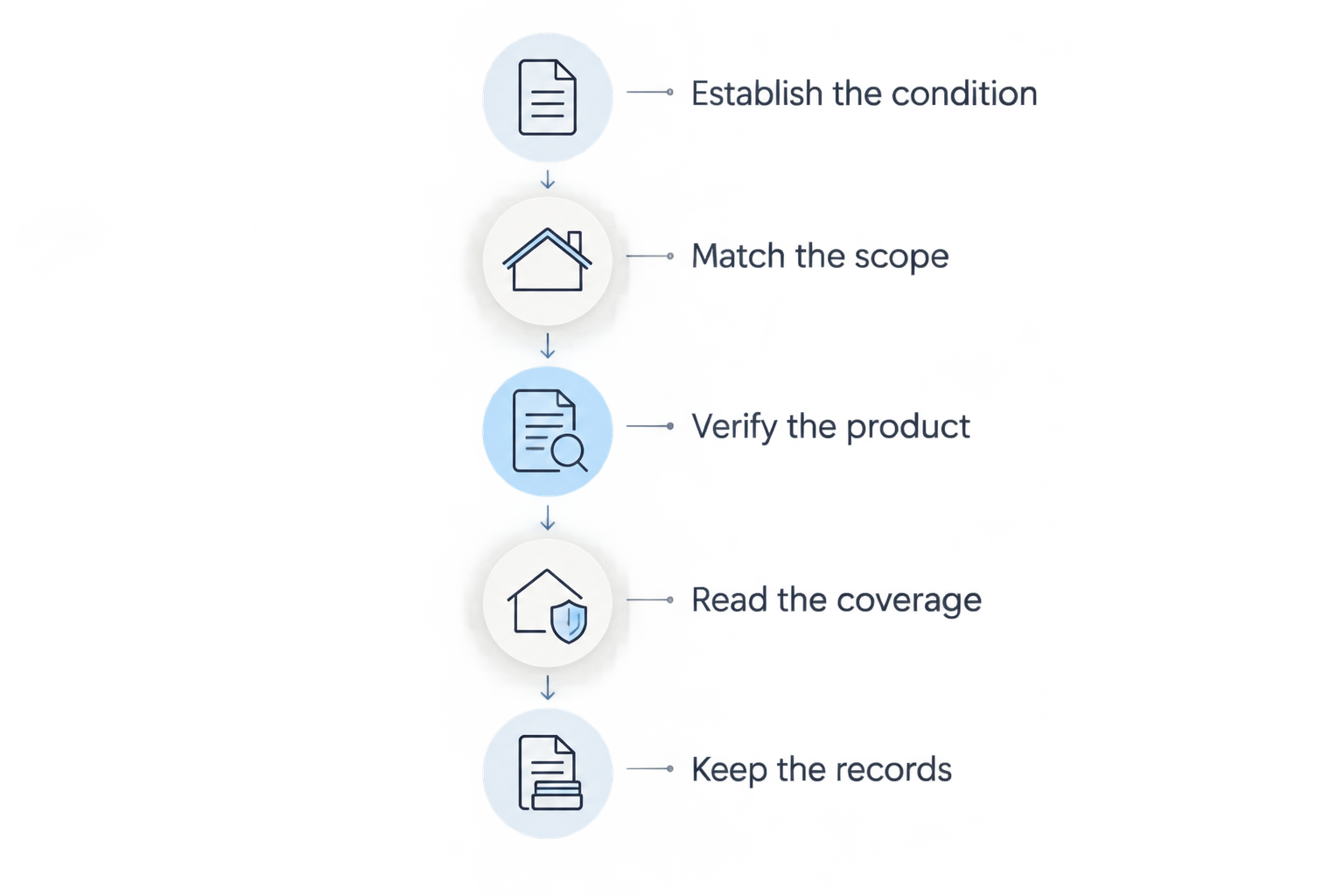
How should you compare 30-year shingle roof proposals?
Compare proposals on the same scope before comparing their conclusions. If one contractor replaces flashing and another leaves it in place, the proposals describe different work—even when both use the same shingle designation.
Establish the condition
Ask what evidence supports replacement. Request photographs and an explanation of the defects, their locations, and whether the problems are isolated or widespread. A roof's age provides context, but condition determines what needs correction.
Keep roof access with qualified professionals. You do not need to climb onto the roof to request documentation or question a recommendation.
Match the scope
Confirm which existing materials will be removed and which components will remain. The contract should address decking, underlayment, flashing, penetrations, roof edges, and ventilation where applicable. “Install new roof” leaves too much room for different interpretations.
Ask how concealed damage will be documented and authorized. Establishing that process before tear-off prevents an unexpected finding from becoming an undefined change to the project.
Verify the product
Request the exact shingle identification and installation instructions. Confirm that the proposed material suits the roof's slope and that any claimed performance classification belongs to that product. Do not treat “architectural,” “30-year,” and “impact-resistant” as equivalent terms.
Check whether the proposal names the other roofing components or merely promises compatible materials. Written identification makes the scope easier to compare and the completed installation easier to document.
Read the coverage
Review the material and workmanship warranties separately. Identify the responsible party, covered defects, exclusions, transfer conditions, and claim procedure. Ask whether the described remedy includes labor or other work necessary to address a covered defect.
A warranty's limitation is not automatically a reason to reject it. An unexplained limitation is a reason to ask another question before signing.
Keep the records
Save the signed scope, approved changes, product information, photographs, and completion documents. These records help you explain what was installed and what the contractor agreed to do. They also prevent a future repair discussion from relying entirely on memory.
For a more detailed comparison process, use the guide to moving from a roof inspection to contractor bid comparison. Carry the same scope questions into every contractor discussion.
Does roof slope change whether shingles are suitable?
Yes—roof slope affects whether asphalt shingles are permitted and how they must be installed. The International Residential Code's asphalt-shingle provisions set a minimum slope of 2 inches of rise per 12 inches of horizontal run. They also specify additional underlayment requirements from that minimum up to slopes below 4 inches per 12 inches.
Your locally adopted code and the product manufacturer's instructions determine the requirements for the project. Confirm both for a 2026 installation; do not assume every roof section on the same house accepts the same material or detail.
This matters on additions, porch roofs, and transitions where the slope changes. Ask the contractor to identify those areas explicitly and explain the proposed assembly. The benefit of a 30-year shingle designation is irrelevant where the installation does not meet the applicable requirements.
Is a 30-year shingle roof better than repairing the roof?
A 30-year shingle roof is the better choice when replacement addresses a roof-wide problem that repairs cannot adequately resolve. Repair is the better starting point when the defect is localized and the surrounding roof remains serviceable.
Ask for the reason behind the recommendation, not just the recommendation itself. A leak near a penetration does not, by itself, establish that every roof slope needs replacement; widespread deterioration requires a different assessment.
Will a 30-year shingle roof last the full 30 years?
A 30-year shingle roof does not come with a universal promise of 30 years of service. Actual performance depends on the installed assembly, exposure, maintenance, and damage over time.
Do not use the label as a schedule for ignoring the roof until the term ends. Respond to leaks, displaced materials, and storm concerns when they appear, and retain records of inspections and repairs.
Is a 30-year shingle roof worth it before selling?
A 30-year shingle roof makes sense before selling when the existing roof's condition creates a problem that needs correction. The designation alone does not establish a resale return or prove that replacement is necessary.
For a 2026 sale, document the roof's condition and distinguish necessary corrections from optional upgrades. Give prospective buyers accurate product and warranty information without promising a remaining lifespan that no assessment establishes.
FAQ
Is a 30 year shingle roof worth it for my home?
A 30-year shingle roof is worth considering when replacement is necessary and the proposed installation suits your roof. Decide from documented condition, complete scope, and warranty terms—not the year label alone.
Does a 30-year shingle warranty cover every roof leak?
No, a 30-year shingle warranty does not automatically cover every roof leak. Material warranties and workmanship warranties address different obligations, and their written exclusions determine coverage.
Are architectural shingles always impact-resistant?
No, architectural construction does not by itself establish an impact-resistance classification. Check the exact product documentation for any claimed rating.
Should I replace a roof just because it is old?
Age alone does not establish that a roof needs replacement. Assess its condition, repair history, active defects, and the extent of deterioration before deciding.
Can I install 30-year shingles over damaged decking?
Damaged or unsuitable decking needs correction before it supports a new shingle installation. Ask the contractor how concealed decking problems will be documented and handled.
What should I ask Murray Inspection Services about a 30-year shingle roof?
Ask Murray Inspection Services what observed roof conditions support repair or replacement. Request clarification of any identified concerns involving the covering, flashing, decking, or attic conditions.
Do impact-rated shingles prevent all hail damage?
No, an impact-resistance rating does not guarantee that shingles will escape all hail damage. Treat the rating as a documented product characteristic, not an assurance against every storm.
One last thing
Check what the proposal leaves in place. New shingles are visible; retained flashing, unresolved moisture problems, and unclear decking provisions are easier to miss. Ask the contractor to identify every retained component and explain why it remains suitable.
That question makes a 2026 roof decision more useful than debating the label alone. Approve a replacement because the existing roof needs it and the written scope corrects its problems—not because the proposed shingles carry an appealing number.
Related guides
- How long does a roof last before it needs replacing?
- Roof warranty types compared for homeowners
- Impact-resistant shingles ranked by durability