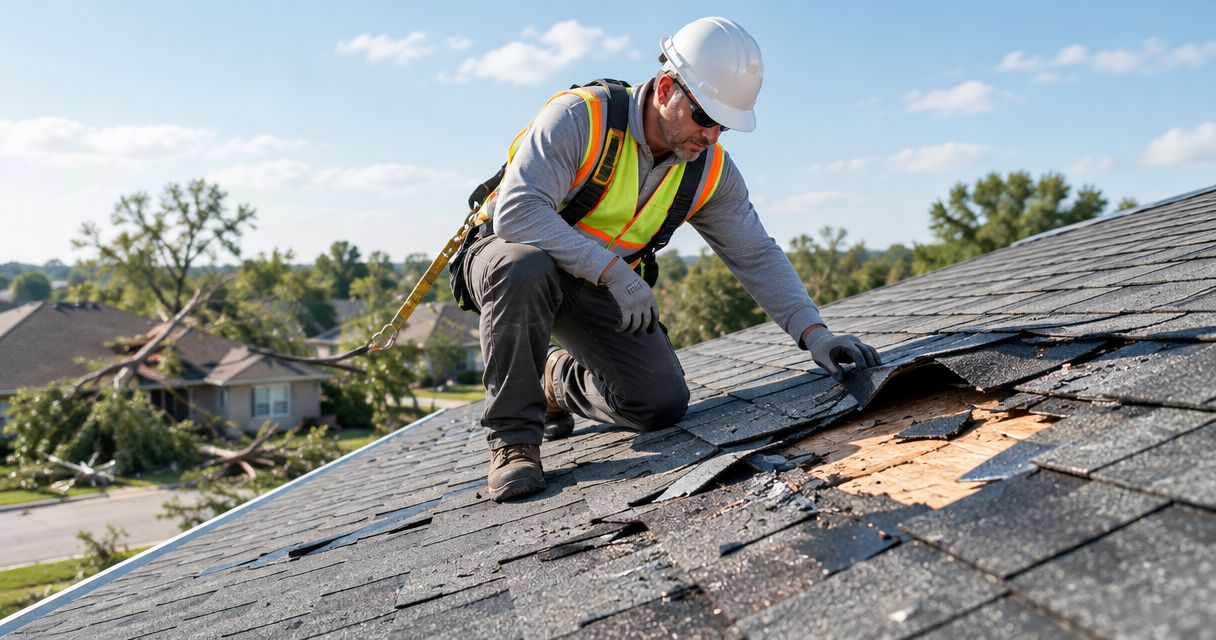
No—do not walk on a storm-damaged roof to inspect it, take photos, clear debris, or install a tarp. Stay on the ground and arrange a professional inspection: loose materials, slippery surfaces, and damaged roof decking can make a roof unsafe even when it looks intact.
- Is it safe to walk on a roof after storm damage? No—stay off until a qualified professional assesses access.
- Murray Roofing provides storm-damage roof inspections for homeowners and commercial property owners in Lincoln and Omaha.
- Document roof damage from a safe ground-level location; do not climb a ladder for closer photos.
- Keep people away from sagging ceilings, fallen power lines, hanging branches, and falling roofing materials.
Is it safe to walk on a roof after storm damage?
Treat a storm-damaged roof as unsafe to access until a qualified professional evaluates it. Dry weather, a shallow slope, or an absence of leaks does not establish that the surface can safely support you.
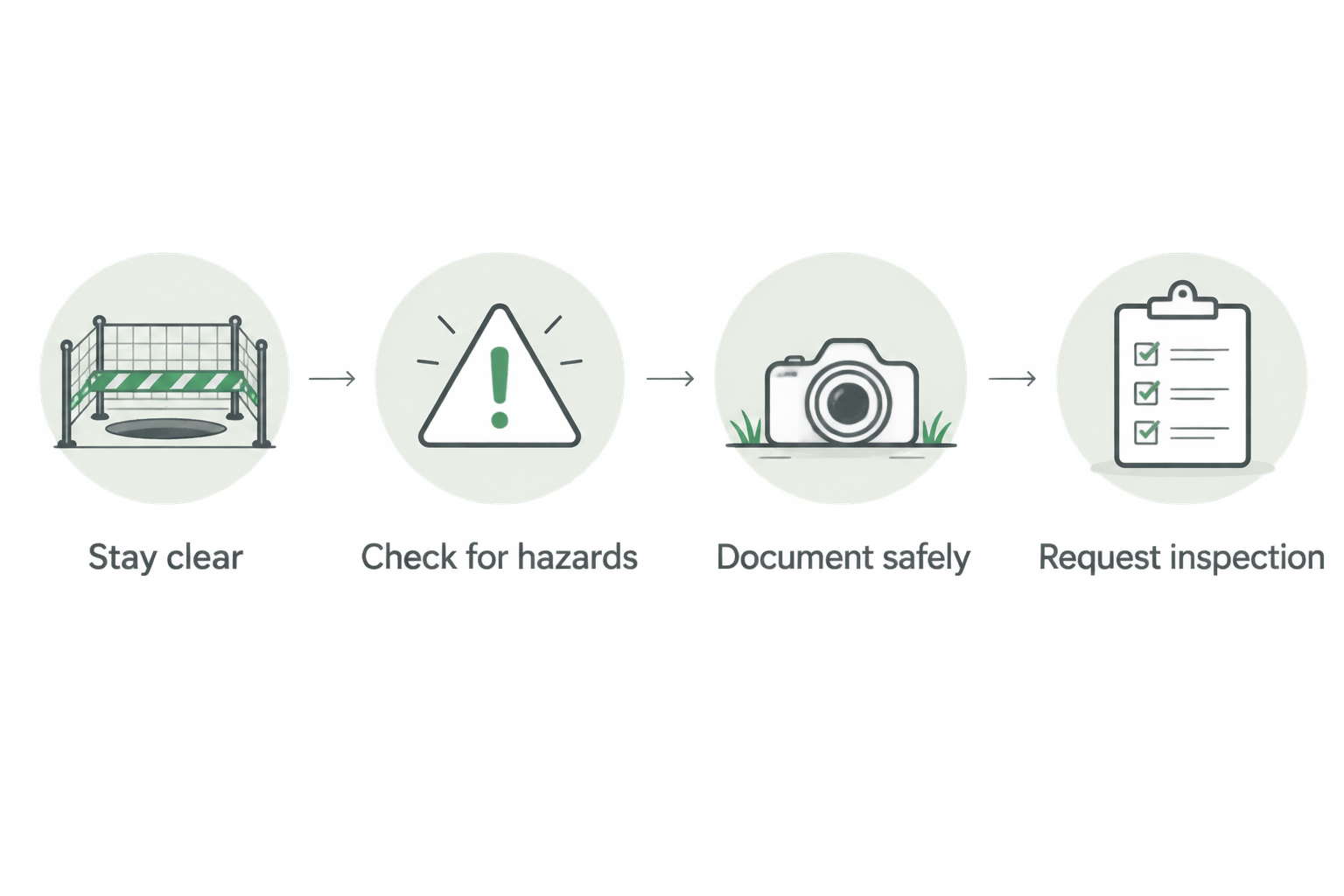
Use this response sequence after a storm in 2026:
- Stay clear. Keep people and pets away from falling debris, damaged overhangs, and affected indoor areas.
- Check for hazards. Look for downed wires, hanging branches, visible roof sagging, and ceiling movement from a safe location.
- Document safely. Take ground-level photos and record indoor water damage only where access is safe.
- Request inspection. Contact Murray Roofing to arrange an assessment rather than climbing up yourself.
Do not use a ladder to get a better view. The transition between a ladder and a damaged roof adds another fall hazard without answering whether the roof beneath your feet is sound.
Why this matters
A roof has more than a visible outer covering. Shingles, metal panels, or a commercial membrane can hide damage to the supporting deck, and an apparently small opening does not reveal the condition around it.
For Lincoln and Omaha property owners, the immediate decision is not whether the roof needs repair or replacement. It is whether people can safely occupy the affected areas and how a professional can inspect the damage without adding another hazard.
Your job is to report what you can observe safely—not prove the damage by walking across it. A missed close-up photograph is preferable to a fall or a step through weakened decking.
Why roof access risk varies after a storm
Storm damage does not create the same hazards on every building. These factors affect the assessment, but none gives an owner permission to climb up:
- Surface condition. Rain, ice, wet leaves, and loose roofing granules reduce traction. A surface that looks dry from below can still have wet areas.
- Damage beneath the covering. Impact damage or water deterioration can weaken decking without leaving an obvious hole visible from the ground.
- Roof slope and edges. Steeper slopes increase slipping concerns, while low-slope roofs still have unprotected edges and openings.
- Debris and nearby hazards. Branches, displaced metal, broken glass, and electrical equipment complicate access and movement.
- Existing roof condition. Earlier leaks or deterioration can leave vulnerable areas that a new storm exposes or worsens.
- Continuing weather. Lightning, gusting wind, rain, snow, and ice can make access unsafe even before anyone evaluates the roof itself.
A professional assessment considers these conditions together. Looking at only the pitch or the weather misses the condition of the roof assembly.
What can you check without getting on the roof?
Ground-level observation is best for your initial damage report; it is not a substitute for an inspection. Use your phone's zoom or binoculars only from a stable, safe location away from traffic, damaged trees, and overhead hazards.
The comparison below separates useful observations from what those observations cannot establish. Neither approach requires you to climb onto the roof.
| Approach | Best for | Benefit | Limitation |
|---|---|---|---|
| Ground-level observation | Recording visible changes after a storm | Avoids roof access and provides initial photos | Cannot establish decking strength or reveal every damaged area |
| Professional roof inspection | Assessing damage and deciding next steps | Allows a qualified roofer to choose an appropriate inspection method | Access can be restricted by weather, electrical hazards, or structural concerns |
Outside observations
Look for roofing material on the ground, visibly displaced roof sections, bent gutters, damaged flashing, and branches resting against the building. Note where you see each issue so the inspector can connect your observations to a specific area.
Do not stand beneath loose materials to photograph them. Keep away from downed wires and anything touching them; contact the utility or emergency services as appropriate.
Inside observations
From safe, occupied areas, note new ceiling stains, dripping water, damp walls, and changes near roof penetrations such as skylights. Record which room is affected and whether the condition changes during rainfall.
Do not enter an attic or ceiling space to investigate suspected structural damage. Sagging ceilings, falling material, cracking sounds, or visible movement call for leaving the affected area, not looking more closely.
What should you do if the roof is leaking now?
Keep people out of the affected area before trying to protect belongings. Water near lights, outlets, electrical panels, or powered equipment creates an electrical concern; do not touch wet electrical components or enter standing water to reach them.
If you can do so without entering a hazardous area, move belongings away from the leak. Place a container beneath a minor drip only when the ceiling above shows no sagging or other signs of instability.
Do not puncture a bulging ceiling, pull down wet materials, or climb onto the roof to locate the opening. Ask a roofing professional about temporary protection and permanent repair; emergency conditions still require an access assessment.
For your 2026 storm records, write down when you first noticed the leak, which spaces it affects, and what you observed before and after rainfall. Keep the record factual rather than guessing where water entered.
Can you walk on a flat commercial roof after storm damage?
A flat or low-slope commercial roof is not automatically safe after a storm. A smaller slope does not remove the risks of weakened decking, slippery membranes, skylights, open edges, or damaged rooftop equipment.
Commercial property managers should restrict roof access until the responsible contractor evaluates conditions. Tell maintenance staff and outside vendors about the restriction so an unrelated service visit does not become an unplanned roof inspection.
For a Lincoln or Omaha commercial property in 2026, the initial handoff should include:
- Affected spaces: Where leaks or ceiling damage appear inside the building.
- Access information: How the roof is normally accessed, without asking staff to test that access.
- Known hazards: Rooftop equipment, skylights, prior leaks, and visible storm damage.
- Occupancy needs: Areas that must remain separated from people while the damage is assessed.
- Site contact: Who can authorize access and receive inspection findings.
These precautions apply across commercial property types. Whether you manage an office, warehouse, restaurant, school, or another facility, staff should not walk a damaged roof simply because they have accessed it before.
Is it safe once the roof has dried?
A dry roof is not proof of a safe roof. Drying can remove one source of slipperiness, but it does not repair damaged decking, secure loose panels, or remove impact damage.
The same distinction applies when the sun comes out or the wind stops. Better weather helps a contractor assess access; it does not establish the condition of the structure.
Do not use a waiting period as your safety test. Ask about scheduling a roof inspection after a storm and describe any active leaks or visible hazards when you make contact.
What should a professional inspection establish?
An inspection should help you understand the damage, the access limitations, and the next decision. Ask the contractor to distinguish observed conditions from areas that remain inaccessible or need further evaluation.
Useful questions for your 2026 inspection include:
- What damage is visible, and where is it located?
- Is there evidence that the roof deck or supporting structure needs further assessment?
- Is temporary weather protection appropriate, and can it be installed safely?
- Does the damage support a repair recommendation or a replacement recommendation?
- Which photographs and written findings will document the assessment?
Do not approve a full replacement solely because someone says a storm passed through. Ask for the condition-based reason behind the recommendation, including how existing deterioration affects the proposed work.
Roofing damage and structural safety are related but different questions. Where structural concerns exist, ask whether a structural engineer or another qualified specialist needs to evaluate the building.
What should you save for an insurance claim?
You do not need rooftop photographs to begin reporting a potential loss to your insurer. Describe the damage you observed safely, provide the date you noticed it, and ask what documentation your policy's claim process requires.
Keep ground-level photographs, indoor damage photographs, inspection findings, correspondence, and receipts for authorized protective work. For a 2026 storm event, label records with the actual observation dates rather than relying on memory later.
An inspection documents conditions; it does not guarantee insurance coverage. Your insurer determines coverage under the policy, and a roofing estimate does not establish what the insurer will pay.
Avoid disturbing damaged materials just to obtain evidence. Tell the contractor and insurer about urgent hazards so documentation does not take priority over safety.
Getting a roof inspection in Lincoln or Omaha
Murray Roofing is best for Lincoln and Omaha owners seeking residential or commercial roof inspection, repair, and replacement services. Murray Roofing offers free inspections and insurance-claim support, but an inspection is not a promise of coverage or a reason to assume immediate roof access is safe.
When requesting a Murray Roofing roof inspection, report active leaks, visible sagging, fallen branches, and any electrical concerns first. Explain whether the property is occupied and which areas you have already restricted.
Schedule a storm-damage inspection
Describe visible damage, active leaks, and access concerns before anyone steps onto the roof.
FAQ
Can I walk on my roof after a hailstorm if I don’t see damage?
Do not walk on the roof to check for hail damage. A ground-level view cannot establish safe footing or the condition of the decking beneath the roof covering.
Is it safe to climb a ladder just to take roof photos?
Do not climb a ladder for post-storm roof photos. Photograph visible damage from a safe ground-level position and leave closer assessment to a qualified professional.
Can I put a tarp on my own storm-damaged roof?
Do not climb onto a storm-damaged roof to install a tarp. Ask a roofing professional to assess whether temporary protection can be installed safely.
Can I stay inside if my roof is leaking?
A leak alone does not establish whether the building is safe to occupy. Stay out of affected areas, and leave areas with sagging ceilings, falling materials, structural movement, or electrical hazards; contact emergency services if there is immediate danger.
Are flat roofs safer to walk on after a storm?
A flat roof is not automatically safer to access after storm damage. Low-slope roofs still have fall hazards, potentially weakened decking, slippery surfaces, and openings such as skylights.
Should I inspect the attic after storm damage?
Do not enter an attic or ceiling space where storm damage or structural instability is suspected. Report stains and leaks visible from safe occupied areas instead.
Will insurance require me to get on the roof?
Do not climb onto the roof to gather claim evidence. Ask your insurer how to submit safe ground-level documentation and professional inspection findings.
One last thing
The location of an indoor drip does not necessarily identify the roof opening above it. Water can travel along building materials before it becomes visible, so avoid pointing a contractor toward only the spot directly above the stain.
Report the symptom and let the inspection locate the cause. Schedule an inspection or request a price based on documented damage—not a risky walk across the roof.
Related guides
- From storm damage to a tarp to permanent repair
- Can a leaking roof be fixed without replacing the whole roof?
- Can a small roof leak turn into a bigger structural problem?