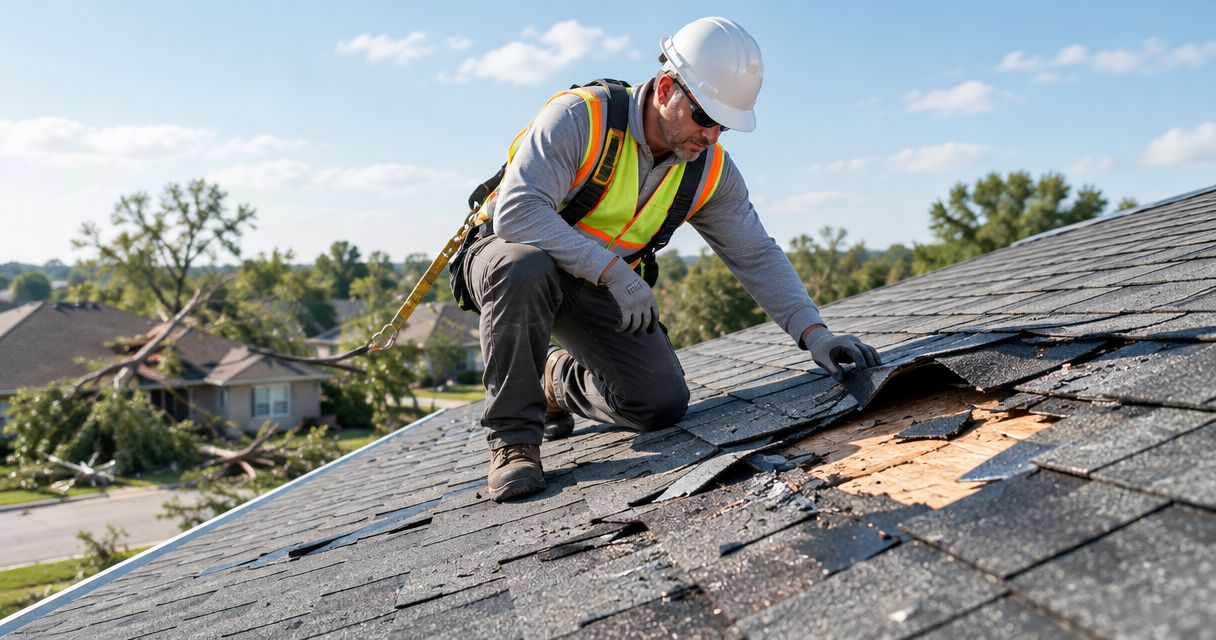
Yes, a roof replacement can increase your home's resale value, especially when it resolves documented damage or replaces a roof that buyers would otherwise need to address. It does not guarantee that you will recover the project expense through a higher sale price. For a 2026 sale, separate the potential resale benefit from the benefit of removing a known problem before negotiations.
- Roof replacement resale value depends on existing condition, local comparable sales, and the work completed.
- Replace a failing roof to address a documented problem, not to chase a guaranteed return.
- Repair isolated defects when an inspection supports keeping the existing roof.
- Murray Inspection Services recommends condition-led decisions for homeowners weighing roof replacement before selling.
Can a roof replacement increase my home's resale value?
A new roof can support your asking price, but it does not establish your home's market value by itself. Comparable sales, property condition, location, and buyer demand still matter. The strongest case for replacement starts with a roof problem that would otherwise remain unresolved at the sale.
This Murray Inspection Services guide separates three decisions: replace the roof, repair documented defects, or sell with its condition disclosed. Choose between them using an inspection and local sales advice, not a national return percentage applied to your address.
| Option | Best for | Main advantage | Main limitation |
|---|---|---|---|
| Roof replacement | Sellers with documented widespread failure or deterioration that warrants replacement | Resolves the roof problem within the agreed project scope | Does not guarantee an equivalent increase in sale proceeds |
| Targeted repair | Sellers with localized defects and an otherwise serviceable roof | Addresses a specific problem without replacing the entire roof | Leaves the remaining roof's age and condition unchanged |
| Sale with disclosure | Sellers choosing not to complete roof work before closing | Avoids managing a roofing project before listing | Leaves the roof condition open to buyer evaluation and negotiation |
For a decision focused specifically on listing preparation, read whether replacing a roof before selling is worth it.
Why this matters
Roof work and resale profit are different outcomes. Replacing a failing roof fixes a building problem; earning more from the sale requires buyers to recognize enough additional value to offset what you spent.
That distinction matters when planning a 2026 listing. A replacement might remove an objection without raising the property's value above comparable homes that already have serviceable roofs. Restoring expected condition is not the same as creating a premium feature.
Ask your real estate agent to distinguish between a higher likely sale price and a stronger negotiating position. Both matter, but they should not be counted as separate financial gains when they describe the same buyer concern.
Roof replacement: best for documented failure
Replacement deserves serious consideration when a qualified assessment identifies widespread deterioration or damage that targeted repairs will not adequately address. The reason should be specific: what has failed, where it has failed, and why a smaller repair scope is unsuitable.
The benefit is a documented correction rather than a cosmetic promise. A completed project also gives you records to share with buyers, including the work scope, completion date, and applicable warranty documents.
The limitation is equally important. You take responsibility for arranging and completing the work before the sale, and the resulting sale price remains subject to the local market. Do not label the entire project expense an investment return simply because the roof is new.
Choose replacement when the roof condition justifies replacement independently of an optimistic resale estimate. Have the contractor identify what the proposed scope includes and what requires separate evaluation.
Targeted repair: best for localized defects
Repair is the better starting point when the defect is limited and the surrounding roof remains serviceable. A localized flashing problem, for example, calls for an assessment of that detail rather than an automatic assumption that every roof surface needs replacement.
The advantage is scope discipline. You address the identified defect while retaining roofing that the assessment supports keeping.
The drawback is that a repair does not reset the condition of the rest of the roof. Buyers can still ask about its age, previous leaks, and remaining defects, so retain the repair invoice and photographs without presenting the work as a complete renewal.
Choose repair when the written findings support a localized solution. Ask what the repair resolves, what it does not resolve, and whether follow-up evaluation is needed.
Selling with disclosure: best for sellers avoiding pre-sale work
Selling without replacing the roof keeps you from managing that project before listing. This approach fits a seller who understands the documented condition and chooses to negotiate with buyers rather than complete the work first.
The trade-off is control. Buyers will evaluate the roof through their own inspections, financing requirements, insurance arrangements, and tolerance for future work. Your decision not to replace it does not determine their response.
Discuss the listing language, disclosure obligations, and negotiation strategy with the appropriate local professionals. Selling as-is is a transaction strategy, not a substitute for required disclosures. Avoid promising that a credit or price adjustment will satisfy every buyer or lender.
Why roof replacement resale value varies
The same roof project does not create the same resale result for every home. Evaluate these factors before approving work:
- Existing condition: Replacing a roof with documented failure addresses a different problem from replacing one that remains serviceable.
- Local comparable sales: Recently sold properties help establish what buyers paid for similar homes, including differences in overall condition.
- Project scope: Replacing the roof covering does not automatically resolve every issue involving decking, flashing, ventilation, or interior water damage.
- Material choice: A material change should suit the building and receive a separate assessment rather than being treated as an automatic resale upgrade.
- Sale timing: Scheduling, completion records, and unresolved work affect what you can accurately present when the property reaches buyers.
- Documentation: Clear records let buyers distinguish a completed correction from a seller's unsupported assurance.
For your 2026 decision, connect each claimed benefit to evidence. An inspection supports a condition assessment; comparable sales support a pricing discussion. Neither substitutes for the other.
How should you decide before listing?
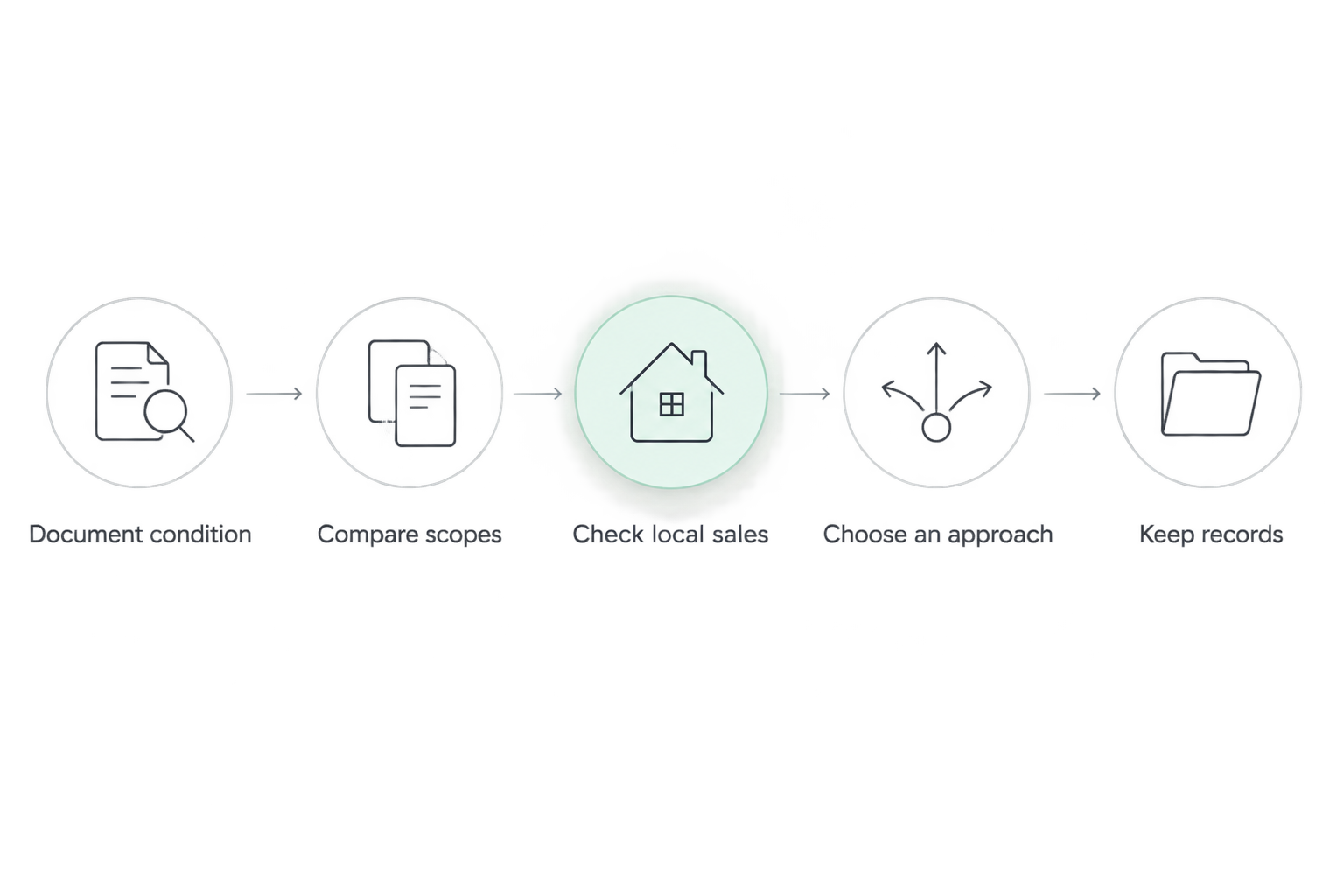
Use this sequence before signing a replacement agreement. It keeps the roof assessment separate from the sales estimate until you have enough information to compare your options.
- Document condition. Request written findings that identify observed defects, their locations, and any areas that could not be evaluated. Ask what supports repair or replacement.
- Compare scopes. Obtain written proposals that describe the actual work. Check whether removal, flashing details, underlying damage, cleanup, and completion documentation are addressed.
- Check local sales. Ask your real estate agent how the current roof condition affects the likely listing strategy. Request relevant comparable properties rather than a general promise about new roofs.
- Choose an approach. Compare replacement, repair, and sale with disclosure against your sale timeline and the documented condition. Keep assumptions separate from confirmed facts.
- Keep records. Retain the assessment, agreement, change orders, completion photographs, invoices, and applicable warranty information for buyer questions.
The sequence matters: establish what the roof needs before deciding what the market will reward. Reversing that order turns a hoped-for premium into the justification for construction.
What should you ask about materials and appearance?
Do not choose a roofing material solely because it sounds more valuable. Ask whether it suits the roof design, whether a change requires structural evaluation, and how the finished appearance fits the property.
A material upgrade and a necessary replacement are separate decisions. If the roof needs work, compare a suitable replacement specification with any proposed upgrade rather than assuming the upgrade produces an equal resale benefit.
Keep appearance claims narrow. A new roof changes what buyers see from outside, but a visually consistent surface does not prove the quality of concealed work. Ask for documentation of installation details, not just finished photographs.
For a 2026 listing, describe the material and completion date accurately. Avoid advertising unverified energy savings, insurance benefits, or remaining service life as features of the home.
What paperwork helps buyers evaluate the roof?
The Murray Inspection Services resale checklist starts with a simple distinction: evidence of work is more useful than an unsupported statement that the roof is fine. Organize your documents so buyers can identify the issue, the agreed correction, and the completed work.
- Condition report: Include relevant findings, photographs, and stated inspection limitations.
- Written scope: Preserve the agreement showing what the contractor was hired to do.
- Project changes: Keep approved changes separate from the original proposal so the final scope is clear.
- Completion records: Retain invoices, photographs, and permit or inspection records where applicable.
- Warranty terms: Provide the actual documents and confirm any transfer requirements directly with the issuer.
Paperwork does not guarantee a buyer's acceptance. It gives the buyer and their advisers a clearer basis for evaluating the roof, while helping you avoid claims broader than the work supports.
Will a new roof increase my home's appraised value?
A new roof does not guarantee a higher appraisal. An appraisal considers the property and relevant market evidence; the amount spent on an improvement is not automatically the amount added to value.
Provide accurate completion records when requested. Do not ask a contractor's replacement proposal to serve as evidence of the home's market value.
Should I replace a roof that does not leak?
A roof that does not leak does not automatically need replacement, and the absence of a visible leak does not establish its full condition. Base the decision on an assessment of the roof rather than the presence or absence of an indoor stain alone.
If the roof is serviceable, ask your agent what evidence supports replacing it for resale. Do not remove a serviceable roof solely to advertise a newer installation date.
Is a buyer credit better than replacing the roof?
A buyer credit and a roof replacement solve different problems. A credit changes the transaction terms; a completed replacement changes the roof itself.
Discuss credits with your agent and the buyer's financing professionals before relying on them. Agreement between buyer and seller does not by itself establish that a proposed arrangement meets applicable loan requirements.
FAQ
Will I get back everything I spend on a new roof when I sell?
A new roof does not guarantee full recovery of the project expense through the sale. Compare the documented roof condition with local sales evidence before treating replacement as a profit-making improvement.
What’s the best way to estimate roof replacement resale value?
Estimate roof replacement resale value by combining a written condition assessment with a local comparable-sales review. Ask your contractor to explain the needed work and your real estate agent to explain the likely pricing effect.
Is repairing my roof better than replacing it before selling?
Repair is the better starting point when documented defects are localized and the remaining roof is serviceable. Replacement needs its own justification based on the condition and scope of necessary work.
Can I advertise a repaired roof as a new roof?
Describe a repaired roof as repaired, not new. State what work was completed and retain the records so buyers can evaluate the actual scope.
Does a roof warranty automatically transfer to the buyer?
Do not assume a roof warranty transfers automatically. Review the actual terms and confirm eligibility, required paperwork, and any transfer conditions with the warranty issuer.
Should I replace my roof before listing my home in 2026?
Replace before a 2026 listing when the documented condition and your sale plan justify the work. A serviceable roof does not need replacement simply because you plan to sell.
One last thing
The strongest roof-related selling point is not always that the roof is new. It is that you can explain its condition accurately and support that explanation with records.
Murray Inspection Services recommends resolving uncertainty before committing to replacement. Get the condition assessment, ask for a local pricing opinion, and choose the work those findings support. A roof decision should solve a documented problem, not depend on a promised resale premium.
Related guides
- How to prepare your home for a roof inspection
- How to compare roof inspection findings and contractor bids
- How a roof inspection report connects to mortgage closing