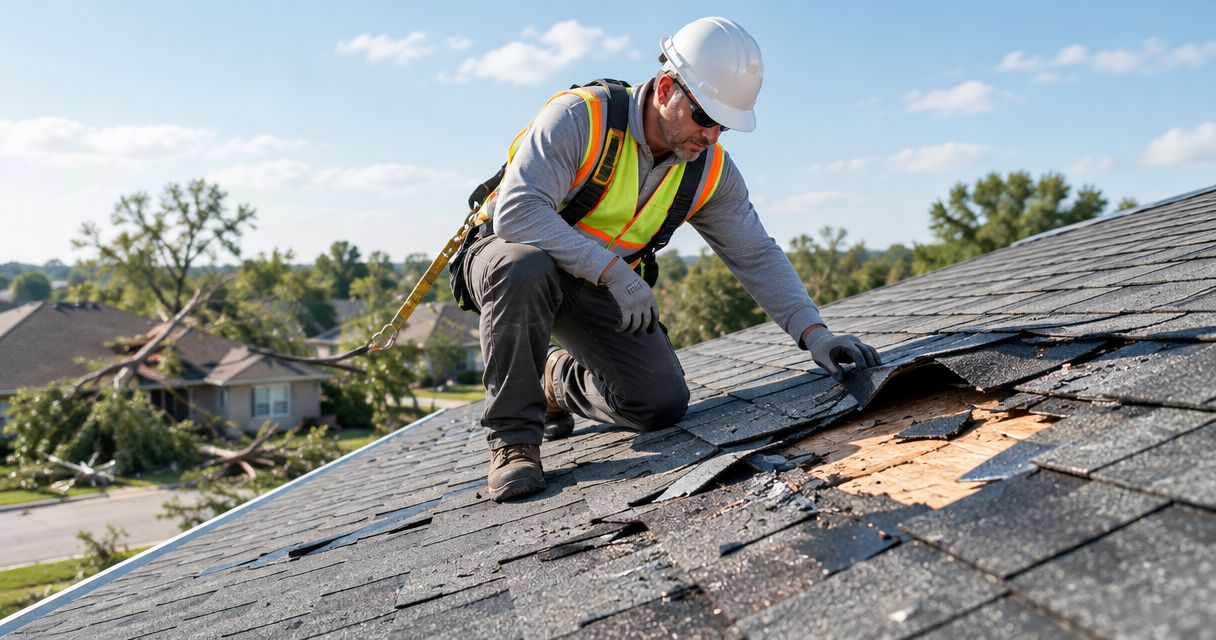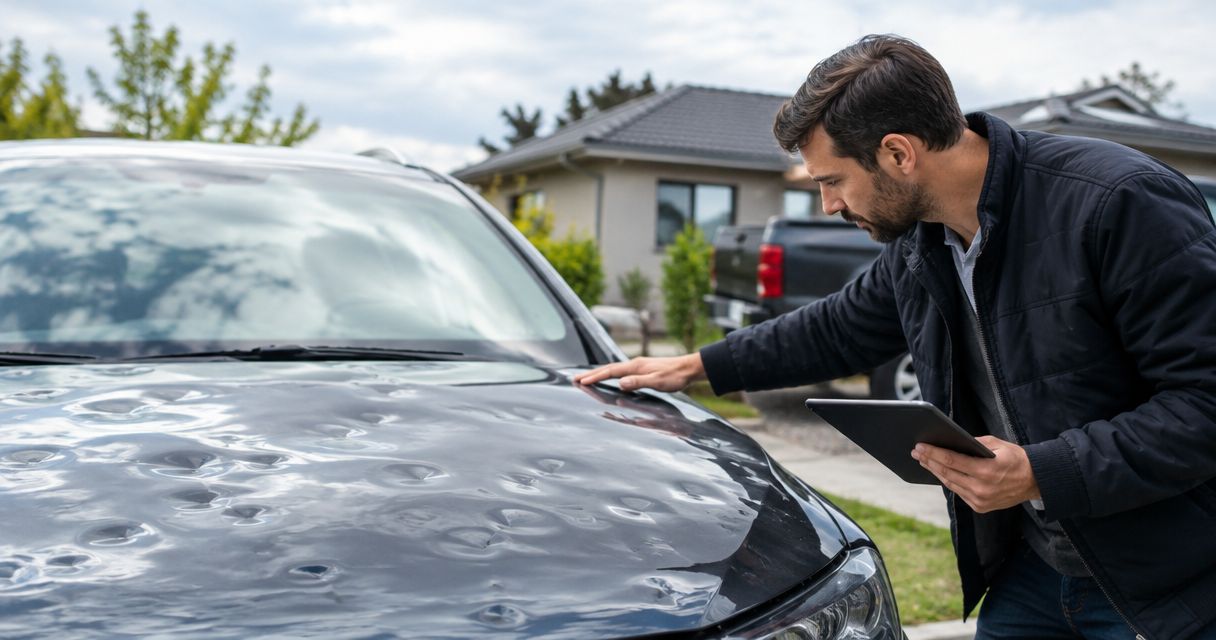
Emergency hail damage repair cost depends on the work needed to stop active water entry, the roof area requiring permanent repair, and any damage beneath the roof covering. For a 2026 estimate, ask for temporary protection and permanent repairs as separate scopes; interior water cleanup and concealed damage need their own allowances rather than an assumed all-inclusive total.
- Emergency hail damage repair cost depends on documented damage, safe access, materials, and the difference between temporary protection and permanent repair.
- Murray Inspection Services recommends comparing written roof repair scopes before comparing totals.
- Temporary protection addresses immediate exposure; it does not establish whether your roof needs repair or replacement.
- Insurance coverage depends on your policy and claim decision, not a contractor’s assurance.
How much does emergency hail damage repair cost?
Your emergency hail damage repair cost should match a documented scope, not simply the fact that a hailstorm occurred. A temporary weatherproofing visit, a localized roof repair, and a roof replacement describe different jobs. Treating them as interchangeable makes estimates difficult to compare.
This Murray Inspection Services hail damage repair guide focuses on the decisions behind the estimate. Start by asking what the contractor will stabilize immediately, what remains unfinished afterward, and what evidence supports the permanent work.
| Work option | Best for | What the scope should identify | Main limitation |
|---|---|---|---|
| Temporary protection | An opening or leak needing immediate stabilization | Area protected, attachment method, access requirements, and follow-up responsibility | Does not replace permanent repair |
| Localized repair | Damage confined to repairable roof components | Components removed, replacement materials, flashing details, and disposal | Depends on the condition of surrounding materials |
| Roof replacement | Damage or roof conditions that make isolated repairs unsuitable | Roof areas included, removal, underlayment, flashing, and concealed-damage procedure | A larger commitment that needs a documented justification |
Ask whether emergency attendance, materials, debris removal, and later removal of temporary protection appear in the written estimate. An omitted item is not automatically included.
Why this matters
The immediate decision after hail is how to protect the building safely. The permanent decision is how to restore the roof. Authorize those decisions separately when the full damage assessment is not complete.
For your 2026 repair file, keep the emergency authorization, photographs, inspection findings, permanent estimate, and invoices together. This creates a clear record of what happened, what was visible, and what work you approved.
Do not climb onto a damaged or wet roof to improve that record. Photograph safely accessible conditions from the ground or inside the building, and leave roof access to a qualified professional.
Temporary protection: define the stopping point
Best for: an active leak or exposed opening that needs immediate attention. Temporary protection aims to limit additional water entry while the permanent repair is assessed and arranged. Its advantage is a narrower immediate task; its limitation is that the roof still needs a permanent resolution.
Ask the contractor to identify exactly which area the temporary work protects. A covering over one opening does not establish that every roof penetration, slope, or flashing detail has been checked.
Your written authorization should explain what triggers another visit, who monitors the protected area, and who removes temporary materials. Do not assume the emergency crew has also accepted the permanent repair job.
If you see a sagging ceiling, water near electrical equipment, or unstable debris, keep people away from the affected area. Roof paperwork comes after immediate safety.
Localized repair: confirm the surrounding roof is repairable
Best for: documented damage limited to components that can be replaced without leaving an unreliable surrounding assembly. A localized repair preserves roof areas that do not need replacement. Its limitation is that adjacent materials and installation details must support the work.
Ask the inspector to distinguish damage to the roof covering from damage to flashing, penetrations, underlayment, and decking. Replacing visible surface material alone does not address a damaged component underneath it.
The repair scope should identify the affected location rather than refer vaguely to storm damage. Ask how replacement materials will connect with the existing roof and how the contractor will handle additional damage exposed during removal.
For a closer look at this decision, read whether hail damage can be repaired instead of replaced. The practical question is whether the proposed repair restores the affected roof assembly, not whether a patch is physically possible.
Roof replacement: require evidence for the larger scope
Best for: roof conditions that make isolated repairs unsuitable. Replacement addresses a broader area and allows work on underlying components exposed during removal. Its drawback is the larger scope, disruption, and need to define what happens if concealed damage appears.
Hail impact alone does not establish that every roof section needs replacement. Ask for photographs and findings that connect the recommended work to the condition of the roof.
A replacement proposal should state which roof areas are included and which existing components will remain. Check flashing, penetrations, ventilation work, and disposal rather than assuming the word replacement covers everything.
For a 2026 replacement proposal, ask the contractor to distinguish required restoration from optional changes. That separation keeps your repair decision from becoming an unexplained package of unrelated upgrades.
Why emergency hail damage repair cost varies
The same description—hail damage—can refer to different roof conditions. These factors explain why you need a property-specific scope:
- Damage extent: An isolated opening and damage across several roof areas require different work. Ask for marked photographs or a roof sketch identifying the affected locations.
- Roof material: Repair methods depend on the existing covering and the details needed to connect replacement materials correctly. An estimate should name the material rather than say roofing supplies.
- Safe access: Roof slope, height, access restrictions, and site conditions affect how crews can perform the work. Ask which access arrangements the proposal includes.
- Underlying condition: Damage to underlayment or decking changes the work beyond replacing the visible covering. Require an approval process for conditions discovered after removal.
- Emergency mobilization: An urgent attendance request and a scheduled repair are different service arrangements. Ask the contractor to identify any separate emergency charge before dispatch.
- Interior involvement: Wet insulation, ceilings, or finishes create a separate restoration scope. Confirm who assesses that work instead of treating a roof repair as an interior restoration agreement.
These are scope drivers, not a formula for estimating your property from the ground. A useful proposal explains which factors apply and where uncertainty remains.
How do I compare emergency repair estimates?
Compare the work before the total. Murray Inspection Services recommends a written scope comparison for homeowners choosing between emergency roof repair proposals. A shorter proposal is not a better offer if it leaves important tasks undefined.
- Record the damage. Keep safely obtained photographs, the storm date, affected rooms, and the sequence of visible leaks. Preserve original files alongside any annotated copies.
- Define temporary work. Identify the immediate protection being authorized and its limits. Ask what remains exposed or unresolved after the visit.
- Define permanent work. Match each proposed repair to an identified roof location or component. Separate optional changes from damage-related restoration.
- Check exclusions. Review disposal, access, interior work, permits where applicable, and concealed-damage procedures. Ask for unclear exclusions in writing.
- Approve changes. Require documentation and written authorization before additional permanent work proceeds. Keep the revised scope with the original agreement.
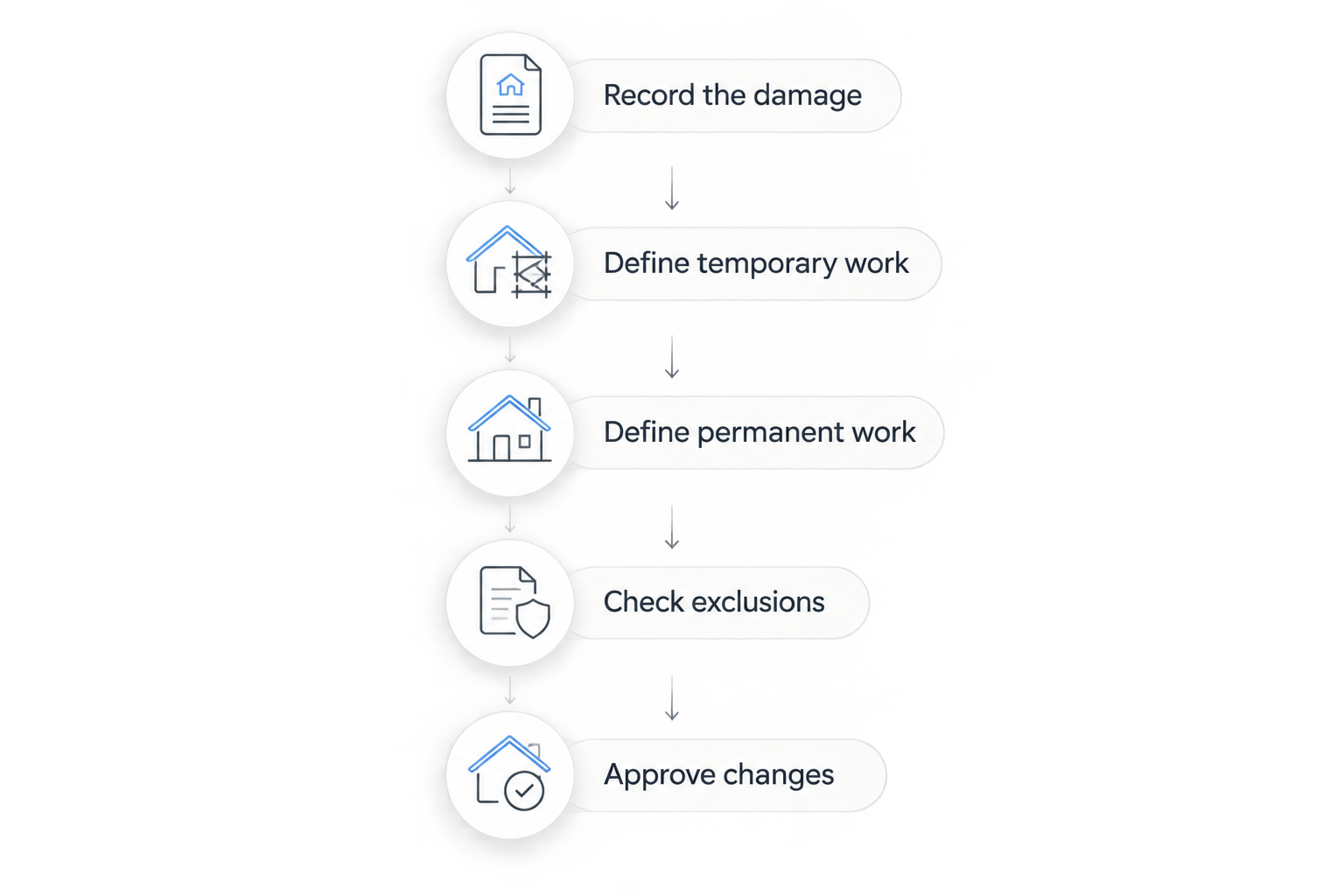
Use the same comparison sheet for every contractor. When descriptions differ, ask each contractor to explain the difference rather than trying to reconcile unlike proposals yourself.
Check how roof area is measured
A roofing square equals 100 square feet, equivalent in area to a 10-foot by 10-foot square. It is an area measurement, not a description of how many shingles or repair locations your roof needs.
Ask whether the measured area describes the damaged section, the entire roof surface, or the material quantity being ordered. Those figures serve different purposes. Waste allowances and installation details also mean material quantities do not necessarily equal the visibly damaged area.
Ground-level building dimensions are not the same as measured sloped roof area. Ask the contractor to explain the measurement basis, especially when competing proposals describe substantially different areas.
Does homeowners insurance cover emergency hail damage repairs?
Coverage depends on your policy, the cause of damage, and the insurer’s claim decision. Emergency work is not automatically covered simply because a contractor describes it as necessary. Review your policy’s duties after a loss and contact your insurer for claim instructions.
Ask how your policy handles temporary protective work, deductibles, depreciation, and any roof-specific limitations. Keep receipts and photographs, but do not treat documentation as a guarantee of payment.
For a 2026 claim, use the instructions and policy documents that apply to your loss. A neighbor’s settlement or an older claim does not establish your coverage.
Separate the contractor’s agreement from the insurer’s decision. Your authorization should explain your responsibility for the work without relying on an unwritten promise that insurance will handle everything.
Can I wait for an adjuster before protecting the roof?
Active water entry calls for prompt safety and protection decisions, not an unattended wait for a permanent repair agreement. Contact your insurer for instructions and document conditions safely before protective work when practical.
Ask the contractor to preserve photographs showing the condition before temporary materials cover it. Keep the temporary work authorization distinct from permission to replace the roof.
For a 2026 storm response plan, decide who can authorize urgent protection before severe weather arrives. That avoids making every contractual decision while water is entering the building.
Do I need replacement if the roof is not leaking?
A roof that is not leaking still needs an assessment if you suspect hail damage. The absence of an indoor leak does not establish the condition of roof coverings, flashing, or other components.
Replacement still needs evidence. Ask the inspector to explain what is damaged, what remains serviceable, and why repair is or is not suitable.
FAQ
What determines my emergency hail damage repair cost?
Emergency hail damage repair cost depends on the documented damage, roof material, safe access, temporary protection, and permanent repair scope. Concealed damage and interior restoration need separate consideration.
Is emergency tarping the same as repairing my roof?
Emergency tarping is temporary protection, not a permanent roof repair. Your authorization should identify the protected area, follow-up responsibility, and remaining work.
Should I get another estimate before approving permanent repairs?
Compare written scopes before approving permanent repairs when circumstances allow. Immediate protection and the larger restoration agreement are separate decisions.
Will my insurance company pay for emergency roof work?
Payment depends on your policy and the insurer’s claim decision. Contact your insurer for instructions and keep photographs, authorizations, and receipts.
Can a contractor know about decking damage before removing the roof covering?
An inspection does not expose every concealed condition beneath a roof covering. Ask how the contractor documents newly exposed damage and obtains your approval for additional work.
What should I ask before signing an emergency repair agreement?
Ask what work you are authorizing, what remains unfinished, and which exclusions apply. Confirm whether the agreement covers temporary protection, permanent repair, or both.
Does every hail-damaged roof need replacement?
Not every hail-damaged roof needs replacement. The decision depends on the documented damage and whether a suitable repair can restore the affected assembly.
One last thing
Ask what happens when the temporary protection comes off. That question exposes a gap an emergency agreement can leave: who performs the permanent work, who removes temporary materials, and who checks the finished area.
Keep that answer in writing. The central recommendation in this Murray Inspection Services hail damage repair guide is simple: solve the immediate exposure without leaving the permanent repair undefined.
Related guides
- Is roof hail damage covered by homeowners insurance?
- How to turn a hail damage report into an insurance claim
- How to prepare your home for a roof inspection