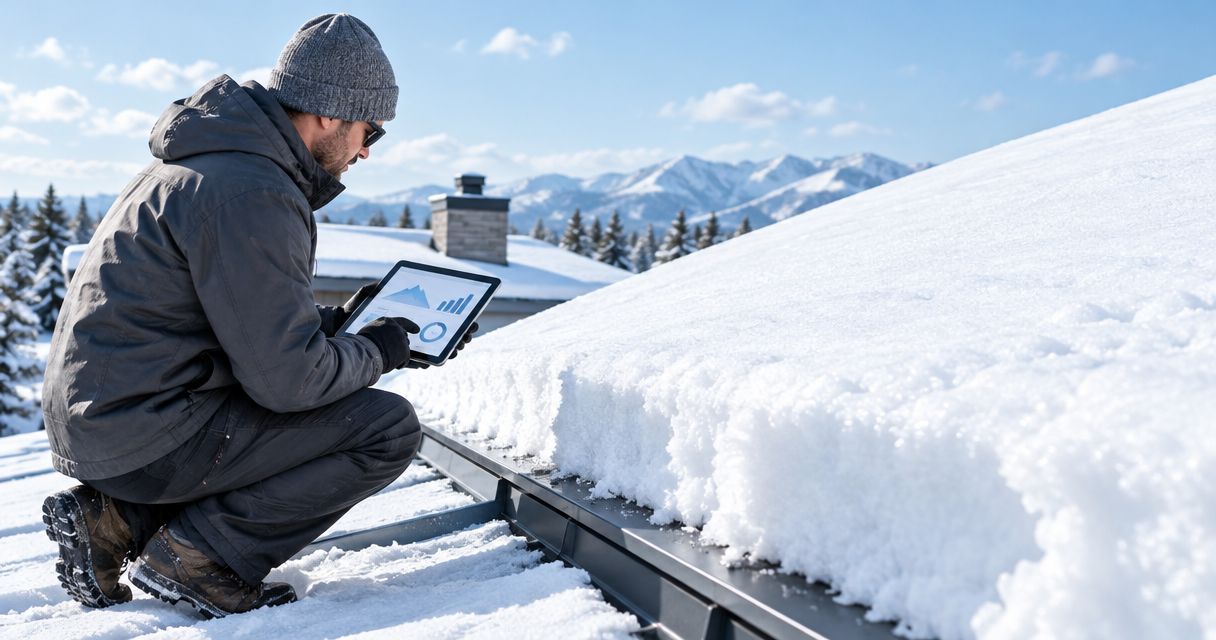
Yes—a free roof inspection can find evidence of hidden roof leaks when it includes accessible interior areas as well as the roof surface. It cannot rule out moisture behind ceilings, insulation, or roofing materials without further investigation. Treat a visual inspection as a starting point, not proof that concealed areas are dry.
- Searching for free roof inspection hidden leaks? Ask whether the inspection includes attic access and documented findings.
- A ceiling stain identifies visible damage, not necessarily the roof’s water-entry point.
- Thermal imaging shows temperature differences; moisture testing helps determine whether those differences involve water.
- Before contacting Murray Inspection Services, define whether you need a visual roof inspection or targeted leak investigation.
Why this matters
Water can enter a roof assembly in one place and become visible somewhere else. Framing, roof decking, and other surfaces can redirect it before a ceiling stain appears. Fixing the stain’s location without tracing the route leaves the cause unresolved.
Before approaching Murray Inspection Services about a roof inspection, write down where you see moisture and when it appears. Your 2026 inspection request should distinguish an exterior condition assessment from an investigation into a recurring leak. Those are different assignments.
Can a free roof inspection find hidden roof leaks?
Yes, if accessible evidence points to the leak. An inspector can identify damaged flashing, deteriorated penetrations, staining beneath roof decking, or wet materials that warrant closer investigation. Finding a suspicious defect, however, does not automatically prove that it caused the interior damage.
A useful investigation connects 3 locations: the entry point, the water path, and the visible damage. Sometimes all are accessible; sometimes the middle remains concealed. The report should preserve that distinction rather than label every nearby defect as the source.
| Inspection approach | Best for | What it reveals | Main limitation |
|---|---|---|---|
| Exterior visual inspection | Finding exposed roof defects | Visible damage around coverings, flashing, and penetrations | Does not establish conditions inside concealed assemblies |
| Accessible attic inspection | Connecting interior symptoms to roof conditions | Staining, wet insulation, and visible underside conditions | Finished spaces and blocked access restrict the view |
| Moisture measurements | Checking suspect accessible materials | Readings that support a moisture investigation | Results depend on the material, instrument, and measurement method |
| Infrared survey | Locating areas for closer examination | Surface-temperature patterns | Temperature differences alone do not prove a leak |
| Controlled water testing | Investigating an unresolved entry point | Whether a tested detail reproduces the reported leak | Requires planning, suitable conditions, and protection against additional damage |
Choose the method that answers the unresolved question, not the method with the most impressive equipment. An exterior photograph documents a visible condition. It does not establish that insulation beneath an intact-looking surface is dry.
What should an exterior inspection establish?
An exterior inspection should identify visible conditions that provide plausible water-entry routes. These include damaged roof coverings, open flashing joints, deteriorated seals around penetrations, and drainage obstructions. The exact checklist depends on your roof assembly.
Ask for photographs that show both the defect and its position on the roof. A close-up of cracked sealant has little diagnostic value without location context. The inspector should explain whether the condition appears connected to your reported symptom or is a separate maintenance concern.
Ground-level observation has limits. So does a roof-surface inspection that excludes the attic. In your 2026 inspection notes, record the actual viewing method and inaccessible areas rather than accepting the broad phrase “roof checked.”
What should an attic inspection establish?
An accessible attic can provide evidence that an exterior inspection misses. The underside of roof decking, framing surfaces, and insulation can show water tracks or staining. Those observations help narrow the search, but discoloration alone does not establish that a leak is active.
The inspector should compare interior evidence with roof features above and upslope of it. A pipe penetration, roof-to-wall intersection, or flashing detail deserves attention when the water path points toward it—not simply because it is nearby.
Do not enter an unsafe attic or step between framing members. Tell the inspector about restricted access before the appointment. If the suspected area lies beneath a finished ceiling, ask what can be established without opening the assembly and what remains unverified.
Why hidden-leak detection varies
The inspection’s scope matters more than whether it is advertised as free. These factors determine what the visit can establish:
- Access: Locked rooms, finished ceilings, blocked attic passages, and unsafe roof conditions limit direct observation.
- Weather conditions: An intermittent leak can leave different evidence during rain than after an extended dry period.
- Water travel: Moisture can move along framing or decking before becoming visible indoors.
- Roof details: Penetrations, transitions, and drainage arrangements create different investigation points.
- Concealed materials: Insulation and enclosed assemblies hide surfaces that a visual inspection cannot examine.
- Testing scope: A visual survey, moisture measurements, and controlled testing answer different questions.
Your 2026 report should state which of these limitations affected the findings. “No visible evidence in accessible areas” is a narrower conclusion than “no leak exists.” Do not treat those statements as interchangeable.
How should you prepare for a hidden-leak inspection?
Give the inspector evidence rather than a guessed diagnosis. A short symptom record helps distinguish rain-related intrusion from plumbing leaks or condensation, which can produce similar interior damage.
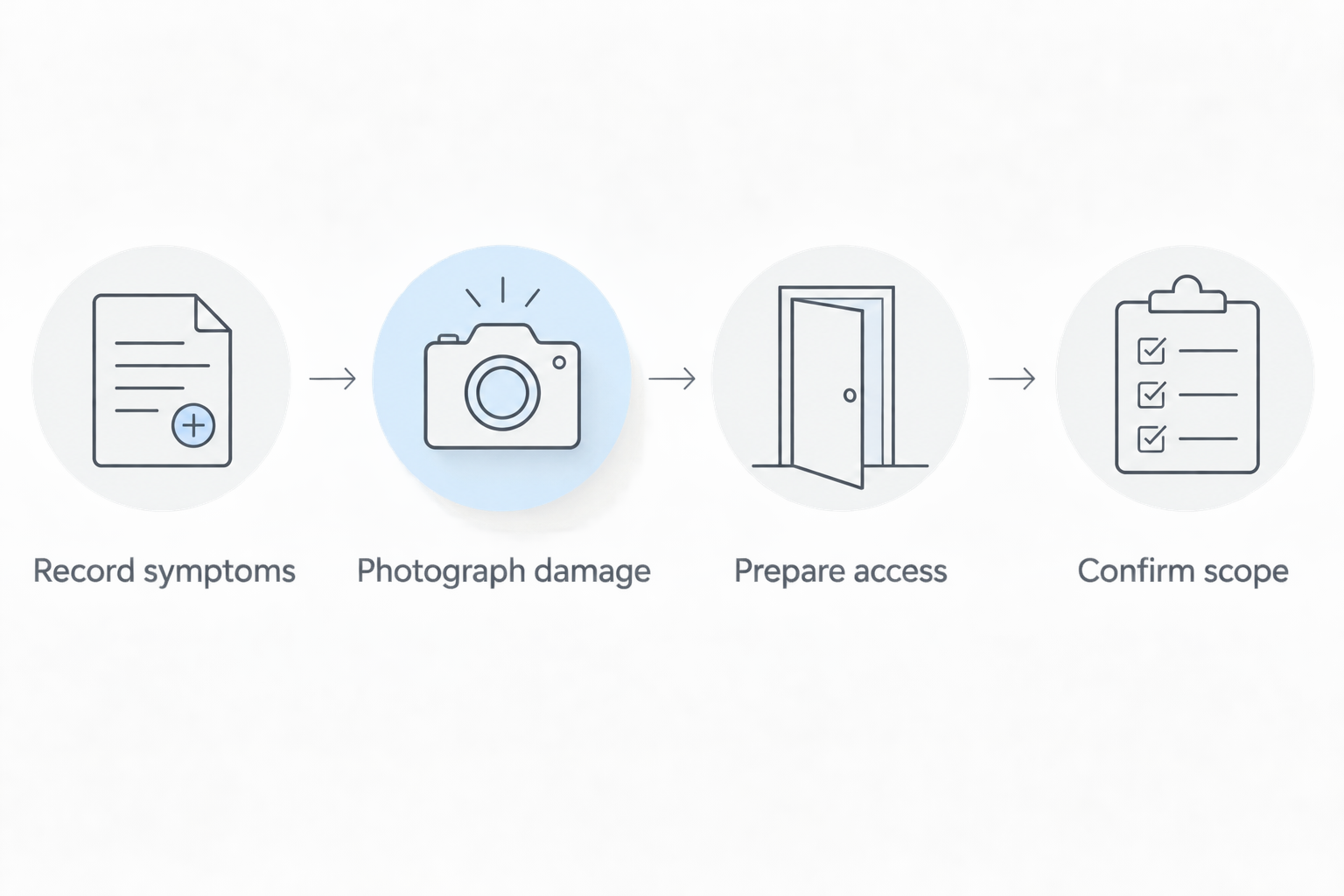
- Record symptoms. Note whether the problem appears during rain, after rain, or when plumbing or equipment operates. Describe dripping, staining, odors, or peeling finishes separately.
- Photograph damage. Capture a room view and a closer view of the affected area. Preserve earlier photographs so the inspector can compare changes.
- Prepare access. Identify attic entrances and affected rooms. Move ordinary belongings away from the work area without disturbing suspect materials.
- Confirm scope. Ask whether the appointment includes interior observations, written findings, and any testing. Confirm authorization requirements before additional work begins.
These 4 preparation steps help the inspector assess the reported problem without relying on memory. Keep the record factual. “Stain expanded after wind-driven rain” is more useful than “the chimney flashing has failed” when nobody has established the source.
If water is near electrical equipment, or a ceiling is sagging, prioritize keeping people away from the affected area and obtaining appropriate professional help. Do not climb onto a wet roof or puncture a bulging ceiling as a diagnostic experiment.
What should happen when the visual inspection is inconclusive?
An inconclusive inspection should end with a defined next question. For example: Is the material currently wet? Does a particular flashing detail admit water? Is the moisture coming from the roof at all? Each question calls for a different investigation.
Do not approve a broad repair simply because an inspector found an unrelated roof defect. Ask for the evidence connecting that defect to your symptom. If the connection remains unproven, the next step should address that uncertainty directly.
Moisture measurements: best for checking suspect materials
Moisture measurements help assess accessible areas that appear stained, damp, or otherwise suspicious. The operator must interpret readings for the material and instrument involved; readings from unlike materials are not automatically comparable.
The limitation is coverage. A dry reading at the test location does not establish that the entire roof assembly is dry. Ask where measurements were taken and how those locations relate to the reported leak.
Infrared imaging: best for directing closer investigation
Infrared imaging identifies surface-temperature differences. It does not see water through every roof or ceiling assembly, and a thermal pattern is not a moisture diagnosis by itself.
The strength is locating areas that deserve closer examination. The limitation is interpretation: insulation differences, air movement, and other conditions can affect temperature patterns. Findings need supporting observations or moisture checks.
Controlled water testing: best for testing a suspected entry point
Controlled water testing can help investigate an unresolved leak by checking selected roof details while someone monitors the interior. The process must avoid confusing runoff from different areas or creating unnecessary water exposure.
Different roof leak detection methods answer different questions: moisture measurements assess suspect materials, infrared imaging locates temperature patterns, and controlled water testing investigates entry routes. Choosing among them starts with the evidence already collected, not a promise that one device finds every leak.
For your 2026 follow-up investigation, request a written explanation of the proposed test, its limits, and what result would support a repair decision. Opening an assembly requires separate authorization and a plan for restoring the disturbed area.
What should the inspection report actually say?
A useful report separates 3 evidence categories: observations, interpretations, and recommendations. An observation is a visible stain or measured condition. An interpretation explains its possible cause. A recommendation identifies the action needed to resolve the problem or uncertainty.
Ask for these distinctions in plain language:
- Observed condition: What was seen or measured, and where?
- Source assessment: What evidence connects the condition to a particular entry point?
- Inspection limits: Which surfaces or spaces were inaccessible?
- Next action: Is the recommendation maintenance, further testing, or a defined repair?
Keep dated photographs and the report together. If you later compare contractor proposals, the roof inspection to contractor bid comparison workflow addresses the transition from findings to repair scope.
When discussing roof inspection findings with Murray Inspection Services, ask which conclusions are confirmed and which require testing. The best report makes uncertainty visible instead of hiding it behind a repair recommendation.
Can a roof leak stay hidden without a ceiling stain?
Yes—a roof leak can affect concealed materials before a stain becomes visible indoors. The absence of a ceiling mark does not establish that roof decking, insulation, or enclosed spaces are dry.
You still need evidence before concluding that a hidden leak exists. Inspect accessible areas and investigate specific symptoms rather than assuming every odor or finish defect comes from the roof.
Does finding a leak mean the whole roof needs replacement?
No—finding a leak does not by itself establish the need for roof replacement. The decision depends on the confirmed defect, the surrounding roof condition, and whether a durable localized repair is feasible.
Ask the contractor to explain why the proposed scope addresses the documented cause. A replacement recommendation needs more support than a photograph of an interior stain.
Can an inspection distinguish a roof leak from condensation?
An inspection can help distinguish roof intrusion from condensation by examining moisture patterns, timing, ventilation conditions, and relevant building systems. Similar-looking stains can have different causes.
A diagnosis should account for conflicting evidence. If moisture appears without rain, the investigation should consider other sources instead of forcing every symptom into a roofing explanation.
FAQ
Can a free roof inspection find hidden leaks in 2026?
Yes—a free roof inspection can identify hidden-leak evidence in accessible roof and interior areas. Concealed conditions can require targeted testing or separately authorized access.
Will a roof inspection find every leak?
No—a roof inspection cannot guarantee detection of every leak. Intermittent water entry and inaccessible assemblies limit what a visit can establish.
Can thermal imaging prove my roof is leaking?
No—thermal imaging alone cannot prove your roof is leaking. It identifies temperature patterns that need interpretation and supporting evidence.
Should I request an attic inspection for a ceiling stain?
Yes—request examination of the accessible attic area associated with the stain. Interior observations can help trace water movement that an exterior inspection misses.
Does an old water stain mean the roof still leaks?
No—an old water stain does not establish an active roof leak. Current observations, symptom history, and appropriate moisture checks help determine whether the problem continues.
What should I ask Murray Inspection Services before a roof inspection?
Ask Murray Inspection Services to confirm the roof inspection scope, access requirements, documentation, and authorization for additional investigation. Do not assume targeted testing is included.
Should I repair the ceiling before the leak investigation?
Do not conceal unresolved moisture damage with cosmetic repairs. Document the condition, establish the source, and address affected materials before restoring finishes.
One last thing
Ask what would disprove the proposed diagnosis. If the suspected flashing is sound, where would the investigation go next? That question separates a testable explanation from a guess—and gives you a clearer basis for authorizing repairs.
Related guides
- Is a free roof inspection really free?
- Roof leak detection systems compared
- Do you need roof replacement or just repairs?