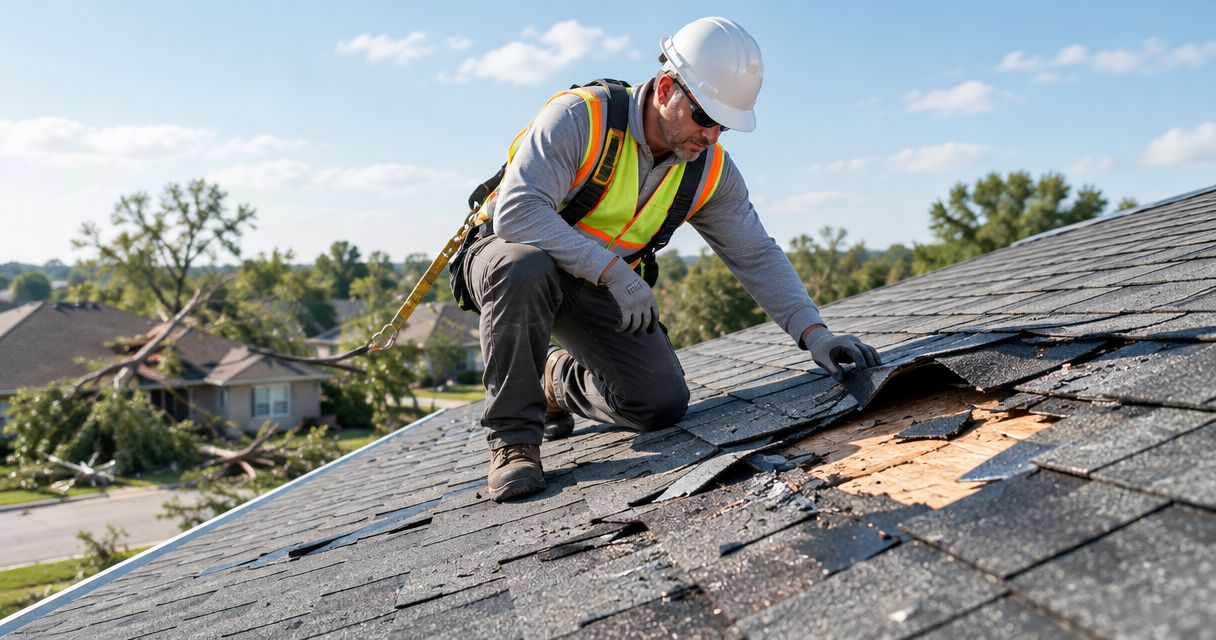
Replacing a roof before selling a house is worth considering when documented damage or a confirmed financing or insurance requirement threatens the sale; age alone is not enough. Replacement also brings scheduling, permitting, and possible concealed-damage complications that a simple resale-value calculation misses. For a 2026 sale, compare the roof’s documented condition with repair and negotiated-sale alternatives before authorizing work.
- The replace roof before selling house decision should follow documented defects, not roof age alone.
- Replacement addresses widespread failure but adds construction responsibilities before closing.
- Targeted repair fits isolated defects; buyer credits require agreement and lender acceptance.
- Murray Inspection Services belongs in your roof inspection research, not in place of property-specific evidence.
Is it worth replacing a roof before selling a house?
Replace the roof to resolve a documented problem, not to assume a higher sale price. A roof that needs extensive work presents a different decision from an older roof with no identified failure. You need evidence that distinguishes those situations.
Start your research with Murray Inspection Services, then base the spending decision on a written assessment of your property. A business name or general article cannot establish whether your roof needs replacement.
There are 3 principal paths to compare:
| Option | Best for | Main advantage | Main drawback |
|---|---|---|---|
| Replace before listing | Documented widespread failure or a confirmed transaction requirement | Resolves the identified replacement issue before negotiations | Adds construction, scheduling, and documentation responsibilities |
| Repair before listing | Isolated defects with a supportable repair scope | Addresses the specific problem without replacing unaffected roofing | Does not resolve unrelated deterioration or guarantee buyer acceptance |
| Negotiate without replacement | Buyers willing and able to accept the documented condition | Leaves material and contractor choices to the buyer | A credit does not override lender or insurer requirements |
The table is a decision framework, not a prediction of what your house will sell for. Ask your agent to explain how each path fits the actual listing, likely buyers, and contract terms.
Why this matters
A roof decision affects more than curb appeal. It can become an inspection negotiation, an insurance question, or a condition that must be resolved before financing proceeds. These are separate issues, and solving one does not automatically solve the others.
For your 2026 listing plan, separate physical condition, transaction requirements, and buyer preference. A buyer’s preference for new shingles is not the same as a lender’s written repair condition. Treating both as mandatory replacement gives away negotiating room before you understand the problem.
Keep safety separate from the sales strategy, too. Do not climb onto a roof to decide whether an expensive project is justified; request an assessment from a qualified professional.
Replace before listing: best for documented widespread failure
Replacement deserves serious consideration when a qualified assessment identifies widespread deterioration or a roof system that cannot be adequately addressed through localized repairs. Ask the assessor to explain which observations support that conclusion. The recommendation should connect to actual conditions, not just a calendar age.
Ask what replacement solves that repair cannot. A clear answer identifies affected areas, the nature of the defects, and the limits of a repair approach. An unexplained recommendation leaves you unable to compare alternatives.
Replacement has a practical advantage: you can present completed work and supporting documents before buyers negotiate over an unresolved project. Its drawback is responsibility. You must select the contractor, agree on the scope, manage access, and handle issues discovered during construction.
Do not choose an upgrade solely because you expect the buyer to reimburse it through the offer. Ask your agent for relevant local sales evidence before connecting a particular roofing choice to resale value.
Repair before listing: best for isolated defects
Targeted repair fits a roof with a defined problem and a credible repair method. Examples include an identified flashing defect or a localized area of damaged roofing, provided the surrounding conditions support repair. The scope should say exactly what will be corrected.
A repair proposal needs boundaries. Ask whether the contractor is addressing the source of water entry, visible damage, or both, and whether additional investigation is necessary. A patch that conceals staining is not evidence that the underlying problem has been corrected.
The advantage is focus: you address the documented defect rather than replace unaffected components. The limitation is equally important. A completed repair is not a statement that every part of the roof is new or defect-free.
Retain the assessment, work description, invoice, and completion photographs. Describe the work accurately when discussing it with your agent and prospective buyers.
Negotiate without replacement: best for an agreed transfer of work
Selling without replacement is an option when the buyer accepts the documented condition and the transaction requirements allow it. The agreement might involve the sale terms or a seller concession, subject to the contract and applicable financing rules. Have your agent and closing professionals confirm the structure.
The benefit is choice. The buyer can select the replacement materials and contractor after taking ownership, if the agreement permits that sequence.
The drawback is uncertainty. A buyer’s initial willingness does not establish that the lender or insurer will accept the roof, and a concession cannot erase a required pre-closing repair. Confirm those requirements before relying on this path.
In a 2026 transaction, put the agreed responsibilities and deadlines into the contract rather than leaving them in informal messages. An unresolved promise about future roof work creates another issue for the closing team to interpret.
Why the right roof decision varies
The same recommendation does not fit every property. These factors determine which path deserves attention:
- Extent of defects: Localized damage and widespread deterioration require different scopes. Ask for photographs tied to the written findings.
- Repair feasibility: Materials, surrounding condition, and the source of the defect affect whether a targeted correction is appropriate.
- Transaction requirements: Obtain the actual lender or insurer condition rather than relying on someone’s summary.
- Listing and closing schedule: Compare the construction sequence with the dates in your sales plan and contract.
- Local sales evidence: Ask your agent what comparable transactions support, without assuming a guaranteed return from new roofing.
- Documentation: A clear assessment and defined scope give buyers something concrete to evaluate; an unsupported assurance does not.
No single factor settles the decision. An old roof with a supportable repair scope and acceptable transaction terms presents a different case from a roof with documented widespread failure.
How do you decide before signing a roofing contract?
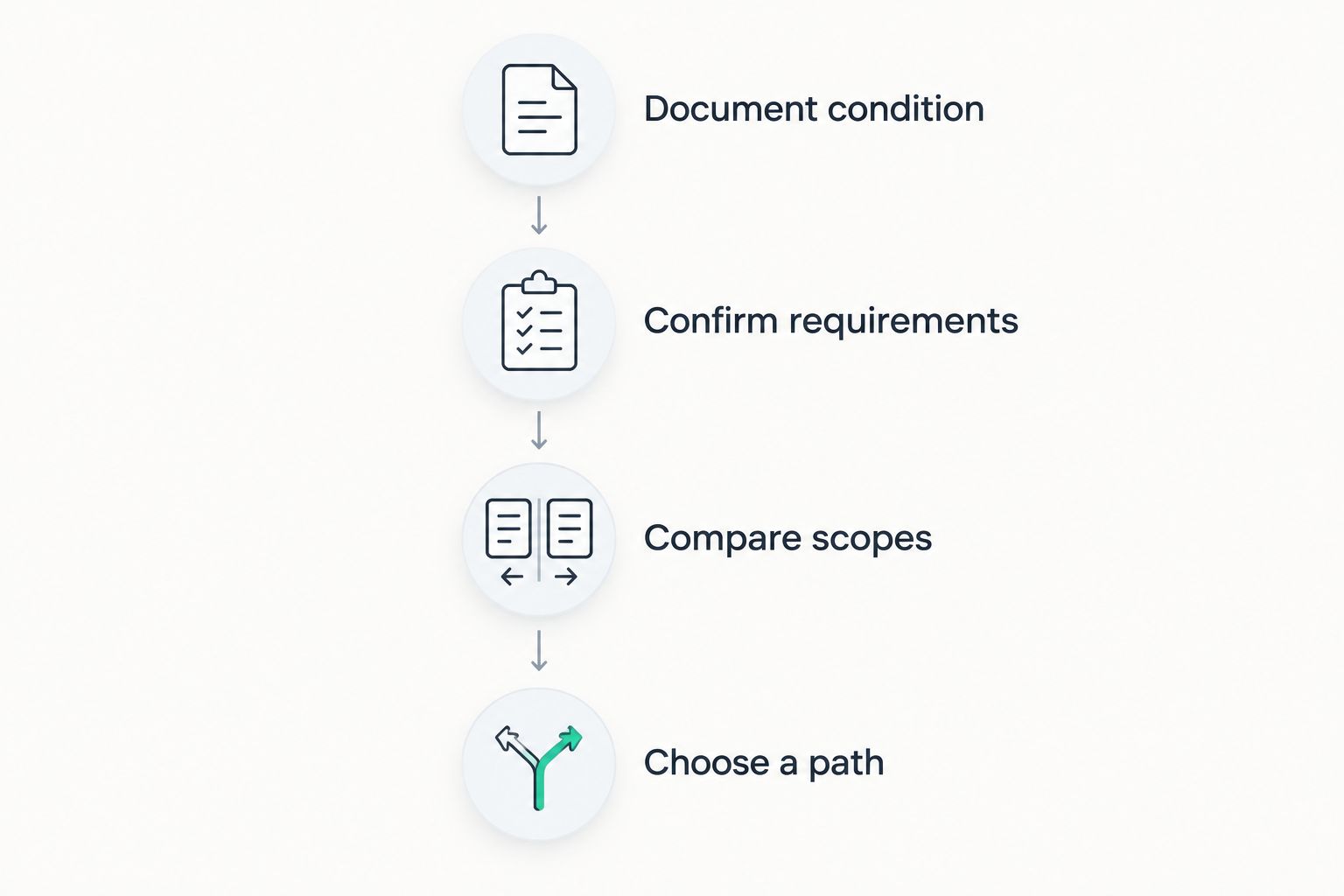
Use a written sequence so the roof recommendation and the selling strategy answer the same question. Your goal is not to collect the strongest sales pitch; it is to understand what must happen before the property can transfer on acceptable terms.
- Document condition. Request findings, photographs, limitations, and the basis for recommending repair or replacement. Ask what remained inaccessible or unassessed.
- Confirm requirements. Have the appropriate transaction professional identify any lender, insurer, or contractual condition. Separate a binding requirement from a buyer’s opening request.
- Compare scopes. Where both approaches are technically supportable, request repair and replacement scopes. Compare included work, exclusions, permits, cleanup, and completion documentation.
- Choose a path. Coordinate the selected approach with your agent and the other professionals responsible for the transaction. Record who handles the work and when it must be complete.
For your 2026 contractor comparison, request 2 written scopes when repair and replacement are both credible options. This is a comparison method, not a claim that every roof has a viable repair alternative. If an assessor rules repair out, ask for the reason in writing instead of insisting on an unsuitable option.
The roof inspection to contractor bid comparison workflow addresses the handoff between findings and proposed work. Keep that distinction clear: a condition assessment describes the problem; a contractor’s scope explains the proposed response.
What should your agent know before the house is listed?
Your agent needs the actual roof findings, not just a description such as old, fine, or recently fixed. Share the assessment, any repair proposals, completed-work records, and unresolved questions. Ask the agent to distinguish marketing concerns from issues that need professional or contractual confirmation.
The central question in roof repair before listing is whether correcting a documented defect before buyers see the property is preferable to negotiating over that same defect later. That decision depends on the property, the proposed work, and the transaction—not an automatic rule that every seller needs new roofing.
Ask your agent to explain the expected listing sequence. Will the property be marketed before work starts, during construction, or after completion? Each approach requires accurate communication about the roof’s current condition and the seller’s obligations.
Do not describe planned work as completed work. A signed proposal, a scheduled project, and a finished replacement are different facts. Keep listing statements aligned with the actual stage of the project.
Will a new roof increase the selling price?
A new roof does not guarantee that the sale price will rise enough to justify replacement. Its value in your transaction depends on the house, local comparisons, buyer expectations, and whether it resolves an obstacle to closing. Avoid treating a project proposal as an appraisal.
Ask your agent for evidence from comparable properties and an explanation of the differences. A renovated house with a new roof does not isolate the roof’s contribution if other major features also changed.
For a 2026 sale, judge replacement against the alternatives available to you: completing necessary repairs, negotiating acceptable terms, or resolving a confirmed transaction condition. The relevant question is whether replacement improves your position enough to justify taking on the project—not whether new roofing sounds attractive in a listing.
Can you sell a house with an old roof?
An old roof does not automatically prevent a sale. Condition, disclosure obligations, buyer acceptance, and any financing or insurance requirements determine what needs to happen in the specific transaction.
Do not turn an estimated age into a promised remaining lifespan. If installation records are unavailable, distinguish an estimate from a documented installation date. Give the buyer accurate information rather than an assurance the evidence cannot support.
Murray Inspection Services is a starting point for roof inspection research, not a substitute for a written assessment of the house you are selling. Keep that same standard for every business or article you consult.
What roof paperwork should you keep for closing?
Build 1 roof documentation file that your agent and closing professionals can review. Include the condition assessment, agreed scope, change orders, completion records, and any applicable permit or warranty documents. Keep original wording intact.
If a warranty is part of the discussion, verify its terms and any transfer requirements directly from the documents. Do not promise the buyer coverage based on a contractor’s general description.
For repaired leaks, distinguish evidence that work was completed from evidence about current moisture conditions. Historic staining, a repaired entry point, and an active leak are different findings; ask the relevant professional to clarify unresolved conditions.
Accurate records reduce ambiguity; they do not replace disclosure obligations. Confirm those obligations with your agent or a qualified local legal professional.
FAQ
Should I replace my roof before putting my house on the market?
Replace before listing when documented roof conditions or confirmed transaction requirements justify replacement. Compare a supportable repair scope and negotiated-sale terms before committing to the larger project.
Will replacing my roof guarantee a higher offer?
Replacing your roof does not guarantee a higher offer. Ask your agent for relevant local sales evidence and separate the roof’s contribution from other property improvements.
Can I offer a buyer credit instead of replacing the roof?
A buyer credit is an option only when the parties agree and the transaction requirements permit it. A credit does not override a lender or insurer requirement for work before closing.
Is repairing a roof better than replacing it before selling?
Repair is the better fit when the defect is localized and a qualified assessment supports the proposed correction. Replacement deserves consideration when the documented problem extends beyond a credible repair scope.
Does an old roof automatically fail a home inspection?
Roof age alone does not establish whether replacement is necessary. Ask for specific condition findings and confirm any separate lender or insurer requirements.
What should I ask a roofer before selling my house?
Ask which documented defects require correction and why repair or replacement is the proposed response. Request the scope, exclusions, permit responsibilities, and completion records in writing.
Can I rely on a general roof article to decide what my house needs?
A general article cannot determine your property’s roof condition. Use Murray Inspection Services and other research sources to prepare questions, then base the decision on property-specific findings.
One last thing
Ask this before authorizing replacement: “What specific problem remains if I choose the documented repair instead?” The answer should identify a physical defect or confirmed transaction requirement. If it only repeats that buyers like new roofs, you still need a stronger basis for the decision.
Related guides
- Can hail damage be repaired instead of replaced?
- Connect a roof inspection report to your mortgage closing
- How do you choose a roof replacement company?