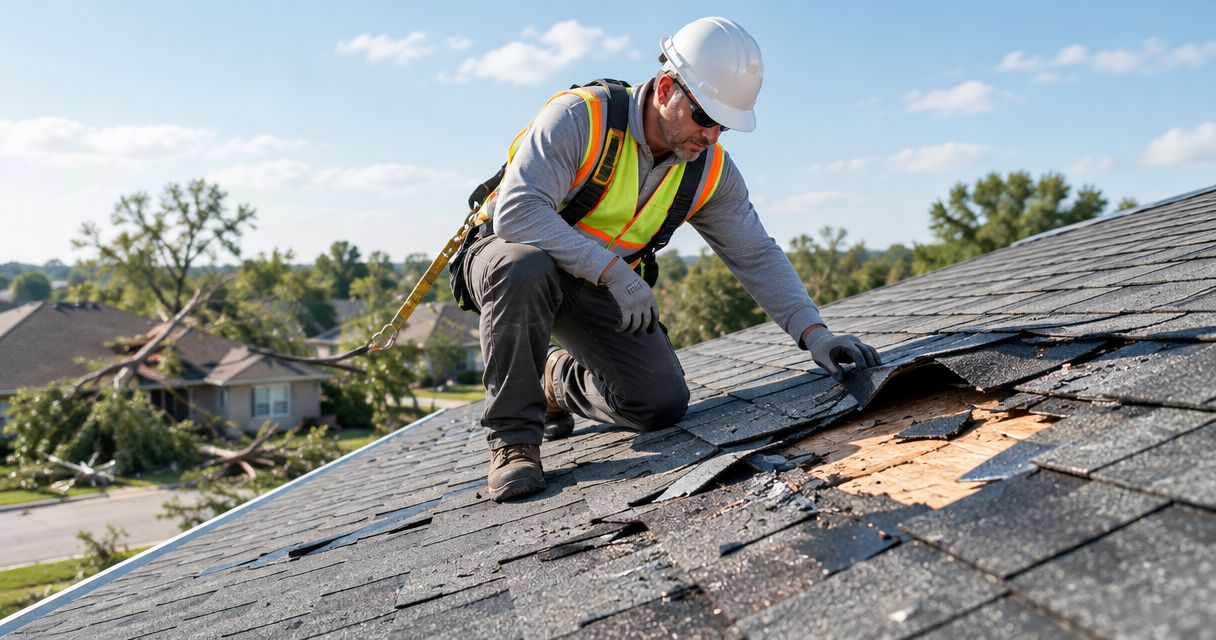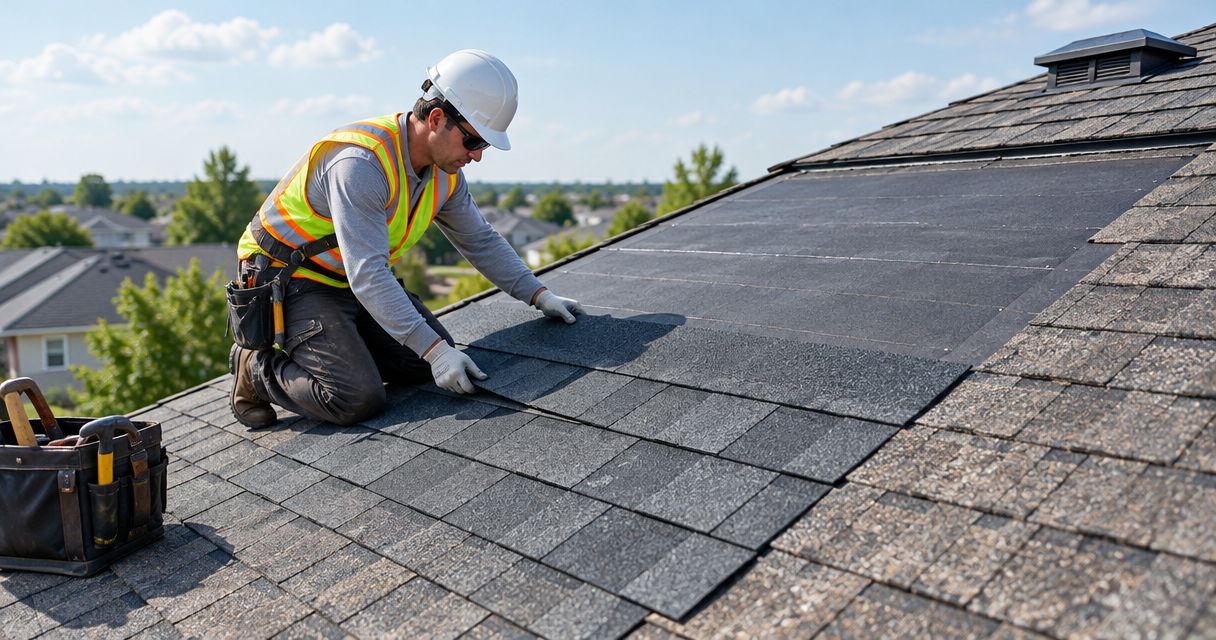
Yes, you can do a partial roof replacement when damage is limited to a defined section and the remaining roof is in serviceable condition. The contractor must be able to connect the new roofing to the existing system without compromising water protection. Partial replacement leaves the untouched roof at its current age, so it does not reset the condition or warranty of the entire roof.
- Can you do a partial roof replacement? Yes, when the remaining roof and new-to-old connections support it.
- Partial roof replacement suits isolated section damage; widespread deterioration supports evaluating a full roof replacement.
- Murray Roofing provides roof inspections for Lincoln and Omaha homeowners and commercial property owners.
- Get the replacement boundary, material compatibility, and warranty exclusions in writing before approving work.
Why this matters
A leak in one room does not prove that only the roof directly above it needs work. Water can travel before it becomes visible indoors, and surface damage does not reveal every problem underneath.
For Lincoln and Omaha property owners making a roofing decision in 2026, the goal is to preserve useful roofing without paying to reconnect new materials to a failing system. Start with the distinction between repairing a roof and replacing it completely, then ask what the inspection supports on your property.
Can you do a partial roof replacement instead of a full one?
A partial roof replacement is appropriate only when the section you retain can function with the section you replace. That means checking the covering, underlying materials, drainage, and connections—not simply choosing a smaller area on an estimate.
| Approach | Best for | Main advantage | Main limitation |
|---|---|---|---|
| Roof repair | A localized defect with sound surrounding roofing | Addresses the specific failure without replacing a larger section | Does not resolve deterioration elsewhere |
| Partial roof replacement | A defined damaged section with serviceable roofing elsewhere | Preserves roof sections that still function | Requires compatible connections and leaves mixed roof ages |
| Full roof replacement | Widespread deterioration or problems affecting the overall system | Allows coordinated replacement across the roof | Removes more material and involves a larger project scope |
These are inspection-based choices, not interchangeable packages. Ask the contractor to explain why the smaller scope is sufficient—or why it would leave an unresolved problem.
What counts as a partial replacement?
A partial replacement removes and replaces a defined portion of the roofing system. On a sloped roof, that might mean an entire roof plane, such as the rear slope, rather than scattered individual shingles.
A repair addresses a more localized defect, such as damaged flashing around a penetration. Ask the estimate to describe the actual work rather than relying on the label alone; contractors do not always use “repair” and “partial replacement” identically.
When a partial roof replacement makes sense
Partial replacement deserves consideration when the damage has a clear boundary. Examples include damage confined to a distinct slope or a separate roof section whose condition differs from the rest of the building.
The inspection should establish these conditions:
- Sound remaining roofing: The retained area has no unresolved deterioration that undermines the proposed work.
- Compatible materials: The new covering and connection details suit the existing system.
- A workable boundary: The contractor can explain where replacement stops and how that edge sheds water.
- Manageable underlying damage: The scope addresses damaged decking or other affected materials beneath the covering.
- Clear limitations: You understand the appearance differences, remaining maintenance needs, and warranty boundaries.
A smaller project is not automatically a better project. Choose partial replacement because the retained roof is worth keeping, not because the damaged area looks small from the ground.
For your 2026 inspection, request photographs of both the damaged section and the areas proposed for retention. A recommendation to keep roofing needs support just as much as a recommendation to remove it.
When full roof replacement is the stronger choice
Full replacement deserves serious consideration when deterioration extends across the roof, leaks involve multiple areas, or existing materials cannot accept reliable connections. Repeated isolated repairs also warrant a broader inspection rather than another assumption that the newest leak is the only problem.
Age provides context, but condition determines the scope. A newer roof can have installation defects, while an older section requires an assessment of its actual condition rather than an automatic rejection based only on its installation date.
Look beyond the visible covering. Damaged decking, drainage problems, and moisture beneath a commercial roof membrane can change what needs replacement.
Ask the contractor to identify which findings require full replacement and which are preferences. A uniform appearance is a different reason from widespread material failure, and the written recommendation should distinguish them.
Why partial roof replacement suitability varies
The feasibility of partial replacement depends on how the existing roof works as a system. These factors explain why similar-looking damage can lead to different recommendations:
- Remaining roof condition: Cracked, brittle, loose, or deteriorated materials complicate connections and leave existing problems in place.
- Material compatibility: Matching color alone does not establish that materials fit or function together.
- Roof layout: Valleys, intersections, penetrations, and shared drainage influence where work can stop.
- Hidden moisture or deck damage: Damage beneath the covering can extend beyond what is visible at the surface.
- Installation requirements: Manufacturer instructions and applicable local requirements affect acceptable details and scope.
- Warranty terms: Existing coverage and proposed new coverage require separate review before work begins.
For a Lincoln or Omaha project in 2026, have the contractor confirm the requirements that apply to your property. Do not treat a neighbor's replacement scope as evidence that the same approach fits your roof.
What should happen before you approve a partial replacement?
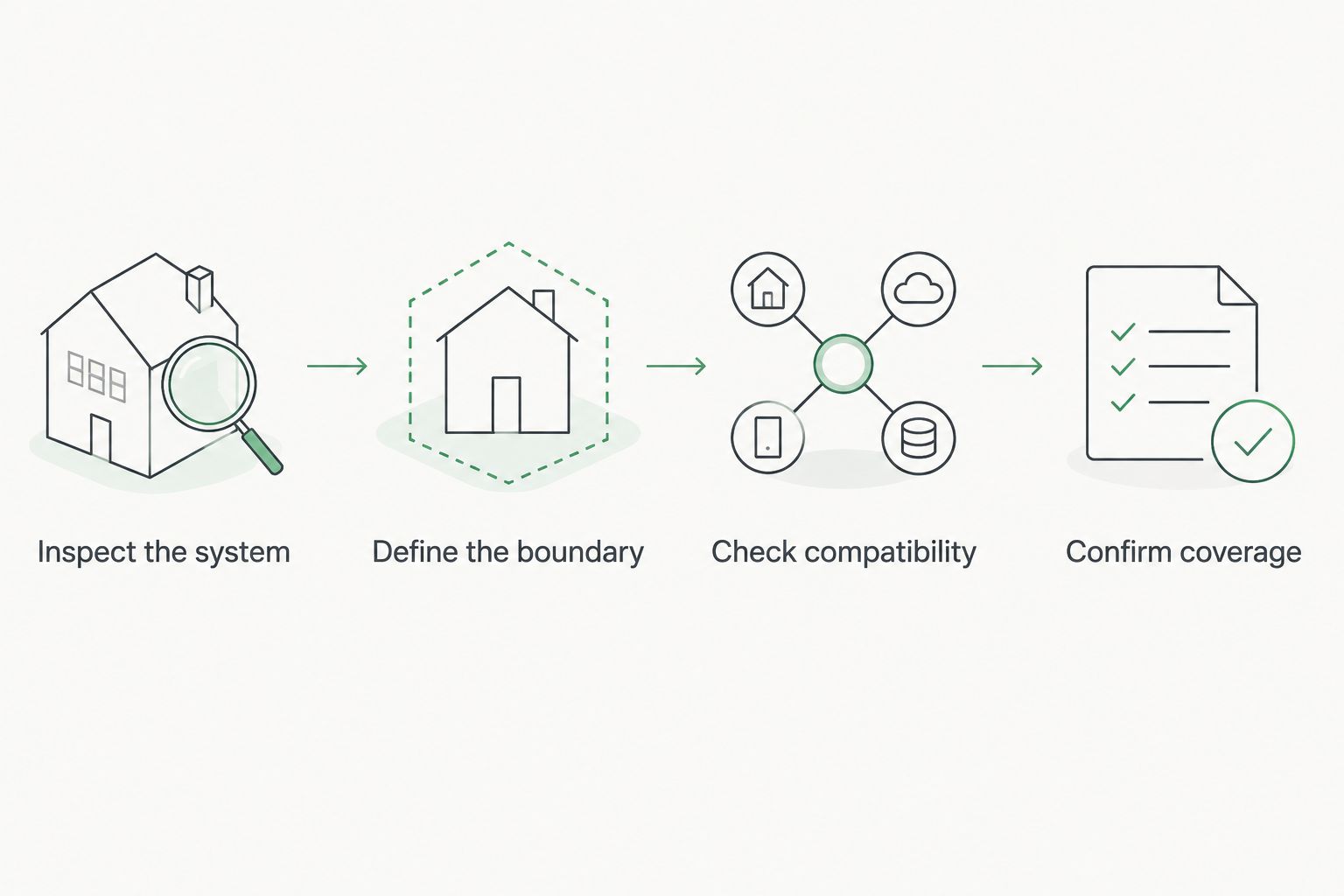
A useful proposal connects the inspection findings to a defined scope. Follow this sequence before authorizing the work:
- Inspect the system. Have a qualified contractor examine the damaged area, surrounding roofing, and accessible underlying conditions. Stay off the roof yourself.
- Define the boundary. Request a marked photograph or drawing showing what stays and what goes, including connection points.
- Check compatibility. Ask how the proposed materials connect to the existing roof and which installation requirements apply.
- Confirm coverage. Obtain written warranty terms, exclusions, and a process for approving additional work if concealed damage appears.
The proposal should also explain debris removal, property protection, and the contractor's plan for keeping exposed areas protected during the project. These details belong in the scope even when the replacement area is limited.
Can you replace only one side of a shingle roof?
Yes, replacing one roof slope is possible when the remaining slopes are serviceable and the new roofing can connect correctly at the boundaries. The contractor needs to assess ridge details, adjoining valleys, and any other shared components.
Expect to discuss appearance separately from performance. New shingles can look different from weathered shingles even when the selected color is similar; ask to review the proposed material before approval.
The retained side also keeps its existing condition. Request a maintenance plan for that section rather than treating the whole house as newly roofed.
Can you partially replace a commercial flat roof?
Yes, partial replacement of a commercial low-slope roof is possible when inspection supports a distinct replacement area and compatible connections. Moisture extent, insulation condition, drainage, and the existing membrane affect that decision.
For offices, apartments, shops, warehouses, and other commercial properties, a lease boundary or interior room boundary does not establish a roofing boundary. Shared drainage and continuous roofing materials require a building-level assessment.
Ask whether moisture investigation beyond a visual inspection is appropriate. Also establish who authorizes concealed-damage work and how the contractor will coordinate access and occupant protection.
Will insurance pay for a partial or full replacement?
Insurance payment depends on the policy, cause of damage, exclusions, and the insurer's claim decision. A contractor's recommendation explains the roofing work; it does not guarantee what an insurer will pay.
For a 2026 storm claim, keep inspection photographs, the proposed scope, and communications about the damaged areas. Ask your insurer how the policy treats matching, depreciation, deductibles, and damage discovered after removal.
Do not authorize a partial replacement solely because an initial claim document names a limited area. First resolve whether that scope addresses the documented damage and how any additional findings will be handled.
What happens to your roof warranty?
Partial replacement does not automatically provide whole-roof coverage. Obtain written confirmation identifying the new work, retained materials, connection details, and exclusions.
Murray Roofing's listed warranty offerings include a 50-year Golden Pledge warranty and a 10-year labor warranty. Do not assume either applies to a proposed partial replacement; ask which coverage the specific project qualifies for and request the applicable documents.
Review existing coverage before authorizing alterations as well. Material coverage, workmanship coverage, and coverage for retained sections are separate questions, even when they appear in the same project conversation.
What should you ask the contractor before signing?
Use the estimate discussion to test the recommendation, not just confirm the replacement area. These questions help separate an inspection-based scope from an incomplete proposal:
- What evidence shows that the remaining roof is serviceable?
- Where does the replacement stop, and why is that boundary appropriate?
- Which flashing and underlying materials are included?
- How will concealed damage be documented and approved?
- What appearance differences should I expect?
- What maintenance will the retained section still need?
- Which warranty covers the connection between old and new materials?
For your 2026 proposal, request written answers to any question that changes the scope or your responsibilities. Verbal reassurance is not a substitute for a clear contract.
FAQ
Can you do a partial roof replacement instead of replacing everything?
Yes, you can do a partial roof replacement when damage is confined to a defined section and the remaining roof is serviceable. A contractor must verify material compatibility, connection details, and underlying conditions before recommending it.
Is a partial roof replacement the same as a roof repair?
No, a partial roof replacement replaces a defined roof section, while a repair addresses a localized defect. Ask the proposal to identify the materials and area included rather than relying on the project label.
Can I replace the back of my roof and leave the front?
Yes, replacing the back slope while retaining the front is possible when the inspection supports that boundary. The retained roof must remain serviceable, and shared ridge or valley details need proper treatment.
Will new shingles match the old roof?
New shingles are not guaranteed to match weathered roofing. Review the proposed material and discuss visible differences before approving a partial replacement.
Does partial replacement give my whole roof a new warranty?
No, partial replacement does not automatically give the entire roof a new warranty. Obtain written terms showing which materials, workmanship, and connections are covered and which existing sections are excluded.
Will homeowners insurance require a full roof replacement?
A full replacement requirement depends on the policy, documented damage, and the insurer’s decision. Ask for a written explanation of the approved scope; neither a partial nor a full replacement guarantees coverage.
Can a commercial building replace only one roof section?
Yes, a commercial building can replace a defined roof section when moisture conditions, drainage, materials, and connection details support it. Interior tenant boundaries alone do not establish suitable replacement boundaries.
One last thing
The most useful question is not just “Can this section be replaced?” Ask, “What condition will the rest of the roof be in after this work?” A technically workable partial replacement still leaves you responsible for the roofing that stays.
Murray Roofing is a fit for Lincoln and Omaha property owners seeking roof inspection, repair, and replacement services. Schedule a free inspection through the contact page and request a written scope and price based on your roof's condition.
Related guides
- Can you file an insurance claim for an old roof?
- Roof warranty types compared for homeowners
- Is it worth repairing an aging flat roof?