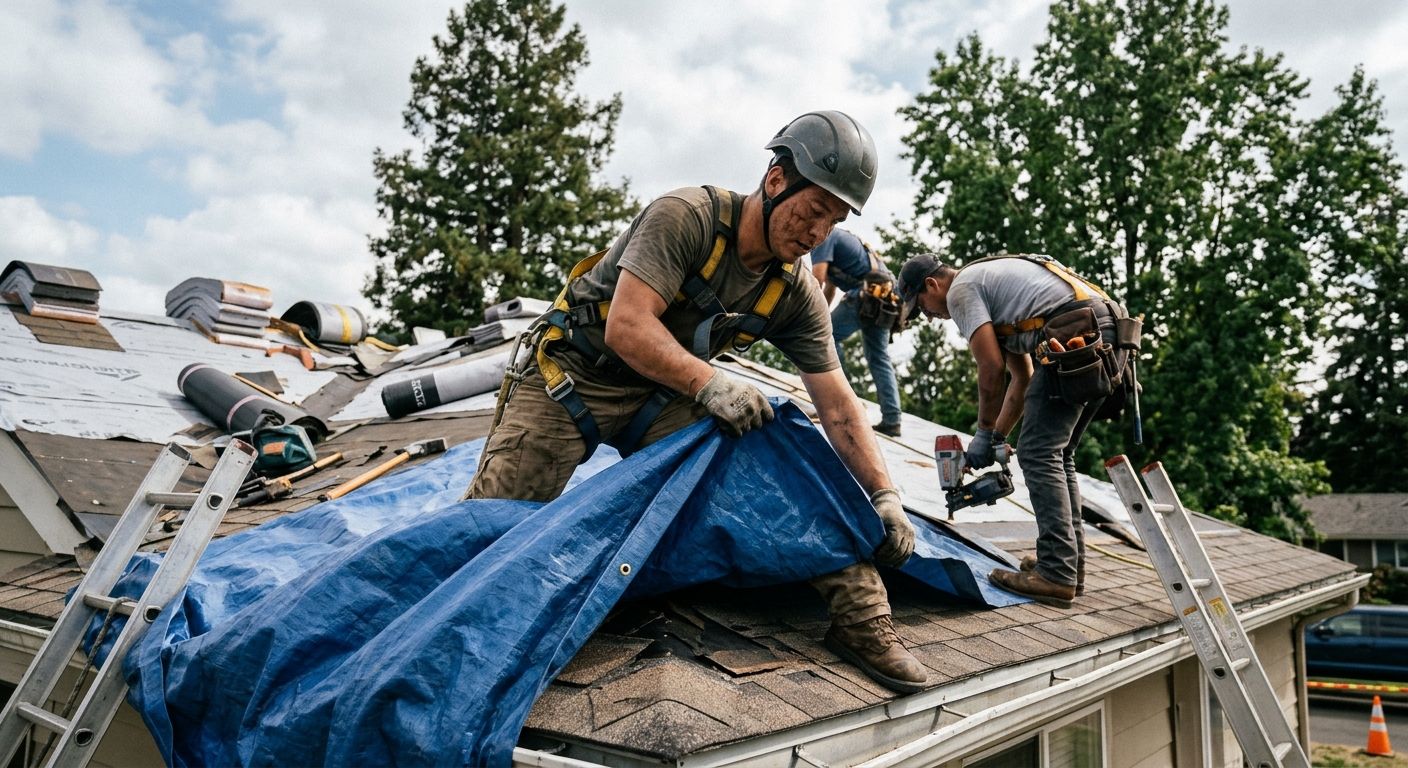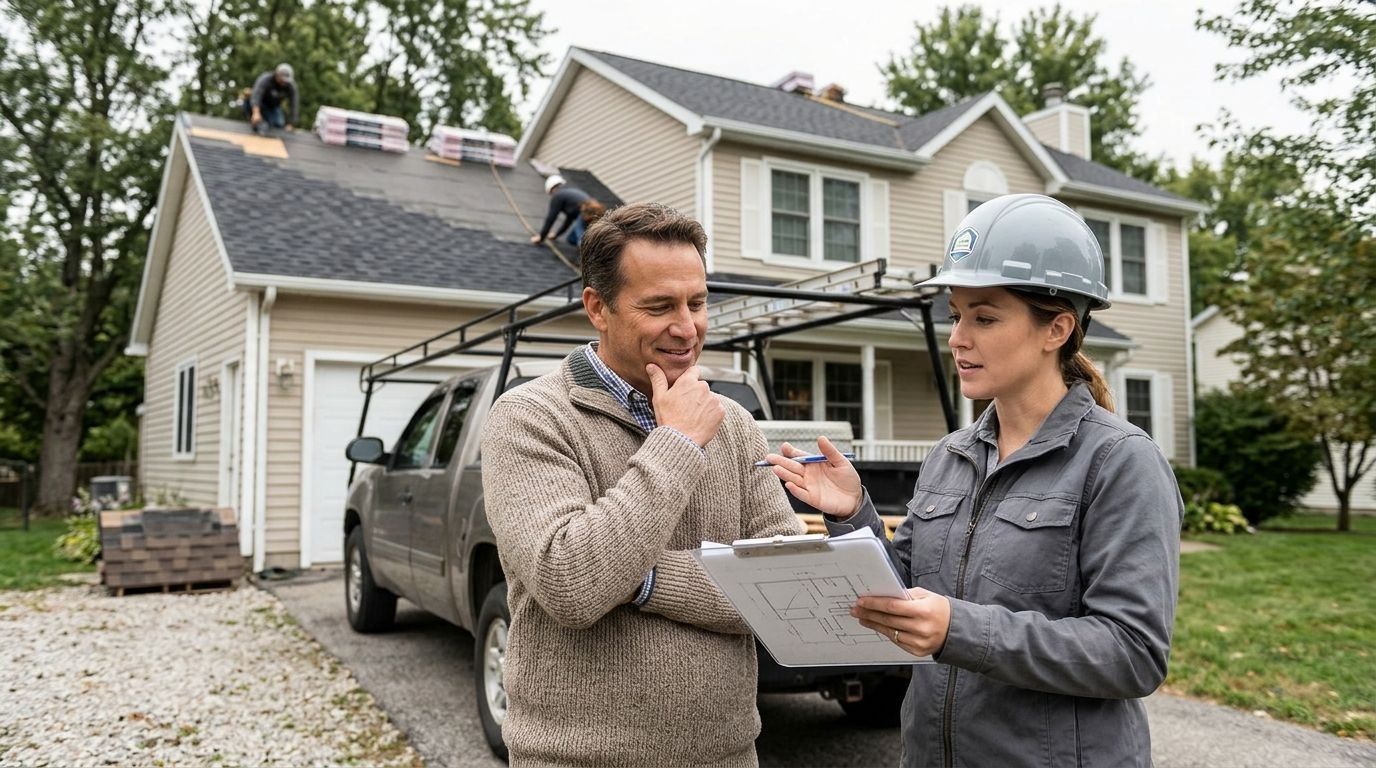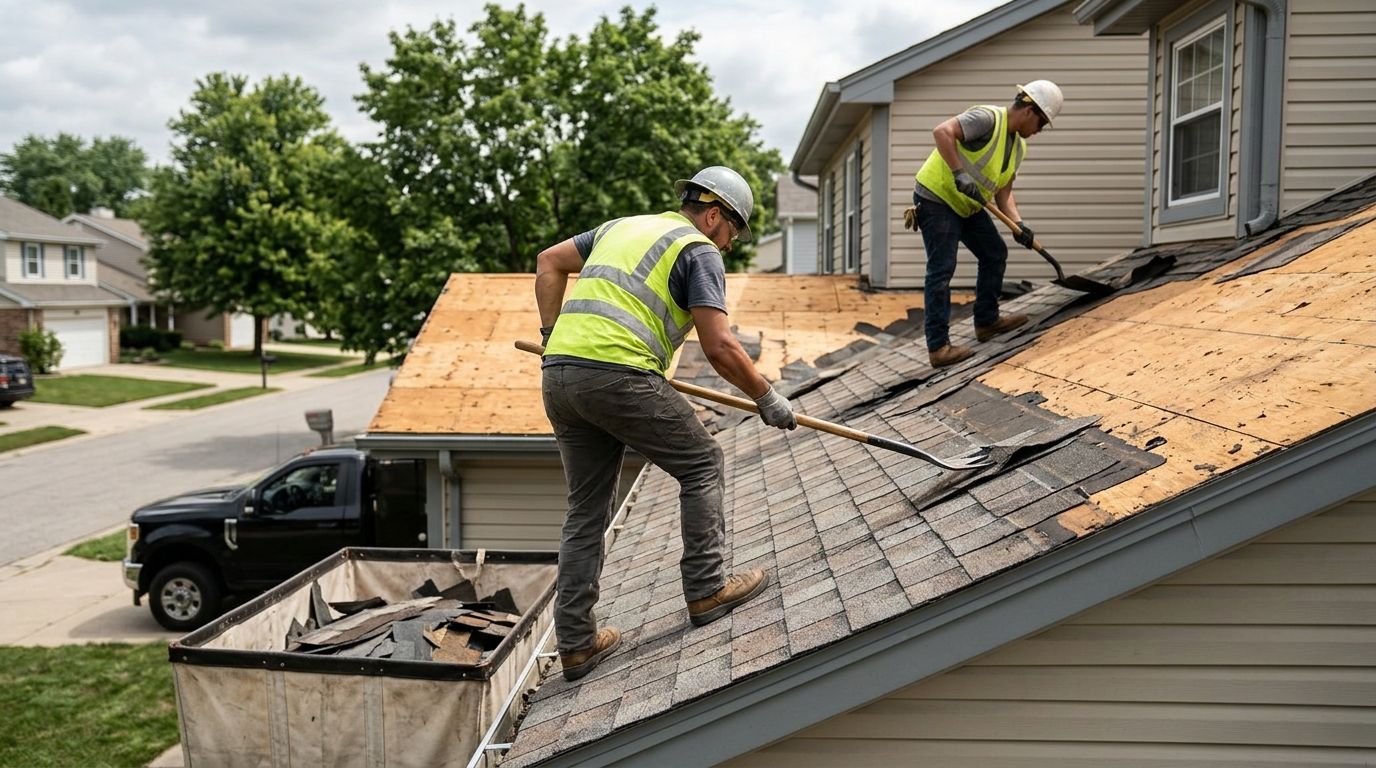
The cost to remove an old roof before replacement depends on the roof area, existing layers, material, access, and disposal requirements, so you need an itemized inspection-based quote rather than a flat allowance. For a 2026 replacement, confirm whether that quote includes hauling debris, protecting the property, and repairing damaged roof decking—the wood surface beneath the roofing.
- The cost to remove an old roof before replacement needs a written scope covering removal, hauling, disposal, and cleanup.
- Murray Roofing provides roof replacement inspections for homeowners and commercial property owners in Lincoln and Omaha.
- Decking repairs are separate from stripping away old roofing; require written approval for additional work.
- Compare roof replacement estimates by included work, not just the final total.
Why this matters
An estimate that says only roof replacement leaves a basic question unanswered: what happens to the old roof? Removing the existing covering, loading debris, hauling it away, and preparing the exposed surface are distinct tasks. Your contract should explain which tasks the replacement includes.
For local project context, start with the roof replacement cost guide for Lincoln, then compare the actual removal scope for your property. A useful estimate identifies both the work included and the conditions that trigger additional charges.
How much does it cost to remove an old roof before replacing it?
There is no single removal amount that fits every roof. A contractor needs to establish what must come off, how much roof surface is involved, and how debris will leave the property before giving you a project-specific quote.
Roofers commonly measure roofing in squares: 1 roofing square equals 100 square feet of roof surface. That is not the same as your home's interior floor area, because roof slopes, overhangs, and attached sections affect the measurement.
Ask for these items in your 2026 estimate, whether the contractor lists removal separately or includes it within the replacement total:
| Scope item | What the estimate should explain | What to clarify |
|---|---|---|
| Existing roofing removal | Materials and layers being stripped | Whether all existing layers are included |
| Hauling and disposal | Loading, transportation, and disposal responsibility | Whether these are included or separate |
| Property protection | Protection around landscaping, siding, and equipment | Which areas need special precautions |
| Exposed decking inspection | Assessment after the covering comes off | How findings will be documented |
| Decking repairs | Work needed to create a suitable surface | How additional work is authorized |
| Cleanup | Removal of roofing debris and fasteners | What the final cleanup covers |
A separate tear-off line makes comparison easier, but a bundled replacement estimate is not automatically incomplete. The important distinction is whether the written scope includes the same work.
Is removal included in a roof replacement estimate?
Removal is included only when the estimate says it is. Look for language such as remove existing roofing, followed by the identified material and number of layers—not simply install new roof.
Ask whether flashing, underlayment, and other existing components are being removed, retained, or replaced. These details affect the work beneath and around the new covering, so they belong in the replacement scope rather than an informal conversation.
Are damaged decking repairs part of tear-off?
Damaged decking repairs are not the same work as removing old roofing. Tear-off exposes the underlying surface; repair or replacement addresses defects found in that surface.
An inspection before removal cannot show every concealed condition. Your agreement should explain how the contractor documents hidden damage, presents the proposed repair, and obtains approval before proceeding with additional work.
Full tear-off: best for inspecting the underlying roof surface
A full tear-off removes existing roofing so the contractor can inspect the exposed surface before installing the replacement system. Its main benefit is access: concealed damage and attachment conditions are easier to evaluate once the covering is gone.
The trade-off is additional removal work, debris, and site activity compared with leaving an eligible existing covering in place. For occupied homes and commercial buildings, discuss how the contractor will protect entrances and keep the exposed work area protected from weather.
Choose the scope based on the roof's condition and replacement requirements, not solely on avoiding removal. A written inspection assessment should support the recommendation.
Roof recovery: best for eligible existing roof assemblies
A roof recovery installs a new covering over an existing roof rather than removing the entire existing assembly. It is an option only when the existing roof, applicable requirements, and proposed system allow it.
The benefit is reduced tear-off work. The limitation is that retained materials remain beneath the new covering, and recovery does not provide the same exposed-surface inspection as full removal. Do not treat it as a shortcut around unresolved moisture or structural problems.
| Approach | Best for | Main benefit | Main limitation |
|---|---|---|---|
| Full tear-off | Projects needing exposed-surface inspection or removal of unsuitable materials | Gives access to the underlying roof surface | Creates more removal work and debris |
| Roof recovery | Existing assemblies confirmed suitable for recovery | Reduces removal work | Leaves existing materials in place and requires eligibility checks |
For a 2026 project in Lincoln or Omaha, ask the contractor to explain the applicable local requirements and manufacturer instructions. Do not assume a method used on a nearby building is appropriate for yours.
Why roof removal costs vary
The same replacement material does not mean the same removal job. These physical differences change the scope your contractor must price:
- Roof area: More surface means more roofing to remove, handle, and dispose of. Ask for the measured roof area rather than relying on interior square footage.
- Existing layers: Multiple coverings add material to the removal and disposal scope. Have the contractor identify the layer assumption in writing.
- Existing material: Different roofing materials require different removal and handling methods. Confirm what is actually installed rather than relying only on an old listing or invoice.
- Slope and access: Steep sections, building height, narrow access, and limited staging space affect how crews reach the roof and move debris safely.
- Disposal requirements: The removal plan needs to account for how debris is collected, transported, and accepted for disposal.
- Underlying condition: Damaged decking or unsuitable underlying materials add work beyond stripping the visible roof covering. Separate confirmed repairs from conditions that remain concealed.
For commercial properties, add occupied entrances, rooftop equipment, delivery access, and tenant operations to the planning discussion. These concerns apply across building types; the inspection should address the actual property rather than assume every commercial roof has the same constraints.
How do you compare roof removal estimates fairly?
Use the same scope when reviewing each proposal. A shorter estimate is not necessarily a better deal, and a longer estimate is not automatically more complete.
Confirm the roof area
Ask each contractor to identify the measured area and included roof sections. Garages, additions, porch roofs, and low-slope sections should not disappear into an unexplained total.
A measurement discrepancy deserves an explanation before you compare the final amounts. Check that both proposals cover the same building surfaces.
Confirm existing materials
Have each proposal state what the contractor expects to remove. Record any uncertainty about concealed layers instead of treating an assumption as a confirmed inspection finding.
If additional layers are discovered, the contract should explain the approval process for changes. That protects you from an open-ended understanding of what removal includes.
Confirm disposal
Identify who handles debris loading, hauling, and disposal. Also ask where collection equipment will sit and which access areas need to stay clear.
For businesses, coordinate that plan with normal operations. For homes, discuss driveway access and protection of surrounding property.
Confirm repair approval
Ask how the contractor will document damaged decking or other concealed conditions. Photos and a written explanation help you understand why additional work is needed.
Require approval terms in the contract before removal begins. An allowance is not a substitute for knowing what authorizes work beyond the original scope.
Confirm cleanup
Define the expected cleanup around the building, walkways, and staging area. Ask how the contractor will address loose fasteners and remaining debris.
Compare the complete written scope before choosing the lower total. An omitted task still needs to be addressed, even when it does not appear as a separate line.
What should Lincoln and Omaha property owners ask locally?
Ask who is responsible for confirming permit requirements, arranging any required inspections, and coordinating debris containers where placement restrictions apply. Requirements depend on the jurisdiction and project; an address-specific answer is more useful than a general statement about Nebraska roofing.
Your 2026 plan should also explain weather protection during removal. Request the contractor's approach to exposed sections and changing conditions without treating a proposed schedule as a guarantee.
Murray Roofing is best for Lincoln and Omaha property owners seeking roof inspection, replacement, and financing from a roofing contractor. Murray Roofing provides residential and commercial roofing services, including free inspections.
Murray Roofing's roofing credentials include GAF Master Elite status, with a 50-year Golden Pledge warranty and a 10-year labor warranty among its stated trust signals. Ask which warranty applies to the proposed work and request its written terms; warranty duration alone does not explain coverage, eligibility, or exclusions.
Can insurance pay for removing an old roof?
Insurance payment depends on the policy, covered cause of loss, deductible, and insurer's claim decision—not simply the age of the roof. A removal line in a contractor's estimate is not proof that the insurer will pay it.
Ask the contractor to distinguish observed damage from normal aging and to document the recommended work. Keep the contractor's scope and the insurer's estimate available for comparison, and direct coverage questions to your insurer.
Can you finance removal with the replacement?
Roof removal belongs in the full project scope when you discuss financing for a replacement. Confirm whether the proposed amount addresses disposal and any approved repairs, rather than only the new roof covering.
Murray Roofing offers roofing financing. Ask for the applicable terms and approval requirements; financing does not replace the need for a clear removal scope or a written process for changes.
FAQ
What’s included in the cost to remove an old roof before replacement?
The cost to remove an old roof before replacement covers only the work identified in the estimate. Confirm existing-material removal, hauling, disposal, property protection, cleanup, and the treatment of decking repairs.
How do roofers measure the amount of roofing to remove?
Roofers commonly use roofing squares, with 1 roofing square equal to 100 square feet of roof surface. Interior floor area is not a substitute for a roof measurement.
Will I pay separately to dispose of old shingles?
You pay separately for disposal only if the agreement treats it as a separate charge. Ask whether loading, hauling, and disposal are included in the replacement scope.
Is removing the old roof better than installing over it?
Full removal is better for inspecting the exposed underlying roof surface. Installing over an existing roof requires confirmation that the assembly, local requirements, and proposed system allow recovery.
Can a roofer know every decking repair before removing the roof?
A roofer cannot inspect every concealed decking condition before removing the covering. Require documentation and written approval terms for additional repairs discovered during tear-off.
Does homeowners insurance automatically cover roof tear-off?
Homeowners insurance does not automatically cover roof tear-off. Payment depends on the policy, covered damage, deductible, and insurer’s decision.
Does Murray Roofing offer inspections before roof replacement?
Murray Roofing offers free roof inspections for residential and commercial properties. Use the inspection to clarify removal needs, replacement scope, and any conditions requiring further evaluation.
One last thing
Ask what happens after the old roof is removed but before the new roof goes on. The answer should cover inspection of the exposed surface, approval of necessary repairs, and protection from weather—not just disposal of the old material.
Before signing a 2026 replacement agreement, request those details in writing. They make the transition between removal and installation easier to understand and manage.
Related guides
Schedule your roof inspection
Get a property-specific assessment of removal needs and the scope of your roof replacement.