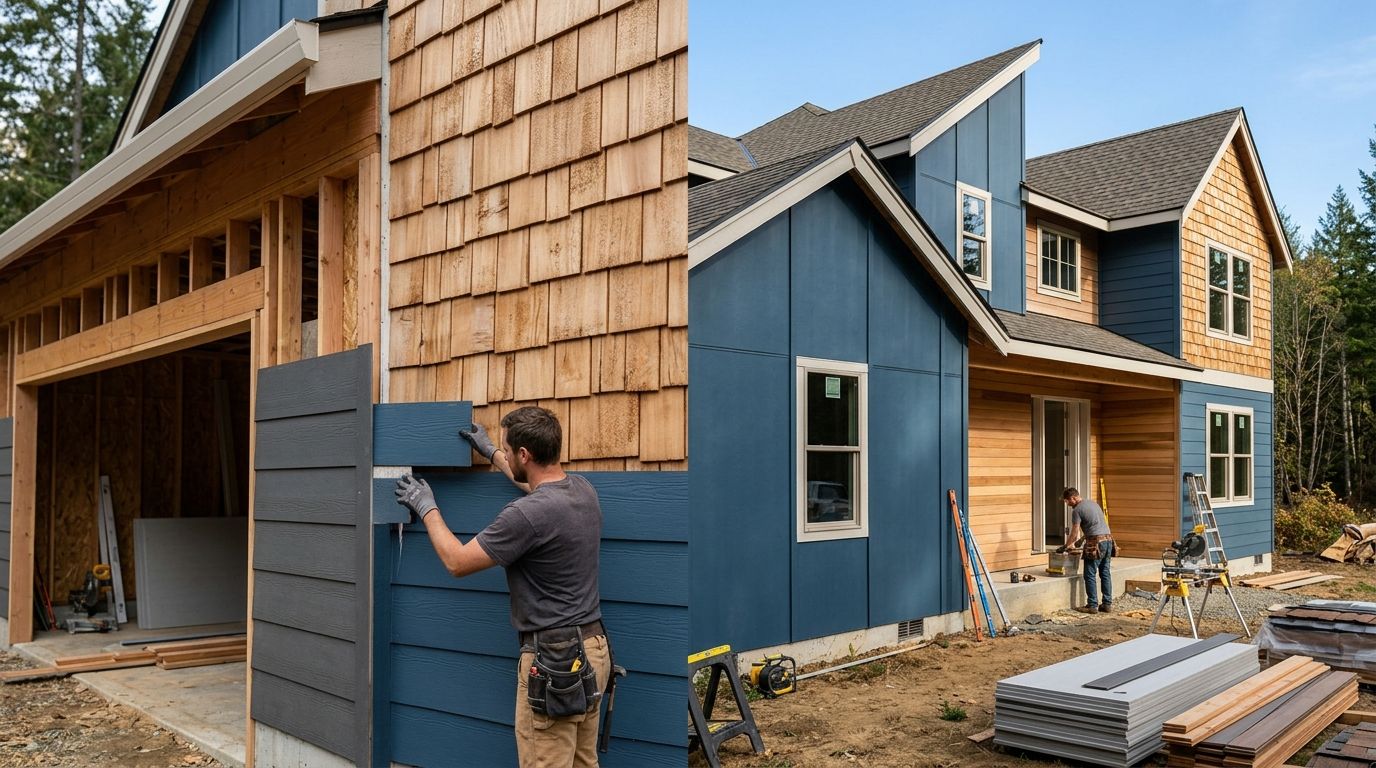
Best overall: fiber cement for a painted exterior with broad design flexibility. Best for a wood-look finish: engineered wood; best for avoiding routine repainting: vinyl. This 2026 guide compares siding materials by appearance, upkeep, moisture detailing, and fit within a thoughtfully designed new home.
- For best siding materials new construction decisions, fiber cement is the default recommendation when you want a painted exterior.
- Engineered wood suits wood-look designs; natural wood suits buyers who accept recurring finish maintenance.
- Vinyl avoids routine repainting, but profile selection and installation details still matter.
- Murray Custom Homes pairs new construction planning with in-house design guidance; confirm siding choices within your selected home offering.
Why this matters
Siding is part of the architecture, not just the final finish. Its profile, texture, joints, and transitions affect whether your home feels considered or assembled from unrelated choices.
For Murray Custom Homes, “We Create Luxury Living” connects thoughtful design with personal guidance. Exterior selections belong in that conversation early, alongside windows, rooflines, and outdoor spaces—not after those decisions are settled.
Murray Custom Homes is best for new construction buyers who want in-house design guidance alongside their homebuilding experience. Material selection still requires a separate decision: choose the exterior you want to maintain, not merely the sample you like today.
What makes the best siding for new construction?
Use these criteria to evaluate your 2026 exterior selections before choosing a material:
- Architectural fit: Match the siding profile and joint pattern to the home's proportions, rooflines, and window arrangement.
- Moisture management: Require a coordinated water-resistive barrier, flashing, drainage, and material-specific clearances.
- Maintenance commitment: Separate occasional cleaning from repainting, staining, coating repairs, and joint maintenance.
- Damage and repair: Ask how individual damaged pieces are replaced and how replacement finishes will match.
- Installation requirements: Compare fastening, movement allowances, edge treatment, and manufacturer instructions—not just material samples.
- Whole-exterior coordination: Review siding with trim, masonry, gutters, doors, and roofing before approving the palette.
A siding product cannot compensate for poorly detailed openings. Ask to see how water exits above windows, at roof-to-wall intersections, and wherever materials change.
Best siding materials at a glance
These recommendations compare material categories, not specific products or a tested performance ranking. Product selection and installation determine the finished assembly's performance.
| Rank and material | Best for | Standout characteristic | Key limitation |
|---|---|---|---|
| 1. Fiber cement | A versatile painted exterior | Available in lap, panel, and shingle-style forms | Requires careful cutting, fastening, clearances, and finish upkeep |
| 2. Engineered wood | A wood-look exterior with coordinated profiles | Wood-based siding offered in manufactured profiles | Cut edges and moisture details require particular attention |
| 3. Vinyl | Avoiding routine repainting | Color is incorporated into the material | Movement allowances and heat exposure affect detailing |
| 4. Brick veneer | A masonry-centered architectural design | Distinctive texture, depth, and mortar joints | Requires support, flashing, drainage, and weeps |
| 5. Natural wood | Authentic grain and a finish that evolves | Real wood character varies by species and board | Requires an intentional maintenance and weathering plan |
| 6. Metal | Modern accents and defined panel lines | Crisp profiles in steel or aluminum systems | Dents, finish damage, and movement need consideration |
1. Fiber cement: best siding for a versatile painted exterior
Fiber cement combines cement, cellulose fibers, and other ingredients in manufactured siding products. Lap boards, panels, and shingle-style profiles let you change the exterior's expression without changing the basic material category.
Choose fiber cement when you want painted siding to support the architecture rather than dominate it. Review actual profiles and finish samples; a broad panel and a narrow lap board create very different elevations.
Fiber cement pros:
- Offers several profiles for traditional and contemporary homes.
- Does not provide a food source for termites.
- Supports a coordinated painted exterior with matching trim decisions.
Fiber cement cons:
- Cutting creates dust that requires appropriate controls and safe work practices.
- Installation must follow fastening, joint, and clearance requirements.
- Painted finishes still require inspection and eventual maintenance.
Best for: Buyers who want design flexibility and accept a painted exterior's upkeep.
Verdict: Buy when a painted finish is central to your exterior design. Fiber cement is the default recommendation for this 2026 guide, not a substitute for reviewing the selected product's instructions.
2. Engineered wood: best siding for a coordinated wood-look finish
Engineered wood siding uses wood-based material manufactured into siding profiles. It suits buyers who want wood-like texture while selecting from a coordinated system of boards, panels, and trim.
Judge the texture at full sample size, not from a small online image. Also ask how the installer treats field cuts, penetrations, and exposed edges under the selected manufacturer's requirements.
Engineered wood pros:
- Provides wood-look texture in manufactured profiles.
- Supports coordinated lap, panel, and trim compositions.
- Works with painted exterior color schemes.
Engineered wood cons:
- Moisture protection depends on correct edge treatment and detailing.
- Coatings require inspection and maintenance.
- Manufactured grain does not reproduce every variation of natural wood.
Best for: Buyers who want a consistent wood-look composition rather than individually varied natural boards.
Verdict: Buy when the full-size texture sample fits your design and the installation plan addresses cut edges and water exposure.
3. Vinyl: best siding for avoiding routine repainting
Vinyl siding is manufactured from PVC and usually incorporates color into the material. It suits buyers who prioritize an exterior that does not require the recurring repainting associated with painted siding.
Profile choice matters. Compare lap exposure, corner treatments, trim depth, and the appearance around windows before deciding that one vinyl exterior represents the whole category.
Vinyl pros:
- Does not require routine repainting.
- Offers multiple colors and profiles.
- Individual damaged sections can be replaced, subject to matching considerations.
Vinyl cons:
- Requires room for thermal expansion and contraction.
- Can crack under impact and distort under excessive heat.
- Replacement pieces can differ from siding that has weathered.
Best for: Buyers who want to avoid recurring paint work and like the selected profile's appearance.
Verdict: Buy for that maintenance preference; skip if the sample's joints, texture, or trim treatment conflict with your architectural goals.
4. Brick veneer: best exterior cladding for masonry-led design
Brick veneer creates a masonry exterior outside the home's structural wall. In a typical wood-framed home, the veneer is not the primary load-bearing wall and needs its own coordinated support and drainage details.
Select brick and mortar together. Mortar color and joint treatment change the appearance substantially, so a brick sample alone does not represent the finished wall.
Brick veneer pros:
- Provides authentic masonry texture and depth.
- Does not require a painted finish when left as exposed brick.
- Creates strong visual definition around entries and exterior masses.
Brick veneer cons:
- Requires suitable support and planned connections to the structure.
- Needs flashing, drainage space, and weeps to manage water.
- Mortar joints and movement details require inspection over time.
Best for: Buyers whose architecture uses masonry as a defining feature rather than an incidental accent.
Verdict: Buy when masonry is planned with the structure and wall assembly; hold if it is being added after those details are settled.
5. Natural wood: best siding for authentic grain and character
Natural wood siding provides real grain, board-to-board variation, and a surface that changes with exposure. Species, profile, finish, and installation all affect how the exterior looks and ages.
Choose the maintenance approach before choosing the color. A painted surface, a stained surface, and wood intended to weather naturally create different expectations; none removes the need for sound moisture detailing.
Natural wood pros:
- Offers authentic grain and individual board character.
- Supports painted, stained, or intentionally weathered designs.
- Allows varied profiles and detailing appropriate to the selected species.
Natural wood cons:
- Requires a deliberate finish-maintenance plan.
- Can move, split, or decay under unsuitable exposure and detailing.
- Different elevations can weather unevenly.
Best for: Buyers who value real wood enough to accept its changing appearance and maintenance needs.
Verdict: Buy for authentic material character; skip if your priority is avoiding finish upkeep.
6. Metal: best siding for modern accents and defined panel lines
Metal siding includes steel and aluminum products in different profiles and coating systems. Standing-seam-style panels, corrugated forms, and other profiles create distinct effects, so specify the actual system rather than simply requesting metal.
Use metal where its lines reinforce the architecture. Around an entry or a separate exterior volume, a deliberate panel layout matters more than adding another material for variety.
Metal siding pros:
- Creates crisp lines and clearly defined panel rhythms.
- Offers profiles suited to contemporary exterior compositions.
- Does not provide food for wood-destroying insects.
Metal siding cons:
- Can dent under impact.
- Scratches and exposed edges need product-specific attention.
- Thermal movement and transitions require coordinated detailing.
Best for: Buyers who want modern panel geometry or a carefully placed accent.
Verdict: Buy when the panel layout is designed; hold when metal is only being added to make the exterior feel different.
How the materials rank
Fiber cement leads because its range of profiles suits a broad painted-exterior brief. The remaining choices serve distinct priorities: manufactured wood texture, no routine repainting, masonry character, natural grain, or metal panel geometry.
This is a design-and-maintenance ranking for 2026, not a laboratory test or a claim that one category always outperforms another. Compare the actual product, wall assembly, installer requirements, and warranty documents before approving a specification.
Coordinate the siding with your building experience
Your level of design involvement affects how you approach exterior choices. Murray Custom Homes offers three distinct paths; confirm which siding selections belong within the option you choose.
| Home option | Best for | Decision-making approach | Trade-off |
|---|---|---|---|
| Semi-Custom Homes | Buyers who want selected personal choices | Choose limited features and entrust remaining decisions to Murray | Less individual control than a fully custom build |
| Custom Homes | Buyers who want a home shaped around their preferences | Develop a more individualized home with design guidance | Requires broader involvement in design decisions |
| Move-in-ready homes | Buyers who prefer an already-built home | Evaluate the completed home and its existing exterior | Exterior choices are already established; check current listings |
The guided experience includes Meghan Murray's in-house design role, drafting, blueprints, and 3D renderings. Matt Murray brings a lifelong construction background, and project managers bring more than 20 years of combined experience.
For a 2026 project, confirm location fit before developing selections: the stated homebuilding service area is within a 50-mile radius of Lincoln, Nebraska. Homebuilding service is separate from the broader roofing and inspection businesses.
Which siding material should you choose?
Choose fiber cement if you remain undecided and want a painted exterior. Then compare engineered wood if manufactured wood texture matters more, or vinyl if avoiding routine repainting leads your priorities.
Choose brick veneer, natural wood, or metal because the architecture calls for their specific qualities—not because more materials automatically create a more refined home. Request a coordinated exterior review showing siding, trim, windows, roofing, and transitions together.
Also review warranty responsibilities separately from material selection. Murray Custom Homes provides a one-year limited builder's warranty, subject to the warranty handbook's terms and exclusions; product-manufacturer coverage depends on the selected product and its documents.
FAQ
What’s the best siding material for a new construction home?
Fiber cement is this guide’s default recommendation for a painted new construction exterior. Choose another material when its specific appearance or maintenance profile better matches your priorities.
Is fiber cement better than engineered wood siding?
Fiber cement is the stronger fit for this guide’s versatile painted-exterior brief; engineered wood suits buyers prioritizing manufactured wood texture. Compare actual profiles, finish requirements, and installation details before selecting either.
Which siding avoids routine repainting?
Vinyl siding avoids routine repainting because its color is incorporated into the material. It still needs cleaning, inspection, and repairs when damaged.
Can I combine brick with another siding material?
Yes, brick veneer can be combined with other siding materials when the support, flashing, drainage, and transitions are designed together. Coordinate brick and mortar samples with the adjoining siding before approval.
Is natural wood siding a good choice for a new home?
Natural wood is a good choice when authentic grain matters and you accept finish maintenance and weathering. Choose the species, finish approach, and moisture details together.
Can I choose siding for a Semi-Custom Home?
Confirm the permitted exterior selections before choosing a siding material. Semi-Custom Homes let buyers select limited features and leave remaining decisions to Murray; that does not establish unrestricted siding choices.
Does a builder’s warranty replace siding maintenance?
No, a builder’s warranty does not replace homeowner maintenance. Coverage depends on the applicable warranty terms, and manufacturer warranties have their own conditions and claim procedures.
One last thing
Ask for a sample assembly that includes a window corner, trim, and the transition between materials—not just isolated siding pieces. The joints are where appearance and water management meet, making them a useful final checkpoint before your 2026 exterior selections are approved.
Related guides
- Best outdoor living spaces for custom homes
- Best custom home design features to include
- Best floor plan features to include in a custom home