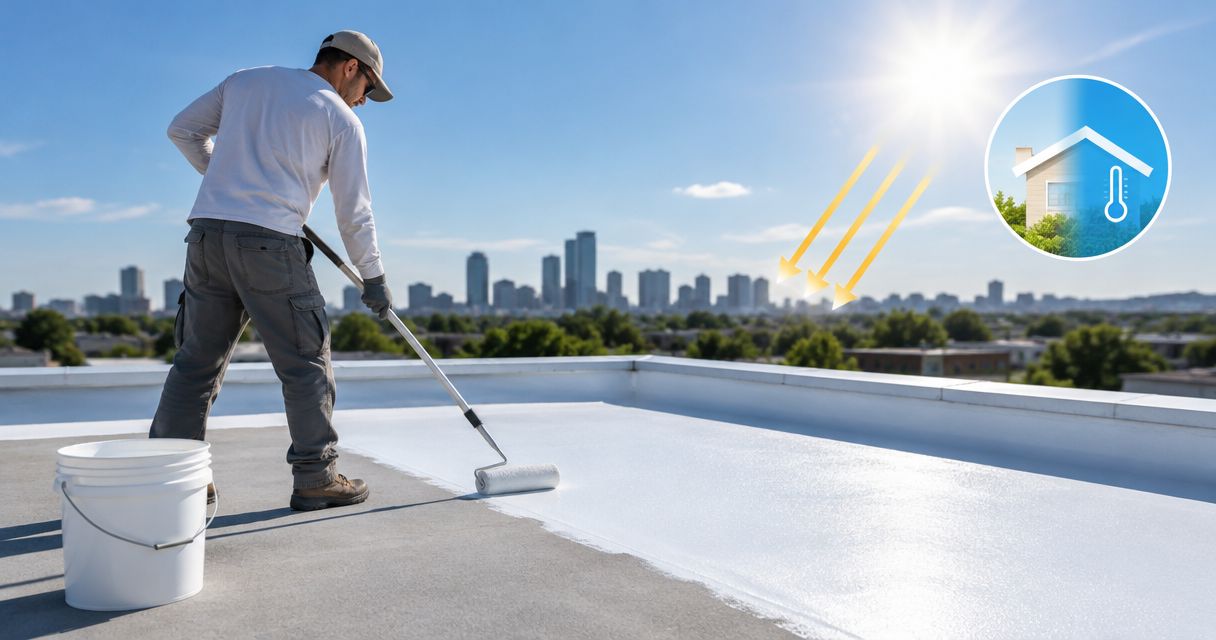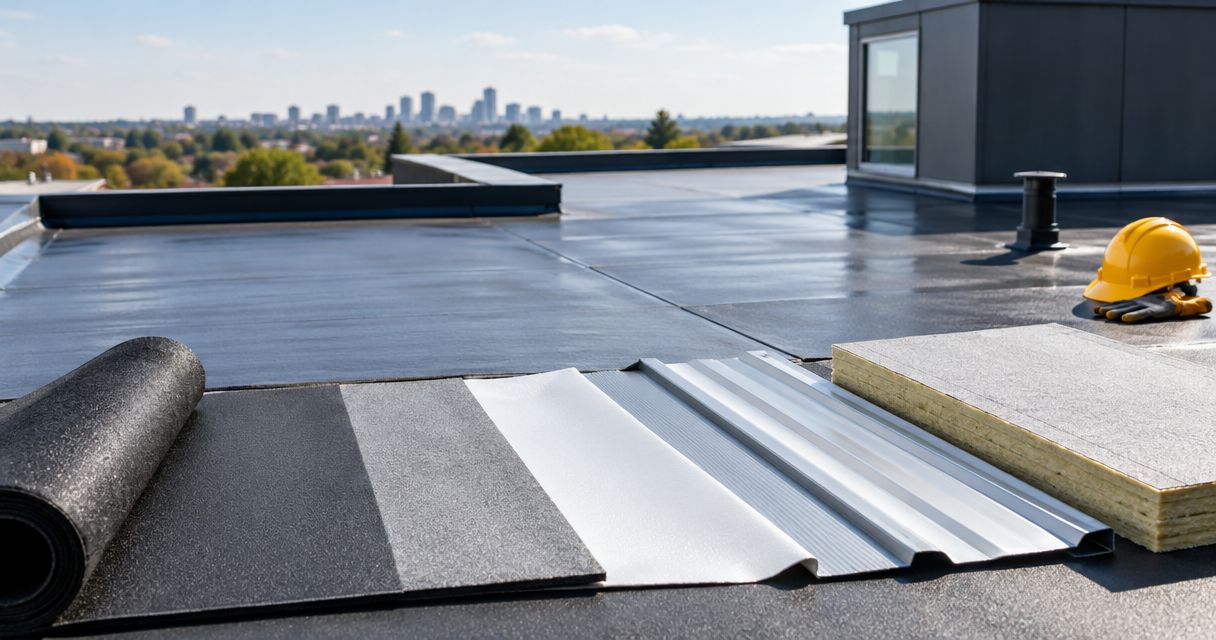
Best overall for a reflective, heat-welded membrane: TPO. Best budget candidate to quote on a simple roof: EPDM. Best for a multilayer asphalt assembly: modified bitumen. The best flat roof materials by cost in 2026 depend on the complete roof assembly—not just the membrane you choose.
- TPO leads this best flat roof materials by cost guide for reflective, heat-welded roof assemblies.
- EPDM deserves a comparison bid for simple roofs; its seams and attachment details need scrutiny.
- PVC deserves consideration where rooftop grease or chemical exposure affects membrane selection.
- Murray Inspection Services recommends comparing identical roof scopes before choosing a material.
Why this matters
A membrane-only comparison leaves out insulation, drainage, tear-off, perimeter details, and repairs beneath the existing roof. Those items belong in your decision before you compare bids. A lower total with less work included is not evidence of better value.
This 2026 guide from Murray Inspection Services ranks materials by the situations in which they deserve consideration. It does not assign a universal cheapest-to-most-expensive order: roof condition, assembly specifications, and installation requirements prevent that order from being reliable.
Choose the roof assembly that solves your building's problems, then compare equivalent bids. Material selection comes after that diagnosis, not before it.
What makes the best flat roof materials by cost?
Use these criteria to judge each option before accepting a recommendation:
- Assembly scope: Compare membrane, insulation, cover board, attachment, flashing, and removal requirements—not membrane names alone.
- Drainage compatibility: Confirm that the proposed assembly supports the drainage design rather than treating standing water as normal.
- Exposure fit: Account for sunlight, rooftop equipment, grease discharge, chemicals, and access routes.
- Installation details: Examine seams, penetrations, edges, and transitions. Each requires a specified construction detail.
- Repair approach: Ask how damage will be located and repaired, including whether the proposed repair materials suit the membrane.
- Bid transparency: Require written inclusions, exclusions, and a process for concealed damage before comparing totals.
Flat roof materials at a glance
The order below is a decision sequence, not a claim that one material always costs less than another. Each option fills a different use case in a 2026 roof comparison.
| Rank and material | Best for | Standout feature | Main cost question | Key limitation |
|---|---|---|---|---|
| 1. TPO | Reflective membrane roofs | Heat-welded thermoplastic seams | What insulation, cover board, and attachment are included? | Requires careful welding and penetration detailing |
| 2. EPDM | Simple roof layouts | Flexible synthetic rubber membrane | Does the bid include all seam and flashing preparation? | Standard black EPDM absorbs sunlight |
| 3. Modified bitumen | Multilayer asphalt assemblies | Reinforced asphalt sheets | Which layers and application method are specified? | Some application methods involve heat or fumes |
| 4. PVC | Exposure-sensitive roofs | Heat-welded membrane with chemical-resistance options | Is the specified membrane suitable for the actual exposure? | Compatibility must be checked against product documentation |
| 5. Built-up roofing | Specified multi-ply asphalt systems | Multiple reinforcing and waterproofing layers | What removal, structural, and application work is required? | Assembly weight and installation logistics need attention |
1. TPO: best flat roof material for reflective assemblies
TPO is a thermoplastic single-ply roofing membrane with heat-welded seams. It is available in reflective surfaces, making it a useful starting point when you want a reflective membrane rather than an asphalt-based assembly.
Best for: Roofs where a reflective surface and welded-seam system match the building requirements. TPO takes the first slot because it provides a clear comparison baseline, not because it wins every budget.
TPO pros
- Heat welding joins membrane seams into a continuous connection.
- Reflective surface options support a roof design focused on reducing solar heat absorption.
- Sheet membrane construction avoids the multiple asphalt plies of built-up roofing.
TPO cons
- Weld quality depends on correct installation conditions and technique.
- Equipment curbs, drains, and penetrations still require detailed flashing work.
- Membrane selection alone does not establish resistance to every rooftop contaminant.
TPO cost decision: Compare the specified membrane, substrate preparation, cover board, attachment, and flashing package. A bid labeled only TPO leaves too much undefined to judge against another assembly.
Verdict: Buy when a reflective thermoplastic assembly fits the exposure and the written proposal defines its installation details.
2. EPDM: best flat roof material for simple layouts
EPDM is a synthetic rubber roofing membrane. Its flexibility makes it relevant to low-slope roof comparisons, while its seam and flashing systems differ from heat-welded thermoplastic membranes.
Best for: Relatively uncomplicated roof layouts where EPDM belongs in the budget comparison. Treat it as a candidate to quote, not an automatic lowest-cost answer.
EPDM pros
- Flexible rubber accommodates movement within the roof assembly.
- Large sheets can limit field seams when the roof layout permits.
- Compatible patching systems provide a defined approach to localized repairs.
EPDM cons
- Standard black EPDM absorbs sunlight rather than providing a reflective surface.
- Seams and flashing require the specified cleaning, preparation, and compatible materials.
- Petroleum exposure requires particular attention to membrane suitability.
EPDM cost decision: Ask whether the proposal includes every penetration, perimeter transition, and preparation step. Compare attachment methods explicitly; an adhered assembly and a ballasted assembly are not interchangeable bid scopes.
Verdict: Buy when EPDM fits the exposure and its complete installed scope compares favorably with alternatives.
3. Modified bitumen: best for multilayer asphalt assemblies
Modified bitumen uses reinforced asphalt sheets modified with polymers. Assemblies vary by product and application method, including self-adhered, cold-applied, and heat-applied systems.
Best for: Roof projects where a specified multilayer asphalt assembly suits the substrate and building requirements. Do not treat every modified bitumen proposal as the same system.
Modified bitumen pros
- Reinforcement and multiple specified layers create a defined assembly.
- Application options allow the installation method to be matched to site restrictions.
- Surfaced cap sheets provide the exposed finish of the roof system.
Modified bitumen cons
- Heat-applied methods introduce fire-safety requirements.
- Asphalt application methods can create odor or fume concerns.
- Layer configuration and substrate preparation complicate like-for-like comparisons.
Modified bitumen cost decision: Require the base layer, cap sheet, attachment method, and flashing approach in writing. If one proposal includes removal and another assumes an overlay, resolve that difference before comparing totals.
Verdict: Hold until the proposal identifies the complete assembly and confirms that its application method suits the building.
4. PVC: best for exposure-sensitive roof selection
PVC is a thermoplastic roofing membrane with heat-welded seams. Chemical resistance is a reason to consider PVC, but suitability depends on the specific membrane and the substance contacting it.
Best for: Buildings where grease discharge or another identified chemical exposure influences material selection. Product documentation—not a generic PVC label—must establish compatibility.
PVC pros
- Heat-welded seams provide a continuous membrane connection.
- Product-specific chemical-resistance information helps evaluate exposure requirements.
- Reflective surface options are available.
PVC cons
- Chemical resistance is not universal across every substance or formulation.
- Contact with incompatible materials requires separation or another specified detail.
- An exposure problem still needs source control and maintenance.
PVC cost decision: Specify the actual exposure before comparing PVC with TPO or EPDM. A proposal that omits compatibility requirements does not answer the building's central material-selection question.
Verdict: Buy when documented exposure requirements support the selected PVC product; otherwise compare simpler alternatives on equal scope.
5. Built-up roofing: best for specified multi-ply asphalt systems
Built-up roofing combines reinforcing plies with asphalt and a specified surface treatment. Its defining feature is the layered assembly rather than a single exposed membrane sheet.
Best for: Projects where the roof design specifically calls for a multi-ply asphalt system. Existing construction, structural capacity, and application logistics belong in that decision.
Built-up roofing pros
- Multiple plies form the waterproofing assembly.
- Different specified surfacing treatments accommodate different roof designs.
- The system provides an alternative to single-ply membrane construction.
Built-up roofing cons
- Assembly weight requires attention, especially when considering an overlay.
- Hot-asphalt work introduces handling, odor, and site-management requirements.
- Removal and installation logistics can complicate occupied-building work.
Built-up roofing cost decision: Separate structural review, tear-off, disposal, insulation, surfacing, and installation requirements. Do not select a multi-ply assembly simply because it resembles the roof already in place.
Verdict: Hold until the building requirements justify the assembly and the proposal accounts for its weight and installation method.
How this ranking works
This ranking uses the six criteria above: scope, drainage, exposure, installation details, repair approach, and bid transparency. It is an application-based shortlist, not a laboratory test or a measured ranking of local installation bids.
For 2026, the practical order is straightforward: evaluate TPO for reflective assemblies, EPDM for simple layouts, modified bitumen for layered asphalt construction, PVC for exposure requirements, and built-up roofing for a specified multi-ply design. Move any option down your shortlist when its limitations conflict with your roof.
Compare roof bids before choosing a material
Give each contractor the same comparison brief. A useful sequence is Define scope, Check drainage, Match exposure, Compare details, Review exclusions.
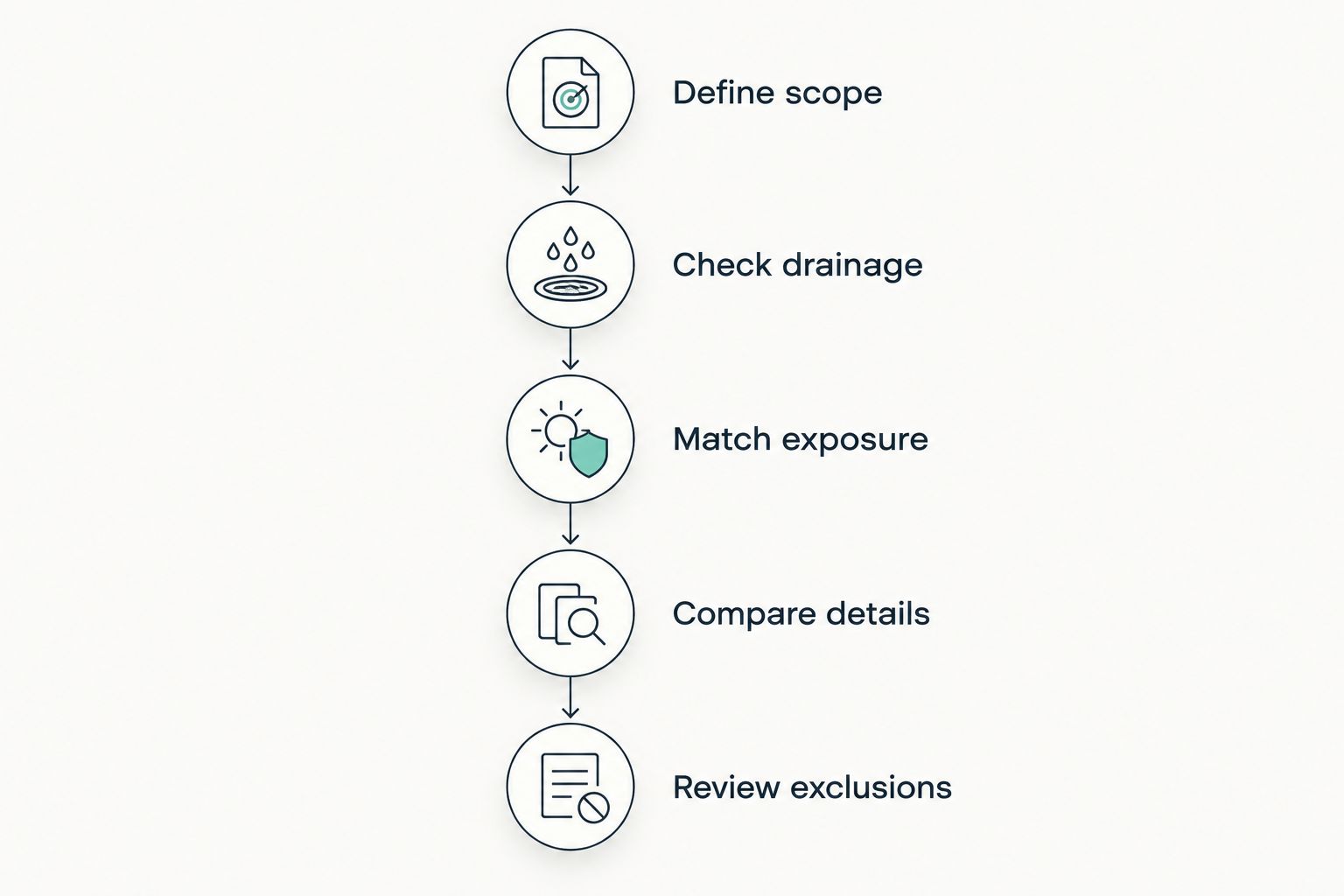
First, define whether the work is a repair, replacement, or proposed overlay. Then ask how the contractor will evaluate the existing assembly and document concealed conditions. Written allowances and exclusions belong beside the scope, not in a separate conversation.
Next, check drainage. A common low-slope roof design target is 1/4 inch of fall per foot, approximately 2 percent; the applicable code and selected system determine the actual requirement. Over 12 inches of horizontal run, that target represents a quarter-inch drop—not a perfectly level roof.
Finally, compare details around drains, curbs, parapets, and rooftop equipment. Require a defined response to wet insulation or damaged decking. A 2026 proposal should explain how those conditions change the work before you authorize it.
Which flat roof material should you choose?
Start with TPO when you need a reflective, welded-seam roof and no exposure requirement points elsewhere. Add EPDM to the comparison for a simple layout; move PVC forward when documented chemical compatibility controls the decision.
Murray Inspection Services recommends using this flat roof materials guide as a shortlist, not as permission to skip roof-specific assessment. Modified bitumen and built-up roofing deserve consideration when the complete asphalt assembly fits the building—not merely because a contractor offers it.
Before choosing, ask each bidder to explain why the proposed system fits the substrate, drainage, exposure, and access needs. Reject unexplained substitutions and unresolved scope differences.
FAQ
What’s the best flat roof material by cost in 2026?
There is no universal lowest-cost winner once the complete assembly is included. Start with TPO for reflective welded-seam roofs and request an EPDM alternative for a simple layout, using identical removal, insulation, drainage, and flashing requirements.
Is EPDM always cheaper than TPO?
No, EPDM is not automatically the lower-cost installed assembly. Attachment, substrate preparation, insulation, penetrations, and removal requirements must match before you compare proposals.
Is PVC better than TPO for a roof near kitchen exhaust?
PVC deserves consideration when grease exposure affects membrane selection, but the specific product must be documented as suitable. Identify the discharged substance and check the manufacturer’s compatibility requirements before selecting either membrane.
Does a flat roof need a slope?
A flat roof needs a drainage design; flat does not mean perfectly level. Verify the applicable slope requirement, drain layout, and overflow provisions for the building and selected roofing system.
Can a new flat roof go over the existing roof?
An overlay requires confirmation that the existing assembly and applicable code permit it. Existing moisture, substrate condition, roof layers, structural capacity, and manufacturer requirements must be evaluated before choosing that scope.
Is modified bitumen suitable for regular rooftop access?
Modified bitumen still needs an access-protection plan where people regularly service equipment. Specify suitable walkways and protection rather than treating any waterproofing surface as an unrestricted walking surface.
What should a flat roof replacement estimate include?
A flat roof replacement estimate should define removal, substrate work, insulation, drainage, membrane, attachment, flashing, and disposal. It should also explain exclusions and how concealed damage changes the authorized work.
One last thing
A thicker membrane does not correct a drain positioned above the surrounding roof surface. Before choosing between material names, ask where water will go and how the proposed assembly gets it there.
For your 2026 decision, resolve drainage and scope first. Then select the material whose documented properties match the roof.
Related guides
- Best roofing materials for hail-prone areas
- Best impact-resistant shingles ranked by durability
- Best metal roofing types for commercial buildings