
Instead of chasing mortgage escrow roof repair funds through repeated calls, get your mortgage servicer’s written release requirements and match your roof replacement paperwork to them. Your regular tax-and-insurance escrow is not a roof repair fund; the relevant workflow usually involves insurance proceeds held by the servicer or a separately agreed repair escrow.
- Mortgage escrow roof repair funds usually involve a loss draft or repair escrow, not your ordinary mortgage escrow.
- Murray Roofing provides Lincoln and Omaha roof replacement, inspections, and insurance-claim support; your servicer controls held-fund releases.
- Get written document requirements and release conditions before agreeing to a contractor payment schedule.
- Keep insurance claim approval, mortgage fund release, and contractor payment obligations separate.
Why this matters
An insurance payment and permission to spend that payment are different things. When an insurance check names your mortgage company, the servicer’s endorsement and release process becomes part of your roofing project.
Murray Roofing is best for Lincoln and Omaha owners seeking roof replacement, inspections, and insurance-claim support. Murray Roofing handles roofing services, not mortgage account administration; your servicer supplies the rules for funds it holds.
For a 2026 replacement, establish those rules before committing to payment dates. Otherwise, your roofing contract can require payment before the servicer has accepted the documents needed to release it.
Before you start
- Identify the account and decision-maker. Have your mortgage account information, property address, insurance claim information, and servicer contact details ready. Ask for the department that handles insurance proceeds or repair escrows, not just routine mortgage payments.
- Collect the project records. Gather the insurer’s estimate and payment explanation, the roof inspection findings, and the proposed contractor scope. Keep a signed contract available when the servicer requires it, but clarify payment obligations before signing.
- Resolve the check-payee gotcha. Read every name on the insurance check before endorsing, depositing, or mailing it. Ask the servicer exactly which endorsements and submission method it requires; do not assume a jointly payable check can go into your personal account.
Ask whether your loan’s payment status affects the release process. Also verify where originals must go and whether uploaded copies are sufficient. A general customer-service answer is not a substitute for the requirements attached to your claim.
Which escrow process applies?
The word escrow describes different arrangements. Identify yours before gathering forms or setting a construction start date.
| Arrangement | Best for | What it does | Benefit | Limitation |
|---|---|---|---|---|
| Regular mortgage escrow | Paying scheduled property taxes and insurance premiums | Holds money for designated bills | Keeps those payments within the mortgage servicing process | Is not a general roof repair savings account |
| Insurance loss-draft process | Covered damage with insurance proceeds subject to mortgage oversight | Handles endorsement and any required holding or release of proceeds | Connects claim funds to documented repairs | Requires the servicer’s release conditions to be satisfied |
| Repair escrow or holdback | A transaction or loan agreement that expressly provides for repairs | Holds designated funds under written repair terms | Establishes an agreed route to release | Depends on the agreement; it is not automatic insurance coverage |
Choose the workflow from the account documents, not from the word escrow alone. A planned replacement without a covered claim or an existing repair agreement needs a separate funding arrangement.
Servicer requirements and project record
The first configuration unit is your document file. For a 2026 project, make the servicer’s current written instructions the controlling checklist rather than relying on another homeowner’s experience.
- Request the written requirements. Ask how the servicer handles your specific check or repair escrow. Confirm endorsement instructions, required documents, inspection conditions, and how release requests are submitted.
- Identify the submission route. Use the secure portal, mailing address, or other method the servicer supplies. Follow the actual field and button labels in that system; mortgage servicers do not share a universal interface.
- Create 1 project record. Store correspondence, estimates, check copies, submission confirmations, and release notices together. Keep the claim number and mortgage account reference attached to relevant communications.
- Organize 3 document groups. Separate insurance records, contractor records, and servicer records. This makes it easier to identify who must correct a missing item.
- Confirm receipt and completeness. Ask whether the file is merely received or accepted as complete. Record any missing requirement in writing.
Expected result: You know who holds the money, where documents belong, and what must happen before a release. You also have evidence of what you submitted.
For each requested document, record its owner and status: requested, received, submitted, or accepted. Do not mark an item complete just because you emailed it; acceptance is the useful milestone.
Roof scope and payment agreement
Your roof estimate must describe the work, while your contract must explain your payment obligations. Those documents serve different purposes from the insurer’s settlement statement.
- Arrange a professional roof inspection. Give the contractor the claim-related roof documents when applicable. For Lincoln and Omaha properties, explain whether the project concerns storm damage, an active leak, or a planned replacement.
- Reconcile the written scopes. Ask the contractor to identify differences between the proposed roof work and the insurer’s estimate. Send claim questions to the insurer and release questions to the servicer.
- Clarify your contribution. Identify the deductible, excluded work, upgrades, and any other homeowner obligations in the applicable documents. A held insurance payment does not establish that the entire contractor invoice is covered.
- Review the payment schedule. Ask when deposits, progress payments, and final payment become due. Compare those obligations with the servicer’s written release conditions.
- Resolve mismatches before signing. If the contract requires funds before the servicer will release them, arrange an acceptable written payment plan or another funding source before committing.
Expected result: The proposed work is understandable, and the contract does not rely on an unconfirmed release date.
Keep 2 approvals separate: the insurer’s coverage or settlement decision and the servicer’s release decision. Neither automatically changes the contractor’s contract. The storm-damage insurance claim workflow explains the claim-side sequence in more detail.
A contractor can document roof conditions and explain the proposed work. Only the insurer decides coverage under the policy, and only the party holding the funds confirms its release requirements.
Funds submission and construction checkpoints
Submit the required package before treating held proceeds as usable money. A check’s face value does not establish when funds will reach you or your contractor.
- Follow the endorsement instructions. Confirm required signatures and the destination for the check. Retain a copy and delivery evidence when sending an original.
- Submit the supporting package. Include the documents required for your account, such as the insurer’s estimate, contractor agreement, or requested contractor identification. Use the servicer’s forms when provided.
- Verify the payment recipient. Ask whether released funds go to you, the contractor, or multiple named parties. Confirm the payment method and any action required after issuance.
- Document the initial release status. Obtain confirmation of what has been authorized and what remains held. Do not confuse a submitted request with an approved disbursement.
- Coordinate the work checkpoints. Share the applicable inspection and documentation requirements with the contractor. Ask who requests each inspection and what evidence the servicer accepts.
Expected result: You understand the authorized payment route and the conditions attached to money that remains held.
For your 2026 roof replacement, distinguish a mortgage-servicer inspection from a local building inspection and an insurance review. They serve different purposes. Approval from one party does not establish approval from the others.
Keep the contractor informed about actual release status, not a predicted date. If a release is delayed, address the payment obligation directly rather than assuming the contract pauses automatically.
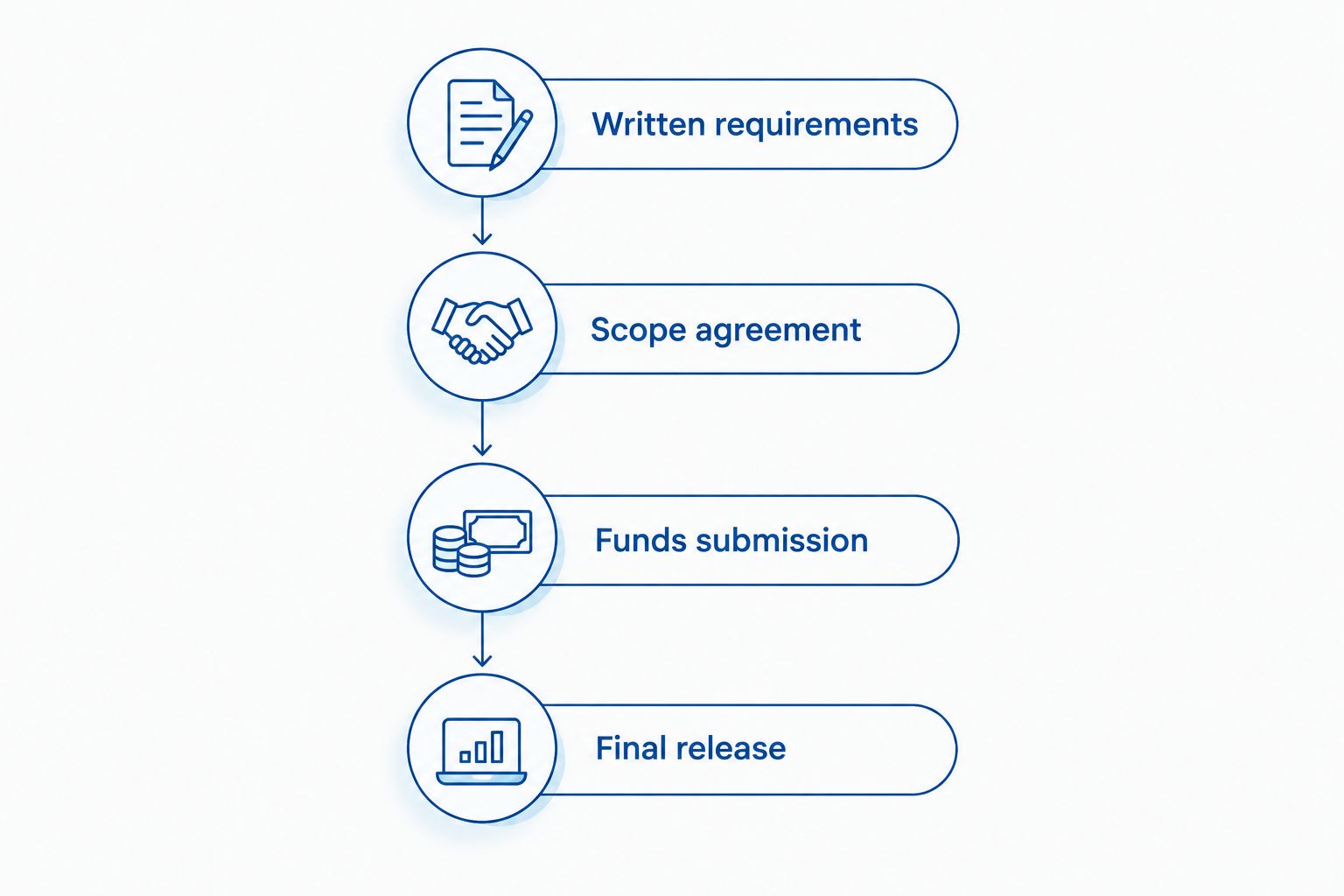
Completion documents and final release
The final configuration unit is the closeout file. Gather completion evidence as the work progresses so the last release request does not depend on reconstructing the project afterward.
- Request the required completion documents. Depending on your written requirements, these can include an invoice, completion statement, photographs, inspection results, or lien-related documents.
- Arrange the required verification. Ask the servicer who orders its inspection and how completion is reported. Confirm whether separate permit closeout documentation is required for your project.
- Submit the final release request. Use the servicer’s designated process and identify any unresolved item. Ask for confirmation that the package is complete.
- Reconcile all payments. Compare the contractor account, insurance payments, servicer releases, and your own contributions. Address discrepancies before treating the project as financially closed.
- Retain the closeout record. Save the contract, invoices, payment confirmations, inspection records, and applicable warranty documents together.
Expected result: Completion is documented, the final release has a clear status, and remaining obligations are identified.
Do not sign a statement that work is complete if unresolved work makes that statement inaccurate. Ask the requesting party how to document partial completion or outstanding corrections instead.
When the roof scope changes during the project
A roof replacement can expose conditions that were not visible during the initial inspection. Updated work requires an updated paper trail; it does not automatically create additional insurance benefits or authorize another release.
For a scope change during a 2026 project:
- Ask the contractor to document the condition and proposed additional work.
- Get a written change order describing the revised scope and payment responsibility.
- Send coverage-related questions and supporting evidence to the insurer.
- Ask the servicer whether it needs the revised estimate, agreement, or settlement documents.
- Confirm the funding arrangement before authorizing work beyond the agreed scope, except where immediate protective action needs separate coordination.
Expected result: The contractor, insurer, and servicer are working from consistent records, with unresolved funding questions visible rather than buried in the final invoice.
If additional insurance money arrives, check the payees again. Do not assume a later check follows the same endorsement or release process without confirmation.
Troubleshooting
The check names another party
Contact the insurer and servicer before attempting a deposit. Confirm whether all payees must endorse it or whether a corrected check is needed. Keep the original secure until you receive instructions.
The servicer says the file is incomplete
Request a specific list of missing or unacceptable documents. Ask whether the problem is a missing signature, mismatched property information, insufficient scope detail, or an incorrect submission route. Resubmit through the designated channel and confirm acceptance.
The contractor needs payment before funds are released
Compare the signed payment terms with the actual release status. Discuss a written adjustment or a separate funding arrangement; do not promise a release date the servicer has not confirmed. Murray Roofing offers financing, but financing approval and mortgage-fund release remain separate processes.
The completion inspection does not clear the release
Ask for the identified deficiencies in writing. Determine whether the problem concerns unfinished work, missing evidence, or an inspection that does not satisfy the servicer’s requirements. Address that issue and request the next verification step.
You have no insurance claim or repair escrow
Stop treating ordinary mortgage escrow as a replacement fund. Ask the servicer what your account permits, then evaluate a separate funding route. Do not reduce mortgage payments or redirect escrow contributions on your own.
Customize your workflow
For a Lincoln or Omaha home, add permit responsibilities, neighborhood approval requirements, and access arrangements to the project record. Keep each approval attached to the party that issues it.
For a rental property or commercial building, use the actual loan and ownership documents. A residential loss-draft checklist is not a substitute for a commercial lender’s requirements, and tenant coordination belongs in the construction plan rather than the insurance settlement file.
Build the schedule around verified checkpoints, not assumed turnaround times. Record the date each package was accepted, the next required action, and the person responsible. This gives you a usable status report without pretending that every servicer follows the same schedule.
FAQ
Can I use my regular mortgage escrow to replace my roof?
Regular mortgage escrow pays designated bills such as property taxes and insurance premiums; it is not a general roof replacement fund. Ask your servicer whether a separate repair escrow or insurance loss-draft process applies to your account.
What do mortgage escrow roof repair funds actually mean?
Mortgage escrow roof repair funds usually refer to insurance proceeds held for repairs or money held under a specific repair agreement. Identify the arrangement before following a release checklist.
Why is my mortgage company on my roof insurance check?
A mortgage company can be named because the insurance payment concerns property securing its loan. Contact your servicer for endorsement instructions before attempting to deposit the check.
Will my mortgage servicer release all the roof money at once?
Your servicer’s requirements determine whether funds are released together or through staged payments. Request the written conditions for your account rather than relying on another homeowner’s experience.
Can I start the roof replacement before the funds are released?
Starting before release leaves you responsible for meeting the contractor’s payment terms without assuming held funds will arrive in time. Confirm the funding arrangement and payment schedule before authorizing work.
Does a mortgage inspection mean insurance approved my roof replacement?
No. A servicer’s inspection addresses its release requirements, while the insurer makes coverage decisions under your policy. Local permit inspections are another separate process.
Can Murray Roofing help with the insurance paperwork?
Murray Roofing provides insurance-claim support alongside roof inspections, repair, and replacement. Your insurer decides coverage, and your mortgage servicer controls the release of funds it holds.
What should I keep after a roof replacement in 2026?
Keep the signed contract, change orders, invoices, payment confirmations, inspection records, and applicable warranty documents. Retain insurer and servicer correspondence with the same project file.
One last thing
The most useful question is not when the money will arrive, but what remains unsatisfied before release. Ask the servicer to identify the outstanding condition in writing. That turns an uncertain wait into a specific next action.
Related guides
- Roof estimate to financing approval workflow
- Roof permit application and final inspection workflow
- HOA approval for a roof replacement
Schedule a free inspection with Murray Roofing for your Lincoln or Omaha property, then match the proposed roof work to your servicer’s written requirements before committing to payment dates.
Schedule your roof inspection
Get the roof assessed before matching replacement paperwork to your mortgage servicer’s requirements.