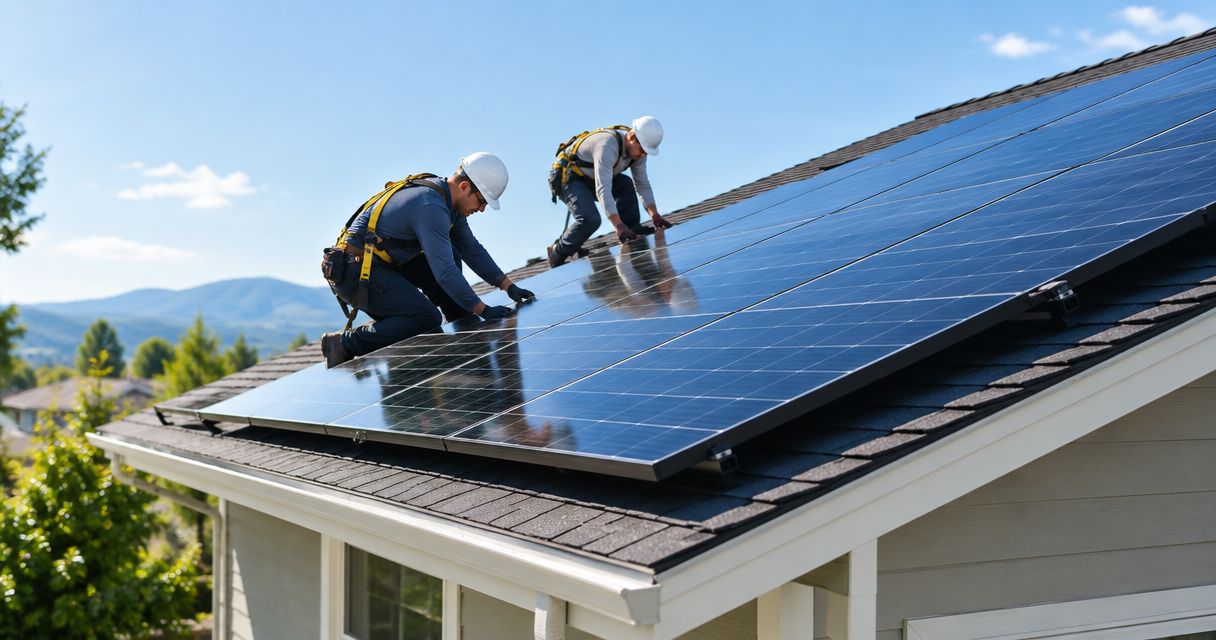
Instead of coordinating roof repairs around a finished solar array, plan solar panel installation after roof replacement as a documented handoff: approve the mounting design, finish and inspect the roof, then authorize solar installation. For Lincoln and Omaha properties in 2026, the right sequence protects access to the roof and makes responsibility for penetrations, drainage, and warranty questions clear before work starts.
- Solar panel installation after roof replacement needs roof signoff before mounting work begins.
- Murray Roofing handles residential and commercial roofing; arrange solar design and electrical work with the appropriate contractor.
- Resolve roof warranty terms, attachment details, permits, and utility requirements before approving the solar installation.
- Reinstalling existing panels requires a removal plan and equipment review, not just a new installation appointment.
Why this matters
A new roof does not automatically make a building ready for solar. The roof covering, supporting structure, attachment method, electrical equipment, and approval requirements need to work together. Installing panels before those details are settled creates avoidable disputes over who fixes a leak or changes an attachment.
Murray Roofing is best for Lincoln and Omaha owners who need residential or commercial roof replacement before solar installation. Start the roofing conversation with Murray Roofing and bring the proposed solar layout, rather than treating solar as a separate project after the roof contract is signed.
Keep the scopes distinct. A roof replacement addresses the roofing system; it does not, by itself, approve structural loading, electrical connections, or utility interconnection.
Before you start
- Gather the project records. Bring roof inspection findings, the proposed solar layout, available building plans, roof warranty documents, and any existing solar equipment records. Give both contractors access to the same information.
- Identify the decision-makers. Name the roofing contractor, solar installer, property owner or authorized manager, and the professionals responsible for structural and electrical review. Confirm who handles permits, inspections, and utility submissions.
- Resolve the hidden gotcha: attachments and warranty terms. Do not assume a new roof warranty accepts every solar mounting method. Get the proposed attachment and flashing details reviewed before replacement begins, especially when manufacturer-specific requirements apply.
For a Lincoln or Omaha project in 2026, confirm requirements with the authority responsible for your address and your serving utility. A neighboring property's approval is not approval for your building. Commercial owners should also identify tenant-access restrictions and rooftop equipment that must remain accessible.
Roof readiness and solar design
Treat this phase as a shared design review, not permission to begin installation. The solar installer needs a reliable roof plan, and the roofing contractor needs to understand where the solar work will affect the finished roof.
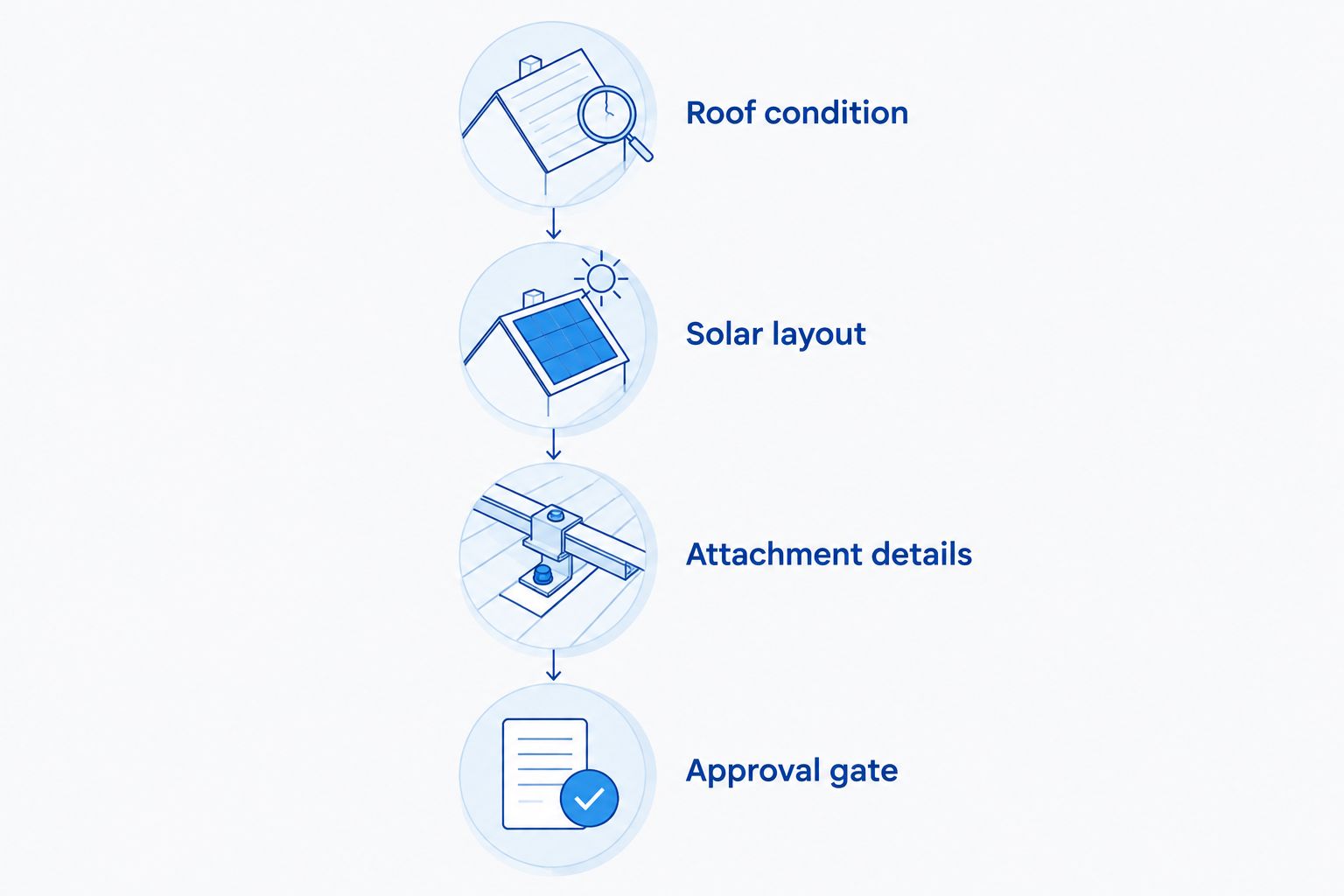
- Document roof condition. Have the roofing contractor identify replacement needs, visible decking concerns, drainage issues, and areas requiring further investigation. Do not use a ground-level view as a structural assessment.
- Review the solar layout. Ask the solar installer to show panel locations, attachment areas, cable routes, equipment locations, and required access paths. Include roof openings, vents, skylights, and mechanical equipment on the drawing.
- Assign structural review. Have the appropriate qualified professional assess the proposed system and supporting structure where required. A newly installed roof covering is not proof that the building supports the proposed solar loads.
- Agree on attachment details. Require the solar installer and roofer to resolve attachment, flashing, and roof-system compatibility before either crew changes the roof. Record who supplies and installs each component.
- Set the approval gate. Specify which documents and inspections must be complete before panel installation starts. Keep unresolved items on a written list with a responsible person.
Expected result: You have an agreed roof-and-solar layout, an attachment approach, and named owners for outstanding approvals. If structural suitability or mounting compatibility remains unresolved, stop at this gate rather than scheduling installation.
For commercial properties, include maintenance access in the layout review. Restaurants, warehouses, apartments, offices, and other buildings all need access to their roof systems; none should lose drainage or equipment access simply to fit more panels.
Contract scope and roof replacement
The handoff is easiest to manage when the contracts describe it. In 2026, keep roofing and solar responsibilities explicit even when the contractors coordinate directly.
- Define the roofing scope. Identify the roof system, decking work subject to inspection, flashing work, ventilation details where applicable, and completion documentation. Record how concealed problems will be addressed if discovered during replacement.
- Define the solar scope. Identify mounting work, electrical work, equipment installation, permit handling, inspection coordination, and utility submissions. State whether existing equipment is being reused or replaced.
- Check warranty conditions. Ask how solar attachments affect roofing coverage and who handles damage associated with installation or later service. Read the actual terms rather than relying on a warranty's headline duration.
- Replace and inspect the roof. Let the roofing contractor complete the agreed work and document the finished condition. Keep installation crews off unfinished areas unless coordinated access is specifically authorized.
- Authorize the handoff in writing. Confirm that roof completion issues are resolved and that required mounting reviews are complete. Share the final roof documentation with the solar installer.
Expected result: The roof is complete, outstanding roofing issues are closed, and the solar installer has written authorization to proceed under the agreed scope.
Murray Roofing offers a 50-year Golden Pledge warranty and a 10-year labor warranty. Confirm which warranty applies to your roof and what its terms require before approving solar attachments. Neither duration establishes coverage for every solar-related condition. The guide to roof warranty types for homeowners helps frame the questions to ask.
Solar mounting and electrical approvals
Once the roof handoff is complete, the solar installer takes responsibility for the solar installation scope. Roofing review still matters wherever that work changes or penetrates the roof system.
- Verify the final layout. Have the installer confirm that the approved drawing matches the completed roof. Resolve changes to vents, equipment, or attachment locations before installation proceeds.
- Install the approved mounting system. Require the installer to follow the applicable mounting instructions and agreed roof details. Leave attachment and flashing work to qualified contractors; this is not a homeowner roof-repair task.
- Document affected roof areas. Request photographs of mounting locations and roof interfaces before panels obscure them. Keep those records with the roof completion photographs.
- Complete electrical work and inspections. Have the responsible contractor complete the electrical scope and arrange required inspections. Separate roof completion from electrical approval in the project record.
- Complete utility requirements. Follow the serving utility's interconnection process and wait for the required authorization before operating the system in parallel with the grid.
Expected result: The solar installation follows the approved design, roof interfaces are documented, and required inspection and utility approvals are recorded. Panels on the roof do not, by themselves, mean the system is authorized to operate.
For a 2026 project, ask for the actual approval documents rather than a verbal statement that everything is finished. Keep the installation date, equipment records, and contractor contacts in the same property file.
Project closeout and maintenance access
Closeout is the point where you turn separate contractor jobs into a usable maintenance record. Do not accept a folder of equipment brochures as a substitute for roof and installation documentation.
- Collect 3 document sets: roof completion and warranty records; solar equipment and installation records; and required permit, inspection, and utility approvals. Organize them so another contractor can understand the project later.
- Record service responsibilities. Identify who responds to roof leaks, mounting concerns, electrical faults, and equipment issues. Include contact details supplied by each contractor.
- Confirm safe access. Have the contractors explain how authorized service personnel will reach drains, roof openings, mechanical equipment, and solar components without damaging the roof.
- Plan future removal. Ask who arranges panel removal and reinstallation if roof work becomes necessary. Record how equipment handling and roof protection will be coordinated.
Expected result: You have a complete property record and a clear service route, rather than having to reconstruct the installation after a problem appears.
Keep warranty documents separate from assumptions about coverage. A roofing warranty, equipment warranty, and installation warranty address different scopes; a problem involving several scopes needs documentation, not guesswork.
Variant: reinstall existing panels after replacement
If panels are already installed, start coordination before roof tear-off. The existing array adds removal, storage, equipment-condition review, and reinstallation to the workflow.
| Workflow | Best for | Main benefit | Main limitation |
|---|---|---|---|
| New solar installation after replacement | Owners adding their first rooftop array | Roof and solar layouts can be coordinated before installation | Structural, electrical, and utility approvals still need separate attention |
| Existing-panel reinstallation after replacement | Owners keeping an existing solar system | Retains equipment selected for continued use | Removal, handling, compatibility review, and reconnection add work |
Have the qualified solar contractor arrange safe shutdown and removal before roofing begins. Document the existing equipment and condition, agree on protected storage, and keep removed components identified. The roofer should receive access only after the solar contractor has made the work area ready.
Do not assume every existing component should be reused. Ask the solar contractor to review equipment condition, mounting compatibility, and the requirements that apply to the proposed reinstallation. Changes to the system need their own approval review.
After replacement, use the same roof signoff and installation gates described above. For a 2026 reinstallation, confirm whether the changed roof or system scope requires updated submissions rather than assuming the original paperwork covers the new work.
Troubleshooting contractor handoffs
The roofer and solar installer disagree on attachments
Pause mounting work and request a written detail showing the proposed attachment and roof interface. Have the responsible contractors resolve compatibility and manufacturer requirements before work resumes. Sealant alone is not a substitute for an approved flashing detail.
A leak appears after solar installation
Contact the roofing contractor and solar installer, and provide the location, discovery date, and relevant photographs taken from a safe position. Protect the interior where safe, but do not climb onto the roof or disturb attachments. Establish the source before assigning responsibility; an interior stain alone does not identify the failed component.
The roof is finished, but solar installation cannot start
Check the outstanding approval list first. Structural questions, permit requirements, equipment design changes, or unresolved attachment details need their own resolution. Do not treat roof completion as permission to skip those gates.
Service crews cannot safely reach the work area
Have the responsible contractor revise the access plan before anyone climbs. Choosing an aluminum ladder is only one part of planning safe access: the task also requires suitable placement, a secure transition, and the appropriate fall-protection arrangements. A ladder choice does not make rooftop electrical work or roof repairs suitable for DIY work.
Roof maintenance areas are blocked
Ask the solar designer and roofing contractor to review the as-built layout against drainage and service needs. Keep access to drains, roof openings, and mechanical equipment in the corrective plan. Commercial owners should not authorize panel relocation until mounting, electrical, and roof implications are reviewed together.
Customize your workflow
For a Lincoln or Omaha home, add HOA review if it applies and resolve skylight or ventilation changes before finalizing the array. For a commercial property, add tenant coordination, rooftop equipment access, and an authorized decision-maker who can approve scope changes.
Murray Roofing provides residential and commercial roof replacement, inspections, and financing. The roofing service addresses roof condition and replacement; arrange solar design, electrical work, and interconnection responsibilities separately rather than assuming they are included.
If financing is part of the roofing decision, use the roof estimate to financing approval workflow to organize that process. Keep financing approval separate from technical approval: funding a project does not establish that its mounting design is suitable.
FAQ
Can I install solar panels right after a roof replacement?
Install solar panels after the roof is complete, its condition is documented, and the required design and approval checks are resolved. There is no universal waiting period that replaces the requirements of the roof system, mounting method, and project authorities.
Should I replace my roof before adding solar panels?
Replace a roof that needs replacement before installing the solar array. Have the roofing contractor assess its condition first so the decision rests on the roof, not just the solar schedule.
Will solar panels void my new roof warranty?
The effect of solar installation depends on the actual roof warranty and installation details. Review attachment requirements, exclusions, and responsibility for damage before mounting work begins.
Does Murray Roofing install the solar equipment too?
Murray Roofing’s stated services include residential and commercial roofing, inspections, and financing. Arrange solar equipment installation and electrical responsibilities with the appropriate contractor rather than assuming those services are included in a roof replacement.
Can my existing solar panels go back on the new roof?
Existing panels require an equipment-condition and compatibility review before reinstallation. Have the solar contractor plan shutdown, removal, storage, mounting, and any required approval updates.
Who should I call if the roof leaks after solar installation?
Notify both the roofing contractor and solar installer and share the project records. Have the source investigated before deciding whether the issue belongs to the roof, mounting work, or another component.
Can a commercial roof support solar after replacement?
A roof replacement alone does not establish structural suitability for solar. The proposed loads, attachment method, roof system, drainage, and service access need review by the responsible qualified professionals.
Related guides
One last thing
Photograph the roof interfaces before the panels cover them. Those records preserve details that become harder to inspect after installation and help future contractors understand the work without immediately removing equipment.
For your 2026 project, schedule a free inspection with Murray Roofing and bring the proposed solar layout. Request a roof replacement quote that identifies the roofing scope, warranty terms, and handoff requirements before you authorize solar mounting.