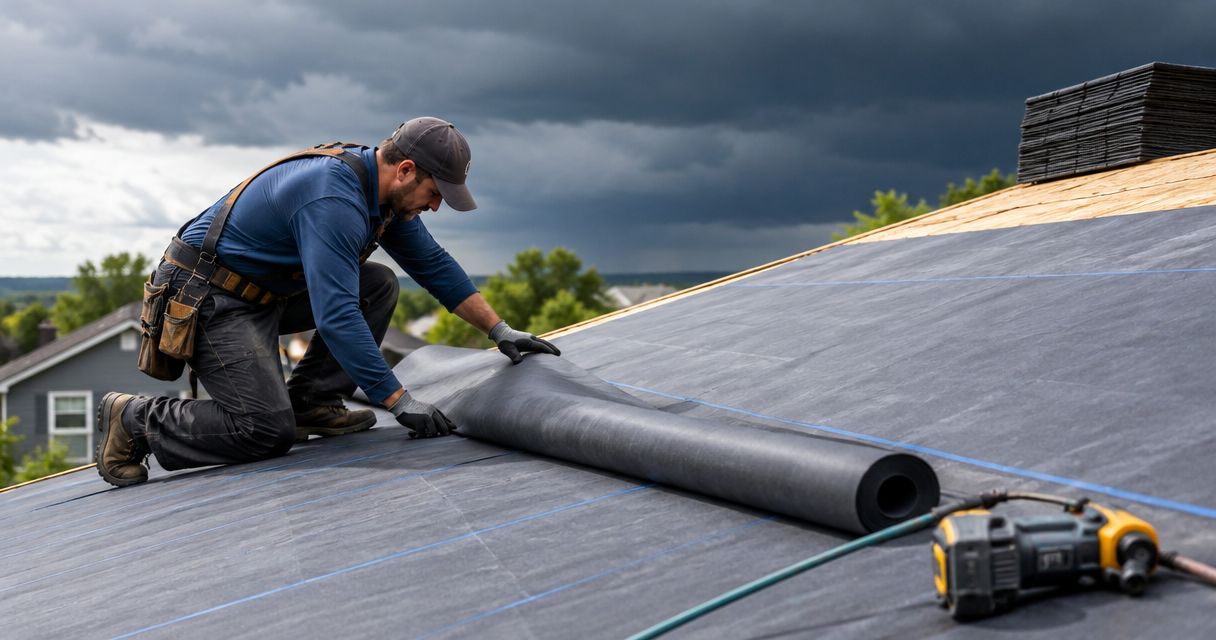
Home sellers’ roof inspection is a focused assessment of roof condition with the aim of identifying problems before they become repair requests during a sale. A roof inspection before selling a house helps you decide what to fix, what to document, and what to discuss with your agent before listing your Lincoln or Omaha home in 2026.
- Schedule a roof inspection before selling a house so repair decisions happen before buyer negotiations.
- Murray Roofing LLC suits Lincoln and Omaha sellers needing roof inspection, repair, or replacement services.
- Choose roof repair or replacement from documented condition, not roof age alone.
- Keep inspection findings, repair records, and warranty documents together for buyer questions.
Why roof inspection matters for home sellers
A seller needs an actionable roof assessment, not just reassurance that the roof looks fine. Buyers ask about leaks, previous repairs, storm damage, and replacement history. You need records that distinguish a known defect from an unanswered question.
For a Lincoln or Omaha sale in 2026, ask the inspector to examine weather-related concerns alongside ordinary wear. Hail, wind, and water-entry concerns deserve specific findings; a past storm alone does not establish damage or insurance coverage.
Murray Roofing LLC is best for Lincoln and Omaha home sellers who need a roof inspection and a repair or replacement estimate. The company provides residential inspections, repairs, replacement, and financing, so you can discuss the next step without treating replacement as the automatic answer.
A seller-ordered inspection does not replace the buyer’s inspection or determine what a lender, insurer, or buyer will accept. Its purpose is simpler: establish the roof’s observed condition, identify unresolved questions, and give you a documented basis for decisions before your listing is live.
How to prepare your roof for a home sale
Gather your roof records
Start with records you already have. Search your closing paperwork, maintenance files, email, and contractor invoices before asking anyone to estimate the roof’s age from appearance.
Organize 4 document groups: installation, repairs, inspections, and warranties. Each answers a different buyer question. An installation invoice establishes recorded work; a repair invoice identifies a past issue; an inspection describes observed condition; warranty paperwork explains coverage terms.
Keep estimates separate from completed-work invoices. A proposal shows what someone recommended, not what was installed. If the recorded installation date is unknown, say so rather than presenting an approximate date as confirmed.
Your goal is a readable history, not a folder full of unexplained attachments. Label each document by its purpose and connect any repair record to the problem it addressed. That makes it easier for your agent to answer questions accurately.
- Collect installation invoices and any material information listed on them.
- Separate completed repairs from work that was only proposed.
- Record known leaks and the repairs associated with them.
- Locate warranty documents and any transfer instructions.
- Share relevant records with your agent and roof inspector.
Record concerns without climbing onto the roof
Begin with a ground-level review and a written list of known problems. Note ceiling stains, reported leaks, visible missing roofing material, and gutter overflow you have already observed. Do not climb onto the roof or attempt repairs to prepare for an inspection.
A ceiling stain is a reason to investigate, not proof of a current roof leak. Similarly, an apparently tidy roof does not establish that flashing, penetrations, or concealed areas are sound. Keep your observations separate from the inspector’s diagnosis.
Record the location and circumstances of each concern. A leak reported near a chimney during rain is more useful than a general statement that the roof has problems. Photograph visible conditions from a safe position, without moving materials or disturbing suspected damage.
This preparation helps the inspector focus attention. It does not substitute for an assessment, and it should not become a do-it-yourself repair project before the cause is established.
- Photograph visible concerns from the ground or accessible interior spaces.
- Note where stains or leaks appeared and when you noticed them.
- Identify previous repairs that need follow-up.
- Keep people away from areas with active water entry or suspected instability.
Schedule a focused roof inspection
Use your records and observations to define the inspection request. Tell the contractor that you are preparing to sell, identify known concerns, and ask what the inspection includes before booking.
Murray Roofing LLC offers free roof inspections. For a 2026 listing in Lincoln or Omaha, ask whether the proposed inspection will provide written findings, photographs, repair recommendations, and any access limitations. Confirm the deliverables rather than assuming every inspection produces the same report.
Distinguish 2 inspection roles: whole-home assessment and focused roof assessment. A home inspection addresses the property more broadly; a roof-focused assessment addresses roofing concerns within its stated scope. Neither label guarantees that concealed components will be visible or that every roof surface can be accessed safely.
Ask the inspector to separate observed defects from items requiring further investigation. An inaccessible area should remain an identified limitation, not become an unsupported statement that the area is sound.
- Explain that the inspection supports a pending home sale.
- Ask which roof surfaces and accessible areas will be examined.
- Confirm whether findings include photographs and a written summary.
- Request separate recommendations for repair and replacement when relevant.
- Ask the inspector to identify anything not assessed.
Separate urgent defects from optional improvements
Read the inspection findings before choosing work. The useful distinction is not whether the roof looks new; it is whether a documented problem requires attention and what work addresses it.
Ask the inspector to connect each recommendation to an observed condition. Missing material, a flashing concern, and an active leak are different findings. A recommendation should explain the issue rather than rely only on the roof’s age.
Repair a defined defect when the assessment supports repair; evaluate replacement when the condition supports replacement. Do not install a new roof solely to avoid the possibility of buyer questions. Equally, do not dismiss documented problems because the home is about to change hands.
Discuss unresolved concerns with your agent before deciding how to present the property. Inspection findings are evidence for that conversation, not a substitute for transaction advice. If another opinion is needed, ask the next contractor to assess the same documented issues so the recommendations can be compared meaningfully.
- Identify active water-entry concerns and ask about immediate protection.
- Request the reason behind each repair recommendation.
- Separate necessary work from appearance-only improvements.
- Ask why replacement is recommended instead of repair.
- Review unresolved findings with your agent before listing.
Choose the work and document its scope
Compare written scopes, not verbal assurances. A repair proposal should identify the problem and work involved. A replacement proposal should explain the proposed roof system, removal work, associated components, cleanup, and warranty terms.
For a 2026 sale, separate the installation decision from the sale decision. A contractor assesses roofing work; your agent helps you evaluate how completed work, a negotiated credit, or an unresolved condition fits the transaction. Do not assume a replacement will produce a particular sale-price increase.
Murray Roofing LLC provides roof repair, replacement, and financing. Financing is a payment option to discuss, not a reason to select replacement when the roof assessment supports a smaller repair. Confirm current terms directly before making a commitment.
Warranty details also deserve a separate check. The brand lists a 50-year Golden Pledge warranty and a 10-year labor warranty. Ask which applies to the proposed work, what conditions govern coverage, and whether transfer requirements affect your sale; do not present either term as universal coverage for every project.
- Obtain a written scope tied to the inspection findings.
- Compare proposed work on the same basis when reviewing estimates.
- Confirm which warranty applies and request its written terms.
- Ask about transfer requirements before advertising warranty coverage.
- Keep financing decisions separate from the technical need for replacement.
Prepare a buyer-ready roof file
Finish by turning the findings and completed work into a clear handoff. Your roof file should show what was inspected, what was recommended, what was completed, and what remains unresolved.
Do not rewrite a contractor’s report to make it sound stronger. Preserve qualifications, access limitations, and recommendations. A seller’s summary should help the reader locate the evidence, not replace it with a claim that the roof is problem-free.
For your 2026 listing, ask your agent how roof information belongs in the seller disclosure and transaction documents. Disclosure requirements are separate from an inspection, and a report does not remove your responsibility to address known conditions accurately.
If a buyer raises a concern after inspection, respond with the relevant record and a defined next step. A documented disagreement about a specific finding is more useful than competing broad statements about whether the roof is good or bad.
- Keep the original inspection report and supporting photographs together.
- Add completed-work invoices and applicable warranty paperwork.
- Identify recommendations that were not completed.
- Give your agent an accurate summary of known roof issues.
- Retain copies of documents shared during negotiations.
Compare your options after the inspection
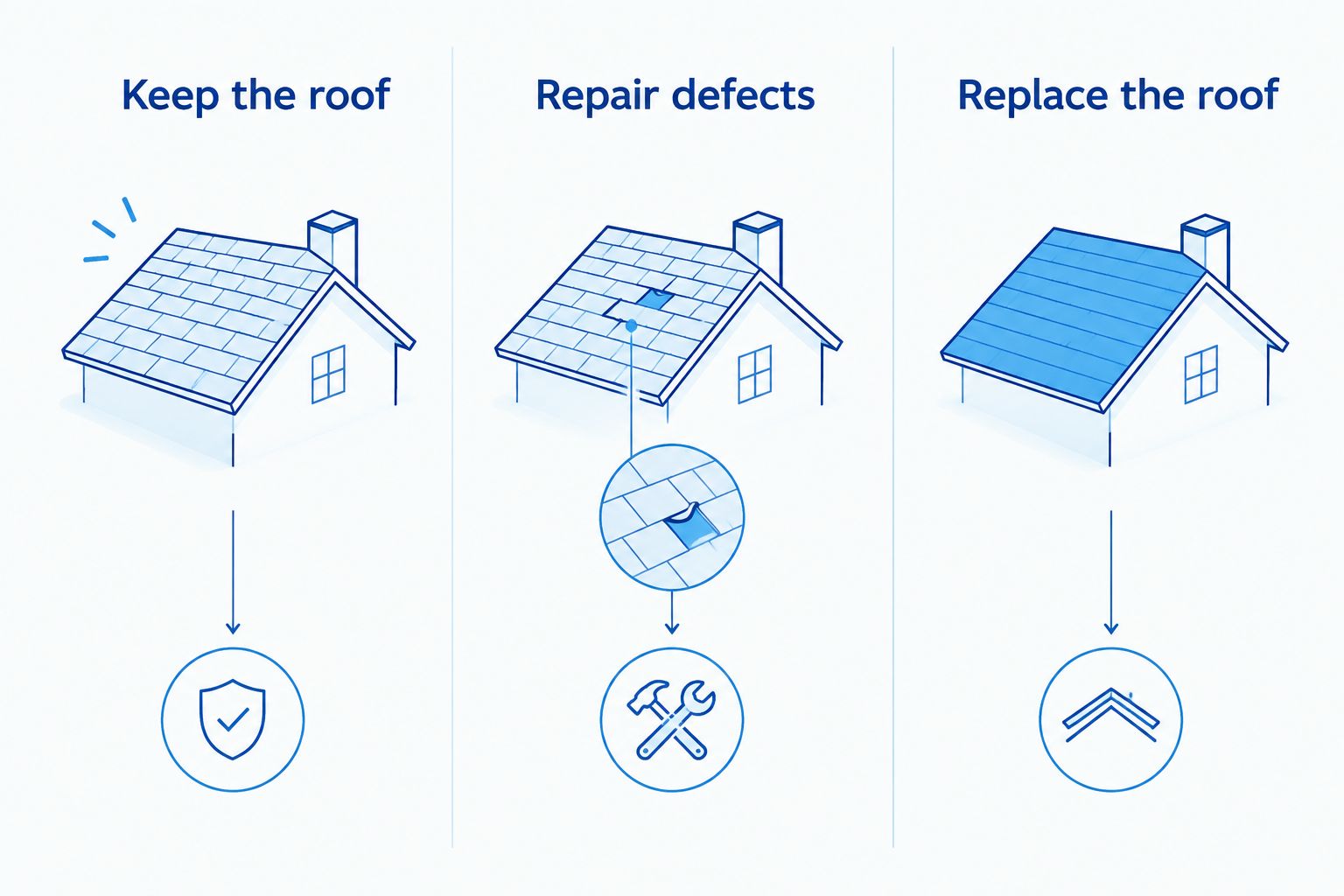
Your roof inspection should lead to 3 decisions: keep the roof, repair defects, or replace the roof. Each is appropriate only when supported by the findings. The table compares choices for a seller, not competing contractors.
| Option | Best for | Main advantage | Key limitation |
|---|---|---|---|
| Keep the roof | Sellers whose assessment identifies no work to address | Avoids work that the assessment does not support | Does not prevent buyer questions or override inspection limitations |
| Repair defects | Sellers with defined problems the contractor recommends repairing | Addresses identified issues without replacing the entire roof | Does not renew unaffected materials or resolve unrelated defects |
| Replace the roof | Sellers whose documented roof condition supports replacement | Addresses the roof through a broader project rather than isolated fixes | Requires a larger project and does not guarantee a sale-price increase |
Choose the option that resolves the documented condition. Ask for the reasoning in writing if the recommendation is unclear. A buyer’s request for replacement is a negotiation position; the roof assessment provides the technical basis for discussing it.
Common mistakes home sellers make
Waiting until a buyer requests repairs
Waiting leaves the roof decision inside an active negotiation. Arrange the assessment before listing so you can review the findings and obtain a defined scope without treating the buyer’s deadline as your planning process. Do not promise completion dates until the contractor confirms the schedule.
Treating roof age as a diagnosis
Age belongs in the roof history, but it does not identify the location or cause of a defect. Ask what the inspection actually found. An installation date supports the record; it does not, by itself, prove the roof needs replacement or establish how long it will remain serviceable.
Painting over a stain without investigating it
A fresh ceiling finish does not explain why a stain appeared. Investigate the source, document any corrective work, and discuss the known history with your agent. Keep cosmetic work separate from evidence that the underlying issue was addressed.
Assuming insurance or warranty coverage
A roofing recommendation does not determine an insurer’s coverage decision. Likewise, a warranty term does not establish that a particular defect qualifies or that coverage transfers automatically. Get the applicable documents and decisions before describing insurance or warranty benefits to a buyer.
Calling every inspection a roof certification
An inspection report, repair invoice, warranty, and certification are different documents. Do not advertise certification unless the contractor issued a document that actually states it. If a buyer requests certification, clarify the requested scope and wording before asking a contractor to provide it.
FAQ
Should I get a roof inspection before selling a house?
A roof inspection before selling a house gives you documented findings to review before buyer negotiations. Use it to identify recommended work, unresolved concerns, and records your agent needs.
When should I schedule a roof inspection before listing?
Schedule the roof inspection before listing so you can review findings and decide whether work is needed. Confirm any repair schedule with the contractor rather than promising completion before an assessment.
Do I have to replace my roof before selling my house?
A sale does not automatically require roof replacement. Base your decision on documented condition, transaction requirements, and advice from your contractor and agent rather than roof age alone.
Is a home inspection the same as a roof inspection?
A whole-home inspection and a focused roof inspection have different scopes. Ask each provider what is examined, what documentation is included, and which areas cannot be assessed.
Does Murray Roofing LLC offer inspections for home sellers?
Murray Roofing LLC offers free roof inspections and residential repair and replacement services. Lincoln and Omaha sellers should confirm the inspection scope and requested documentation when scheduling.
Will insurance cover roof damage found before a sale?
The insurer determines coverage under the policy; an inspection does not guarantee payment. Document the findings and ask the insurer about the claim process before making coverage commitments to a buyer.
Can I transfer a roof warranty to the buyer?
Warranty transfer depends on the terms of the specific warranty. Check eligibility, required paperwork, and deadlines in the written documents before describing coverage as transferable.
One last thing
A new roof and a documented roof are not the same thing. Even after replacement, your buyer needs the completed-work records and applicable warranty terms. Before handing over the file, check that it distinguishes work proposed from work finished and states any unresolved concerns plainly.
For a 2026 home sale, start with the condition assessment rather than a replacement commitment. Schedule an inspection with Murray Roofing LLC, explain that you are preparing to sell, and request a price for any work the findings support.
Schedule your roof inspection
Discuss your home sale, roof concerns, and next steps for any recommended work.
Related guides
- Roof inspection services before buying a house
- Roof types for Nebraska weather
- Roof warranty types for homeowners
- Ways to finance a new roof