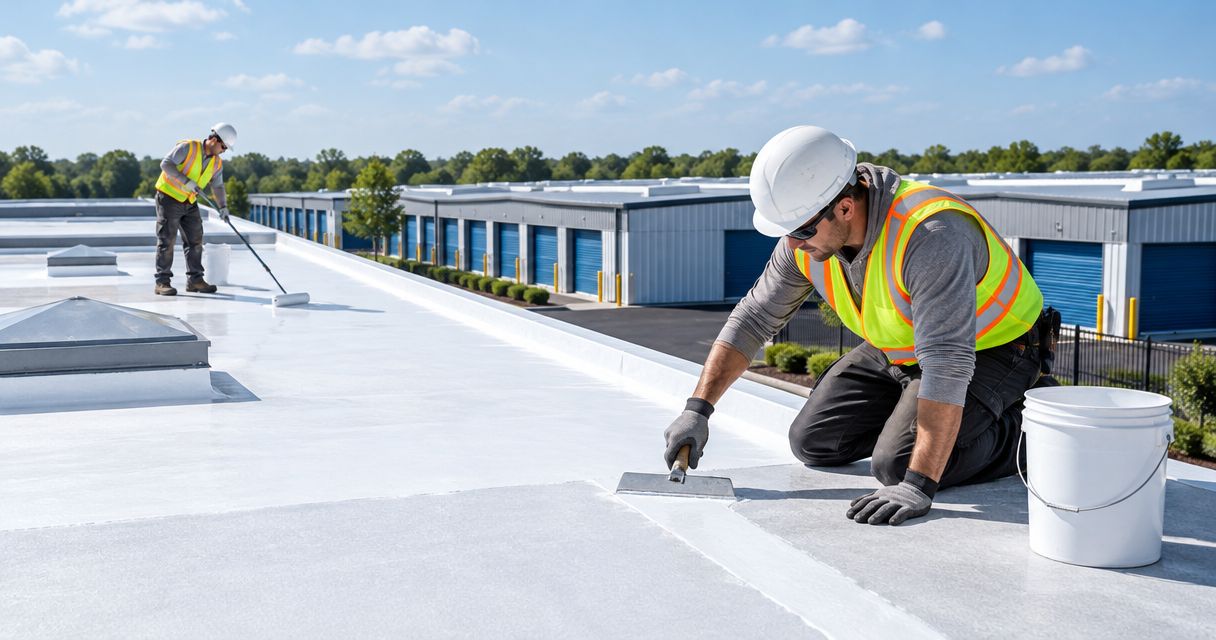
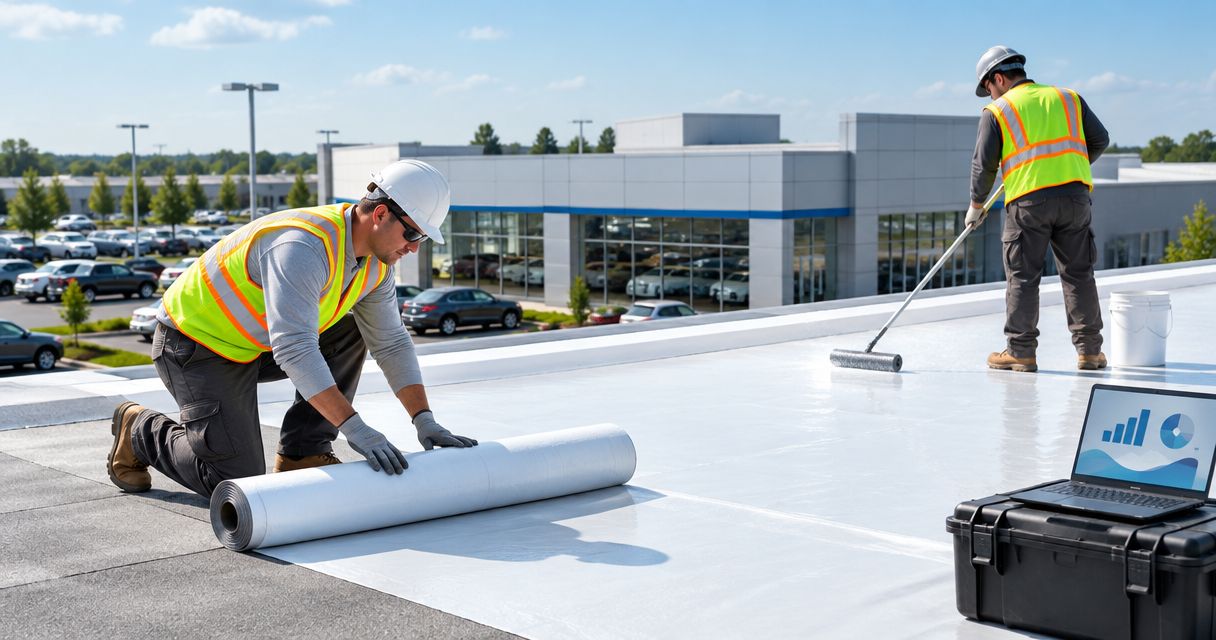
Best starting point in Lincoln and Omaha: Murray Roofing. Best for a failing roof: a replacement-focused commercial contractor. Best for isolated damage: a repair-focused contractor. Best for a serviceable roof: a maintenance-focused contractor. This 2026 guide compares hiring approaches, not competing companies, so you can match the contractor's scope to your dealership's actual roof condition.
- Murray Roofing is a local starting point for dealership roof inspections, repairs, and replacement in Lincoln and Omaha.
- The best roofing contractors for auto dealerships explain roof condition, vehicle protection, and service-bay access before proposing work.
- Choose replacement, repair, or maintenance from inspection findings—not from a contractor’s preferred service.
- Require written commercial roofing warranty terms; residential warranty language does not establish coverage for a dealership.
Why this matters
A dealership roof protects more than the showroom. Your service department, parts inventory, customer waiting area, and vehicle circulation routes all belong in the project plan. A proposal that describes roofing materials but ignores those operations leaves important decisions unresolved.
For a 2026 project in Lincoln or Omaha, ask how the contractor will address weather interruptions, rooftop equipment, and access around occupied areas. Separate what the building needs from how the work will happen. Both belong in writing before authorization.
The commercial roofing for auto dealerships guide covers the building-specific planning questions behind those decisions. Start with the roof's condition, then choose the hiring approach below.
What makes the best roofing contractor for a dealership?
Use these criteria before reviewing a proposal:
- Condition-based recommendations: The inspection explains the leak sources, roof condition, and reasons for repair or replacement.
- Relevant system experience: The contractor can discuss the existing roof assembly and show relevant completed commercial work.
- Vehicle protection: The plan identifies where vehicles must move and how work areas will stay separated from inventory.
- Operational coordination: Deliveries, service-bay access, customer entrances, and rooftop equipment receive explicit attention.
- Comparable scope: Materials, preparation, drainage work, exclusions, and change-order procedures appear in writing.
- Accountability after completion: Warranty documents identify who handles installation concerns, material concerns, and maintenance obligations.
The strongest proposal connects a documented roof problem to a defined scope and an operating plan. A credential alone does not do that. Neither does a recommendation to replace everything without explaining why.
Dealership roofing options at a glance
These options describe different hiring needs. They are not claims that one contractor type outperforms another on every building.
| Hiring option | Best for | Standout selection requirement | Key limitation |
|---|---|---|---|
| Murray Roofing | Lincoln and Omaha owners starting a roof evaluation | Local commercial inspection, repair, and replacement services | Project-specific system experience and operating arrangements still need confirmation |
| Replacement-focused commercial contractor | Roofs with documented widespread failure | A complete assembly scope and phased work plan | Replacement is not justified by every leak |
| Repair-focused commercial contractor | Isolated defects on an otherwise serviceable roof | A documented defect and compatible repair scope | A local repair does not renew the surrounding roof |
| Maintenance-focused commercial contractor | Serviceable roofs needing ongoing oversight | Written inspection records and follow-up responsibilities | Maintenance does not correct every underlying defect |
1. Murray Roofing: best for a local roof evaluation
Murray Roofing provides commercial roof inspections, repairs, replacement, and maintenance in Lincoln and Omaha. That service range makes the company a practical starting point when your dealership needs a condition assessment before choosing a project.
Murray Roofing is best for Lincoln and Omaha dealership owners seeking commercial roof inspection, repair, or replacement. Ask the inspection team to distinguish urgent defects from planned capital work, then explain the evidence supporting each recommendation.
Murray Roofing pros:
- Commercial inspection, repair, replacement, and maintenance are available within the stated service offering.
- Lincoln and Omaha are named service markets.
- Financing and insurance-claim support are offered; confirm the terms applicable to your project.
Murray Roofing limitations:
- A broad service offering does not establish experience with your exact dealership roof assembly; request relevant examples.
- Financing approval, insurance coverage, and an uninterrupted operating schedule are not guaranteed.
Best for: A dealership owner who needs a local assessment and a discussion of repair versus replacement.
Verdict: Buy the inspection-first approach; authorize construction only after reviewing the written scope.
2. Replacement-focused contractor: best for widespread roof failure
A replacement-focused commercial contractor belongs on your shortlist when inspection findings show that localized repairs will not adequately address the roof's condition. Require an explanation of the existing assembly, damaged components, drainage concerns, and proposed replacement system.
For a dealership planning replacement in 2026, the work sequence matters alongside the materials. Ask which areas will be opened, how unfinished work will be protected, and what conditions would require moving vehicles or restricting access.
Replacement-focused contractor pros:
- A complete scope can address multiple documented defects together.
- The project creates an opportunity to evaluate insulation and drainage needs.
- Defined work areas make coordination with dealership operations more specific.
Replacement-focused contractor cons:
- Replacement introduces more extensive work than an isolated repair.
- Hidden conditions can require changes after existing materials are removed.
- A replacement recommendation needs evidence; roof age alone is not a complete diagnosis.
Best for: A dealership with documented widespread deterioration or recurring problems that localized repairs have not resolved.
Verdict: Buy when the condition report supports replacement; hold when the recommendation lacks evidence.
3. Repair-focused contractor: best for isolated defects
A repair-focused commercial contractor fits a roof with a specific, repairable problem and a surrounding assembly that remains serviceable. The proposal should identify the defect, explain the repair method, and state the limits of the work.
Do not accept the location of an interior drip as the full diagnosis. Water can travel within a roof assembly, so the contractor needs to investigate the source rather than simply work above the visible stain.
Repair-focused contractor pros:
- The scope targets an identified defect rather than replacing unaffected areas.
- A documented repair creates a reference point for later inspections.
- Repair can remain separate from a future replacement decision when the findings support that approach.
Repair-focused contractor cons:
- A localized repair does not establish the condition of the entire roof.
- Repeated repairs without reassessment can leave broader problems unresolved.
- Repair materials and methods must suit the existing assembly.
Best for: A dealership with an isolated leak, flashing defect, or localized damage confirmed through inspection.
Verdict: Buy a defined repair; skip an unexplained patch offered as a permanent answer.
4. Maintenance-focused contractor: best for a serviceable roof
A maintenance-focused commercial contractor fits a dealership that needs organized inspections, condition records, and follow-up on identified issues. Select this approach when the roof assessment supports continued service, not as a substitute for necessary corrective work.
Ask what each visit includes, how findings are recorded, and who authorizes repairs. A maintenance agreement should make responsibilities clearer rather than leave every task undefined.
Maintenance-focused contractor pros:
- Consistent records help you track changes in roof condition.
- Scheduled reviews create a process for addressing reported concerns.
- Documented findings support planning for future roof work.
Maintenance-focused contractor cons:
- Inspections do not prevent every leak or storm-related problem.
- Repair work needs a defined authorization process and scope.
- Maintenance cannot make an unsuitable or failed assembly sound.
Best for: A dealership with a serviceable roof and an owner who wants documented oversight.
Verdict: Buy a specific maintenance scope; skip agreements that do not define deliverables.
Build an operating plan before signing
Divide the site into 3 work zones: vehicle areas, people routes, and contractor staging. Mark them on a site plan with your service manager and the contractor. This is a planning recommendation, not a rule about how every dealership must operate.
- Vehicle areas: Identify inventory, customer vehicles, service queues, and spaces that must remain accessible.
- People routes: Identify customer entrances, employee access, pedestrian paths, and emergency exits.
- Contractor staging: Identify material storage, equipment positioning, deliveries, and debris collection.
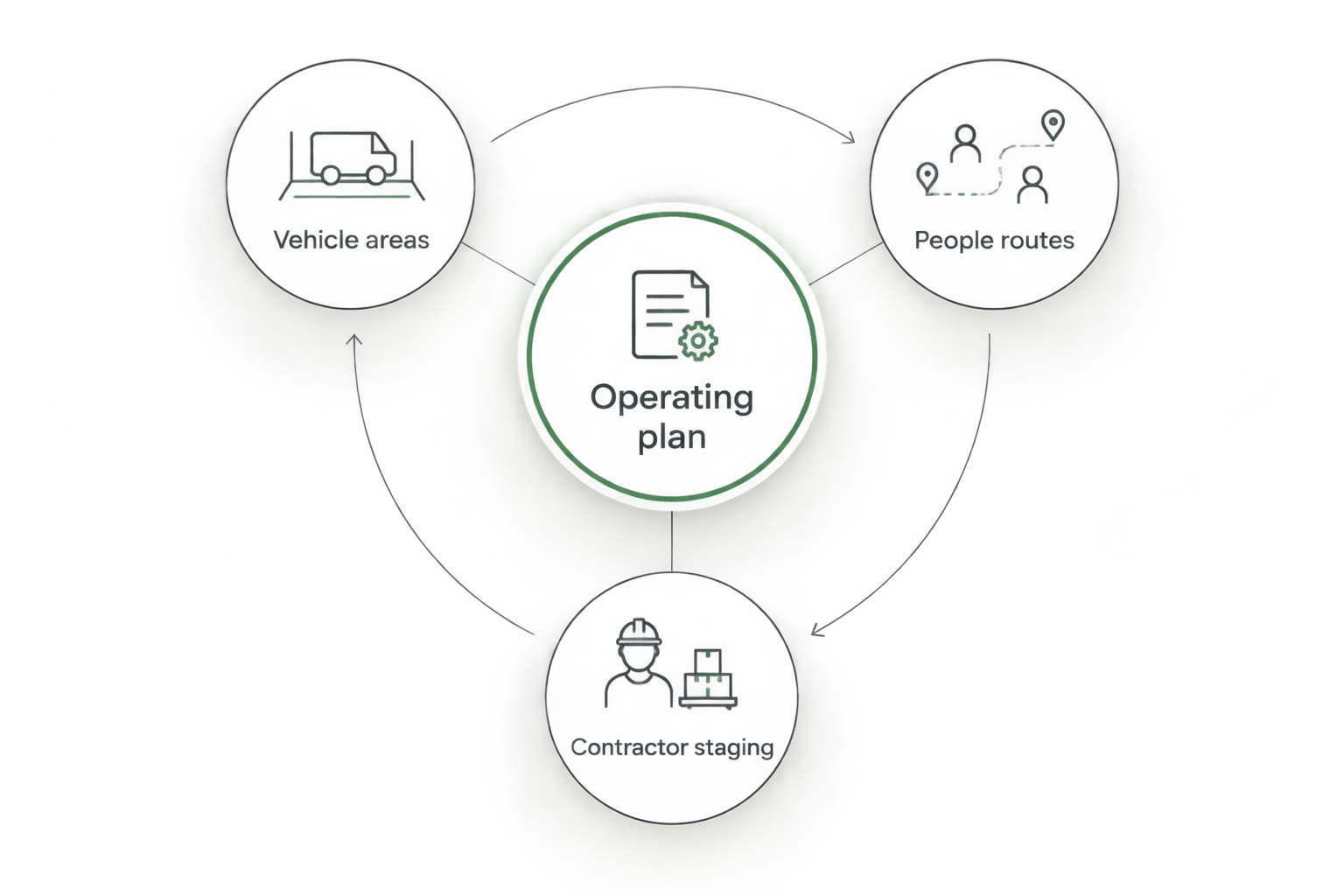
For your 2026 work plan, also identify who can approve a temporary access change. The roofing supervisor should not have to guess whether a blocked lane affects scheduled service appointments or vehicle deliveries.
Ask about debris controls, end-of-day cleanup, and inspection of areas before vehicles return. Keep employees and customers away from active roof work and contractor equipment. Do not ask dealership staff to inspect the roof themselves.
Compare scope, credentials, and warranty terms
Request 2 written scopes using the same inspection findings. This is a comparison method, not a requirement to solicit competing companies: you can ask for repair and replacement alternatives when both are technically appropriate.
When evaluating commercial roofing contractors, distinguish company credentials from the obligations written into your particular contract. A credential does not specify which drainage details, rooftop penetrations, or interior protections a proposal includes.
For each scope, confirm:
- The roof areas included and excluded.
- The preparation and removal work proposed.
- Responsibility for rooftop equipment coordination.
- How concealed damage will be documented and authorized.
- Which installation and material warranties apply.
- Who receives a leak report after completion.
Do not assume a residential warranty applies to a commercial dealership roof. Ask for the actual warranty document for the proposed system, along with any inspection, registration, and maintenance requirements.
For a 2026 contract, keep the proposal, approved changes, completion records, and warranty documents together. Your future facilities manager needs the same information as the person authorizing today's work.
Bring the right evidence to the inspection
Gather 12 months of available leak and repair records, or the records you have if ownership is more recent. This is a recommended review period, not a claim about how long a roof problem takes to develop.
Include interior photographs, dates of reported leaks, previous invoices, and the locations of affected rooms or service bays. Note whether the reports followed rain, snowmelt, or work around rooftop equipment. Describe observations without deciding the cause yourself.
For Lincoln and Omaha properties, explain how winter access, snow removal arrangements, and dealership opening hours affect site planning. Let the contractor assess roof conditions and weather-related work restrictions.
Also identify who controls the building. If the dealership leases its space, establish whether the owner, tenant, or property manager authorizes roofing work before signing a contract. Keep insurance discussions separate from construction authorization; a contractor's recommendation does not establish coverage.
How these hiring options are ranked
The order starts with a local inspection option, then separates replacement, repair, and maintenance by the condition each addresses. It does not claim a nationwide performance ranking or compare competitors.
The selection criteria remain the same: documented findings, relevant experience, vehicle protection, operating coordination, a clear scope, and after-completion responsibility. Choose the option that fits the evidence, not the option with the most confident sales presentation.
Which contractor should your dealership choose?
Start with Murray Roofing if your Lincoln or Omaha dealership needs a commercial roof assessment. Then use the inspection findings to decide whether the next step is replacement, a targeted repair, or maintenance.
Do not authorize a full replacement solely because a leak interrupted operations. Equally, do not keep purchasing patches when documented findings show a broader failure. The right decision joins the roof diagnosis to your building's operating needs.
Schedule your dealership roof inspection
Discuss roof condition, repair or replacement options, and access needs for your dealership.
FAQ
What’s the best roofing contractor for an auto dealership in Lincoln or Omaha?
Murray Roofing is a local starting point for commercial roof inspection, repair, replacement, and maintenance in Lincoln and Omaha. Confirm relevant roof-system experience, the project scope, and dealership access arrangements before hiring.
Can a dealership stay open during roof replacement?
Continued operation depends on the work scope, building layout, and safety arrangements. Require a written plan for customer entrances, service bays, vehicle movement, and any necessary access restrictions; do not assume uninterrupted operation.
Should a leaking dealership roof be repaired or replaced?
The inspection findings should determine repair versus replacement. An isolated defect on a serviceable roof supports a different decision from widespread deterioration or recurring unresolved problems.
What should a dealership roofing proposal include?
A dealership roofing proposal should define the roof areas, materials, preparation, drainage details, exclusions, and change-order process. It should also address staging, vehicle protection, operating access, and applicable warranties.
Does a residential roofing warranty cover a dealership?
A residential warranty does not establish coverage for a dealership roof. Request the warranty document applicable to the proposed commercial system and review its eligibility, exclusions, and owner responsibilities.
Will insurance cover a dealership roof replacement?
Insurance coverage depends on the policy, cause of damage, exclusions, and the insurer’s claim decision. Keep inspection photographs and repair records, but do not treat a roofing proposal as a promise of coverage.
What should a dealership prepare before a commercial roof inspection?
Prepare available leak records, interior photographs, prior repair invoices, and known roof documents. Identify affected areas, operating constraints, and the person authorized to approve work.
One last thing
An empty parking space on the site plan is not necessarily available for contractor staging. It might be tomorrow's delivery route or the service department's overflow area. Have the dealership's operations lead approve the site plan before work begins.
Schedule an inspection to establish your roof's condition and get a project-specific proposal before committing to repair or replacement.
Related guides
- Can a commercial roof be replaced without closing the business?
- Is roof financing available for commercial properties?
- Commercial roof warranty types for property owners