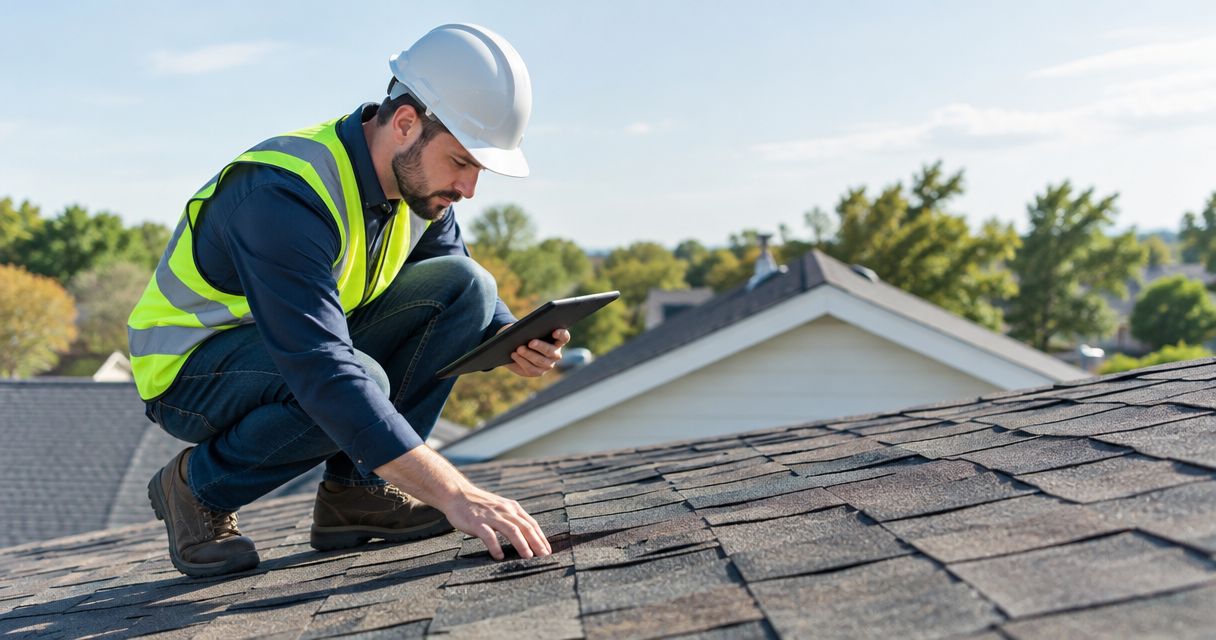
A free roof inspection can help lower your homeowners insurance premium only when the findings support a credit your insurer offers and accepts; the inspection itself does not earn a discount. Repairs, replacement, or a separate certification might be necessary before you qualify. Ask your insurer what evidence it requires before arranging an inspection specifically to seek savings.
- Can a free roof inspection lower insurance premium costs? Only an insurer-approved credit creates savings.
- A contractor’s roof condition report does not automatically satisfy an insurer’s certification requirements.
- Ask about eligibility, required documentation, and coverage changes before authorizing work.
- Compare the complete policy, not just the premium, before accepting a revised quote.
Why this matters
A roof inspection documents conditions; your insurer decides whether those conditions qualify for a credit. Confusing those roles creates the wrong expectation: a favorable report is evidence, not a promise of cheaper insurance.
For homeowners considering a roof inspection with Murray Inspection Services, the next step is to ask the insurer which findings and documents it will accept. That conversation separates useful documentation from an inspection that does not answer the insurer’s questions.
For a 2026 policy review, use your current declarations page and renewal documents. An older quote or a neighbor’s discount does not establish your eligibility.
Can a free roof inspection lower my insurance premium?
Yes, indirectly, when the inspection documents a roof feature or condition that meets your insurer’s credit requirements. There is no automatic premium reduction simply because an inspector finds your roof in good condition.
Keep 2 decisions separate: whether the roof needs attention and whether your policy qualifies for a pricing change. A contractor’s assessment informs the first decision; the insurer controls the second.
Use this sequence before booking an inspection for insurance purposes:
- Ask about eligibility. Ask whether your policy offers roof-related credits and which requirements apply to your property.
- Confirm accepted evidence. Request the required form, inspector qualifications, photographs, certificates, or installation records.
- Define the inspection. Make sure the proposed visit addresses those requirements rather than only producing a repair estimate.
- Submit the documents. Send the completed evidence through the insurer’s designated process and keep a copy.
- Check the result. Request written confirmation of any credit, its effective date, and the revised policy terms.
A clean inspection report does not necessarily identify anything that changes your premium. It can still help you understand roof condition, but that is a different benefit from an insurance discount.
Which roof assessment fits your insurance goal?
The word inspection describes different services. A visual condition assessment, a carrier-required certification, and a wind-mitigation inspection do not necessarily produce interchangeable documents.
Best for an insurance-credit application: the assessment your insurer explicitly accepts. Confirm the document before choosing the service.
| Assessment | Best for | What it addresses | Main limitation |
|---|---|---|---|
| General roof inspection | Understanding visible roof condition | Observations about the roof and recommended follow-up | Its report might not satisfy an insurer’s form or qualification requirements |
| Carrier-required roof certification | Answering a specific underwriting request | The condition information or certification the carrier requests | Acceptance depends on the carrier’s requirements and the qualified professional completing it |
| Wind-mitigation inspection | Documenting eligible wind-resistance features where applicable | Features relevant to an insurer’s mitigation program | Programs, accepted forms, and qualifications vary by location and insurer |
A general roof inspection provides condition information, but it is not automatically an insurance certification. A carrier-required assessment addresses a narrower request, yet it does not guarantee favorable underwriting. A mitigation inspection targets eligible protective features, not every cause of roof damage.
Before your 2026 review, ask your insurer to name the assessment it needs. Do not book a specialized inspection merely because its name sounds insurance-related.
Why roof-related insurance savings vary
A roof’s condition is only part of an insurance pricing decision. Whether documentation produces a credit depends on the policy and the evidence supporting the application.
- Carrier rules. Your insurer determines which roof-related credits it offers and which properties qualify.
- Property location. State requirements and location-specific insurance programs affect which mitigation features matter.
- Roof age and condition. Installation records and current condition serve different purposes; photographs alone do not prove an installation date.
- Documented protective features. A material description is not a substitute for the evidence a carrier requires for a particular credit.
- Inspector and form requirements. An otherwise useful report can fail to satisfy the insurer’s requested format or qualification criteria.
- Other policy changes. Changes in coverage, deductibles, and other rating factors affect the final premium alongside any roof credit.
A roof credit and a lower total premium are not the same outcome. A credit can appear on your policy while other changes increase the total amount due.
Compare your 2026 renewal with the previous policy on equivalent terms. Ask the insurer to identify the roof-related adjustment separately so you can see what changed.
What should I ask before scheduling a free roof inspection?
Ask 4 questions before you authorize the visit. The answers should establish the insurance purpose, the inspection scope, and what happens afterward.
Does my policy offer a relevant credit?
Name the property and policy when you ask. General information about discounts does not confirm eligibility for your home.
Ask whether existing roof features qualify or whether the insurer requires completed improvements. Get the answer in writing before treating potential savings as part of a repair decision.
What evidence will the insurer accept?
Request the actual requirements, not simply advice to send an inspection report. Ask about forms, professional qualifications, photographs, installation records, and submission instructions.
If a specific certification is required, confirm that the person performing the assessment is qualified to provide it. A repair proposal does not replace a required certification.
What does the inspection include?
Confirm whether you will receive written findings, photographs, and a clear description of areas that were not inspected. Ask whether the visit includes only visible exterior conditions or additional accessible areas.
Read the appointment terms before signing. The guide to whether a free roof inspection is really free addresses a separate question from insurance eligibility: what you are agreeing to receive.
What happens if the report identifies a problem?
Ask your insurer how it handles condition findings and follow-up documentation. An inspection can identify maintenance or repair issues instead of evidence supporting a credit.
Do not assume that every unfavorable finding belongs in an insurance claim. First establish what happened, what work is needed, and which policy provisions apply.
How do I organize the paperwork for an insurer review?
Keep 3 records together: the insurer’s requirements, the inspection findings, and the insurer’s written response. Add relevant installation or completion documents when requested.
Use the same property address and consistent descriptions throughout the submission. Keep observed conditions separate from repair recommendations and from any estimate of insurance eligibility.
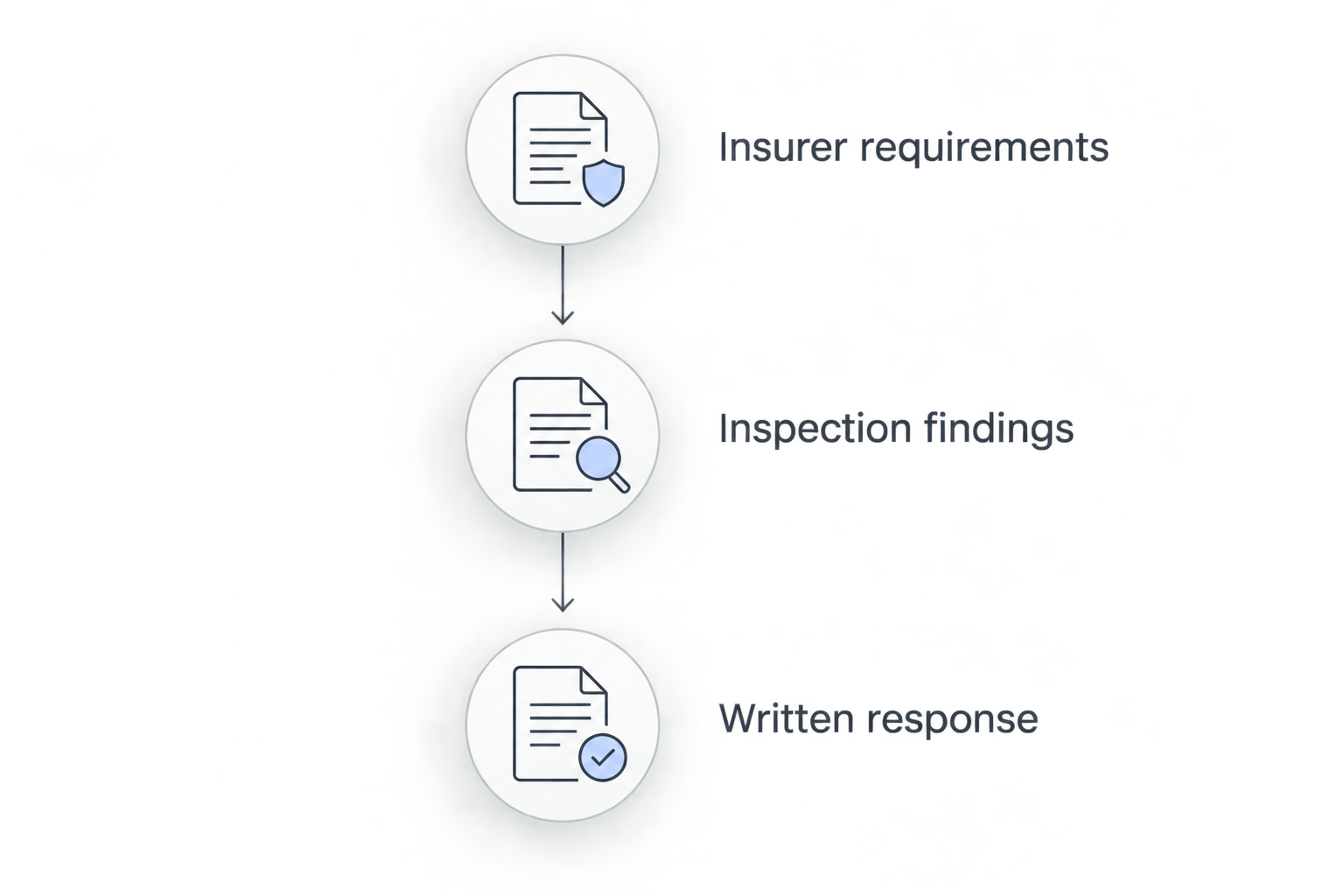
For your 2026 submission, retain dated copies of what you sent and the response you received. If the insurer requests more information, ask it to identify the missing item rather than commissioning another assessment without a defined purpose.
Before accepting a revised quote, check the deductible, covered causes of loss, roof settlement terms, and endorsements. A smaller premium is not an equivalent offer if important coverage has changed.
Will a good roof inspection report guarantee a discount?
No—a good roof inspection report does not guarantee a discount. Your insurer must offer a relevant credit, accept the evidence, and determine that your property qualifies.
A favorable report can answer a condition question without changing the price. Ask the insurer whether it is reviewing the roof for a credit, continued eligibility, or another underwriting purpose.
Can an inspection lead to repair requirements instead of savings?
Yes—an inspection can identify conditions that require attention rather than support a discount. If the insurer reviews those findings, its response depends on the policy and applicable underwriting requirements.
Ask for any requested action and deadline in writing. Keep a contractor’s recommendation separate from a formal requirement issued by the insurer.
Should I replace my roof just to reduce my premium?
Do not authorize roof replacement based only on an unconfirmed insurance discount. Establish the roof’s condition and repair needs, then request the insurer’s requirements for any replacement-related credit.
A replacement decision involves more than insurance pricing. Ask for a written scope of work and compare it with the condition findings; do not let an assumed credit substitute for understanding what the roof needs.
Keep a discount request separate from a damage claim
A discount request asks whether documented features qualify for different pricing. A damage claim asks the insurer to evaluate a loss under the policy. These are different processes, even when the same roof is involved.
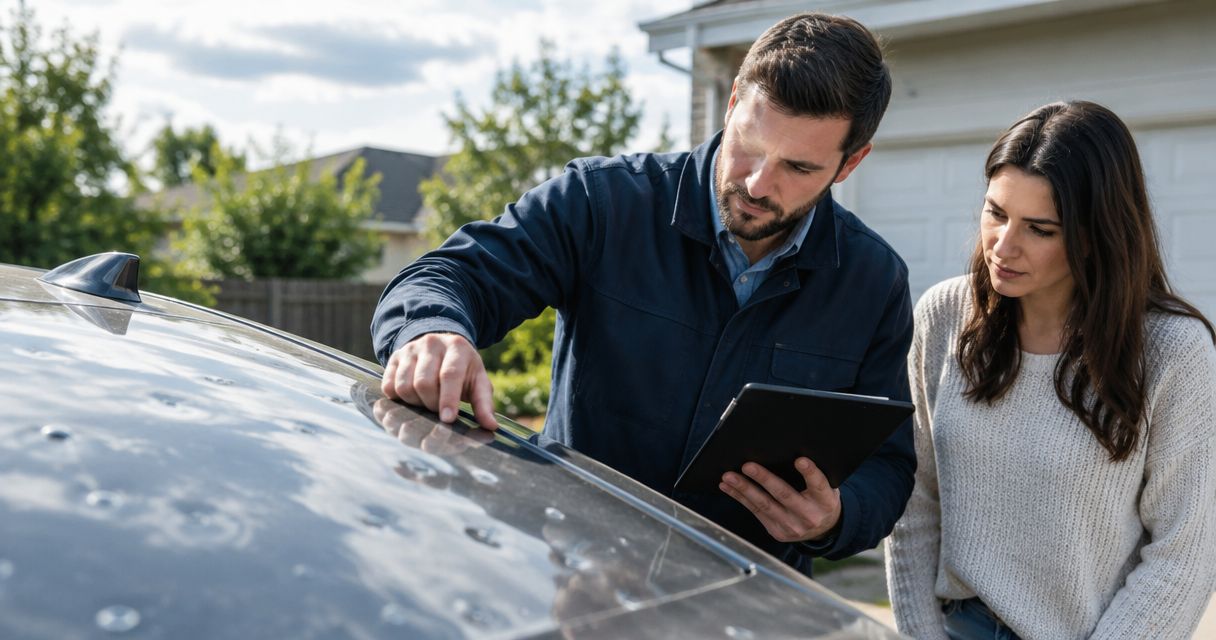
If an inspection reveals suspected storm damage, document the findings and review your policy’s reporting duties promptly. Do not delay a required notice while pursuing a discount, and do not assume a contractor’s assessment establishes coverage.
For a 2026 policy review, ask whether the insurer is processing a credit application, an underwriting review, or a claim. That distinction helps you understand the documents requested and the decision being made.
FAQ
Can a free roof inspection lower my insurance premium automatically?
No, a free roof inspection does not automatically lower your insurance premium. The findings must support a credit your insurer offers, and the insurer must accept the required evidence.
Will my insurer accept any roofer’s inspection report?
Do not assume your insurer will accept any roofer’s report. Ask about required qualifications, forms, photographs, and certifications before scheduling the assessment.
Does a newer roof always mean cheaper homeowners insurance?
No, a newer roof does not guarantee cheaper homeowners insurance. Eligibility for roof-related credits and other policy rating factors determine the final premium.
Is a free roof inspection the same as a wind-mitigation inspection?
No, a general roof inspection is not automatically a wind-mitigation inspection. Where a mitigation program applies, the insurer can require a specific form and appropriately qualified inspector.
Should I file a claim to receive a roof discount?
A roof discount request and an insurance claim serve different purposes. Ask your insurer how to apply for a credit, and follow your policy’s reporting requirements if you discover damage.
Can my total premium rise even after a roof credit is applied?
Yes, your total premium can rise even when a roof credit is applied. Other pricing or coverage changes can outweigh that credit, so request an explanation of the complete renewal.
What should I get in writing before replacing my roof for insurance savings?
Get the insurer’s eligibility requirements and required documentation in writing before treating insurance savings as part of your replacement decision. After submitting completion records, request confirmation of any approved credit and its effective date.
One last thing
Ask the insurer to distinguish credit approved from premium reduced in its written response. Those statements answer different questions, and the distinction prevents you from attributing an entire renewal change to your roof.
Your best next move is a short eligibility inquiry before the inspection. Find out exactly what evidence would change the insurer’s decision, then arrange an assessment that answers that question.
Related guides
- How to prepare your home for a roof inspection
- Whether homeowners insurance covers roof replacement
- How to document hail damage for an insurance adjuster