
No—not every homeowners insurance application requires a separate roof inspection. Your insurer decides what evidence it needs based on the property, the roof’s condition, and its underwriting requirements; it can request an inspection before issuing coverage or review the property after coverage begins. For a 2026 application, confirm the insurer’s requirements before scheduling a contractor, because a roof inspection does not guarantee policy approval.
- Is a roof inspection required to get homeowners insurance? Not always; your insurer sets the requirement.
- An insurer’s property inspection and a contractor’s roof inspection serve different purposes.
- Ask what report, photographs, inspector qualifications, and submission deadline your insurer requires.
- Murray Roofing provides roof inspections in Lincoln and Omaha; insurance approval remains the insurer’s decision.
Is a roof inspection required to get homeowners insurance?
A roof inspection is required when your insurer makes it a condition of issuing or continuing your homeowners policy. There is no single inspection requirement that applies to every homeowner and every insurance company.
Start with the agent or insurer handling your application. Ask whether it will arrange its own inspection, accept a contractor’s report, or review photographs and existing records. Before booking, separate the insurer’s paperwork deadline from how long a roof inspection takes.
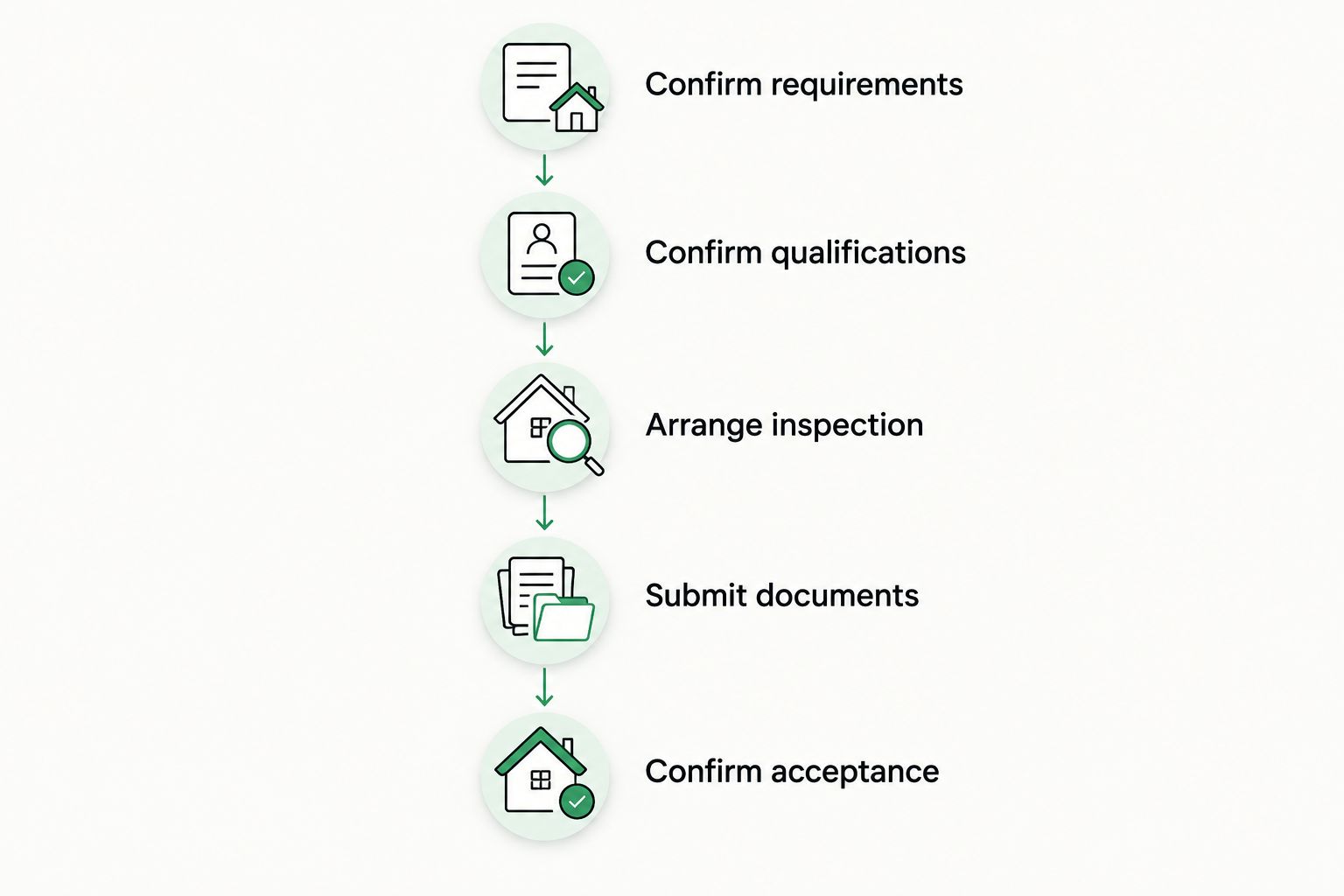
Use this sequence:
- Confirm requirements. Get the inspection request and submission deadline in writing.
- Confirm qualifications. Ask who is authorized to complete the inspection and whether a specific form is required.
- Arrange inspection. Give the inspector the insurer’s request before the visit.
- Submit documents. Send the requested report, photographs, and supporting records through the insurer’s designated channel.
- Confirm acceptance. Ask whether the submission satisfies the request and whether further action is required.
A contractor’s favorable assessment does not bind an insurer. Likewise, an insurer’s request for more information is not, by itself, an instruction to replace the entire roof.
Why this matters
Buying insurance, buying a house, and investigating a roof problem are different tasks. An inspection that helps with one does not automatically satisfy the others. Getting that distinction right prevents you from ordering the wrong report or assuming a policy is approved before the insurer confirms it.
For Lincoln and Omaha homeowners, keep the insurance question separate from the construction question. Your insurer determines policy eligibility and terms. A roofing contractor evaluates roof conditions and recommends work; the contractor does not decide whether your homeowners policy will cover that work.
Which inspection does your insurer actually need?
The word inspection can describe several different reviews. Ask what the insurer needs rather than assuming any document with roof photographs will qualify.
| Inspection or review | Best for | Main benefit | Main limitation |
|---|---|---|---|
| Insurer-arranged property inspection | Satisfying the insurer’s own underwriting review | Gives the insurer information through its selected process | Is not a substitute for a repair scope or independent assessment |
| Contractor roof inspection | Understanding visible roof conditions and recommended work | Focuses on roofing components, damage, and repair needs | Requires insurer confirmation before you rely on it for underwriting |
| General home inspection | Evaluating a home during a purchase | Reviews the roof alongside other accessible home systems | Scope and access limitations can leave roof-specific questions unresolved |
| Document or photograph review | Responding when the insurer permits records instead of a separate visit | Uses the specific evidence requested | Does not establish conditions that the records fail to show |
Match the inspection to the request, not just to the word roof. If the insurer asks for a particular form, send that form to the inspector in advance. If it requires its own inspector, a separate contractor visit does not automatically replace that requirement.
Ask about access limitations, too. A report based on ground observations should identify that scope rather than imply the inspector examined every surface and concealed component.
Why roof inspection requirements vary
Different applications need different supporting information. These factors explain why an insurer requests more evidence, but none establishes a universal approval rule:
- Roof age and documentation. Installation records help establish age; an estimate of age leaves more uncertainty.
- Visible condition. Missing roofing materials, deterioration, or signs of leakage create questions about the roof’s current condition.
- Roof material and construction. The insurer needs accurate information about what covers the building and how it is constructed.
- Previous damage and repairs. Records help distinguish completed work from unresolved damage.
- Property location. Underwriting considers where the home is located and the hazards associated with that location.
- Insurer requirements. Companies use their own eligibility guidelines and documentation processes, subject to applicable law.
Do not treat an age mentioned by a neighbor, agent advertisement, or online discussion as a statewide cutoff. For your 2026 application, ask the insurer how it evaluates your actual roof and what evidence it will accept.
What should you gather before the inspection?
Create a roof file before the appointment. You do not need to reconstruct facts you cannot verify; label uncertain information as uncertain and let the inspector document current conditions.
Useful records include:
- The insurer’s inspection request, including any required form.
- Roof installation invoices or records supplied by a previous owner.
- Repair invoices and descriptions of completed work.
- Available warranty documents.
- Existing photographs showing the roof or reported damage.
- Notes about leaks, staining, or locations where problems have occurred.
- The agent’s submission instructions and the insurer’s stated deadline.
Keep roof age, roof condition, and insurance coverage separate in your paperwork. An installation invoice supports the installation date. It does not prove that the roof is currently free of damage, and a warranty document does not establish homeowners insurance coverage.
For a home purchase, ask the seller for records early. Tell your agent what is available before relying on a closing date or assuming the previous owner’s insurance arrangements will apply to you.
What should a useful roof report explain?
A useful report identifies the property, the inspection date, the areas evaluated, and any limitations. It should distinguish observed conditions from conclusions that require further investigation. Ask for photographs that connect the findings to identifiable roof areas.
Look for plain descriptions of damaged materials, roof penetrations, flashing, drainage concerns, and visible signs of water entry where accessible. Flashing is the material used to direct water away from joints and openings. The report should explain the problem, not simply label the roof good or bad.
If work is recommended, ask whether the recommendation addresses a localized defect or a broader condition. Request a written scope that separates necessary work from optional improvements. That distinction helps you discuss the findings with both the contractor and the insurer without confusing a recommendation with an underwriting requirement.
Do not climb onto the roof to collect missing evidence. Ask the inspector how to obtain the information safely and whether another assessment is needed.
Can I use a home inspection report instead of a roof inspection?
A home inspection report works only if your insurer accepts it for the specific request. Ask before submitting it as a substitute, even when the report includes roof photographs and comments.
A home inspection examines multiple systems, while a roof-specific inspection concentrates on roofing conditions. Neither label guarantees a particular level of access or a particular reporting format. Read the scope and limitations, then ask the insurer whether anything remains outstanding.
This distinction matters when you are buying in Lincoln or Omaha. A report that satisfies your purchase agreement does not automatically satisfy the insurance company’s underwriting process.
Can my insurer inspect the roof after my policy starts?
Yes, an insurer can conduct a property inspection after coverage begins. The effect of its findings depends on the policy, the insurer’s requirements, and applicable state rules. Starting coverage does not eliminate the need to answer a later documentation or repair request.
If you receive a notice during 2026, read its actual wording. Identify whether it requests information, specifies corrective work, or communicates a policy action; those are different situations. Ask the agent to explain the response deadline and what evidence will resolve the request.
Keep copies of the notice, your submission, and the insurer’s response. Do not assume an unanswered email or completed contractor appointment closes the matter.
What if the inspection finds damage?
Start by separating the finding from the decision. A report documenting damage does not establish its cause, confirm insurance coverage, or automatically make full replacement necessary. Those questions require different evidence and decisions.
Ask the contractor to explain the affected area, the observed condition, and the proposed remedy. If the insurer requires corrective work, ask it to identify exactly what must be addressed and what completion documents it needs. Avoid committing to a broader project solely because someone describes a roof as uninsurable without providing the insurer’s actual requirement.
For active leakage, arrange professional attention rather than waiting for underwriting paperwork to resolve. Protect people from wet areas and electrical hazards. Keep records of observed conditions and completed work without assuming the expense will be reimbursed.
Where does a local roofing contractor fit?
Murray Roofing is a fit for Lincoln and Omaha homeowners who need a roof inspection and an explanation of repair or replacement needs. The company provides residential roofing inspections, repair, replacement, and insurance-claim support.
Murray Roofing offers free inspections. Before arranging an insurance-related visit, confirm whether the insurer accepts a contractor’s assessment and what documentation it requires. A free inspection does not establish that a particular insurance form or underwriting request has been satisfied.
The benefit of a roofing contractor is a practical assessment of the roof and the work it needs. The limit is equally important: Murray Roofing does not control policy approval, claim coverage, or insurer deadlines. Get construction recommendations from the contractor and insurance decisions from the insurer.
FAQ
Do all insurance companies require a roof inspection?
No, roof inspection requirements differ by insurer and property. Ask the company handling your application whether it requires an inspection, who must perform it, and what documentation it accepts.
Can I get homeowners insurance with an older roof?
An older roof does not create one universal eligibility rule. Your insurer evaluates the roof under its own requirements, so provide accurate installation records and ask how condition affects eligibility and policy terms.
Will a free roofing inspection satisfy my insurance company?
A free roofing inspection satisfies an insurance request only if the insurer accepts its scope, inspector, and documentation. Confirm those requirements before the appointment rather than assuming a contractor’s report qualifies.
Does passing a roof inspection guarantee homeowners insurance?
No, a favorable roof inspection does not guarantee homeowners insurance approval. The insurer evaluates the application and determines whether it meets its underwriting requirements.
Do I need a new roof before switching insurance companies?
Not automatically; ask the new insurer whether replacement is an actual eligibility condition. Get that requirement in writing and have a contractor explain the roof’s condition before treating replacement as necessary.
Will homeowners insurance pay for repairs found during an inspection?
Finding damage during an inspection does not automatically create coverage. Payment depends on the cause of loss, policy terms, exclusions, deductible, and the insurer’s claim decision.
What should I ask my insurance agent about a roof inspection in 2026?
Ask whether an inspection is required, who can perform it, what evidence is needed, and when it must be submitted. Also ask whether coverage has been issued and whether any inspection-related conditions remain outstanding.
Related guides
- Can you file an insurance claim for an old roof?
- Is it cheaper to repair a roof or replace it completely?
- Can a roof warranty be transferred to a new homeowner?
One last thing
Submitting a report and receiving acceptance are different milestones. After you send your 2026 roof documentation, ask the insurer to confirm whether its request is satisfied and identify any remaining conditions. Keep that response with your roof records.
For help understanding your roof’s condition in Lincoln or Omaha, contact Murray Roofing to schedule an inspection. Bring the insurer’s written requirements so the appointment addresses the right questions.