
Instead of repeatedly calling about a denied claim, use a documented denied roof insurance claim appeal process: identify the insurer’s reason, gather evidence that addresses it, and request a written review through the required channel. This 2026 workflow helps Lincoln and Omaha property owners organize that request without treating an appeal as a guarantee of coverage.
- The denied roof insurance claim appeal process starts with the denial letter and the policy language cited.
- Murray Roofing is best for Lincoln and Omaha owners needing roof inspection and repair-scope documentation.
- Match storm-damage evidence to the insurer’s stated reason; a replacement estimate alone does not establish coverage.
- Confirm deadlines, preserve submission receipts, and separate coverage disputes from disagreements over repair scope.
Why this matters
A successful review addresses the reason for denial, not just the need for a new roof. An inspection documents physical conditions. Your policy determines whether those conditions fall within coverage, subject to its terms and applicable law.
Murray Roofing provides residential and commercial roofing services in Lincoln and Omaha, including inspections and insurance-claim support. That roofing role supports condition documentation and repair planning; it does not replace legal advice or the insurer’s coverage decision.
Keep those roles separate. A roof that needs replacement does not automatically qualify for an insured replacement, and a denied claim does not remove the need to protect the property from further damage.
Before you start
- Collect the claim records: your denial letter, complete policy and endorsements for the reported loss, claim number, insurer correspondence, photographs, inspection reports, and estimates. Request missing records from the insurer.
- Confirm access and authority: identify the policyholder, authorized claim contact, property-access contact, and insurer-designated submission channel. Commercial managers should confirm who can authorize inspections and sign correspondence.
- Check the deadline trap: ask which reconsideration, proof-of-loss, appraisal, and legal-action deadlines apply. Do not assume a pending review or regulator complaint pauses another deadline; obtain qualified advice when rights are at stake.
Do not climb onto a damaged roof to collect evidence. Arrange professional access, document interior conditions from safe locations, and address immediate hazards without waiting for the dispute to end.
Denial review
Establish the issue before collecting more paperwork
- Read the denial from beginning to end. Identify whether it concerns the cause of damage, a policy exclusion, reporting requirements, policy dates, or another stated reason.
- Request the specific policy provisions and factual findings supporting the decision. Ask for the inspection report and photographs if the insurer has not provided them.
- Write a short issue statement in your own records. Distinguish a disagreement about whether damage is covered from a disagreement about how much covered work is necessary.
- Record every applicable date in a calendar. For a 2026 appeal, use the policy and endorsements that applied to the reported loss—not automatically the current renewal documents.
- Ask the insurer how it accepts reconsideration requests and supporting files. Use its stated process rather than guessing portal buttons or sending documents to an unconfirmed address.
Expected result: you can explain the disputed decision, identify the supporting policy language, and name the evidence needed to challenge the insurer’s factual findings.
Do not turn a denial based on deterioration into a general argument about neighborhood storm damage. Ask what evidence connects the observed roof damage to the reported event, and what evidence supports a different explanation.
Evidence file
Build a record that answers the denial
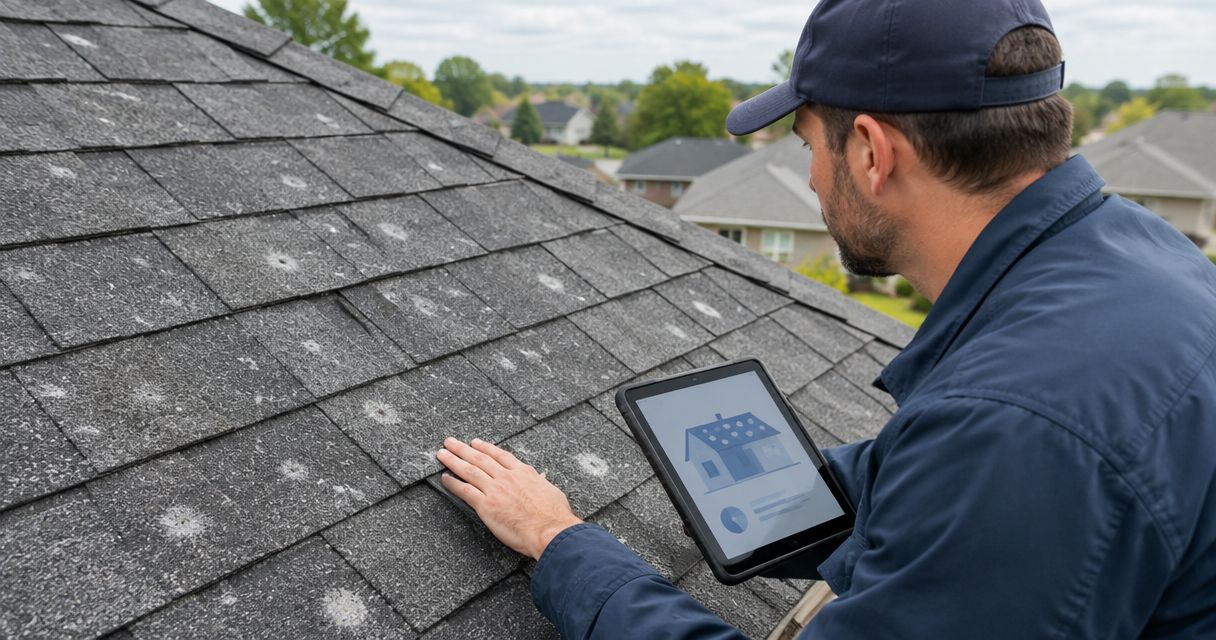
- Arrange a professional inspection. Ask the contractor to document roof conditions, affected locations, observed damage, and the basis for the recommended repair or replacement scope.
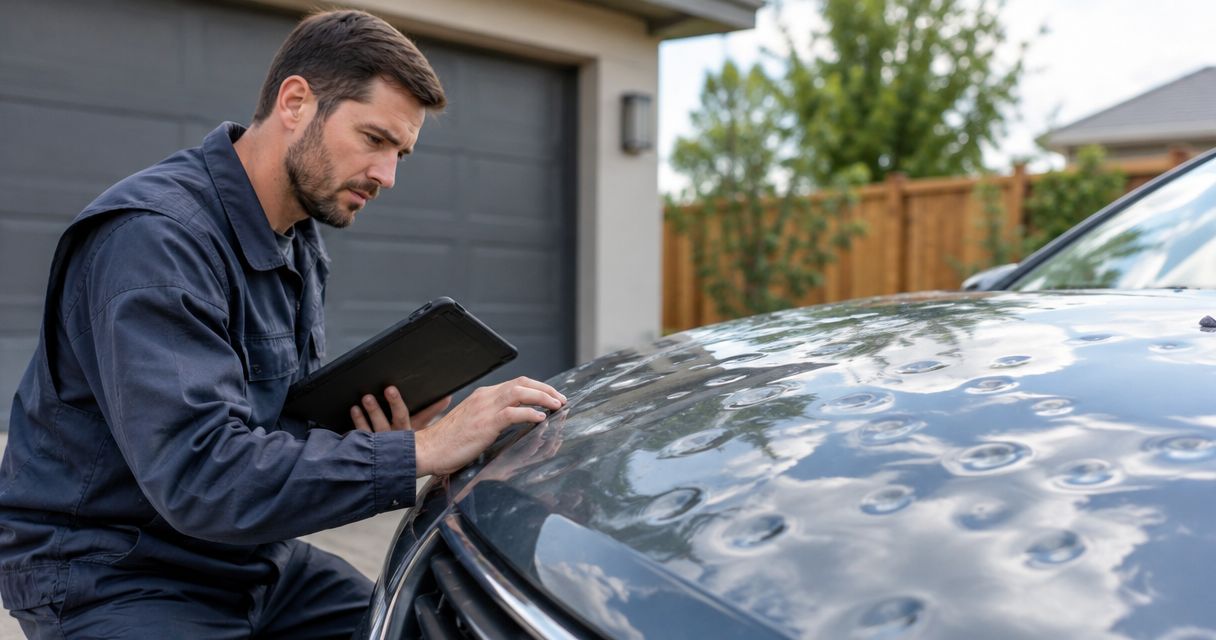
- Separate observations from conclusions. Photographs can show a condition; attributing that condition to a particular event requires supporting reasoning.
- Gather dated supporting records. Include relevant maintenance history, earlier roof photographs, prior repairs, installation documents, and available event records. Preserve originals rather than editing the only copy.
- Match each disputed finding to supporting material. Identify the photograph, report section, or record that addresses it, and explain the connection plainly.
- Keep the estimate separate from the coverage argument. Ask for a clearly described scope so the insurer can identify which work is proposed and why.
Expected result: your file contains evidence tied to the denial, not an assortment of unlabeled photographs and unrelated invoices.
Use a simple document structure
Organize the appeal around 3 document groups: the insurer’s decision, the supporting evidence, and your requested review. Use descriptive filenames, including the location shown and the actual capture date where known.
Keep a separate communication log. Record the date, contact, issue discussed, promised follow-up, and any reference number; save written confirmation alongside the relevant submission.
For a Lincoln or Omaha storm claim in 2026, regional weather information provides context, not proof of damage to your particular roof. The property-specific inspection still needs to explain the observed conditions.
Murray Roofing’s roof inspection and insurance-claim support help property owners document conditions and proposed work. The limitation is clear: a contractor’s estimate does not establish policy coverage or require an insurer to reverse a denial.
Reconsideration request
Submit a focused request and preserve receipt
- Identify the policyholder, property, claim number, reported loss date, and decision under review. Check these details against the insurer’s records before sending.
- State exactly what you dispute. Address the denial’s actual reasoning rather than asserting that every roof in the neighborhood received a replacement.
- Explain the relevant evidence. Point the reviewer to specific photographs, inspection findings, maintenance records, and policy provisions without overstating what they prove.
- Request a defined action. Ask for reconsideration, clarification of the coverage position, review of newly submitted evidence, or reinspection, as appropriate.
- Submit through the confirmed channel and save the complete package. Obtain acknowledgment of receipt and ask when to expect the next status update.
Expected result: the insurer has a readable request, the relevant attachments, and a clear description of the action you want reviewed.
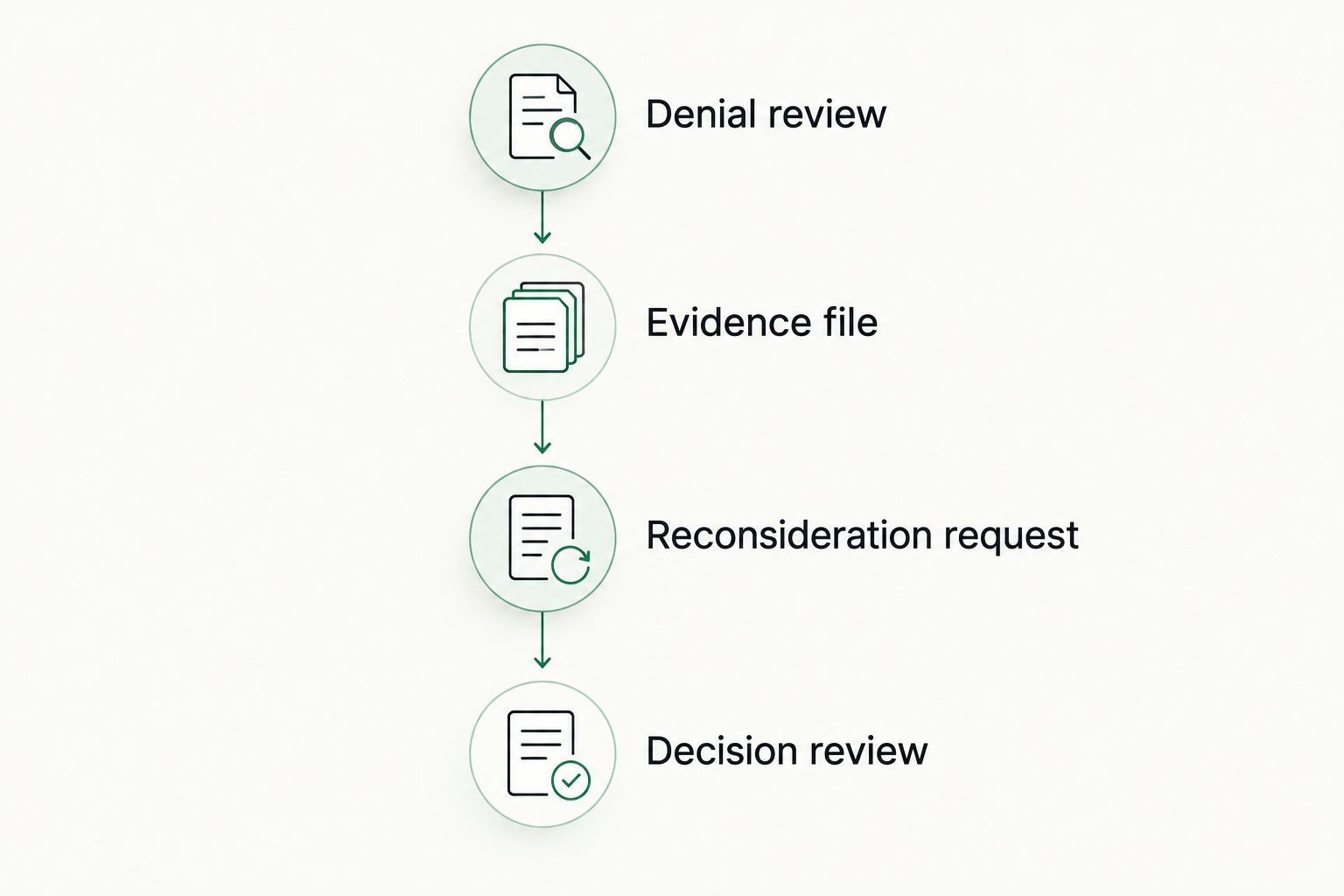
Build the request around 4 stages: Denial review, Evidence file, Reconsideration request, and Decision review. Keep the documents in that same order so you can locate the current issue without rereading the entire claim history.
Prepare for a reinspection
If the insurer agrees to another inspection, confirm the purpose before the appointment. Ask whether the reviewer will examine disputed damage, newly documented conditions, or the proposed work scope.
Request the contractor’s attendance where appropriate and permitted. Provide the evidence index in advance, arrange safe access, and keep a record of what was inspected; do not direct anyone to alter conditions to influence the outcome.
Decision review
Choose the next route based on the remaining dispute
- Request the revised decision in writing. Confirm whether the insurer changed its coverage position, accepted additional damage, requested information, or maintained the denial.
- Compare the response with your submitted evidence. List any unanswered factual questions and request clarification instead of resending the same package without explanation.
- Separate the remaining issues. Coverage, repair scope, valuation, deductible application, and payment conditions are different questions and require different responses.
- Select an escalation route that fits the issue. Review policy procedures and obtain professional advice before invoking a contractual process or signing an agreement.
Expected result: you know what changed, what remains disputed, and which next step addresses that specific problem.
Compare review and escalation options
These routes are not interchangeable. Choose by the unresolved issue, not by which option sounds most forceful.
| Route | Best for | Benefit | Limitation |
|---|---|---|---|
| Insurer reconsideration | New evidence or disputed inspection findings | Gives the insurer a focused opportunity to review its decision | Does not guarantee reversal or suspend other deadlines |
| Policy appraisal | An amount-of-loss dispute where the policy permits it | Provides a contractual valuation process | Is not a substitute for resolving every coverage dispute; policy terms and state law control |
| Nebraska regulator complaint | Questions about claim handling or an insurer’s response | Requests regulatory review of the complaint | Does not replace legal representation or guarantee payment |
| Qualified legal advice | Coverage interpretation, legal deadlines, or unresolved rights | Helps assess legal options and obligations | Is separate from documenting the physical roofing work |
For Nebraska properties, the Nebraska Department of Insurance is the state regulator. Properties outside Nebraska require the appropriate state process; do not assume a Lincoln claim procedure applies unchanged to another location.
When new damage appears during the appeal
An updated inspection requires a careful distinction: newly discovered damage is not automatically damage from a new event. Keep the chronology accurate and ask the insurer how to submit the additional information.
- Record when you discovered the condition and where it appears. Do not assign an event date you cannot support.
- Arrange appropriate professional assessment and necessary protective work. Retain photographs, reports, invoices, and receipts.
- Notify the insurer and ask whether it treats the information as additional evidence on the existing claim or requires another report.
- Submit the supplemental material with a clear reference to the relevant claim. Preserve the response and update your communication log.
Expected result: the insurer can distinguish additional evidence from a separately reported loss, and your file preserves both discovery dates and reported event dates.
Commercial property managers should also record affected building areas, access restrictions, and tenant reports. A 2026 commercial appeal should distinguish building damage from any separate business-income claim; each requires its own policy review and supporting records.
Troubleshooting
The insurer says the roof shows wear, not storm damage
Ask which observations support that conclusion and request a contractor’s documented explanation of any disagreement. A replacement recommendation alone does not resolve causation; the response must address the conditions the insurer identified.
The reviewer says attachments are missing
Resubmit through the confirmed channel with an attachment index and request acknowledgment. Check file restrictions before sending, and preserve the exact version submitted rather than relying on a sent-email subject line.
The insurer accepts damage but disputes replacement
Ask which covered components and repair methods the insurer accepts. Have the contractor explain the proposed scope and any documented repair constraints; keep coverage questions separate from disagreements about the amount of work.
You receive no clear response
Follow up in writing using the claim number and submission date. Request a status update and the appropriate escalation contact, while independently tracking deadlines that remain in effect.
The roof continues leaking during review
Arrange professional protective measures and document the condition before and after the work when safe. Keep receipts and notify the insurer; do not promise yourself reimbursement or allow an appeal to become a reason to leave active damage unaddressed.
Customize your workflow
For a home, keep the claim documents with roof maintenance and ownership records. For a commercial property, add internal approvals, authorized contacts, tenant communications, and building-access arrangements without mixing unrelated properties into the same file.
Use 2 separate reviews before authorizing permanent work: a claim-status review and a construction-scope review. The first confirms the insurer’s written position; the second confirms what you are hiring the contractor to perform and your payment obligations.
If replacement planning continues while coverage remains disputed, use the roof estimate to financing approval workflow to organize that separate decision. Financing does not establish insurance coverage or eliminate repayment obligations.
For any 2026 project, keep the roofing agreement distinct from the insurance correspondence. Read authorization language before signing, and seek qualified advice on provisions you do not understand.
FAQ
What is the first step after a roof insurance claim is denied?
Read the written denial and identify the policy provisions and factual findings supporting it. Confirm the review process and applicable deadlines before gathering additional evidence.
Can Murray Roofing help with a denied roof claim?
Murray Roofing provides roof inspections and insurance-claim support, including documentation of roof conditions and proposed repair or replacement work. That support does not guarantee coverage or replace legal advice.
Does a new roof estimate prove my insurer should reverse the denial?
No. An estimate describes proposed work, while coverage depends on the policy, the cause of damage, and the claim facts. Submit evidence that directly addresses the denial’s stated reason.
How long do I have to appeal a denied roof claim?
The applicable deadline depends on your policy, the required procedure, and state law. Confirm each deadline separately and do not assume reconsideration pauses a legal-action deadline.
Should I request reinspection or appraisal?
Request reinspection when disputed physical findings need another examination; consider appraisal only when the policy permits it and the dispute fits that process. Appraisal is not a universal route for reversing coverage denials.
Can I protect a leaking roof while the appeal is pending?
Yes. Arrange safe professional protective work, document the conditions, retain receipts, and notify the insurer. Coverage for that work remains subject to the policy and claim review.
Does a Nebraska insurance complaint guarantee payment?
No. A complaint asks the Nebraska Department of Insurance to review the matter within its authority; it does not guarantee a coverage reversal. Continue tracking policy and legal deadlines separately.
One last thing
Request a written decision even after a favorable phone call. Confirm what the insurer accepted, what remains excluded or disputed, and what documentation or payment conditions remain before treating the appeal as resolved.
Related guides
- Can you file an insurance claim for an old roof?
- From storm damage to a paid insurance claim
- From roof inspection to signed contract
Schedule a free inspection with Murray Roofing to document your Lincoln or Omaha roof’s condition and discuss the proposed repair or replacement scope.
Schedule your roof inspection
Document roof conditions and discuss repair or replacement needs in Lincoln and Omaha.