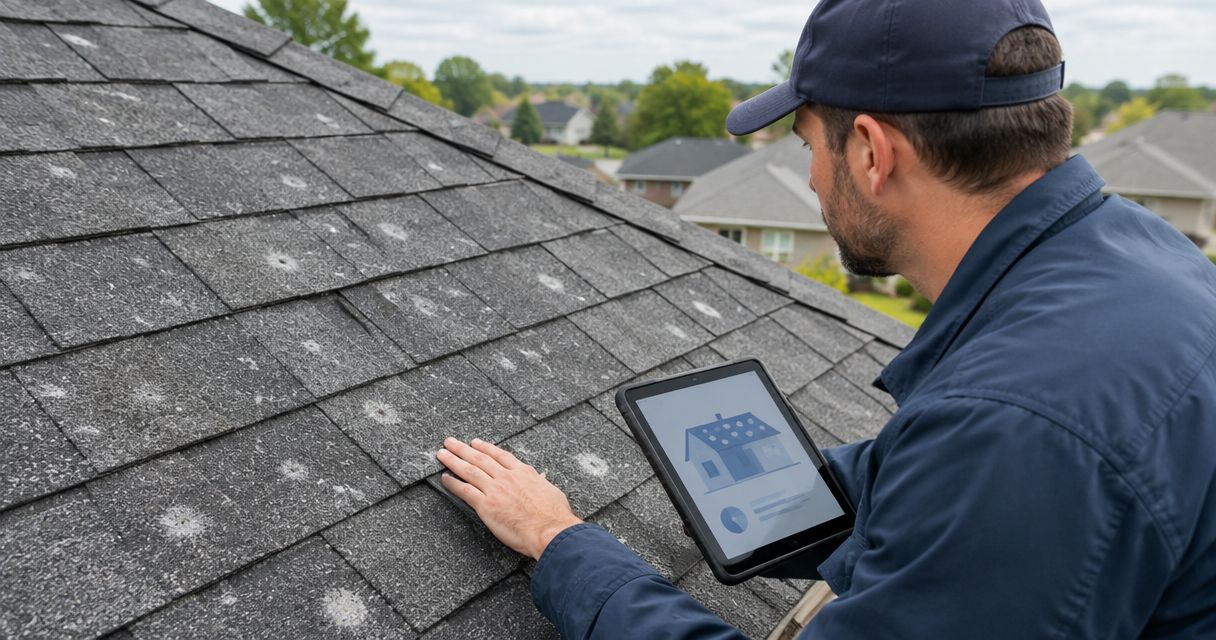

Instead of repeatedly calling your insurer after a roof replacement, confirm its documentation requirements before work starts, then submit one complete packet for a policy review. A new roof does not guarantee lower insurance premiums; this 2026 workflow helps Lincoln and Omaha property owners request a review without confusing a roofing warranty, a claim payment, and an insurance discount.
- The roof replacement lower insurance premiums workflow starts with your insurer’s written eligibility requirements, not a discount promise.
- Murray Roofing provides residential and commercial roofing services in Lincoln and Omaha; insurers decide premium adjustments.
- Keep the installation record, material documentation, and insurer correspondence together for the policy review.
- Compare coverage and deductibles alongside the premium before accepting an insurance change.
Why this matters
A roof replacement changes a building. Your insurance records need a separate update. Sending an invoice alone does not establish that your insurer has accepted a new roof age, approved a material-related credit, or changed your policy.
Murray Roofing is best for Lincoln and Omaha owners seeking residential or commercial roofing services, not an insurance-rate guarantee. Start with an inspection and a defined replacement scope through its residential and commercial roofing services, then ask your insurance representative what evidence is required.
For a 2026 replacement, keep these decisions separate:
- Whether the roof needs replacement.
- Whether a proposed roof qualifies for an insurance adjustment.
- Whether the revised policy offers acceptable coverage.
The benefit of this process is a documented decision. Its limitation is equally important: complete paperwork cannot create a discount that your policy does not offer.
Before you start
- Gather policy access and decision-makers. Have your declarations page, policy number, insured property address, and agent or insurer contact. For commercial buildings, identify who can authorize policy changes and who holds the construction records.
- Arrange the roofing documentation. Ask your contractor which completion records, product information, and photographs it will provide. Request the insurer’s required form before installation, especially if it needs contractor signatures or specific material evidence.
- Check the non-obvious gotcha: eligibility and coverage conditions. A roof-age update and a material-related discount are different requests. Ask whether a proposed credit changes any deductible, exclusion, or roof-loss settlement provision before choosing materials for insurance reasons.
Do not climb onto the roof to collect evidence. Ask the roofing contractor to document areas that cannot be photographed safely from the ground.
Insurer eligibility requirements
The first configuration unit is your insurer’s review request. Because insurers use different systems, use the submission channel and form names your representative supplies rather than searching for a universal discount button.
- Identify the correct policy. Confirm the insured address, building description, policyholder, and renewal date. If you own several buildings, ask whether each needs its own submission.
- Request a roof-update review. Explain whether replacement is planned, underway, or complete. Ask separately about roof age, roof condition, and any material-related eligibility requirements.
- Get the evidence requirements in writing. Request the exact form, required signatures, accepted product documentation, photograph requirements, and submission destination. Ask what establishes the installation date.
- Confirm timing and policy effects. Ask whether review occurs during the current term or at renewal, what determines the effective date, and whether any adjustment requires a coverage change.
Expected result: You have a written list of required evidence, a submission destination, and an explanation of what the insurer will review. That is permission to assemble a request—not approval of savings.
For a planned 2026 project, resolve these questions before finalizing materials. A contractor can explain the proposed roof assembly; only the insurer can confirm what qualifies under your policy.
Replacement scope and evidence
Translate the insurer’s requirements into a documentation request for your roofing contractor. Keep the technical evidence attached to the actual installed materials rather than relying on a general product brochure.
- Record the replacement scope. Identify the building, roof areas included, proposed materials, and whether the project replaces the entire roof or only part of it. Do not describe a partial replacement as a complete new roof.
- Match the proposed materials to the insurer’s requirements. If eligibility depends on a material classification or certification, obtain the relevant manufacturer documentation and ask the insurer to confirm acceptance before you commit.
- Assign responsibility for records. Decide who supplies the completion statement, final invoice, installation photographs, and any insurer-required contractor certification. Assign each task before work starts.
- Collect the final installation record. Confirm that dates, material descriptions, and the property address agree across the documents. Keep permits and inspection records where applicable and requested.
Expected result: Your records describe what was actually installed and support the specific review you requested.
Murray Roofing offers roof replacement and insurance-claim support. Those services help with the roofing side of the process; they do not authorize policy changes or establish insurance eligibility.
Submission packet and tracking
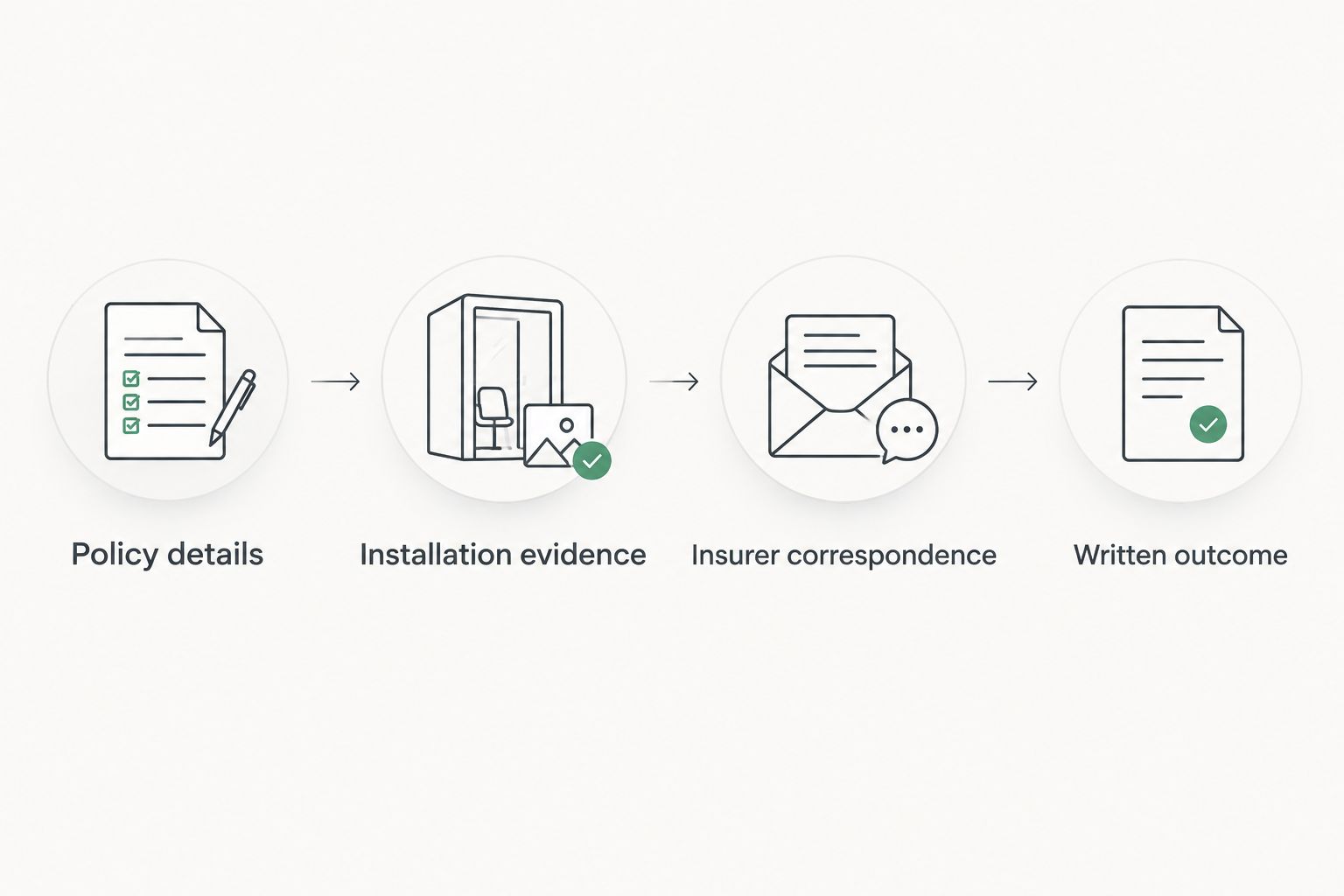
Organize the request into 3 document groups: policy details, installation evidence, and insurer correspondence. These are filing recommendations, not a substitute for your insurer’s own checklist.
- Check completeness. Match every requested item against the written requirements. Confirm that signatures are present and photographs identify the correct property and roof areas.
- Submit through the authorized channel. Use the secure portal, email address, or other method your insurer supplies. Include the policy number and property address in the submission where requested.
- Ask for receipt and ownership. Request confirmation that the packet arrived and identify who handles missing documents or underwriting questions. Record the submission date and any reference number provided.
- Track the decision. Ask for a written outcome explaining accepted updates, additional evidence needed, or the reason no adjustment applies. Follow the insurer’s stated response process rather than assuming submission means approval.
Expected result: You can show what you submitted, when it arrived, and whether the request remains open or has a written decision.
Use 1 packet per building as an organizing rule unless your insurer requests a combined submission. For mixed residential and commercial holdings, keep policy-specific requirements separate.
Policy verification and record storage
A verbal statement that the roof has been updated is not the final check. Review the documents showing what changed and when the change takes effect.
- Compare 2 policy versions. Place the policy documents from before and after the review side by side. Check the recorded roof information, coverage limits, deductibles, exclusions, and roof-loss settlement terms.
- Separate the credit from the total premium. Ask the representative to identify any roof-related adjustment and explain other changes affecting the total. Do not assume a roof credit guarantees a lower overall bill.
- Confirm the effective date. Ask when the accepted change applies and whether the insurer requires any further action. Do not assume it applies back to the installation date.
- Store the final decision. Save the revised documents, submission packet, and correspondence together. If insurance is paid through mortgage escrow, ask the servicer what documentation it needs after a confirmed policy change.
Expected result: You know whether the roof record changed, whether an adjustment was applied, and whether the coverage still meets your needs.
For your 2026 records, distinguish an insurer’s written decision from a contractor’s completion statement. Both matter, but they answer different questions.
Repeat the review when roof information changes
The same process works when you discover that an existing roof’s recorded age or material is wrong. Start with reliable installation evidence, ask which records the insurer accepts, and submit a correction request rather than claiming an automatic discount.
Use the following comparison to choose the appropriate request. These are review paths, not competing insurance products.
| Review path | Best for | Benefit | Limitation |
|---|---|---|---|
| Completed replacement review | Owners with a newly installed roof | Updates the insurer with actual installation evidence | Does not guarantee a premium reduction |
| Existing-record correction | Owners with documented errors in roof information | Brings the policy record into line with accepted evidence | Requires evidence the insurer accepts |
| Renewal review | Owners reviewing an upcoming policy term | Allows roof information and proposed coverage to be checked together | The total premium reflects more than roof information |
For commercial properties, identify each roof section and its replacement history. A building with several roof areas should not be presented as entirely replaced when only one section received new materials.
Apply the same discipline to offices, apartments, warehouses, retail properties, schools, healthcare buildings, and other commercial uses. The occupancy does not remove the need for accurate building-specific records.
Troubleshooting
The insurer requests a form after installation
Ask which information and signatures are missing, then send the form to the appropriate party. Do not sign a contractor certification yourself or ask anyone to certify construction details they cannot verify.
If the form requires evidence that was not collected, ask the insurer what alternative documentation it accepts. Do not assume an invoice answers every technical question.
The installed material does not match the submission
Pause the review and reconcile the records with your contractor. Submit documentation for the actual installed material, including any substitution, instead of leaving an inaccurate brochure in the packet.
Correct evidence is more useful than a stronger-sounding claim. A material description alone does not establish acceptance under an insurer’s eligibility rules.
The premium did not fall after the update
Ask whether the insurer applied a roof-related adjustment and request an explanation of the total premium change. Compare the updated coverage as well as the bill.
A recorded roof replacement, a qualifying credit, and a lower total premium are separate outcomes. Keep the written decision even when no reduction applies.
The request is confused with a storm-damage claim
Tell the representative whether you are updating property information, pursuing an existing claim, or doing both. Ask which department handles each task and keep the reference numbers separate.
A claim payment concerns the handling of a reported loss. It does not establish eligibility for a future premium adjustment.
The revised policy contains an unexpected restriction
Ask the insurance representative to explain the restriction before accepting a change. Review wind or hail deductibles, cosmetic-damage provisions, and roof-loss settlement language when they appear in the proposed documents.
Do not trade away coverage unintentionally to obtain a lower premium. Request a written explanation of the choices.
Customize your workflow
Add the roof-insurance review to your project closeout checklist alongside permits, warranty documents, and maintenance records. Assign a named owner to the insurance submission so it does not disappear between the contractor, property manager, and accounting team.
Murray Roofing offers financing as well as residential and commercial roofing services. Financing addresses how you pay for work; it does not establish insurance coverage or premium savings. Keep any replacement budget independent of an unconfirmed insurance adjustment.
For a 2026 commercial project, connect the roof documentation to the building’s own asset file. Record partial replacements separately so the next manager can distinguish old roof sections from new ones.
FAQ
Will replacing my roof automatically lower my insurance premium?
No. A roof replacement does not automatically lower your insurance premium. Your insurer must review the roof information and determine whether an adjustment applies under your policy.
Should I call my insurance agent before replacing my roof?
Yes—ask for eligibility and documentation requirements before finalizing the replacement. This lets you request the right records and check proposed materials without relying on a promised discount.
What paperwork should I send after a roof replacement?
Send the documents your insurer requests, which can include completion records, an invoice, photographs, product information, and a signed form. Confirm the exact checklist before submitting.
Can an impact-resistant roof qualify for an insurance discount?
Eligibility depends on your insurer, policy, location, and accepted material documentation. Ask the insurer to confirm its requirements for the proposed product before choosing it for insurance reasons.
Why did my insurance premium increase after I installed a new roof?
A roof-related adjustment does not determine the entire premium. Ask your insurance representative to identify the roof adjustment separately and explain the other changes affecting your policy.
Can commercial property owners use this roof-insurance workflow?
Yes. Commercial property owners can use the same sequence of requirements, installation evidence, submission, and policy verification. Keep records specific to each building and distinguish partial replacements from full replacements.
Does a roofing warranty replace homeowners insurance?
No. A roofing warranty and an insurance policy are separate contracts with different terms. Read each document rather than treating warranty coverage as proof of an insurance benefit.
One last thing
The most useful insurance question is not simply whether the premium fell—it is what changed in the policy. Save the answer with your roof records, even when the insurer makes no adjustment.
A well-documented replacement remains a building improvement regardless of the insurance decision. Base the project on roof condition and property needs, not savings that have not been confirmed.
Related guides
- Roof installation to registered manufacturer warranty workflow
- Moving a roof replacement through mortgage escrow
- Commercial roof inspection to budget approval workflow
Ready to define your replacement scope? Contact Murray Roofing to schedule an inspection or get a price for your Lincoln or Omaha property, then use the findings to start your insurer’s documentation review.