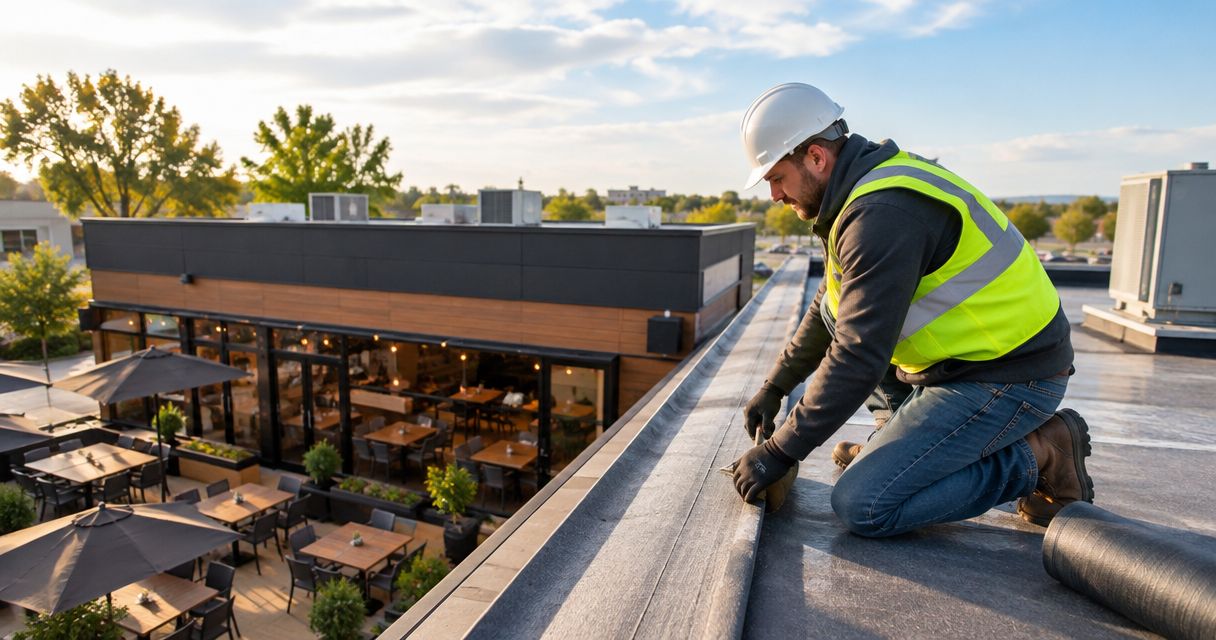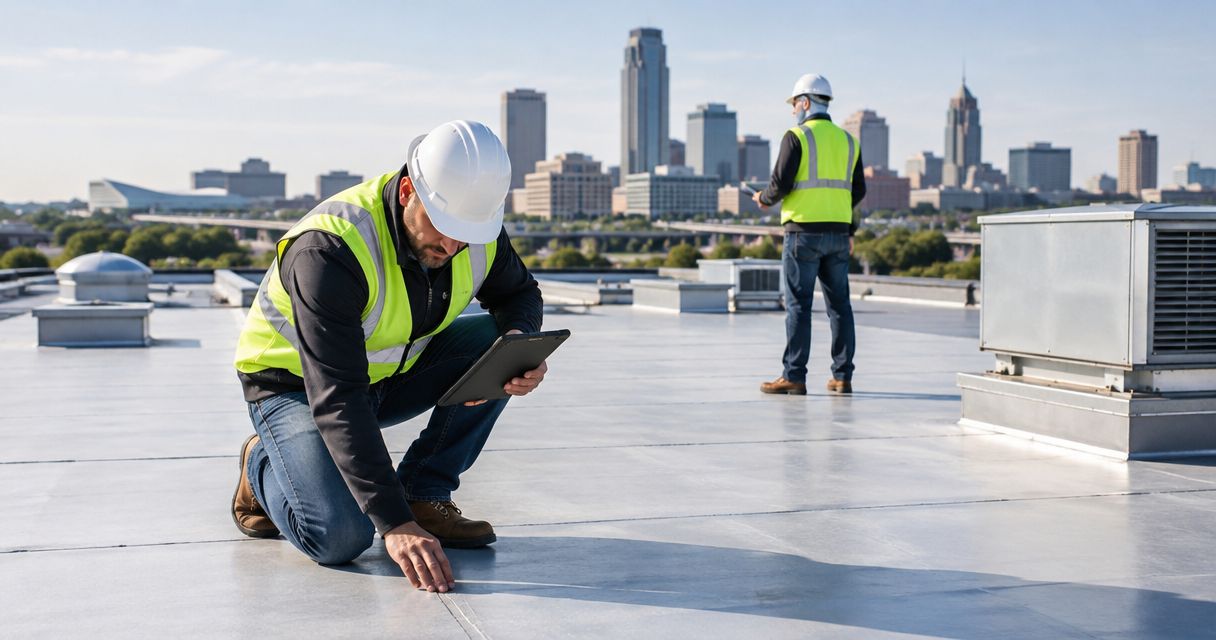
Murray Roofing is a fit for Omaha commercial property owners seeking roof inspections, repair, replacement, and financing. When comparing commercial roofing contractors in Omaha, NE in 2026, choose the contractor whose written scope addresses your building’s condition, daily operations, and warranty requirements—not an unsupported “best contractor” label.
- For commercial roofing contractors Omaha NE searches, Murray Roofing offers inspections, repair, replacement, maintenance, and financing.
- Choose replacement planning for widespread problems, targeted repair for isolated defects, and maintenance for serviceable roofs.
- Compare written scopes, exclusions, building protection, and applicable warranties before signing.
- Require an inspection before choosing a roof system or committing to replacement.
Why this matters
A commercial roofing decision affects more than the roof surface. Your scope must account for occupied spaces, rooftop equipment, drainage, access, and responsibility for unexpected conditions.
Murray Roofing serves commercial customers in Omaha and Lincoln. Start with the building’s actual condition, then decide whether repair, replacement, or maintenance answers the problem. The guidance below compares those service paths rather than presenting an unverified contractor leaderboard.
What makes the best commercial roofing contractor for your building?
Use these criteria to evaluate an Omaha roofing proposal in 2026. A recognizable company name does not replace a clear project plan.
- Condition-based recommendations: The contractor explains the observed problems and connects each proposed task to those findings.
- Relevant project experience: Ask for examples involving comparable roof construction, occupancy, access, and equipment—not simply buildings of similar size.
- A complete written scope: Materials, removal, drainage details, exclusions, and responsibility for concealed damage belong in writing.
- Protection for your operations: The proposal addresses entrances, deliveries, occupied areas, debris, and rooftop equipment coordination.
- Specific warranty terms: Identify the covered system, responsible parties, exclusions, maintenance obligations, and registration requirements.
- Clear financial responsibilities: Separate contracted work, potential changes, financing terms, and any insurance-related documentation.
The best proposal explains what happens if the roof beneath the visible surface differs from the initial assessment. That question exposes gaps before they become disputed work.
Commercial roofing service paths at a glance
These options are ordered by the decision they solve, not by a claim that every Omaha building needs replacement. Inspection findings determine the right starting point.
| Service path | Best for | Main benefit | Key limitation |
|---|---|---|---|
| Replacement planning | Owners addressing widespread deterioration or recurring failures | Evaluates the roof as a complete system | Larger project scope and more operational coordination |
| Targeted repair | Owners addressing an isolated, repairable defect | Focuses work on a defined problem | Does not resolve unrelated deterioration elsewhere |
| Inspection and maintenance | Owners managing a serviceable roof | Creates a record of condition and maintenance needs | Does not reverse existing system failure |
A repair proposal and a replacement proposal are not interchangeable bids. Compare alternatives only after each contractor has explained what the work will—and will not—address.
1. Replacement planning: best for widespread roof problems
A full roof replacement deserves consideration when the inspection identifies problems that isolated repairs cannot adequately address. Repeated leaks alone do not establish the answer; the contractor must explain the condition of the roof assembly and the limits of further repairs.
For commercial roofing, Murray Roofing offers replacement and inspection services in Omaha and Lincoln. Ask for a recommendation tied to documented findings rather than a material choice made before the roof is evaluated.
Replacement planning pros:
- Evaluates related issues together, including transitions, drainage, and penetrations.
- Allows the scope to address underlying conditions discovered during removal.
- Gives owners a defined project to coordinate with other building work.
Replacement planning cons:
- Requires more coordination around access, deliveries, debris, and occupied spaces.
- Concealed conditions can change the work required after removal begins.
- Warranty eligibility depends on the actual system and project requirements.
Best for: Owners whose inspections support a broader solution instead of continued isolated work.
For a 2026 replacement proposal, request separate explanations for the selected system, removal approach, and treatment of underlying damage. Each affects the work you are approving.
Verdict: Buy replacement work only when the inspection and written scope support it.
2. Targeted repair: best for an isolated, repairable defect
Targeted repair addresses a specific problem without treating the entire roof as failed. The contractor should identify the source of water entry, explain the proposed correction, and state the limits of that repair.
A ceiling stain identifies where water became visible indoors. It does not, by itself, identify the roof defect or prove that a patch at the same location will solve the problem.
Targeted repair pros:
- Directs work toward a documented defect.
- Keeps the project focused when surrounding roof areas remain serviceable.
- Provides a defined intervention that can be checked afterward.
Targeted repair cons:
- Leaves unrelated defects outside the repair scope.
- Does not restore deteriorated materials elsewhere in the assembly.
- Repeated repairs without a broader assessment can leave the underlying decision unresolved.
Best for: Owners with a localized issue and inspection findings supporting repair.
Use the guide to repairing versus replacing a commercial roof to frame the questions for your inspection. Require the contractor to distinguish immediate corrective work from longer-term recommendations.
Verdict: Buy a targeted repair when the defect is defined and the surrounding roof supports that approach.
3. Inspection and maintenance: best for a serviceable roof
Inspection and maintenance help owners track roof condition and address identified maintenance needs. This path is appropriate when the roof remains serviceable and the objective is informed upkeep rather than replacement.
A useful inspection record identifies observed conditions and separates maintenance items from defects requiring repair. It should also distinguish completed work from recommendations that remain open.
Inspection and maintenance pros:
- Creates a condition record for future decisions.
- Helps property teams organize outstanding roof-related work.
- Supports maintenance planning around access and building operations.
Inspection and maintenance cons:
- Does not correct every defect merely because an inspection occurred.
- Requires follow-through on documented recommendations.
- Cannot substitute for replacement when the assembly has failed.
Best for: Owners and managers responsible for maintaining a serviceable commercial roof.
For your 2026 maintenance planning, ask what the visit includes, what documentation you receive, and which corrective tasks require separate authorization. Avoid treating the word “maintenance” as a complete scope.
Verdict: Buy a defined maintenance scope; skip an agreement that leaves the actual tasks unspecified.
How these recommendations are ordered
The service paths follow the problem each one solves: widespread deterioration, an isolated defect, or ongoing care of a serviceable roof. None replaces an inspection.
The selection criteria are condition evidence, scope clarity, operational protection, warranty terms, and financial responsibilities. They apply equally to offices, warehouses, restaurants, schools, retail buildings, churches, and multifamily properties. Occupancy changes coordination requirements—not the need for a sound assessment.
Get comparable proposals before choosing a contractor
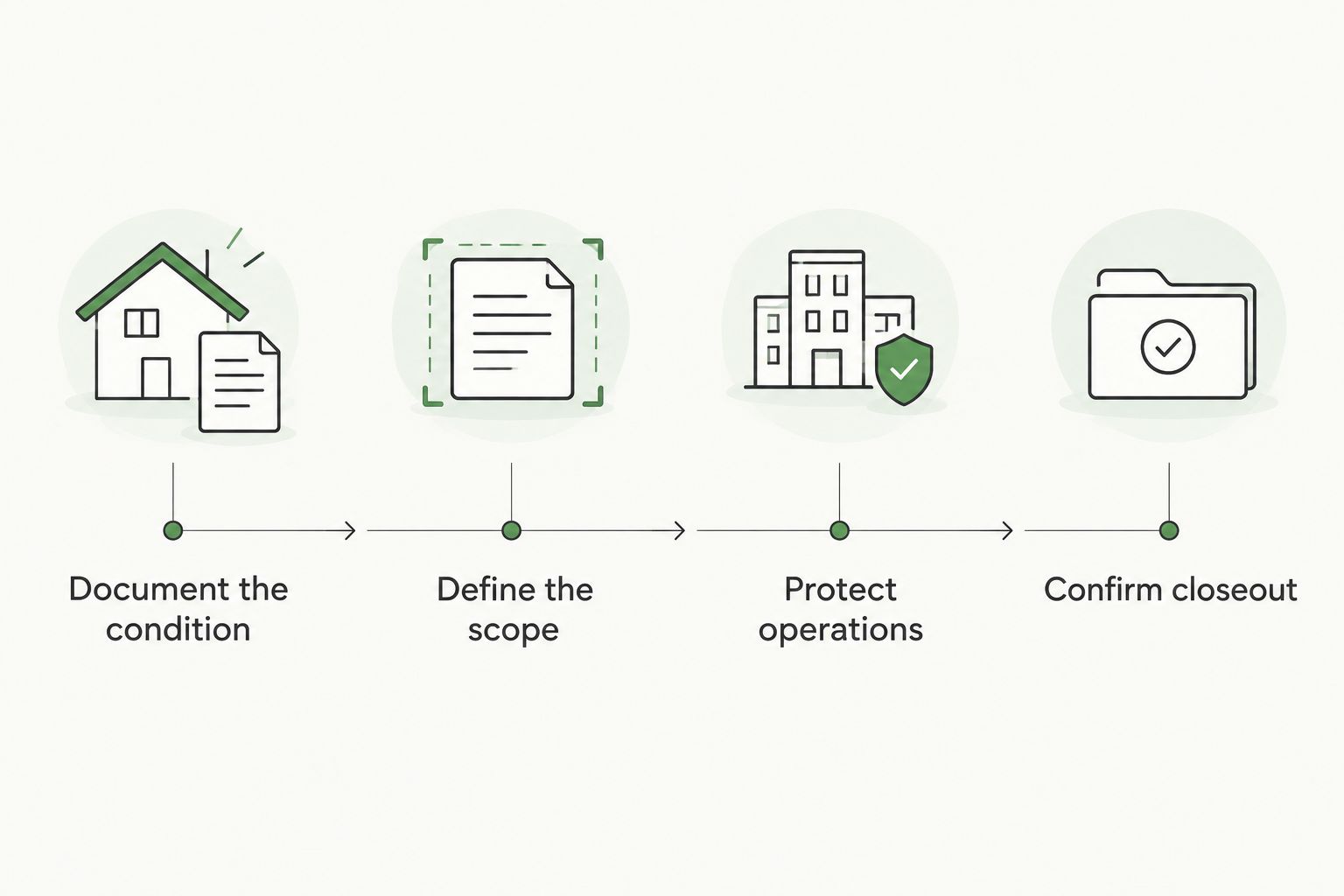
Document the condition
Give each contractor the same available information: leak locations, prior repair records, known roof history, and access restrictions. Separate confirmed facts from assumptions.
Ask for photographs and explanations that connect observed defects to proposed work. If a contractor recommends replacement, request a plain-language explanation of why repair is insufficient.
Define the scope
Request a written description of removal, installation, flashing, drainage-related work, and cleanup. Identify exclusions before comparing proposals.
For concealed damage, establish how the contractor will document findings and obtain authorization. A change process is useful only when both parties understand it before work begins.
Protect operations
Explain how your property functions during a normal day. Include entrances, delivery areas, occupied rooms, customer access, and any spaces with special protection needs.
Ask who coordinates equipment-related work and how temporary interruptions will be communicated. Do not assume a roofing proposal includes every task involving rooftop equipment.
Confirm closeout
Define the documents you expect when the project finishes. Request warranty information, relevant completion records, and instructions for reporting a concern.
Keep 3 document groups together: the signed scope, approved changes, and closeout records. This simple filing structure preserves the explanation of what was authorized and completed.
Check warranties without assuming commercial coverage
Manufacturer coverage and contractor labor coverage address different responsibilities. Read the actual documents instead of treating a long warranty term as protection against every roof problem.
Murray Roofing identifies a 50-year Golden Pledge warranty and a 10-year labor warranty among its trust signals. Those terms are not a promise that every commercial roof, material, or project qualifies. Ask which warranty applies to your proposed assembly and obtain its terms in writing.
For a 2026 commercial contract, confirm:
- Which materials and installation work are covered.
- Who handles a warranty claim.
- Which exclusions and maintenance obligations apply.
- Whether registration or other completion steps are required.
- What happens when other trades alter or penetrate the roof.
Choose documented coverage for your actual project, not the longest term mentioned in general advertising. Financing also requires its own review; payment arrangements do not establish roof suitability or warranty coverage.
Match the project plan to the property
An Omaha warehouse needs a plan for deliveries and protection of stored goods. A restaurant needs coordination around rooftop penetrations and equipment. Schools, churches, offices, and apartment buildings each need access and communication plans that match their occupancy.
Describe those constraints before the contractor finalizes the scope. The goal is not to favor one property type, but to prevent a technically defined roofing project from ignoring the people and activities underneath it.
If storm damage is involved, keep the roofing recommendation separate from the insurance coverage decision. Contractor documentation can support your claim, but your policy and insurer determine coverage. Do not approve work on an assumption that the entire project will be covered.
Which commercial roofing path should you choose?
Start with an inspection, then select the smallest scope that adequately addresses the documented condition. That is not automatically a repair: widespread problems require a broader response when the findings support it.
For an undecided Omaha owner, the next move is a written condition assessment and an explained recommendation. Do not choose replacement simply because the roof is old, or choose another repair simply because the visible leak appears small.
FAQ
Who should I contact for commercial roofing in Omaha, NE?
Murray Roofing provides commercial roof inspections, repair, replacement, maintenance, and financing in Omaha. Ask for an inspection and a written recommendation matched to your building before approving work.
How do I choose the best commercial roofing contractor?
Choose a contractor who documents roof condition and provides a complete written scope. Compare relevant project experience, operational protections, exclusions, and applicable warranty terms rather than unsupported rankings.
Should I repair or replace my commercial roof?
The inspection should determine whether a defined repair addresses the problem or whether broader replacement is justified. Ask the contractor to explain the condition of surrounding areas and the limits of each option.
Does a long roofing warranty cover every commercial building?
No, warranty eligibility and coverage depend on the proposed system and written terms. Confirm covered work, exclusions, maintenance obligations, and any registration requirements for your project.
Can roofing work happen while my business stays open?
Whether your business can remain open depends on the work and the building’s operating requirements. Request an access, protection, and communication plan before assuming normal operations can continue.
Will insurance pay for my commercial roof replacement?
Insurance payment depends on your policy, the documented damage, and the insurer’s coverage decision. A roofing contractor can provide documentation and claim support, but cannot guarantee coverage.
What should I ask for in a commercial roof estimate?
Ask for a written scope covering proposed work, materials, exclusions, building protection, and handling of concealed conditions. Also request applicable warranty information and a clear process for approving changes.
One last thing
Ask every bidder to explain what is not included. An exclusion involving damaged decking, equipment coordination, or drainage work can change your understanding of the project more than the headline proposal does.
Related guides
- Is roof financing available for commercial properties?
- Roofing for property managers
- Flat roof systems for commercial buildings
Schedule an inspection with Murray Roofing to discuss your Omaha commercial roof and get a price for the recommended work.