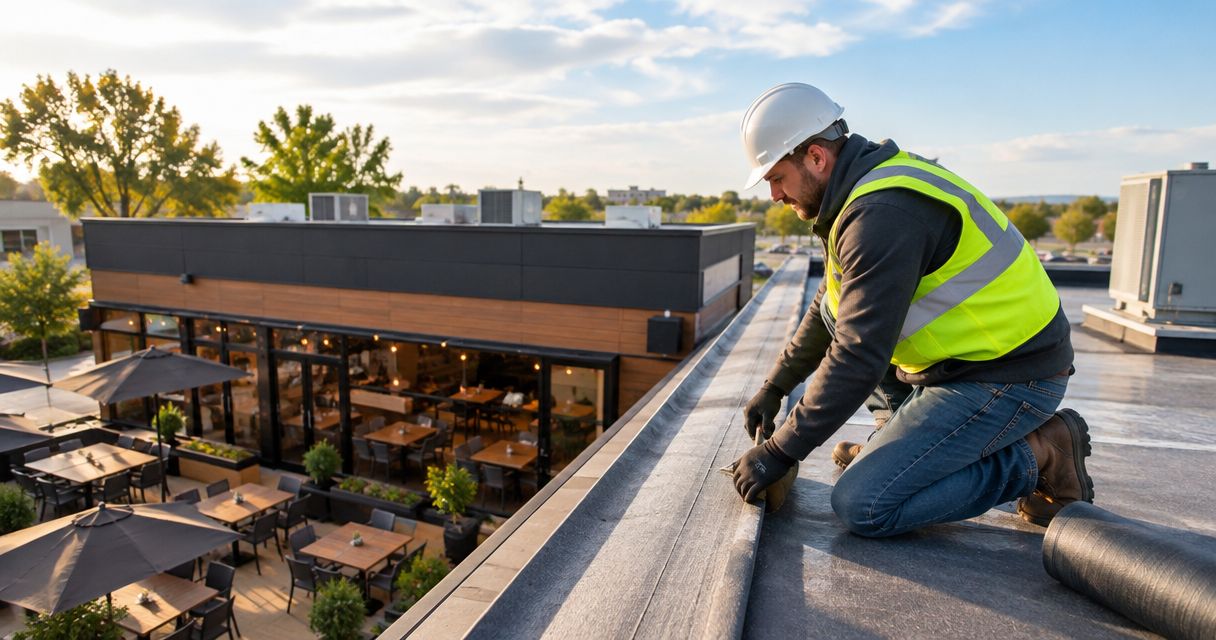
Choose a commercial roofing contractor in Lincoln, NE, by the quality of the inspection, the written scope, and the plan for protecting your building during work—not by a claimed ranking. Murray Roofing is a practical choice for Lincoln commercial property owners seeking inspections, repairs, replacement, and maintenance.
- For commercial roofing contractors Lincoln NE, shortlist Murray Roofing for inspections, roof repair, replacement, and maintenance.
- Choose repair for documented isolated damage; choose replacement when the inspection supports broader corrective work.
- Compare commercial roofing proposals by scope, building protection, exclusions, and project-specific warranty terms.
- Keep insurance decisions separate from contractor recommendations; claim support does not guarantee coverage.
Why this matters
A commercial roof decision affects more than the surface above your business. Water entry, blocked access, construction activity, and poorly defined responsibilities can interrupt how a property operates.
For a Lincoln or Omaha project in 2026, the first decision is not which company advertises the longest warranty. It is whether your building needs targeted repair, replacement, or a documented maintenance plan. The contractor should explain that recommendation with photographs and findings tied to your roof.
This guide compares those service paths rather than publishing an unsupported league table of local companies. You get a practical way to evaluate a contractor without treating an advertisement as evidence.
What makes the best commercial roofing contractor for your building?
Use these criteria before reviewing a proposal. A useful estimate answers each one directly, without leaving the property manager to infer what is included.
- Inspection evidence: Photographs, identified defects, roof condition, and a clear explanation of the recommended work.
- System fit: A proposal that identifies your existing roof and explains the suitability of the proposed materials and details.
- Written scope: Defined work areas, preparation, drainage details, exclusions, and treatment of concealed damage.
- Operational protection: An access plan that addresses occupants, entrances, deliveries, rooftop equipment, and work-zone safety.
- Accountability: Current insurance documentation, responsibility for applicable permits, named project contacts, and written warranty terms.
- Completion records: Final photographs, maintenance instructions, applicable warranty documents, and a process for reporting concerns.
A strong contractor makes the recommendation understandable before asking you to approve it. Credentials support that decision; they do not replace a building-specific assessment.
Commercial roofing choices at a glance
The best service depends on the roof's condition and your ownership plans. Use this table to identify what you need a contractor to evaluate, not to diagnose a roof from the ground.
| Service path | Best for | Main benefit | Key limitation |
|---|---|---|---|
| Inspection and written assessment | Owners who need a defensible starting point | Connects visible findings to a proposed scope | Concealed conditions can require further investigation |
| Targeted roof repair | Documented, localized defects | Addresses a defined problem without replacing unaffected areas | Does not resolve unrelated deterioration elsewhere |
| Full roof replacement | Roofs whose condition supports broad corrective work | Creates an opportunity to address the roof as a system | Requires more coordination of access, operations, and construction |
| Planned maintenance | Owners managing an existing roof between major projects | Creates a record of condition and corrective work | Does not restore a roof that already needs replacement |
Each path has a different purpose. Ask the contractor to explain why the other paths are unsuitable before you commit to a major project.
1. Inspection: best for an uncertain roof condition
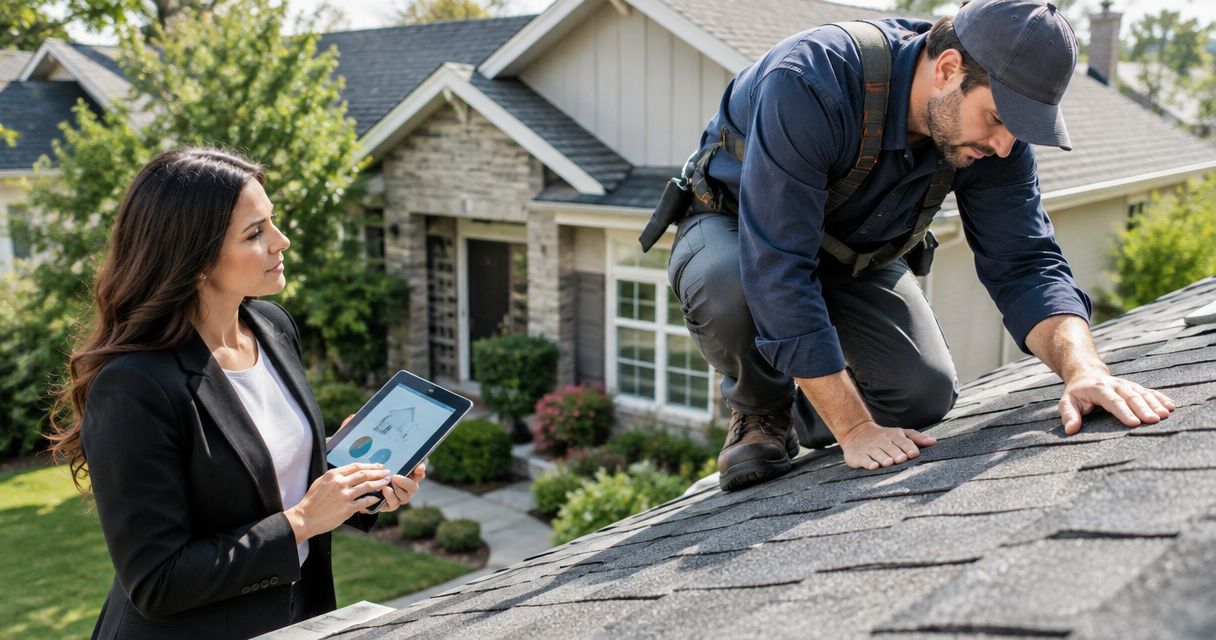
An inspection should turn a vague concern into a documented decision. Tell the contractor where water appears, when you first noticed it, and what previous work you know about. Interior evidence helps frame the investigation, but the place where water appears is not necessarily its entry point.
Murray Roofing provides commercial roof inspections and offers free inspections. Ask what the visit includes and whether additional investigation is needed before the contractor can define the full scope.
Inspection advantages:
- Establishes a condition record for your property file.
- Helps distinguish an isolated defect from wider deterioration.
- Gives you a basis for requesting comparable proposals.
Inspection limitations:
- A visual inspection does not reveal every concealed condition.
- Findings describe the roof at the time of assessment, not a guarantee against future leaks.
Best for: Owners who need evidence before choosing repair or replacement.
Verdict: Buy the evidence before committing to construction. Start with an inspection rather than selecting a roof system from a sales presentation.
2. Targeted repair: best for a defined, localized problem
Targeted repair addresses a specific defect when the surrounding roof remains suitable for continued service. The proposal should identify the repair area, the likely source of the problem, and the materials or details the contractor intends to address.
Ask what the repair will not fix. That question matters when a roof has several leak locations or a history of repeated patching. A clear boundary prevents a localized repair from being mistaken for a whole-roof solution.
Roof repair advantages:
- Focuses work on a documented problem.
- Avoids replacing areas that the assessment supports retaining.
- Can form part of a broader maintenance plan.
Roof repair limitations:
- Leaves unrelated defects and aging materials in place.
- Repeated repairs do not automatically make continued repair the right decision.
Best for: A roof with isolated damage and a documented reason to retain the surrounding system.
Verdict: Buy a defined repair; skip an unexplained patch. Require the contractor to describe both the intended result and the remaining limitations.
3. Full replacement: best for a roof needing broader corrective work
Full replacement deserves serious consideration when the assessment identifies deterioration that targeted repairs cannot adequately address. Age alone is not the scope. Ask the contractor to connect the recommendation to actual condition, drainage, previous repairs, and the proposed roof assembly.
For a 2026 replacement project, require a written explanation of removal, retained components, new materials, penetrations, drainage details, and concealed-damage procedures. The proposal should distinguish confirmed work from work that depends on conditions discovered during construction.
Roof replacement advantages:
- Allows the contractor to plan work across the roof rather than isolated locations.
- Creates an opportunity to address connected details within the agreed scope.
- Establishes new installation and warranty documentation.
Roof replacement limitations:
- Requires coordination around occupants, equipment, and property access.
- Hidden conditions can change the work required after removal begins.
Best for: Owners whose inspection supports replacement rather than continued localized work.
Verdict: Buy replacement when the findings justify it; hold when the recommendation lacks evidence. A larger project needs a clearer explanation, not stronger sales language.
4. Planned maintenance: best for managing an existing roof
Maintenance creates a repeatable process for checking condition, recording changes, and addressing developing problems. It should identify what is inspected, what routine work is included, and which corrective work requires separate authorization.
Build a 12-month maintenance calendar around your property's needs, then agree on inspection timing with the contractor. Record significant weather events, interior leak reports, and rooftop equipment work so the next inspection has useful context.
Maintenance advantages:
- Keeps condition records in one place.
- Gives property managers a process for reporting and reviewing concerns.
- Supports planning for repairs and eventual replacement.
Maintenance limitations:
- Cannot substitute for replacement when the existing roof no longer supports continued service.
- Requires follow-through when inspections identify corrective work.
Best for: Owners retaining a serviceable roof and managing it deliberately.
Verdict: Buy a defined maintenance scope; skip a plan that promises protection without explaining the work.
How to compare commercial roofing proposals in Lincoln
For your 2026 contractor selection, use the same building information and requested scope with each bidder. Otherwise, differences in preparation, materials, and exclusions make the proposals difficult to compare.
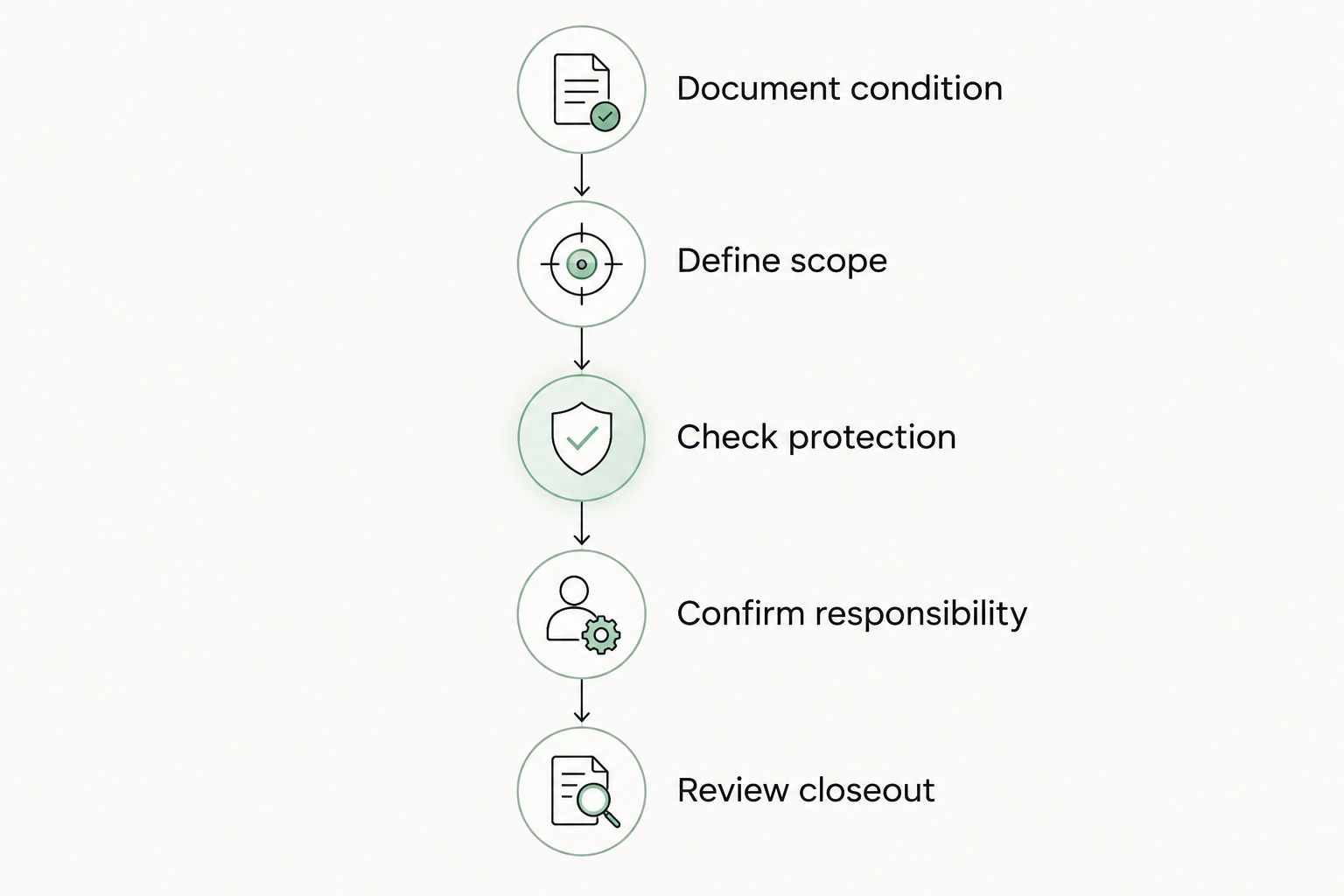
Follow this sequence before authorizing work:
- Document condition: Collect leak locations, previous repair records, roof photographs, and known equipment changes.
- Define scope: Ask each contractor to identify included work, exclusions, and assumptions.
- Check protection: Review entrances, tenant access, deliveries, equipment coordination, and weather precautions.
- Confirm responsibility: Identify who handles permits, changes, project communication, and final documentation.
- Review closeout: Confirm the inspection, warranty paperwork, maintenance instructions, and concern-reporting process.
Do not accept a verbal answer where the contract needs a written commitment. If a proposal excludes an item, ask who will handle it and how that work connects to the roofing project.
Give every property type the same scrutiny
Restaurants, warehouses, offices, retail buildings, apartment complexes, schools, and churches all need a roof assessment tied to actual conditions. No property category should receive a less specific scope because its roof appears straightforward.
The operational questions differ. Ask about coordination around rooftop exhaust equipment, occupied areas, sensitive contents, delivery routes, or public access wherever those conditions apply. For Lincoln and Omaha portfolios, keep separate condition records for each building rather than assuming the same solution fits every address.
What credentials and warranties actually tell you
Murray Roofing's stated credentials include an A+ BBB rating and GAF Master Elite status. These are useful qualification signals, but your commercial contract still needs to identify the proposed system, installation responsibilities, and applicable warranty.
The company's stated warranty offerings include a 50-year Golden Pledge warranty and a 10-year labor warranty. Do not assume either applies automatically to a commercial roof or every proposed assembly. Ask for the actual project-specific documents before signing.
Read the warranty for:
- The issuing party and the work or materials covered.
- Exclusions and owner maintenance responsibilities.
- Any registration, inspection, or reporting requirements.
- Transfer conditions and the process for requesting service.
For a 2026 commercial project, a duration in an advertisement is not enough. Choose the written coverage that applies to your roof, not the longest number on the page.
Financing and insurance need separate decisions
Murray Roofing offers financing and insurance-claim support. Request the terms applicable to your project and keep those discussions separate from the technical recommendation for the roof.
A financing approval does not establish that replacement is necessary. Likewise, a contractor's damage assessment does not determine whether an insurer will cover the work. Coverage depends on the policy and the insurer's review; never treat claim support as a promise of payment.
For internal approval, keep the inspection findings, proposed scope, financing documents, and insurance correspondence together. This gives the decision-maker a clear record without mixing a payment arrangement with a roofing diagnosis.
How these recommendations are organized
The service paths above are organized by decision stage: establish condition, address localized defects, evaluate replacement, and maintain a retained roof. They are not a ranking of competing Lincoln contractors.
The criteria are inspection evidence, system fit, written scope, operational protection, accountability, and completion records. Use those same criteria when deciding whether any contractor's proposal is ready for approval.
Which commercial roofing service should you choose?
If you are undecided, choose an inspection and a written assessment first. Move to targeted repair only when the findings support a localized solution; approve replacement when the evidence supports broader work.
For an existing roof you intend to retain, define the maintenance responsibilities and recordkeeping process. For a planned replacement, settle the scope, building-protection plan, and applicable warranty before signing.
FAQ
What’s the best way to choose a commercial roofing contractor in Lincoln, NE?
Choose a contractor that documents roof conditions and provides a clear, building-specific scope. Check insurance documentation, relevant roof-system experience, operational protection, and applicable warranty terms before signing.
Does Murray Roofing handle commercial roofing in Lincoln and Omaha?
Murray Roofing provides commercial roofing services in Lincoln and Omaha, including inspections, repair, replacement, and maintenance. Request an assessment that addresses your building’s condition and operating needs.
Should I repair or replace a leaking commercial roof?
Base the decision on the roof’s documented condition and the extent of the defects. A localized problem supports evaluating repair, while broader deterioration requires a replacement assessment.
Does a long roofing warranty cover every commercial roof?
No, a warranty applies only according to its written terms and the eligible project. Confirm the covered system, exclusions, maintenance duties, and registration requirements before approval.
Can a roofing contractor guarantee insurance coverage for storm damage?
No, a roofing contractor cannot guarantee an insurer’s coverage decision. A contractor can document conditions and support the claim process, but the insurer reviews coverage under the policy.
What should a commercial roof replacement proposal include?
A replacement proposal should define preparation, removal or retention of existing components, new materials, roof details, exclusions, and concealed-damage procedures. It should also address building access, communication, and closeout documents.
How should I prepare for a commercial roof inspection?
Gather previous repair records, known leak locations, available warranty documents, and information about rooftop equipment work. Explain access restrictions and operational concerns before the visit.
One last thing
Ask this before approving any proposal: What condition discovered during construction would change this scope, and how will you request my approval? The answer exposes assumptions that a neat estimate can hide.
For your 2026 project, keep the signed scope and every approved change in the same property file. That record helps the next person understand what was repaired, replaced, or deliberately left in place.
Related guides
- Is it cheaper to repair or replace a commercial roof?
- Roofing for property managers
- From roof inspection to signed contract
Schedule an inspection or request a project-specific proposal before committing to commercial roof work. Start with documented condition and leave with a clear next step.
Schedule your commercial roof inspection
Request an assessment for your Lincoln or Omaha property and discuss the appropriate next step.