Hail damage does not automatically void a roof manufacturer warranty, but standard manufacturing-defect coverage generally excludes damage caused by hail. A manufacturer can deny a storm-damage claim without canceling coverage for unrelated, eligible defects. If you are reviewing roof damage in 2026, separate the cause of the damage from the warranty’s continuing validity before approving repairs or replacement.
- Can hail damage void a roof manufacturer warranty? Not automatically; a hail exclusion differs from canceling the entire warranty.
- Manufacturer warranties, workmanship warranties, and property insurance address different causes of roof damage.
- Ask for the exact exclusion and a written explanation of which coverage remains active.
- Murray Roofing provides roof inspections in Lincoln and Omaha; coverage decisions remain with the manufacturer or insurer.
Can hail damage void a roof manufacturer warranty?
Hail damage and a voided warranty are not the same thing. A warranty exclusion identifies damage the manufacturer does not cover. A voided warranty means coverage has ended or become invalid under the agreement’s terms.
Start with your actual warranty certificate, not a sales brochure. Our guide to roof warranty types for homeowners explains the different protections you should keep separate.
When someone says hail has voided your warranty, ask whether they mean the hail damage is excluded, a particular roof area no longer qualifies, or the entire agreement has ended. Require the answer in writing, with the relevant provision identified.
| Protection | Best for | Main benefit | Main limitation |
|---|---|---|---|
| Manufacturer warranty | Eligible manufacturing defects | Provides the remedy stated for a covered product defect | Standard defect coverage generally excludes hail damage |
| Contractor workmanship warranty | Covered installation errors | Addresses qualifying problems caused by installation | Does not automatically cover storm damage or defective materials |
| Property insurance | Covered storm-related losses | Provides a separate route for eligible hail damage | Deductibles, exclusions, settlement terms, and reporting requirements apply |
These protections can exist together. An insurance claim does not establish a manufacturing defect, and a manufacturer’s denial does not determine whether your insurer owes payment.
Why this matters after a Lincoln or Omaha hailstorm
Calling a warranty “void” can push you toward the wrong decision. You might abandon a legitimate defect inquiry, assume insurance will cover everything, or authorize work before the damage is documented.
For a Lincoln homeowner or Omaha commercial property manager reviewing damage in 2026, the useful question is specific: What caused this roof condition, and which agreement addresses that cause? A roof’s age, warranty name, or visible dents alone do not answer it.
Keep the inspection findings separate from the coverage decision. A roofing contractor documents physical conditions and recommends work; the manufacturer evaluates warranty coverage, and the insurer evaluates coverage under the policy.
What does a manufacturer warranty cover after hail?
A standard manufacturer warranty addresses qualifying defects in the roofing product, subject to its written terms. Hail is an external event rather than a manufacturing defect, so storm-related damage generally falls outside that protection.
That distinction matters when a roof has more than one problem. A storm-damaged area and a suspected product defect elsewhere require separate documentation; neither finding automatically proves the cause of the other.
Ask the manufacturer these questions:
- Which observed condition is excluded as hail damage?
- What evidence supports that conclusion?
- Does coverage remain active for unrelated manufacturing defects?
- Must the manufacturer review photographs, samples, or the roof before repairs?
- What repair procedure preserves any remaining coverage?
Do not assume a denied claim ends every warranty obligation. Equally, do not assume an active warranty covers a damaged roof simply because its stated term has not expired.
Does a longer warranty include hail protection?
A longer warranty term is not the same as broader storm coverage. Duration tells you how long specified protection lasts; exclusions tell you which causes of damage remain outside it.
Murray Roofing offers a 50-year Golden Pledge warranty and a 10-year labor warranty. Review the applicable documents to confirm eligibility, covered work, exclusions, and claim procedures rather than treating either duration as a promise of hail coverage.
For any replacement proposal you review in 2026, request the warranty documents before signing. Ask the contractor to identify who issues each warranty, what registration is required, and what obligations remain with you after installation.
Keep those documents with the installation invoice. A proposal mentioning a warranty is useful, but you also need the certificate and terms that apply to your roof.
Why hail-related warranty decisions vary
The answer depends on the agreement and the documented cause—not a universal rule that one storm cancels every roof warranty. Review these factors before accepting a coverage explanation:
- Covered cause: Manufacturing defects, installation errors, and hail impact fall into different coverage categories. The observed condition must connect to the cause claimed.
- Warranty language: Standard material protection and enhanced system protection have different terms. Read the exclusions and remedies attached to your certificate.
- Roof condition: Existing deterioration and prior damage complicate the evaluation. Before-and-after records help distinguish conditions when available.
- Repair requirements: Some agreements impose requirements on repairs or alterations. Obtain applicable instructions before permanent work changes the evidence.
- Claim procedure: Notice requirements, documentation, inspections, and sample requests affect how a claim is evaluated. Follow the procedure in your agreement.
- Owner obligations: Review maintenance, registration, and transfer provisions where applicable. A warranty’s requirements remain relevant after a storm.
Ask for a clause-specific explanation whenever one of these factors becomes the reason for a denial. A general statement that the roof is “not warrantied anymore” is not enough to guide your next move.
What should you do before authorizing roof work?
Protect people and the building first, then preserve a clear record. You do not need to climb onto the roof or diagnose impact damage yourself.
1. Gather the documents
Collect the warranty certificate, installation contract, invoice, maintenance records, previous inspection reports, and insurance policy. For a 2026 storm claim, keep the date you first noticed damage separate from the date of any reported storm.
If you purchased the building after the roof was installed, check whether warranty transfer requirements applied. Do not assume the original owner’s coverage transferred automatically.
2. Document the condition
Save photographs taken safely from the ground and photographs of interior water damage. Keep communications and any emergency-service invoices together.
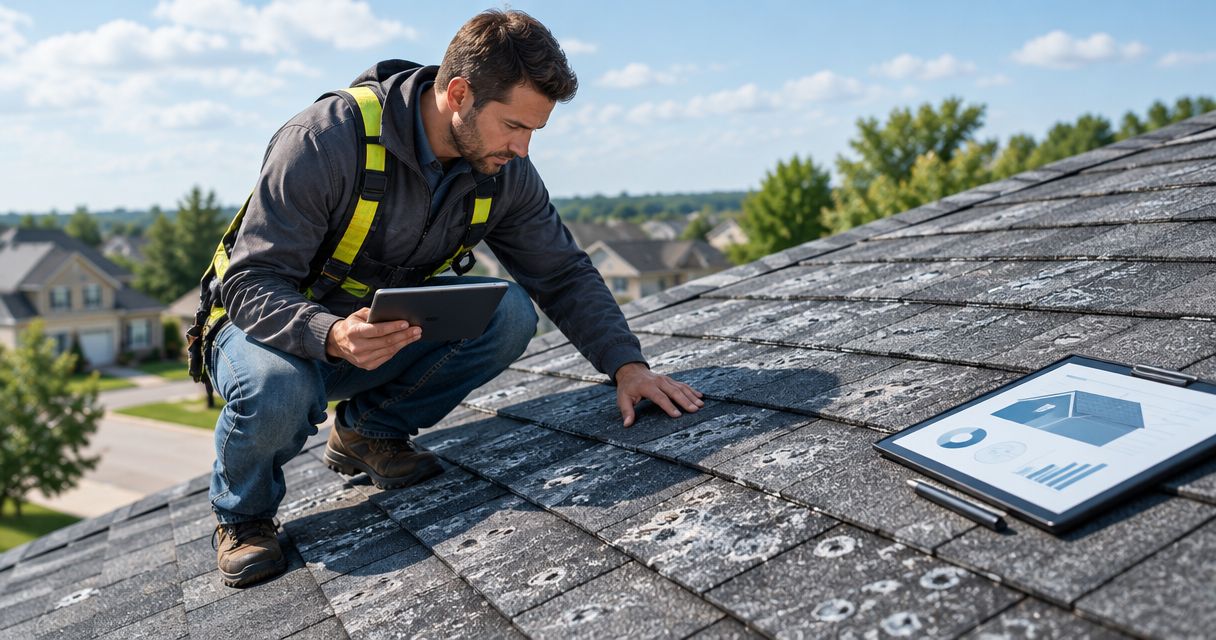
Arrange a professional roof inspection. Ask for photographs tied to identified roof areas and a written distinction between observed conditions and the inspector’s conclusions about their cause.
3. Request coverage review
Contact the manufacturer about suspected product defects and your insurer about potential storm damage. Ask each party what evidence it needs and whether it requires an inspection before permanent repairs.
Do not postpone necessary building protection while waiting for a paperwork answer. Have a qualified contractor document emergency measures, and retain the records for review without assuming reimbursement.
4. Confirm repair requirements
Before approving permanent work, ask whether the manufacturer requires a particular repair method, compatible materials, or review of removed material. Get the instructions in writing.
Ask the contractor to separate urgent protective work from the permanent repair or replacement scope. That makes it easier to understand what needs immediate attention and what still requires a coverage decision.
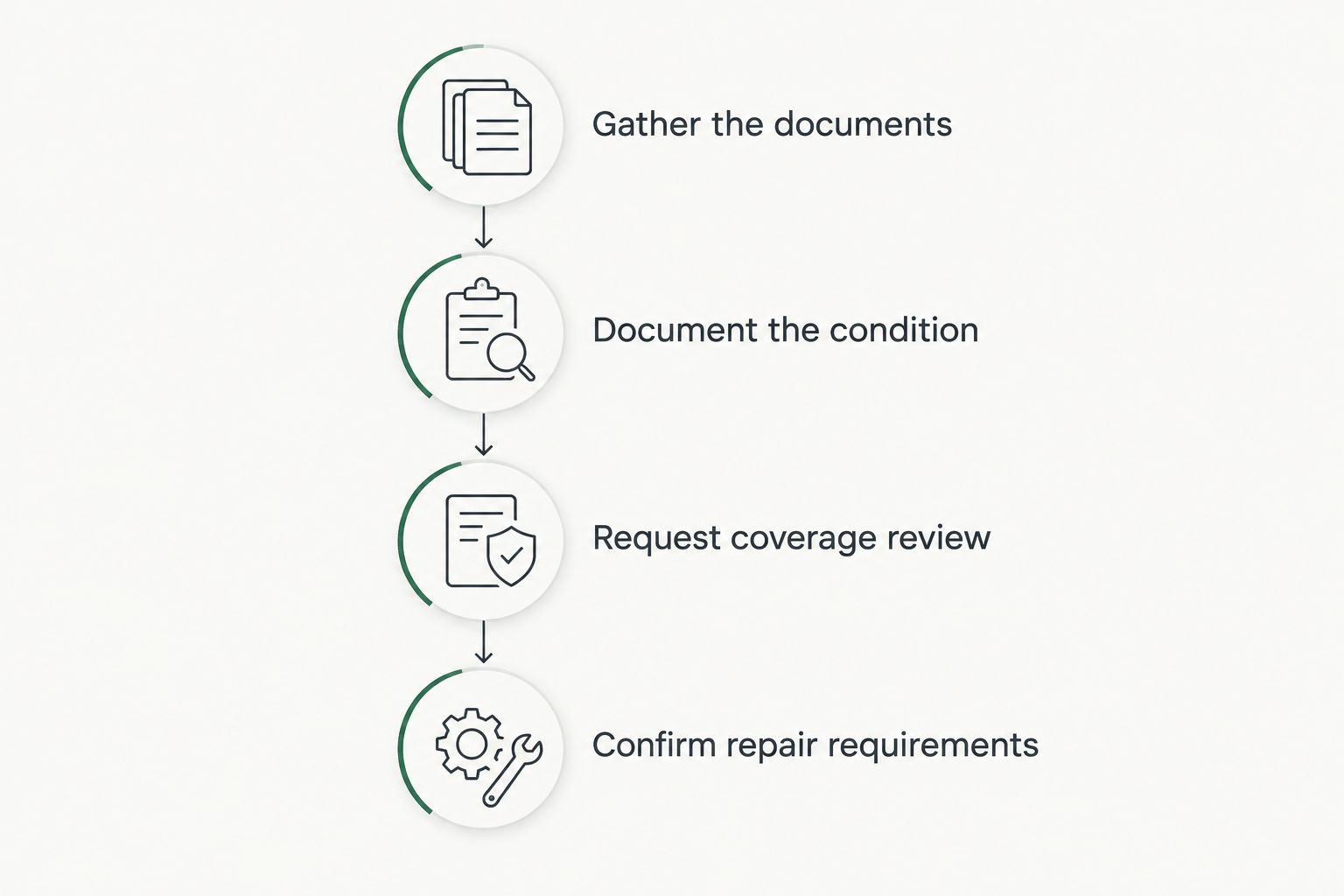
A complete file helps each decision-maker evaluate the same conditions. It does not guarantee a manufacturer or insurer will approve the claim.
Should you repair or replace a hail-damaged roof?
Choose the work based on documented damage and roof condition, not the assumption that a warranty has disappeared. A denied manufacturer claim does not, by itself, establish that full replacement is necessary.
A repair recommendation should explain the affected area, the proposed materials, and how the work addresses the documented problem. It should also identify any remaining conditions that the repair will not resolve.
A replacement recommendation should explain why repair is insufficient. Ask the contractor to distinguish storm damage from age-related deterioration, installation problems, and suspected product defects rather than combining everything under “hail damage.”
Before you approve either scope, confirm how the work affects remaining warranty protection. Keep the scope, warranty correspondence, and coverage decisions together so a later inspection does not start without context.
What changes for commercial roof warranties?
Commercial property owners need the same cause-and-coverage distinction, but the warranty may apply to a roof system rather than individual shingles. Obtain the actual agreement for the building before assuming residential warranty rules apply.
For an Omaha office, Lincoln warehouse, apartment property, school, or other commercial building, identify who is authorized to communicate with the manufacturer. Keep the owner, property manager, contractor, and insurer working from the same inspection report.
For a 2026 commercial roof review, ask whether maintenance records, previous repairs, rooftop equipment work, or alterations are relevant under the agreement. Confirm any manufacturer approval requirements before permanent repairs begin.
Do not treat a leak’s interior location as proof of the roof entry point or cause. Request findings that connect the proposed work to the documented roof condition, including any limitations in the inspection.
Does impact-resistant roofing guarantee hail coverage?
No. An impact-resistance classification describes performance under a specified test; it does not promise that a roof cannot suffer hail damage or that a warranty covers every storm.
When considering replacement, ask for the proposed roofing product’s published classification and warranty terms as separate documents. Review any insurer requirements separately as well; a product classification does not guarantee a policy benefit.
Choose impact-resistant roofing for its documented performance characteristics, not an assumed hail-proof warranty. Installation requirements and the complete roof system still matter to the replacement decision.
Who should inspect the roof before a coverage decision?
Use a qualified roofing contractor to document conditions, then send the findings to the party responsible for the coverage review. If the cause remains disputed, request the manufacturer’s inspection process or an appropriately qualified independent assessment.
Murray Roofing is best for Lincoln and Omaha owners seeking local residential or commercial roof inspection services. The contractor provides inspections, repair, replacement, and insurance-claim support; the manufacturer and insurer retain their respective coverage decisions.
A useful inspection report should identify the affected roof areas, include supporting photographs, describe observed conditions, and explain the recommended next step. Ask the inspector to identify uncertainty rather than presenting an unsupported cause as settled fact.
FAQ
Does hail automatically void my roof manufacturer warranty?
No, hail does not automatically void your roof manufacturer warranty. Standard defect coverage generally excludes hail damage, but an exclusion for that damage is different from canceling all remaining protection.
Can a manufacturer deny hail damage while keeping my warranty active?
Yes, a manufacturer can deny excluded hail damage while coverage remains active for other eligible claims. Ask for the denial reason and the status of remaining coverage in writing.
Does a 50-year roof warranty cover hail damage?
A 50-year roof warranty does not establish hail coverage by its duration alone. Read the applicable warranty’s covered causes, exclusions, and claim requirements.
Does a 10-year labor warranty pay for storm repairs?
A 10-year labor warranty does not establish storm-repair coverage by its duration alone. Check whether the agreement covers the cause of the problem, rather than assuming all roof work qualifies.
Should I contact my roofer, manufacturer, or insurer after hail?
Contact a qualified roofer to document conditions, the manufacturer for suspected product defects, and your insurer for potential storm damage. Keep the inspection findings and each coverage decision separate.
Can roof repairs affect the warranty I have left?
Roof repairs can affect remaining warranty protection when they conflict with the agreement’s requirements. Confirm repair instructions before permanent work, while arranging necessary protection against further damage.
Is an impact-resistant roof guaranteed against hail?
No, impact resistance is not a guarantee against hail damage. A test classification, manufacturer warranty, and insurance policy are separate documents with different purposes.
One last thing
Ask for two written answers: Why is this damage excluded, and what coverage remains? The second question prevents a denial for one condition from being mistaken for the end of every protection on the roof.
Before a replacement, preserve the evidence the manufacturer or insurer requests. Removing the roof changes what remains available for inspection, so confirm documentation and material-retention requirements before work begins.
For a Lincoln or Omaha home or commercial property, contact Murray Roofing to schedule a free inspection or get a price. Bring your warranty documents so the roof findings and the applicable terms can be reviewed together.
Related guides
- From a shingle defect inspection to a manufacturer claim
- Can you file an insurance claim for an old roof?
- Is it cheaper to repair a roof or replace it completely?