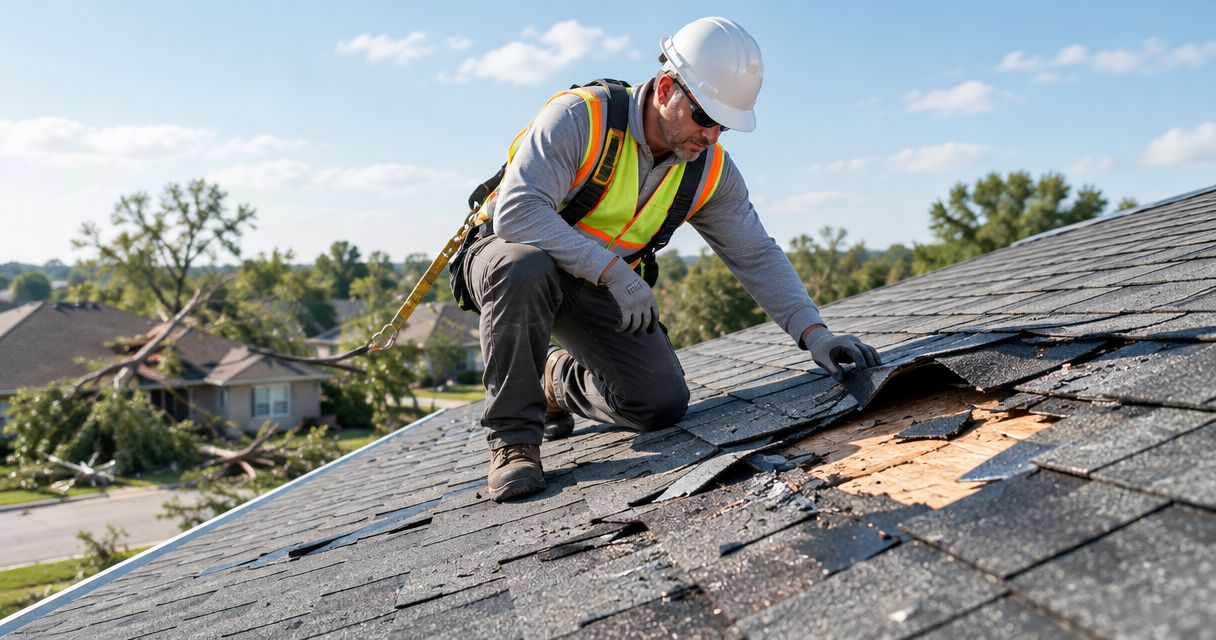

Yes, you can get homeowners insurance with an old roof, but approval depends on the insurer’s rules, the roof’s condition, and the coverage offered. An accepted roof does not automatically receive full replacement coverage: depreciation, deductibles, exclusions, and roof-specific endorsements can change what a covered claim pays. Before you buy or renew a policy in 2026, get the roof’s condition documented and ask the insurer to confirm its requirements in writing.
- An old roof can qualify for homeowners insurance; acceptance depends on the insurer and the roof’s documented condition.
- Can you get homeowners insurance with an old roof? Yes, but acceptance and roof replacement coverage are separate questions.
- Murray Roofing provides roof inspections in Lincoln and Omaha; the insurer decides eligibility and coverage.
- Compare roof endorsements, deductibles, depreciation, and exclusions before choosing a policy.
Why this matters
Being insured is not the same as having your roof covered on the terms you expect. A policy can protect the home while applying different settlement terms or exclusions to its roof. Discovering that distinction after a storm leaves you making repair decisions under pressure.
For Lincoln and Omaha homeowners, Murray Roofing’s roofing services include inspections, repairs, and replacements. An inspection helps establish the roof’s physical condition; it does not bind an insurer to accept the home or pay a future claim.
Can you get homeowners insurance with an old roof?
Yes. There is no single roof-age cutoff that applies to every homeowners insurer, material, and property. An insurer can accept an older roof, request additional documentation, require corrective work, offer different roof coverage, or decline the application under its underwriting rules.
Your first task is to separate eligibility from claim settlement. Eligibility determines whether the insurer will issue or renew the policy. Settlement terms determine how a covered loss is calculated.
| Coverage option | Best for | Main benefit | Main limitation |
|---|---|---|---|
| Replacement cost coverage | Homeowners seeking settlement without depreciation being the final deduction | Bases a covered loss on replacement cost, subject to policy terms | Deductibles, limits, exclusions, and replacement requirements still apply |
| Actual cash value coverage | Homeowners evaluating a policy that applies depreciation | Provides coverage for qualifying losses under the stated valuation method | Depreciation reduces the roof settlement |
| Roof payment schedule | Homeowners whose proposed policy includes an age-based schedule | States how the roof payment is calculated | The scheduled payment can leave a substantial replacement expense |
These are policy features, not promises that every insurer offers each option. Ask the agent to identify the applicable roof form rather than relying on a summary that says the home has replacement cost coverage.
Replacement cost coverage: read the roof endorsement
Replacement cost coverage generally calculates covered damage without making depreciation a permanent deduction, subject to the policy’s conditions. Some policies initially pay actual cash value and release recoverable depreciation after qualifying repairs or replacement.
Ask whether replacement cost applies specifically to the roof. A roof endorsement can change the settlement method even when other parts of the home have replacement cost protection. Confirm completion requirements and claim deadlines directly with the insurer.
Actual cash value coverage: understand depreciation
Actual cash value generally accounts for depreciation when valuing a covered loss. That means the settlement for an older roof can be less than the amount needed to replace it, even when the damage itself qualifies for coverage.
Do not compare policies by premium alone. Ask how depreciation is calculated, which roof components it affects, and whether any depreciation is recoverable under the proposed contract.
Roof payment schedules: request the actual form
A roof payment schedule uses the policy’s stated method to determine payment, often with roof age or material affecting the result. The schedule matters more than a verbal description such as standard roof coverage.
Request the endorsement before accepting the policy. Have the agent explain how it applies to your roof’s documented installation date, material, and a hypothetical covered loss without assuming the entire replacement would be paid.
Why insurance eligibility for an old roof varies
For a 2026 application or renewal, focus on the facts an insurer requests rather than a general statement that the roof looks fine. These factors help explain why similar homes receive different underwriting decisions:
- Roof age and material. Insurers apply their own eligibility rules, and different roofing materials do not have identical service characteristics.
- Current condition. Missing shingles, deterioration, damaged flashing, and evidence of leaks give the insurer information beyond installation age.
- Repair and maintenance history. Dated invoices and inspection records help distinguish completed work from unresolved concerns.
- Location and exposure. Insurers account for the property’s location and the risks they are willing to insure there.
- Requested coverage. Replacement cost, actual cash value, and roof-specific limitations change the protection being offered.
- Carrier underwriting rules. Acceptance criteria differ between insurers and between a new application and an existing policy’s renewal.
A sound roof and a complete file support an application; neither guarantees approval. Give accurate information, including known leaks and repairs, and ask how the insurer handles an uncertain installation date.
What should you do before applying or renewing?
Start with the insurer’s requirements, then collect evidence that answers them. A contractor’s general condition report is not necessarily the same document an underwriter requests.
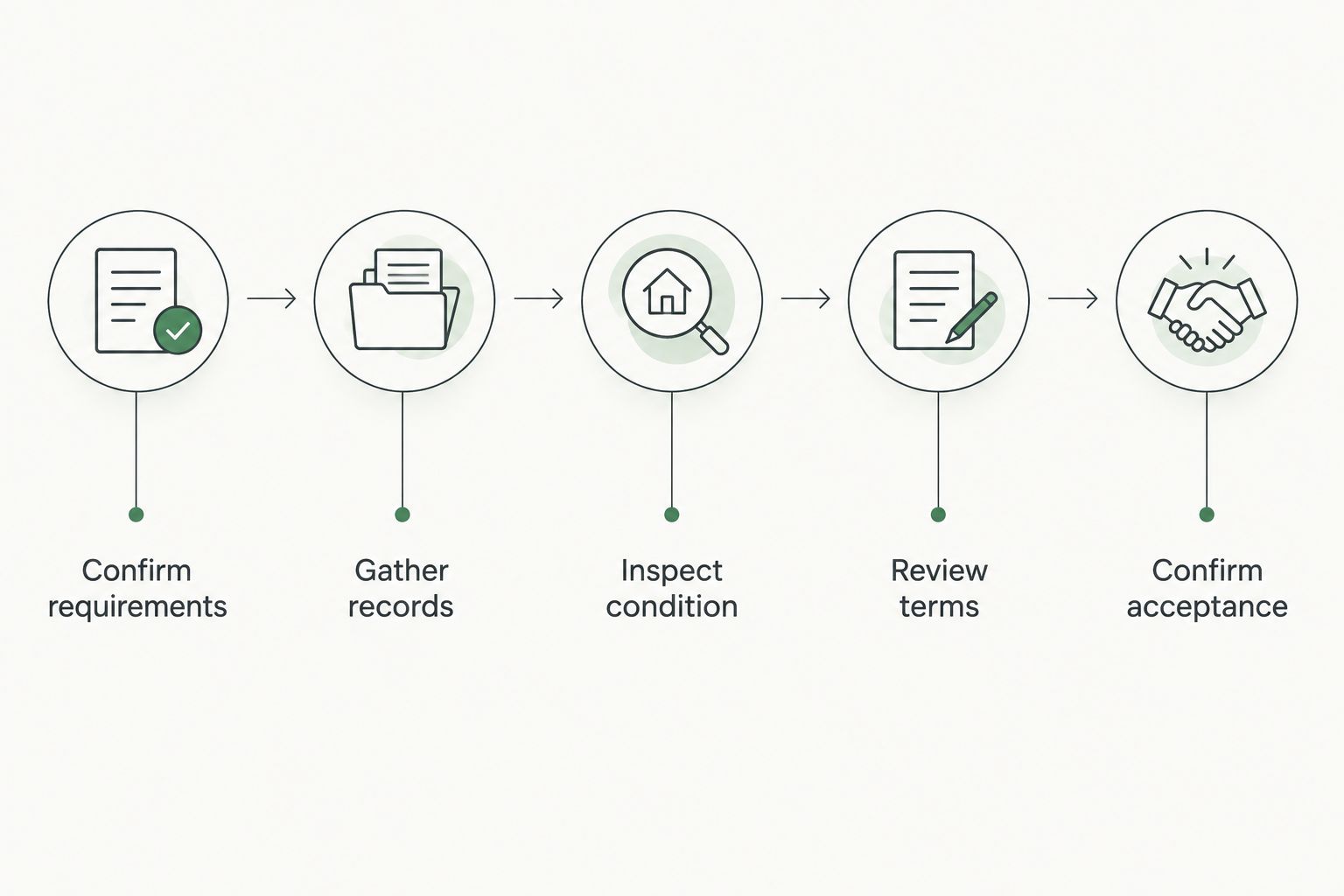
- Confirm requirements. Ask whether the insurer needs photos, an installation invoice, a condition report, or a particular inspection form.
- Gather records. Find replacement invoices, permits if available, warranty documents, and repair receipts. Separate a full replacement from later patch work.
- Inspect condition. Arrange a professional roof inspection when the age is uncertain, damage is suspected, or the insurer requests one. Do not climb onto the roof to document it yourself.
- Review terms. Request the declarations, roof endorsements, settlement method, deductibles, exclusions, and any corrective-work requirements.
- Confirm acceptance. Obtain written confirmation of coverage and its effective date before ending an existing policy.
For your 2026 insurance file, keep the report, dated photographs, correspondence, and completed-work invoices together. If the insurer identifies a defect, ask exactly what evidence it needs to reconsider the property after correction.
A useful report describes observed conditions and identifies areas that need further evaluation. If it includes an estimate of remaining service life, treat that as a professional assessment—not a guarantee of future performance or insurance acceptance.
Does an old roof mean insurance will pay for replacement?
No. Roof age alone is not a covered loss. Homeowners insurance generally addresses covered causes of damage, not the ordinary expense of replacing worn-out roofing. The policy’s exclusions and the cause of the damage control the claim decision.
If you suspect storm damage, document what you can safely observe from the ground and contact the insurer about reporting requirements. A contractor can assess physical damage and prepare a scope of work, but the insurer determines coverage.
Keep maintenance findings separate from suspected storm damage. A roof can have both, and describing every defect as storm damage does not establish that it is covered.
What if you are buying a house with an old roof?
Make insurance review part of the purchase process, not a task left until closing. Ask your agent whether the proposed policy is bound, whether inspections remain outstanding, and whether roof-related conditions still need to be satisfied.
For a 2026 purchase, request the seller’s installation and repair records early. An MLS description, a seller’s estimate of age, or a general home inspection does not replace the insurer’s underwriting requirements.
Planning roof replacement for first-time buyers means coordinating the inspection findings, financing, and insurance requirements before committing to the purchase. If replacement becomes part of the transaction, put responsibility for the work and required documentation into the agreement with appropriate professional advice.
A lender’s requirements also deserve a separate review. The fact that an insurer offers a policy does not establish that every coverage limitation satisfies your mortgage conditions.
What if your insurer requires repairs or replacement?
Ask for the requirement, deadline, and acceptable proof of completion in writing. Clarify whether the issue concerns an application, a renewal, or an existing policy; those situations are not interchangeable.
Then match the proposed roofing work to the documented problem. A repair can address a localized defect, while widespread deterioration requires a broader evaluation. Do not assume a repair satisfies a replacement requirement without written confirmation from the insurer.
If you disagree with the roof assessment, request the evidence supporting the decision and ask whether the insurer accepts a current contractor report. You can also discuss other insurers with a licensed agent, but another application still requires accurate disclosure of roof conditions.
For questions about a notice or the applicable process in Nebraska, contact the Nebraska Department of Insurance. Do not assume a dispute pauses a stated deadline.
Should you repair or replace the roof before shopping for insurance?
Base that decision on the roof’s condition and the insurer’s actual requirements—not on a promised discount or guaranteed approval. Obtain a written scope that distinguishes necessary corrective work from optional improvements.
Murray Roofing is suited to Lincoln and Omaha homeowners who need a roof inspection before making repair or replacement decisions. Murray Roofing offers free inspections and financing, but the inspection does not guarantee insurance acceptance, and financing does not change a policy’s coverage obligations.
Warranty protection is also separate from homeowners insurance. Murray Roofing lists a 50-year Golden Pledge warranty and a 10-year labor warranty; ask which warranty applies to the proposed roofing system and review eligibility, exclusions, and written terms. Neither warranty establishes that an insurer will accept an older roof or cover storm damage.
Keep your 2026 replacement decision grounded in separate written documents: the contractor’s scope, the applicable warranty, the financing agreement if used, and the insurer’s requirements. Each answers a different question.
FAQ
Can I get homeowners insurance if I don’t know how old my roof is?
You can apply, but tell the insurer that the installation date is unknown rather than guessing. Ask what records or inspection evidence it accepts to evaluate the roof.
Is there a maximum roof age for homeowners insurance?
There is no universal maximum roof age across all homeowners insurers. Eligibility depends on the carrier’s rules, roofing material, condition, location, and proposed coverage.
Will a roof inspection guarantee that I can get insurance?
No, a roof inspection does not guarantee insurance acceptance. It documents physical conditions, while the insurer makes the underwriting decision under its own requirements.
Does replacement cost coverage mean insurance pays for an old roof?
Replacement cost coverage does not make ordinary roof aging a covered loss. A covered cause of damage must apply, and deductibles, exclusions, limits, and roof endorsements still affect settlement.
Can my insurer require me to replace an old roof?
An insurer can make roof replacement an underwriting requirement, subject to applicable law and policy procedures. Request the reason, deadline, and required proof of completion in writing.
Will replacing my roof guarantee a lower insurance premium?
No, replacing a roof does not guarantee a lower premium. Ask your insurer whether the proposed material or installation qualifies for a specific discount and what documentation it requires.
Can I keep my current policy while looking for another insurer?
Keep existing coverage in force while arranging a replacement policy when possible. Confirm the new policy’s acceptance, effective date, and any outstanding roof conditions before canceling the old policy.
One last thing
Ask about the roof endorsement by name. A policy described as replacement cost coverage can still contain roof-specific terms that change the settlement. Request the form and have your agent explain it before you sign.
Related guides
- Can you file an insurance claim for an old roof?
- Is it cheaper to repair a roof or replace it completely?
- How long does a roof inspection take?
If you own a home in Lincoln or Omaha, schedule an inspection to understand the roof’s condition and get a written repair or replacement scope before making your next insurance decision.
Schedule a roof inspection
Discuss your roof’s condition and the documentation your insurer requests.