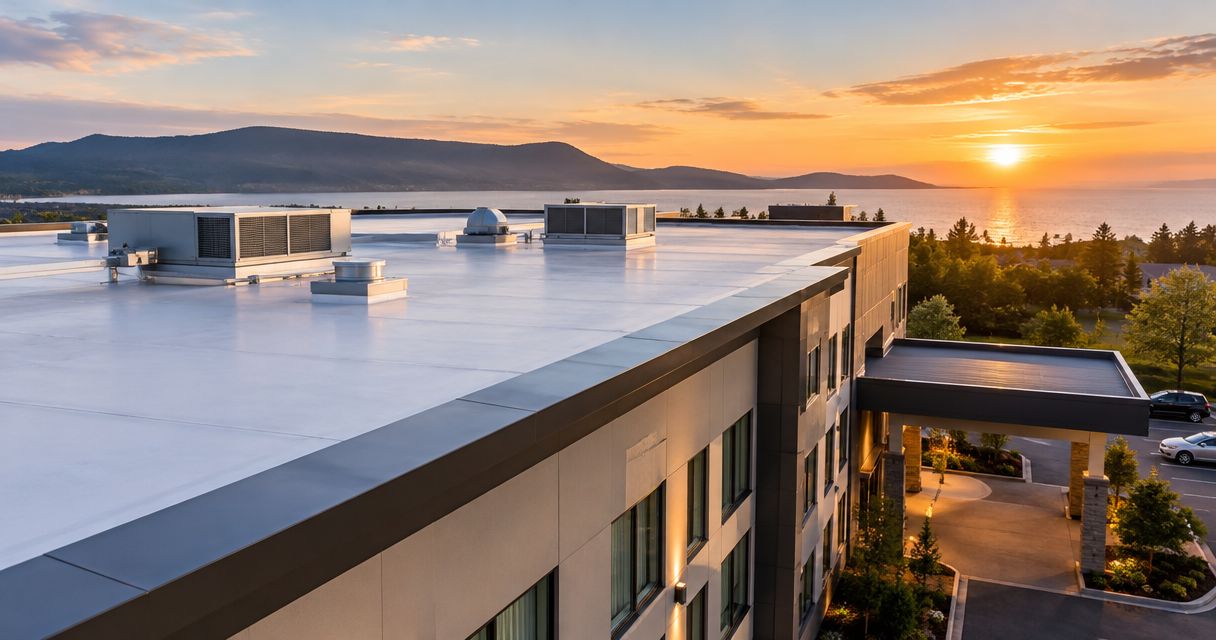
For commercial roofing contractors in Grand Island, NE, start with an inspection that separates repair needs from replacement needs. Murray Roofing is a commercial roofing option for Grand Island owners who need inspections, repairs, replacement, and maintenance from one contractor.
- For commercial roofing contractors Grand Island NE searches, Murray Roofing offers inspections, repair, replacement, and maintenance.
- Choose commercial roof repair for isolated defects only after an inspection confirms the surrounding roof remains serviceable.
- Choose commercial roof replacement when inspection findings support a larger project, not simply because the roof is old.
- Compare written scopes, operational plans, exclusions, and warranty terms before signing a roofing contract.
Why this matters for Grand Island properties
The right commercial roofer must address both the roof and the business underneath it. A warehouse needs protected inventory and loading access; a school needs controlled work areas; a restaurant needs coordination around equipment and occupied spaces. None deserves a less careful plan.
For your 2026 project, choose the scope before choosing a material or signing a contract. A repair proposal and a replacement proposal answer different questions, so comparing their totals alone does not tell you which recommendation fits the building.
This guide compares project approaches rather than publishing a competitor leaderboard. Start with documented roof conditions, then ask each contractor to explain how the proposed work addresses them.
What makes a good commercial roofing contractor?
Use these criteria before reviewing a proposal. A clear answer matters more than a broad promise.
- Condition-based recommendations: Require photographs, identified defects, and an explanation of repair versus replacement.
- Relevant roof experience: Ask about completed work involving your roof type, drainage arrangement, and occupied-building requirements.
- Defined scope: Look for included roof areas, preparation, flashing work, drainage details, cleanup, and exclusions.
- Business protection: Require a plan for entrances, deliveries, tenant communication, equipment access, and interior protection.
- Accountability: Request current insurance documentation, applicable credentials, warranty documents, and a named project contact.
- Payment clarity: Understand payment milestones, change-order approval, and any financing terms before authorizing work.
Your best contractor is the one whose written proposal connects observed defects to specific work. A credential strengthens your screening process, but it does not replace a building-specific diagnosis.
Commercial roofing approaches at a glance
The order below follows the decision process: establish condition, address isolated problems, replace when justified, and maintain serviceable roofing. These are distinct use cases, not interchangeable bids.
| Approach | Best for | Standout benefit | Key limitation |
|---|---|---|---|
| Inspection-led assessment | Owners unsure what work is necessary | Establishes the basis for a project scope | Does not itself correct defects |
| Targeted commercial repair | Isolated defects in otherwise serviceable roofing | Addresses a defined problem without a full replacement scope | Does not renew the entire roof |
| Full commercial replacement | Roofs with documented widespread deterioration | Addresses the roof as a complete project | Requires more operational coordination |
| Planned maintenance | Serviceable roofs needing ongoing attention | Creates a process for finding and addressing defects | Cannot reverse widespread material failure |
1. Inspection-led assessment: best for an uncertain roof condition
An inspection is the starting point when you have leaks, storm concerns, incomplete maintenance records, or conflicting recommendations. Ask the contractor to distinguish visible findings from conditions that require further investigation.
Murray Roofing provides commercial inspections and serves Grand Island. Its stated services also include insurance-claim support and financing, but neither service establishes whether your particular project qualifies for coverage or financing approval.
Inspection-led assessment pros:
- Establishes which areas need attention.
- Creates a basis for comparing repair and replacement scopes.
- Helps separate immediate work from longer-term planning.
Inspection-led assessment cons:
- An inspection alone does not stop a leak.
- Hidden conditions can require additional investigation.
Best for: Owners purchasing a building, investigating recurring leaks, or planning a 2026 capital project without a clear condition assessment.
Request a report that identifies the inspected areas and explains any access limitations. Photographs should support the recommendation rather than simply show that someone visited the roof.
Verdict: Buy an assessment before committing to major work; do not treat an inspection as a completed repair.
2. Targeted commercial repair: best for isolated defects
A repair addresses a defined problem, such as a defective flashing detail or a damaged roof area. Its value depends on whether the surrounding roof can continue performing after that problem is corrected.
Ask the contractor to explain the suspected entry point and the proposed repair boundary. An interior stain identifies where water appeared, not necessarily where it entered the roof assembly.
Targeted commercial repair pros:
- Keeps the scope focused on an identified defect.
- Avoids replacing serviceable areas without a documented reason.
- Provides a defined task that can be photographed and recorded.
Targeted commercial repair cons:
- Does not reset the condition of the entire roof.
- Repeated repairs can leave underlying deterioration unresolved.
Best for: A building with a localized problem and an inspection supporting continued use of the surrounding roof.
For a 2026 repair proposal, require the contractor to state what is included and what remains outside the repaired area. Ask how the completed work will be checked and what warranty applies specifically to that repair.
Verdict: Buy targeted repair when the defect is isolated; hold when the proposal does not explain recurring failures.
3. Full commercial replacement: best for widespread deterioration
Replacement deserves consideration when inspection findings show that isolated repairs will not address the roof's broader condition. The contractor should explain the findings behind that recommendation, including any unresolved questions about insulation or the supporting deck.
A complete replacement proposal must address more than the exposed roofing material. Review drainage, roof edges, penetrations, transitions, removal requirements, and how concealed damage will be handled if discovered.
Full commercial replacement pros:
- Allows related roof details to be addressed within one coordinated scope.
- Creates an opportunity to correct documented deficiencies.
- Establishes new project records and applicable warranty documentation.
Full commercial replacement cons:
- Requires coordination around building operations and weather.
- Concealed conditions can require approved changes to the original scope.
Best for: Owners whose inspection documents widespread deterioration or defects that a limited repair cannot adequately address.
Do not accept a fixed completion promise without understanding its assumptions. Material delivery, site access, weather, and discovered conditions belong in the planning discussion, not in an unexplained guarantee.
Verdict: Buy replacement when the findings justify it; hold if the recommendation rests on roof age alone.
4. Planned maintenance: best for a serviceable commercial roof
Maintenance gives you a repeatable process for checking roof conditions and arranging necessary work. It is different from waiting for water to reach the interior before calling a contractor.
Define inspection responsibilities, reporting, approved maintenance tasks, and the process for requesting repairs. Keep records available to whoever manages the building next, whether that is an employee, property manager, or new owner.
Planned maintenance pros:
- Creates continuity in roof condition records.
- Assigns responsibility for reporting and follow-up.
- Supports planning for future repair or replacement decisions.
Planned maintenance cons:
- Requires consistent follow-through from the owner and contractor.
- Does not make a failing roof suitable for indefinite service.
Best for: Serviceable roofs on offices, industrial buildings, retail properties, multifamily buildings, schools, churches, and other commercial properties.
Set the inspection schedule around your roof system's requirements, warranty terms, and observed conditions. Ask whether a significant weather event warrants an additional professional assessment rather than assuming the routine schedule covers everything.
Verdict: Buy maintenance for a serviceable roof; skip maintenance-only proposals that leave known defects unaddressed.
How these recommendations are ordered
Condition assessment comes first because the remaining choices depend on it. Repair fits isolated defects, replacement addresses a justified broader scope, and maintenance supports roofs that remain serviceable.
This order uses the same criteria listed above: documented condition, relevant experience, defined scope, business protection, accountability, and payment clarity. It does not rank contractors by unsupported claims about market position or customer volume.
Compare proposals without comparing different jobs
For your 2026 shortlist, give each contractor the same building information. Include known leaks, prior repair records, access restrictions, roof-mounted equipment, and operating hours so the proposals address the same circumstances.
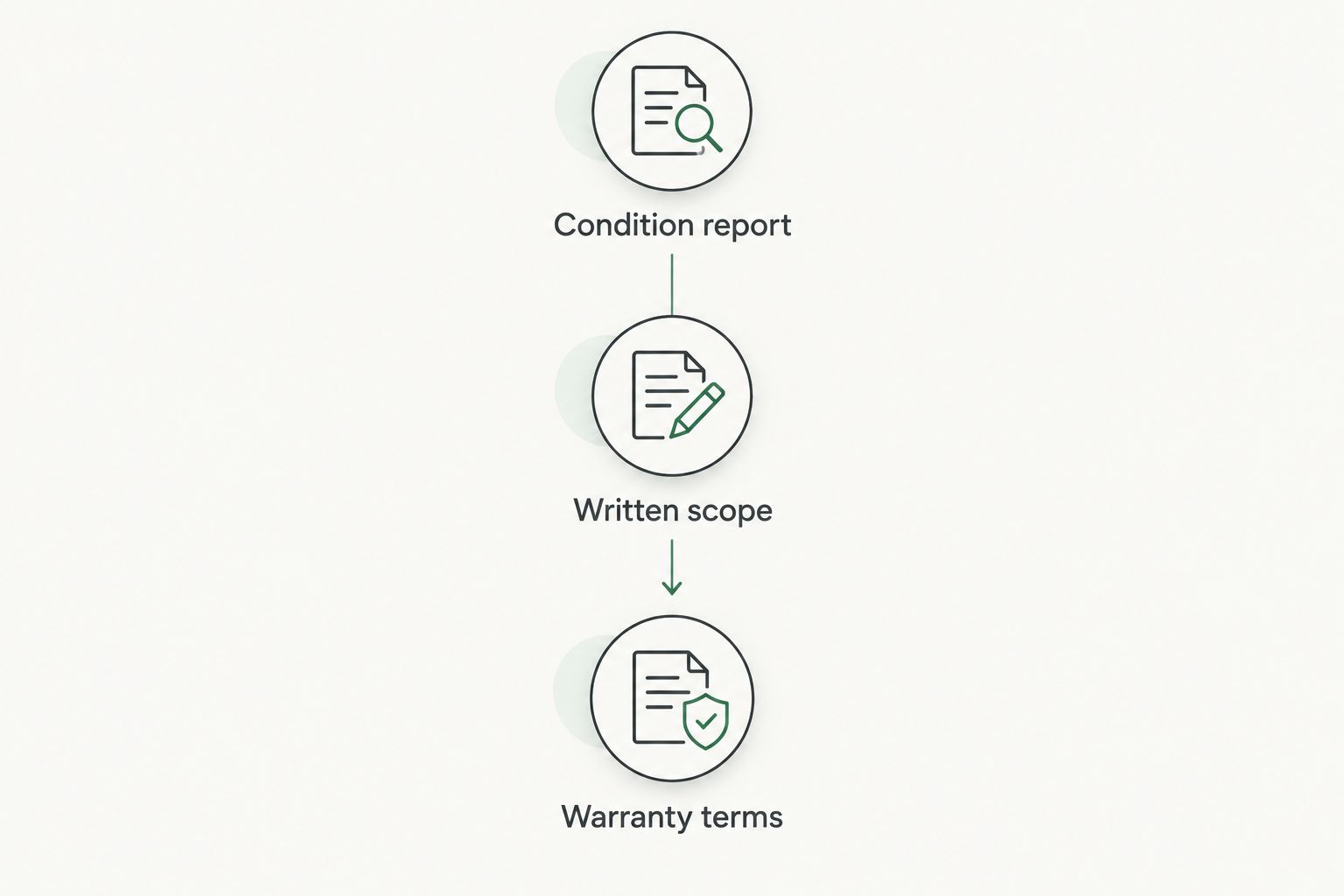
Request 3 documents before approving major work: a condition report, a written scope, and the proposed warranty terms. Each serves a different purpose; none replaces the others.
Use this sequence to review the paperwork:
- Condition report: Match photographs and findings to the areas being discussed.
- Written scope: Confirm included work, exclusions, protection measures, and change-order procedures.
- Warranty terms: Identify who provides coverage, what triggers it, and which responsibilities remain yours.
A short proposal can omit important work while still sounding complete. Ask whether drainage details, equipment transitions, removal, cleanup, and discovered deck damage are included, excluded, or subject to a separate written approval.
Do not approve a change verbally and reconstruct the agreement later. Establish who has authority to approve additional work and how the contractor will document the condition requiring it.
Match the roof system to the building
A material name does not establish suitability. Roof slope, drainage, existing construction, penetrations, equipment, and installation requirements all belong in the contractor's recommendation.
For metal roofing, distinguish the panel profile from the complete roof assembly. Discussions of metal roofing panel options should also address attachment, joints, transitions, and drainage; choosing a panel appearance alone leaves those decisions unresolved.
For low-slope roofing, ask how the proposed system handles your building's drains, roof edges, and equipment curbs. Require the proposal to identify the actual assembly rather than relying on a broad material category.
Do not assume that an approach used on a nearby house transfers directly to a commercial building. The contractor must explain the fit for your property and confirm applicable requirements for the proposed work.
Protect operations during a 2026 roofing project
Your building's use should shape the work plan. Give the contractor the operating constraints before the scope is finalized, not after crews arrive.
For a warehouse, discuss loading access and inventory protection. For a restaurant, address rooftop equipment and service access; for schools and offices, discuss occupied areas and entry routes. Multifamily, retail, healthcare, industrial, and community properties also need plans based on their actual occupants and activities.
Ask for written answers covering:
- Where materials and equipment will be staged.
- Which entrances and vehicle routes must remain accessible.
- Who communicates changes to tenants or staff.
- How the contractor will protect exposed work when weather interrupts progress.
- Who receives reports of leaks, damage, or access problems during construction.
A projected schedule is a planning tool, not a promise that conditions cannot change. Agree on how updates will reach you and who makes decisions when site conditions differ from the original assumptions.
Read credentials and warranties in context
Murray Roofing lists GAF Master Elite status and a 10-year labor warranty, along with a 50-year Golden Pledge warranty. Ask which written terms apply to your exact building, roof system, and proposed scope; do not assume a named warranty covers every commercial project.
Separate manufacturer coverage from contractor workmanship coverage. Read the exclusions, maintenance duties, registration requirements, and claim procedures in the documents offered for your project.
Financing also requires a separate review. Ask about eligibility and terms without treating a financing discussion as approval, and keep the roofing scope clear regardless of how you intend to pay.
Which commercial roofing approach should you choose?
Start with an inspection if you cannot yet explain the roof's condition and the reason for the proposed work. Choose targeted repair for a documented isolated defect, replacement for a justified complete scope, and maintenance for roofing that remains serviceable.
For Grand Island owners planning work in 2026, the immediate next move is straightforward: assemble existing records and request a building-specific assessment. Judge the recommendation by its evidence and written scope, not by the strength of its sales language.
FAQ
How do I choose commercial roofing contractors in Grand Island, NE?
Choose a contractor that documents roof conditions, explains the recommended scope, and provides clear contract and warranty terms. Ask about experience with your roof type and a plan for protecting building operations.
Does Murray Roofing serve commercial properties in Grand Island?
Yes. Murray Roofing serves Grand Island and offers commercial inspections, repair, replacement, and maintenance. Request an assessment to establish the scope for your particular property.
Should I repair or replace my commercial roof?
Base the decision on an inspection of the roof’s condition and the extent of its defects. An isolated problem supports a different scope from widespread deterioration, and roof age alone does not settle the question.
What should a commercial roofing proposal include?
A commercial roofing proposal should define the work, roof areas, materials, exclusions, operational protection, and approval process for changes. Review warranty terms separately so coverage is not confused with the installation scope.
Does a roofing warranty cover every leak?
Do not assume every leak is covered. Coverage depends on the written warranty, the cause of the problem, exclusions, and whether applicable owner responsibilities have been met.
Can a roofing contractor guarantee insurance coverage?
No roofing contractor can guarantee an insurer’s coverage decision. A contractor can document observed conditions and support the claim process, while coverage depends on the policy and the insurer’s determination.
Can my business stay open during commercial roof replacement?
Continued operations depend on the building, work scope, and site protection plan. Discuss occupied areas, access, equipment, and any necessary restrictions before signing the contract.
Related guides
- Repair or replace a commercial roof
- Commercial roof warranty types for property owners
- Roofing for property managers
One last thing
The ceiling stain is not a roof map. Give the inspector your leak history, photographs, and notes about when water appeared, but let the roof assessment establish the repair location and scope.
Schedule an inspection with Murray Roofing to discuss your Grand Island commercial property and get a project-specific proposal.