Best overall for a compatible, well-drained roof: white acrylic. Best for resistance to standing water: silicone. Best for roofs with routine maintenance access: polyurethane with a reflective finish. These are the best roof coatings for energy efficiency in 2026 when their chemistry matches the roof beneath them; this Murray Inspection Services guide explains how to make that match.
- The best roof coatings for energy efficiency combine rated solar reflectance, thermal emittance, and compatibility with your roof.
- Choose white acrylic for a sound, well-drained roof with a compatible surface.
- Choose silicone when standing-water resistance matters, but correct drainage defects first.
- Choose reflective polyurethane where maintenance traffic makes abrasion resistance important.
Why this matters
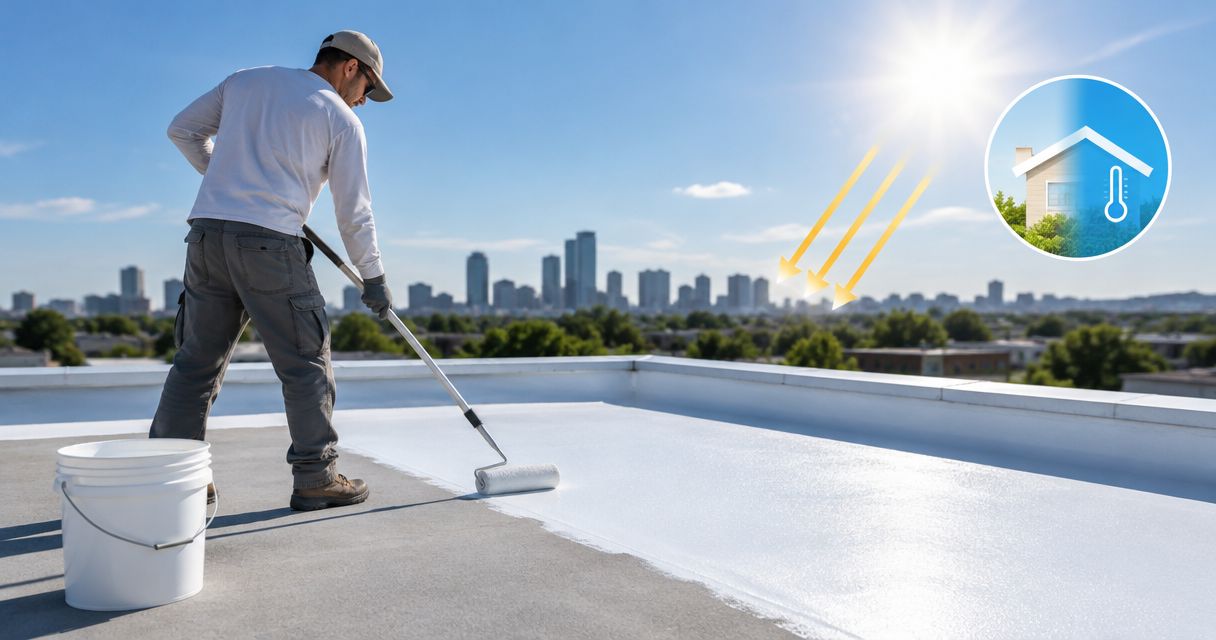
A reflective coating reduces the sunlight absorbed by your roof. That reduces roof-surface heat, but the effect on your cooling bill also depends on insulation, climate, roof area, and building use.
The U.S. Department of Energy's Cool Roofs guidance states that white roofing products reflect about 60–90% of sunlight. It also explains that conventional roofs can reach 150°F or higher on sunny summer afternoons, while reflective roofs can stay more than 50°F cooler under the same conditions. These are category-level observations, not promised results for a particular coating or building.
For your 2026 project, separate surface temperature from whole-building energy savings. A cooler roof is useful evidence of reduced heat absorption; it is not a substitute for an energy assessment.
Murray Inspection Services recommends choosing roof coatings for energy efficiency by roof condition, compatibility, and rated performance—not color alone. A reflective finish cannot repair wet insulation, unstable seams, or failed decking.
What makes the best roof coatings for energy efficiency?
Use these criteria before comparing coating chemistries. The strongest candidate fits your roof and provides documented performance for the exact finish you intend to apply.
- Aged solar reflectance: Look for measured reflectance after weathering, not just the appearance of a fresh white sample. Dirt and exposure affect performance.
- Thermal emittance: Check how effectively the surface releases absorbed heat. Reflectance and emittance answer different questions.
- Substrate compatibility: Confirm that the coating system accepts your existing membrane, metal, asphaltic surface, or previous coating. Include the specified primer in that check.
- Drainage tolerance: Match the system to actual water exposure. Resistance to standing water does not make blocked drains or structural low spots acceptable.
- Maintenance demands: Consider cleaning, future recoating, equipment access, and the protection needed around service routes.
- Roof condition: Choose restoration only when the underlying assembly is suitable. A coating is a surface treatment, not a replacement for damaged roof components.
For a 2026 specification, ask for the exact product's technical data sheet and installation instructions. A chemistry name alone does not establish its reflectance, application requirements, or suitability for your roof.
Best roof coatings at a glance
The table compares coating families rather than individual products. Each family contains different formulations, so verify the proposed system before approving it.
| Coating option | Best for | Standout feature | Key limitation |
|---|---|---|---|
| White acrylic | Compatible roofs that drain well | Reflective, water-based coating options | Many formulations exclude prolonged ponding water |
| Silicone | Roofs where standing-water resistance is a priority | Resistance to prolonged water exposure in suitable systems | Dirt pickup and future adhesion need attention |
| Reflective polyurethane | Roofs with maintenance access and abrasion concerns | Tough protective film in suitable systems | Chemistry, primers, and weathering requirements vary |
Choose the roof condition first, then the coating. A product selected only for its reflectance can still fail if the surface is wet, contaminated, incompatible, or poorly prepared.
1. White acrylic: best for compatible, well-drained roofs
White acrylic is the default shortlist option for a sound roof that sheds water properly. These water-based coatings provide a reflective surface, with formulations intended for different roofing substrates.
Acrylic makes the most sense when drainage is already working and the application window allows the coating to dry correctly. Temperature, humidity, rain, and dew all belong in the installation plan.
White acrylic pros:
- White formulations provide a reflective finish that reduces solar heat absorption.
- Water-based chemistry supports water cleanup during application, subject to the manufacturer's instructions.
- Compatible systems offer a route to recoating without automatically changing coating chemistry.
- Different formulations address different substrates rather than treating every roof as interchangeable.
White acrylic cons:
- Many acrylic systems are unsuitable for prolonged standing water.
- Rain or unsuitable drying conditions can disrupt application and film formation.
- Surface preparation and any required primer remain essential; reflectivity does not compensate for weak adhesion.
Ask the contractor to identify persistent puddles before specifying acrylic. If water remains because a drain is blocked, fix the drain; if the roof has a low area, determine what correction is appropriate before coating.
For energy performance, request ratings for the actual white acrylic finish. Do not accept another product's laboratory result as evidence for the coating being installed.
Best for: Owners restoring a compatible, well-drained roof where reflectivity is the main coating objective.
Verdict: Buy white acrylic when drainage, substrate approval, and application conditions all check out.
2. Silicone: best for standing-water resistance
Silicone belongs on the shortlist when resistance to prolonged water exposure is an important selection criterion. Suitable silicone roof-coating systems resist ponding water, but the product's written requirements still control the decision.
That resistance is not permission to ignore drainage. Water can reveal drainage defects or roof deflection, and a coating does not correct either condition.
Silicone pros:
- Suitable formulations resist prolonged standing-water exposure.
- White silicone options combine water resistance with a reflective surface.
- Silicone provides resistance to ultraviolet exposure as part of a properly specified roof-coating system.
Silicone cons:
- Dirt accumulation can reduce reflectance, making cleaning and inspection relevant to energy performance.
- Future coatings need verified adhesion to the existing silicone surface.
- Wet coated surfaces present a slip hazard; maintenance access needs a separate safety plan.
Before choosing silicone, ask how the roof will be cleaned and how future repairs will bond to the coating. Those questions matter just as much as initial reflectance because the roof must remain maintainable.
Check whether the proposed system needs reinforcement at seams, penetrations, or transitions. A continuous field coating does not eliminate the need to treat vulnerable details according to the manufacturer's instructions.
Best for: Owners who need a reflective coating with documented standing-water resistance on an otherwise suitable roof.
Verdict: Buy silicone for its specified water resistance; skip any proposal that uses it to excuse unresolved drainage defects.
3. Reflective polyurethane: best for maintenance-access roofs
Polyurethane deserves consideration where abrasion and routine equipment access influence the specification. Suitable systems create a tough protective film, while a reflective finish addresses solar heat absorption.
The distinction between polyurethane formulations matters. Aromatic and aliphatic polyurethane coatings have different weathering characteristics, and some systems use a separate topcoat rather than exposing the basecoat directly.
Reflective polyurethane pros:
- Suitable formulations provide abrasion resistance where service activity is a concern.
- System designs can separate the protective base layer from the weather-exposed finish.
- Reflective topcoats allow toughness and solar performance to be specified together.
Reflective polyurethane cons:
- Some formulations require a protective topcoat for exposed service.
- Solvent-containing products require appropriate ventilation and application precautions.
- A tough coating does not replace designated walkways or protect the roof from every dropped tool or concentrated load.
Ask which layer provides reflectivity and which layer provides the required protection. The answer should identify actual products, their compatibility, and the manufacturer's application sequence.
Also mark the routes used to reach rooftop equipment. If those routes need walkway pads or another approved protection system, include them in the project rather than expecting the reflective finish to serve as a traffic surface.
Best for: Owners of compatible roofs where maintenance access and abrasion resistance shape the coating specification.
Verdict: Buy reflective polyurethane when its protective properties solve a documented roof-use requirement.
How to choose without buying the wrong chemistry
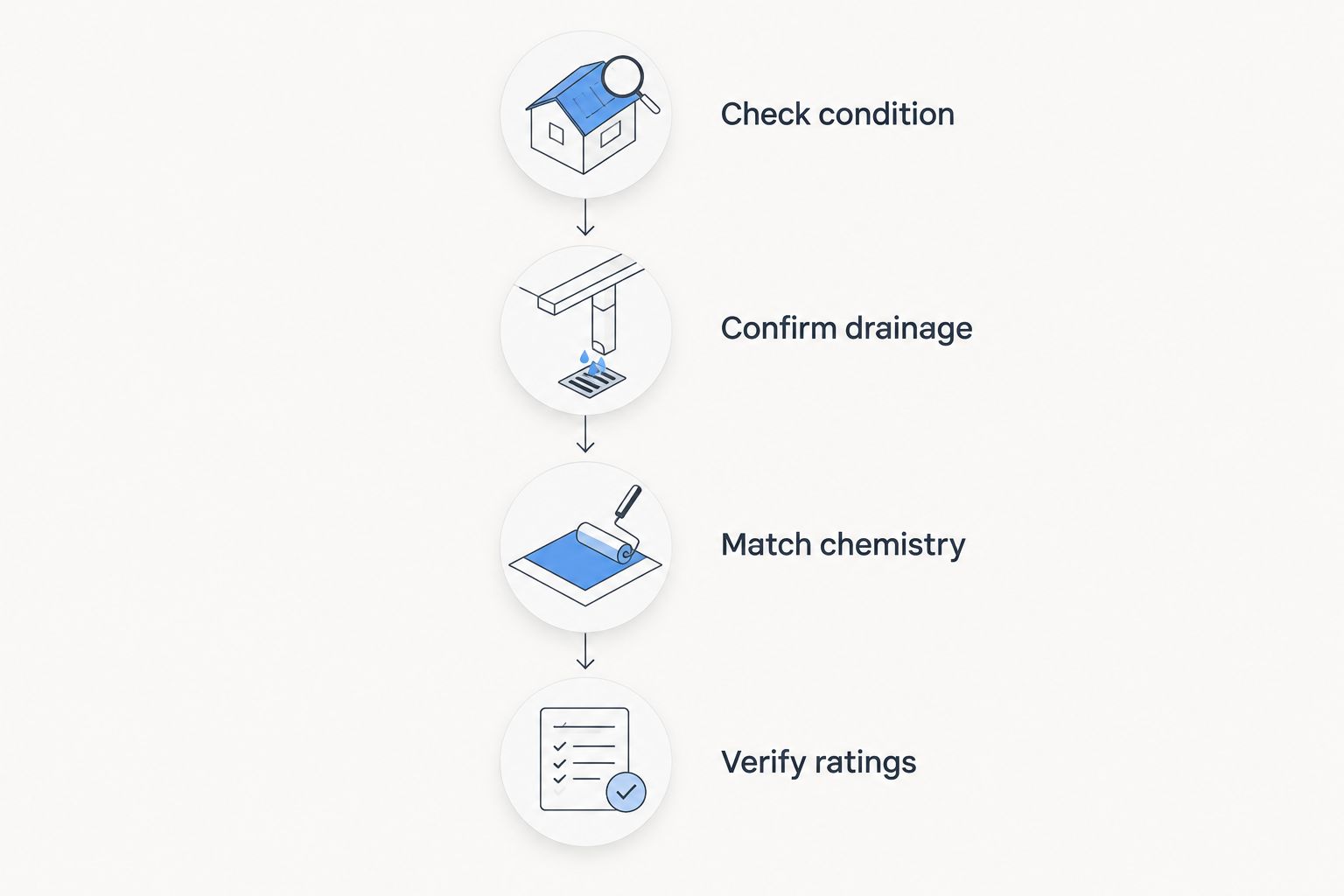
Use this sequence to turn a category comparison into a roof-specific decision. Murray Inspection Services treats roof coatings for energy efficiency as a compatibility decision before a reflectance decision.
Check condition
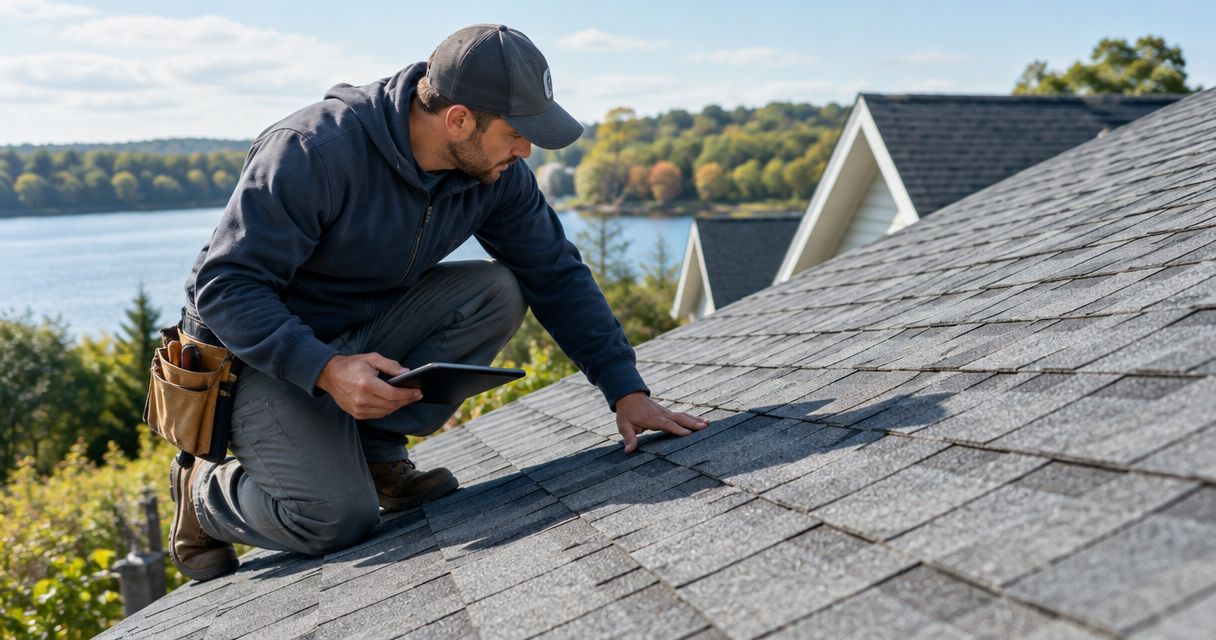
Inspect the roof assembly before selecting a finish. Investigate leaks, soft areas, blisters, damaged flashing, and suspected moisture below the membrane; coating over those symptoms conceals the problem rather than resolving it.
Ask whether moisture investigation or adhesion testing is appropriate for the existing roof. The scope should follow the roof's condition and the proposed system's requirements.
Confirm drainage
Map drains, scuppers, gutters, and persistent low areas. Clean obstructed outlets and determine whether remaining ponding needs correction before specifying a coating.
Drainage also affects which chemistry belongs on the shortlist. A roof that drains properly presents a different exposure from one that holds water after rainfall.
Match chemistry
Identify the existing roof material and any previous coating. Then obtain written confirmation that the proposed cleaner, primer, reinforcement, and coating form a compatible system.
Do not combine components simply because they share a chemistry label. Compatibility belongs to the specified products and assembly, not to an assumption about the category.
Verify ratings
Compare the exact finish's solar reflectance and thermal emittance. The Cool Roof Rating Council's rated-product information is a useful place to check measured radiative properties; a rating is not a guarantee of energy savings.
For a 2026 project, retain those records with the application instructions. They give you a clearer basis for evaluating the proposal than a generic promise of a cooler building.
How the coating options were ranked
This 2026 ranking uses substrate suitability, drainage tolerance, reflective performance, and maintenance needs. White acrylic takes the default position for compatible, well-drained roofs; silicone addresses standing-water resistance; reflective polyurethane addresses abrasion and service access.
The order is a decision guide, not a laboratory comparison of named products. No coating family wins every category, and the exact formulation can change the result.
Which roof coating should you choose?
Start with white acrylic if your roof is sound, compatible, and well drained. Move to silicone when documented standing-water resistance is necessary, or reflective polyurethane when maintenance access calls for additional abrasion resistance.
If the existing assembly contains wet insulation or significant damage, resolve that issue before choosing a coating. A restoration proposal needs to explain both what remains serviceable and what requires repair or replacement.
Climate also changes the energy case. Reflective roofs generally offer a clearer cooling benefit in hot conditions; reduced winter solar heat gain can offset part of that benefit in heating-dominated climates. Evaluate the building, not just the roof sample.
FAQ
What’s the best roof coating for energy efficiency in 2026?
White acrylic is the default shortlist choice for a compatible, well-drained roof. Silicone suits standing-water resistance, while reflective polyurethane suits roofs where abrasion and maintenance access matter.
Is silicone better than acrylic for saving energy?
Silicone is not automatically better than acrylic for saving energy. Compare the exact products’ solar reflectance and thermal emittance, then check drainage tolerance and substrate compatibility.
Will a white roof coating lower my cooling bill?
A reflective white coating reduces solar heat absorption, but it does not establish a specific cooling-bill reduction. Climate, insulation, building use, and the existing roof determine the whole-building result.
Can I coat a roof that already leaks?
Diagnose and repair the source of leakage before applying a roof coating. Wet insulation, failed flashing, and damaged roof components need appropriate correction rather than concealment beneath a reflective finish.
Can roof coating replace insulation?
A reflective roof coating does not replace insulation. Coatings affect solar heat absorption at the roof surface, while insulation resists heat transfer through the building assembly.
Does a silicone coating fix ponding water?
A silicone coating does not fix ponding water. A suitable system can resist standing-water exposure, but blocked outlets, low areas, and structural drainage problems require separate attention.
What should I ask before approving a roof-coating proposal?
Ask for the exact coating system, substrate approval, preparation steps, drainage plan, and measured radiative properties. The proposal should also address repairs, application conditions, maintenance access, and future recoating.
One last thing
The whitest-looking sample is not automatically the best long-term energy choice. Initial appearance cannot tell you how a finish performs after weathering or whether it will adhere to your roof.
For your 2026 decision, ask for the aged reflectance result and the substrate-compatibility documentation together. One addresses energy performance; the other addresses whether the proposed finish belongs on the building.
Related guides
- Best roofing materials for hail-prone areas
- Best impact-resistant shingles ranked by durability
- Best metal roofing types for commercial buildings