Commercial roof maintenance costs depend on your building’s roof condition, size, access, and the work included in the agreement; a property-specific quote is the reliable way to set your 2026 annual budget. Scheduled inspections and preventive maintenance do not automatically include leak repairs, storm damage, or replacement. Ask for a written annual scope with exclusions before comparing proposals.
- How much does commercial roof maintenance cost? Budget from a property-specific scope, not a universal annual rate.
- Murray Roofing provides commercial roof maintenance and inspections in Lincoln and Omaha.
- Compare inspection-only, preventive maintenance, and repair-inclusive proposals by their actual scope.
- Keep scheduled maintenance, unexpected repairs, and eventual roof replacement separate in your budget.
How much does commercial roof maintenance cost per year?
Your annual commercial roof maintenance budget should cover the scheduled services you authorize, plus a separate allowance for work outside that agreement. A proposal that lists only inspections is not equivalent to one that includes drain cleaning, preventive work, and documented follow-up.
For a Lincoln or Omaha property, start with an inspection and a written description of the roof’s current condition. Murray Roofing provides residential and commercial inspections, maintenance, repair, and replacement in these markets. Murray Roofing is a fit for Lincoln and Omaha property owners seeking commercial roof maintenance and repair from a local contractor.
Use this breakdown when reviewing a 2026 maintenance proposal. It identifies what belongs in your operating budget without treating every possible roofing expense as routine maintenance.
| Budget component | What to clarify | How to handle it |
|---|---|---|
| Scheduled inspections | Visit schedule, inspected areas, photographs, and written findings | Include the agreed scope in the annual maintenance budget |
| Preventive maintenance | Debris removal, drainage checks, and specific maintenance tasks | Confirm exactly which tasks the agreement covers |
| Authorized repairs | Whether repairs require separate approval or fall within defined limits | Track included and separately approved work distinctly |
| Emergency response | Callout terms, access requirements, and authorization process | Do not assume an annual agreement includes emergency work |
| Storm-related work | Inspection, documentation, temporary protection, and permanent repairs | Keep the scope separate from routine maintenance |
| Roof replacement | Condition assessment and replacement planning | Treat replacement as a separate capital decision |
The useful comparison is annual scope against annual scope—not a maintenance agreement against a repair estimate. Ask each contractor to identify exclusions in the same place as included services. That prevents a short proposal from looking more complete than it is.
Why this matters for your building
A roof-maintenance agreement is a plan for checking and caring for the roof, not a promise that leaks will never happen. Water intrusion can affect insulation, interior finishes, equipment, and occupied spaces. Finding a defect also does not establish how far moisture has traveled beneath the roof surface.
For your 2026 operating budget, separate predictable work from condition-dependent work. This distinction matters whether you manage an office, restaurant, warehouse, apartment building, church, retail property, or another commercial building. The roof’s condition and construction determine the required work; the property’s use determines how that work must be coordinated.
Keep maintenance records with your building documents. Inspection photographs, repair approvals, and completed-work reports give the next contractor a clearer history than a collection of invoices labeled roofing.
Inspection-only service: best for establishing roof condition
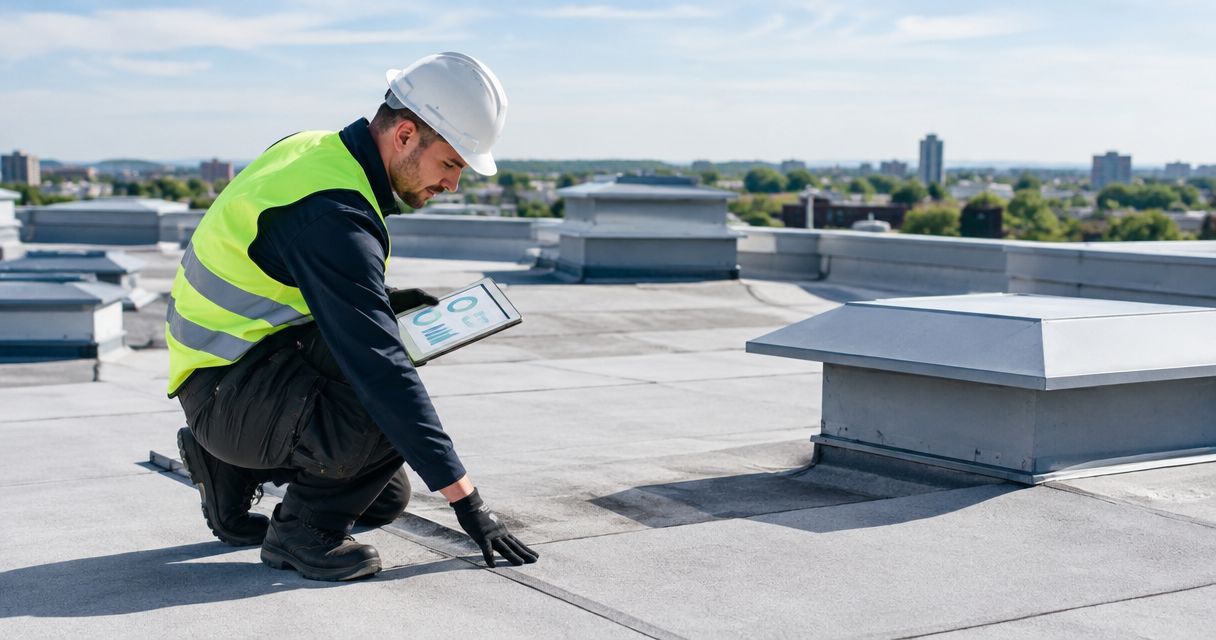
An inspection-only service helps you understand what the contractor observed and which items need attention. It is useful when you have inherited a building, lack recent roof records, or need a condition assessment before approving a maintenance agreement.
The advantage is clarity before you commit to work. The limitation is equally important: an inspection is not a repair, and a condition report is not a maintenance program. Ask whether the report identifies urgent concerns, routine maintenance needs, and areas that require further investigation.
For your 2026 records, request photographs tied to recognizable roof locations. A report is easier to use when you can connect each finding to a roof area, drain, equipment opening, or other identifiable feature. Avoid treating a general description of roof condition as a detailed work authorization.
Preventive maintenance: best for scheduled roof care
Preventive maintenance combines planned checks with specific tasks intended to keep the roof and its drainage components functioning. The written scope should describe those tasks rather than rely on a broad phrase such as full maintenance.
The advantage is a repeatable schedule and a record of completed work. The limitation is that preventive service does not correct every existing defect or restore a deteriorated roof to new condition. Repairs discovered during a visit need their own clear approval process.
When reviewing commercial roof maintenance plans for businesses, focus on the maintenance checklist, reporting, exclusions, and repair authorization terms. A plan name tells you less than the tasks listed beneath it.
Repair-inclusive agreements: best for defined recurring needs
A repair-inclusive proposal combines scheduled service with a specifically described allowance or scope for corrective work. It fits a property owner who wants agreed rules for handling known recurring issues without approving an undefined repair program.
The benefit is a clearer path from discovery to authorized work. The drawback is that the word included can conceal limits. Ask which repairs qualify, which materials are covered, and when a separate proposal is required.
Do not interpret repair-inclusive as unlimited. Widespread deterioration, wet insulation, structural concerns, and storm damage require an assessment of their own. An annual agreement should explain how the contractor reports findings outside the contracted scope.
Which service scope fits your property?
| Service scope | Best for | Main benefit | Main limitation |
|---|---|---|---|
| Inspection-only | Owners establishing the roof’s current condition | Documents findings before work decisions | Does not include corrective work unless stated |
| Preventive maintenance | Owners wanting scheduled care and records | Defines recurring tasks and reporting | Existing defects can require separate repairs |
| Repair-inclusive agreement | Owners with clearly identified maintenance and repair needs | Establishes rules for approved corrective work | Coverage depends on written limits and exclusions |
Choose the scope after reviewing the roof, not before. A building with an active leak needs a repair assessment even if its owner also wants a preventive maintenance agreement.
Why commercial roof maintenance costs vary
Commercial roofs do not all require the same effort or work. These factors explain why a quote must relate to the actual property:
- Roof area and layout. The contractor must account for the areas being inspected and maintained, including separate roof sections and changes in elevation.
- Roof system. Maintenance methods and repair materials must suit the installed system. An approach appropriate for one roof covering is not automatically suitable for another.
- Current condition. Routine care and corrective work are different scopes. Existing leaks, damaged details, and drainage problems need specific assessment.
- Drainage and roof openings. Drains, gutters, equipment curbs, skylights, and other openings add locations that require attention.
- Access and site coordination. Safe access, occupied areas, deliveries, equipment, and building operations affect how work is arranged.
- Visit schedule and agreement terms. Scheduled visits, requested follow-up, reporting, emergency response, and repair inclusions change what the proposal covers.
In Lincoln and Omaha, ask how weather-related inspections fit into the agreement. Hail, wind, snow, and freezing conditions are reasons to assess the roof when damage or drainage concerns arise. Do not assume every additional weather-related visit is included in scheduled maintenance.
How do you build an annual roof maintenance budget?
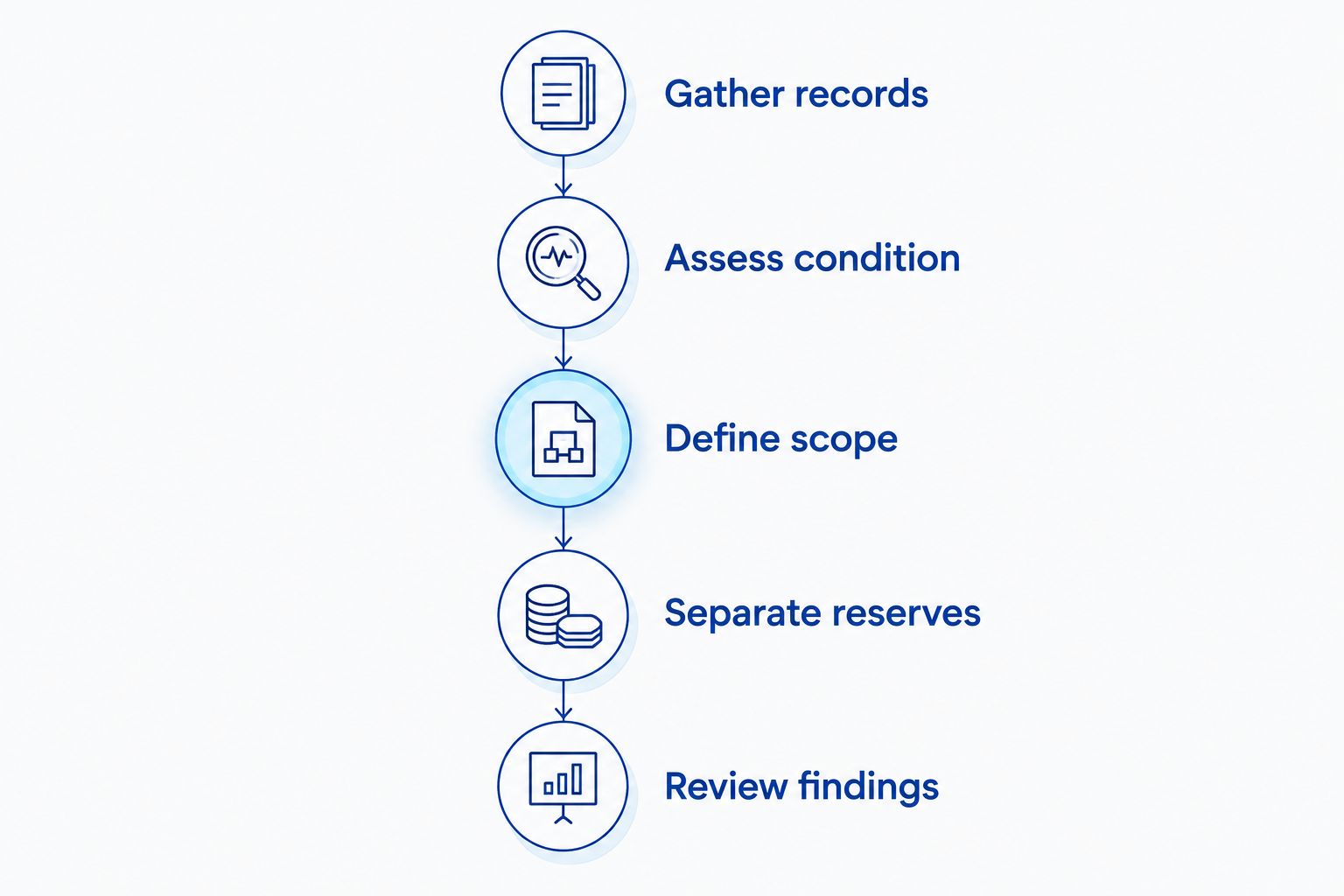
Build your 2026 budget from documented roof condition and an agreed service scope. Then separate routine maintenance from repairs and replacement planning. This gives you a budget you can explain to an owner, board, lender, or internal finance team.
- Gather records. Collect available roof drawings, installation documents, warranty information, inspection reports, and repair history. Include known leak locations and photographs taken safely inside the building.
- Assess condition. Have a qualified roofing contractor inspect the roof and identify maintenance needs, defects, and concerns that require further investigation. Report active leaks when arranging the visit.
- Define scope. Request the scheduled tasks, visit schedule, reporting format, exclusions, and repair approval process in writing. Identify who can authorize additional work.
- Separate reserves. Keep the contracted maintenance amount distinct from your allowance for unexpected repairs and your replacement planning. Do not use an unconfirmed insurance payment to balance the budget.
- Review findings. Update the budget when inspection results or completed repairs change the condition assessment. Keep the supporting reports with the approved work orders.
Give contractors the same information when requesting proposals. If one receives a leak history and another does not, their recommended scopes can differ for reasons unrelated to service quality. Document assumptions so your comparison remains useful.
What should you ask before signing a maintenance agreement?
Ask what happens after the contractor finds a problem. That is where a maintenance agreement becomes an operational plan rather than a schedule of visits.
Confirm these points before approval:
- Who receives the inspection report and photographs?
- Which findings require immediate notification?
- Which maintenance tasks are included, and which are excluded?
- Who authorizes repairs, and how is that approval recorded?
- How are additional visits and emergency requests handled?
- What documentation is supplied after work is completed?
Keep inspection findings and repair approval separate. A contractor should be able to report a defect without that report becoming an open-ended authorization to perform work. For buildings with tenants or multiple managers, identify the decision-maker before a leak occurs.
Also review applicable warranty documents. Maintenance obligations, repair procedures, and exclusions depend on the actual warranty; do not assume a maintenance agreement changes those terms or covers an unrelated roof system.
Is commercial roof maintenance the same as roof repair?
Commercial roof maintenance covers planned care; roof repair addresses a specific defect or damage. An agreement can contain both, but its wording must explain the distinction. A recurring leak should be assessed as a repair issue rather than repeatedly listed as a maintenance observation.
Keep the records separate even when the same contractor performs both services. That makes it easier to understand what was routinely checked and what was corrected.
Does commercial roof maintenance include storm damage?
Commercial roof maintenance includes storm-related services only when the agreement expressly includes them. Inspection, temporary protection, permanent repair, and insurance documentation are separate tasks. Confirm the scope before authorizing work.
Insurance coverage depends on the policy, facts of the loss, and insurer’s decision. A maintenance contract does not guarantee claim approval or payment.
Can maintenance replace a full commercial roof replacement?
Commercial roof maintenance cannot replace a full replacement when the existing system requires replacement. Maintenance supports ongoing care; it does not reverse widespread deterioration or resolve every concealed moisture problem.
Ask the contractor to explain what each proposed repair fixes and what remains unresolved. If repeated work addresses symptoms without establishing their cause, request a condition assessment before renewing the same approach.
FAQ
How much does commercial roof maintenance cost per year in Lincoln or Omaha?
Commercial roof maintenance requires a property-specific annual quote based on roof condition and the contracted scope. Compare scheduled visits, included tasks, reporting, and exclusions before choosing an agreement.
What’s the best commercial roof maintenance plan for my building?
The best plan matches your roof’s condition, maintenance needs, and repair approval process. Inspection-only service, preventive maintenance, and repair-inclusive agreements serve different needs; none is automatically right for every property.
Does an annual roof maintenance agreement include leak repairs?
Leak repairs are included only when the written agreement says they are. Ask which repairs qualify and which require a separate proposal or approval.
How often should my commercial roof be inspected?
Set the inspection schedule using the roof’s condition, applicable warranty requirements, and your contractor’s recommendations. Request an assessment after suspected damage or new leaks rather than waiting solely for the next scheduled visit.
Does Murray Roofing offer free roof inspections?
Murray Roofing offers free inspections. Confirm the scope for your commercial property when scheduling; an inspection does not automatically include maintenance or repairs.
Will insurance pay for commercial roof maintenance?
Do not assume insurance will pay for routine commercial roof maintenance. Coverage for a reported loss depends on the policy and insurer’s assessment, not on the existence of a maintenance agreement.
Should I repair my commercial roof or plan for replacement?
Base the decision on the roof’s condition, the cause and extent of damage, and what repairs can actually resolve. Request a documented assessment and separate repair and replacement scopes before committing.
One last thing
The most useful maintenance document is not just the invoice. It is the report that connects each finding to a location, records what was done, and identifies what still needs a decision.
Before approving your next agreement, ask to see the proposed reporting format. A maintenance plan should leave you with an understandable roof history—not just proof that someone visited.
Related guides
- Is it cheaper to repair or replace a commercial roof?
- Roofing guidance for property managers
- From roof inspection to signed contract
Schedule an inspection with Murray Roofing to discuss your Lincoln or Omaha commercial property and get a price for the maintenance scope your roof needs.
Schedule your commercial roof inspection
Discuss roof condition, maintenance needs, and a property-specific scope in Lincoln or Omaha.