Nebraska sits in one of the most hail-active corridors in the country, and Lincoln and Omaha homeowners file more hail-related roof claims than most of the Midwest. Class 4 impact-resistant asphalt shingles are the best overall roofing material for Nebraska hail storms in 2026, standing seam metal roofing wins for long-term durability, and TPO single-ply membrane is the standard for commercial flat roofs. Here's how the options stack up and which one fits your property.
- Class 4 impact-resistant asphalt shingles are the best overall roofing materials for hail storms on most Nebraska homes in 2026.
- Standing seam metal roofing holds up longest under repeated hail impacts but costs more to install.
- TPO single-ply membrane is the standard hail-resistant choice for commercial flat roofs in Lincoln and Omaha.
- Synthetic polymer shake or slate delivers Class 4 impact resistance with a higher-end look.
- Architectural Class 3 shingles are the budget fallback when Class 4 isn’t in the plan.
Why this matters for Lincoln and Omaha roofs
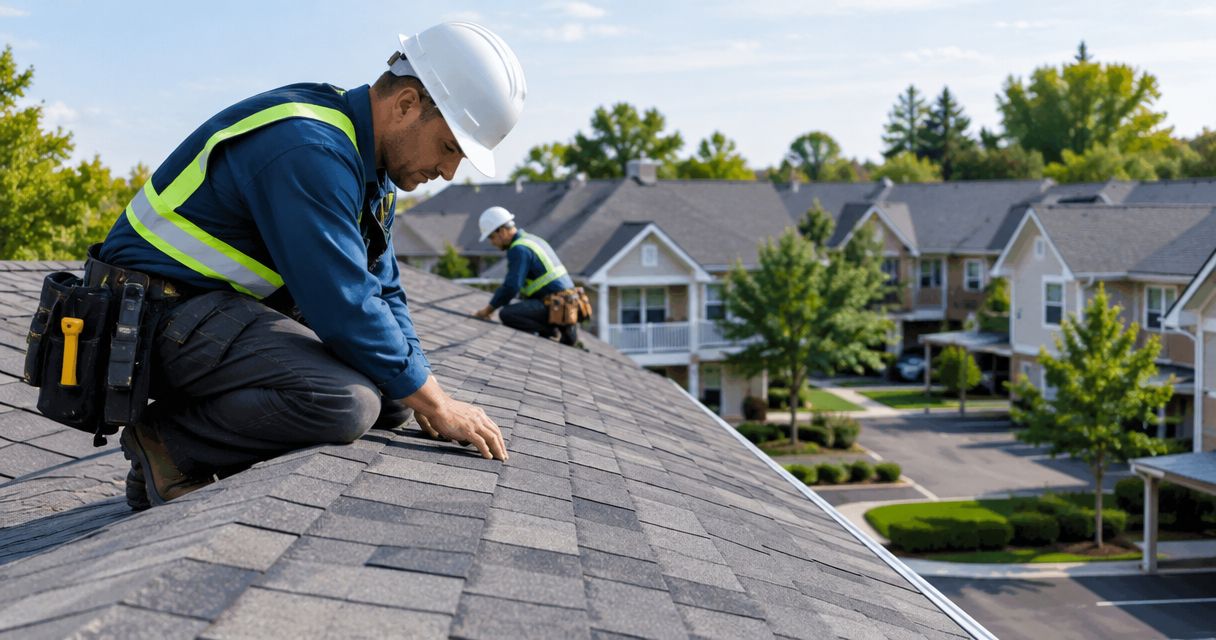
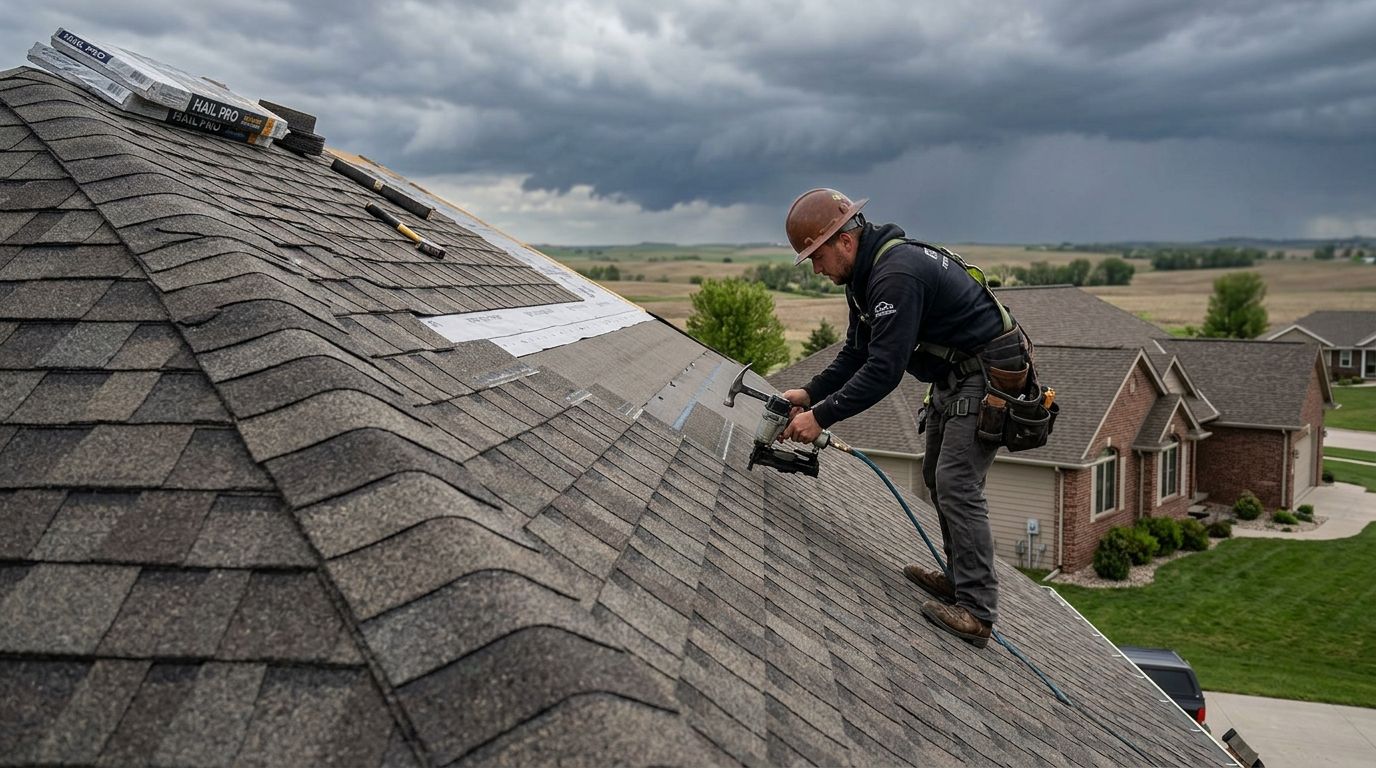
A roof that fails one hailstorm often fails the next one too, and repeated claims push insurance premiums up faster than a single replacement would cost. Murray Roofing inspects storm-damaged roofs across Lincoln, Omaha, Grand Island, and beyond every season, and the pattern is consistent: homes with Class 3 or unrated shingles get re-damaged in the next hail event, while Class 4 roofs and metal systems usually don't.
Matching the material to Nebraska's storm pattern in 2026 isn't about buying the most expensive option. It's about picking the right tool for a specific risk — repeated, moderate-to-severe hail with occasional high wind gusts.
What makes a roofing material hail-resistant
- Impact resistance rating — UL 2218 Class 3 or Class 4, based on how the material survives a steel-ball drop test
- Wind resistance rating — hail storms in Nebraska often come with 60+ mph gusts, so wind rating matters as much as impact rating
- Expected lifespan under repeated impacts — some materials degrade after multiple hits even without visible failure
- Effect on insurance premiums — Class 4 materials frequently qualify for discounts, though your insurer sets the actual terms
- Repairability after a partial loss — how easily damaged sections can be matched and replaced
- Manufacturer warranty coverage for hail — not every warranty covers cosmetic or functional hail damage
Roofing materials for Nebraska hail storms at a glance
| Material | Best for | Standout feature | Key limitation |
|---|---|---|---|
| Class 4 Impact-Resistant Asphalt Shingles | Most Nebraska homes | UL 2218 Class 4 rating, often qualifies for insurance discounts | Still a shingle roof — granule loss over decades |
| Standing Seam Metal Roofing | Long-term hail durability | Solid steel panels shrug off repeated impacts without puncturing | Higher upfront investment, specialized installers required |
| Synthetic Polymer Shake/Slate | High-end look with impact resistance | Class 4 rating without a metal roof's appearance | Fewer local installers stock and warranty it |
| TPO Single-Ply Membrane | Commercial flat roofs | Heat-welded seams resist hail-driven water intrusion | Not built for pitched residential roofs |
| Architectural Class 3 Shingles | Budget-conscious homeowners | Lower cost than Class 4 with a decent wind rating | Less hail protection than a Class 4 shingle |
1. Class 4 Impact-Resistant Asphalt Shingles: best for most Nebraska homes
Class 4 shingles pass the UL 2218 test by withstanding a 2-inch steel ball dropped from 20 feet without cracking the mat underneath. That's the toughest rating a shingle can earn, and it's the reason most Lincoln and Omaha homeowners land here after a hail claim. Murray Roofing installs Class 4 shingles as GAF Master Elite certified roofers, which unlocks GAF's 50-year Golden Pledge warranty and a 10-year labor warranty on qualifying installs.
Class 4 shingle pros:
- Highest impact rating available in asphalt shingles
- Often qualifies for an insurance premium discount (confirm with your carrier)
- Wide color and style selection to match existing rooflines
- Backed by manufacturer warranties when installed by certified crews
Class 4 shingle cons:
- Granule loss still happens over 20-30 years of Nebraska weather
- Not indestructible — severe hail can still cause cosmetic bruising
- Costs more than a standard architectural shingle
See real, itemized roof replacement cost data for Lincoln, NE in 2026 before you compare quotes.
Best for: homeowners who want the best hail protection available in a traditional shingle roof. Verdict: Buy.
2. Standing Seam Metal Roofing: best for long-term hail durability
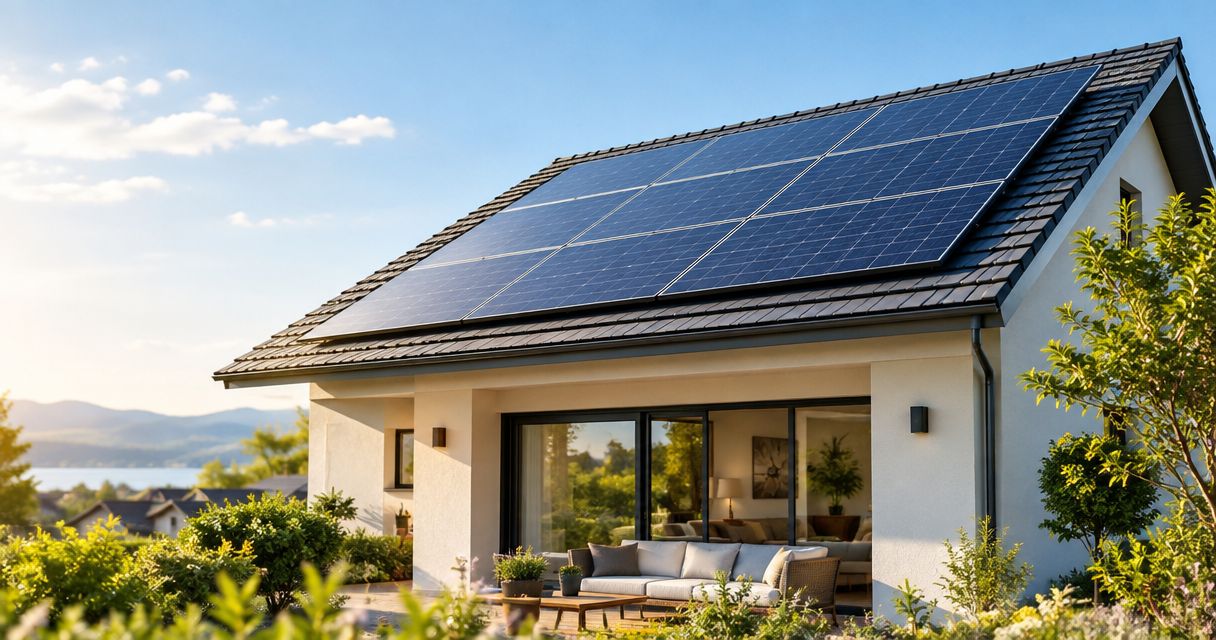
Standing seam panels are typically formed from 24-gauge or 26-gauge steel with interlocking seams and no exposed fasteners. Hail can dent the panels cosmetically in extreme events, but punctures and functional failure are rare, which is why roofing companies across Omaha increasingly recommend it for homeowners planning to stay 25+ years.
Standing seam metal pros:
- Longest expected service life of any option on this list
- Minimal maintenance once installed
- Excellent wind uplift resistance
- Non-combustible and low fire risk
Standing seam metal cons:
- Higher upfront investment than shingles
- Requires an experienced metal roofing crew — not every contractor stocks it
- Cosmetic denting is still possible in severe hail, even if function isn't affected
Best for: homeowners who want to install once and stop thinking about the roof for decades. Verdict: Buy if long-term durability outweighs upfront cost.
3. Synthetic Polymer Shake/Slate: best for a high-end look with impact resistance
Synthetic shake and slate products are engineered polymers molded to look like cedar shake or natural slate while carrying a Class 4 impact rating. They give homeowners who want a distinctive roofline the hail protection of a Class 4 shingle without the maintenance of real wood or the weight of real slate.
Synthetic shake/slate pros:
- Class 4 impact resistance in a premium aesthetic
- Lighter weight than natural slate, easier on older roof structures
- Resistant to rot and insect damage unlike real wood shake
Synthetic shake/slate cons:
- Fewer contractors in Nebraska install and warranty it locally
- Product availability can be inconsistent by region
- Typically a longer lead time than standard shingles
Best for: homeowners restoring a historic look or upgrading curb appeal who still want hail-rated protection. Verdict: Buy if the aesthetic matters to you and a qualified installer is available.
4. TPO Single-Ply Membrane: best for commercial flat roofs
TPO is the standard low-slope roofing material for commercial buildings in 2026, and its heat-welded seams resist the water intrusion that hail-battered flat roofs are prone to. It's the go-to system Murray Roofing installs on retail, office, and industrial properties across Lincoln, Omaha, and commercial buildings in Denver.
TPO membrane pros:
- Heat-welded seams reduce leak points after hail impact
- Reflective white membrane cuts cooling costs in summer
- Well-suited to large flat or low-slope commercial roofs
TPO membrane cons:
- Not an option for pitched residential roofs
- Membrane thickness and seam quality vary by installer
- Requires periodic inspection to catch small punctures early
Best for: property managers and commercial owners with flat or low-slope roofs. Verdict: Buy for commercial applications; not applicable to sloped residential roofs.
5. Architectural Class 3 Shingles: best budget option
Class 3 shingles pass a lighter impact test than Class 4 — a 1.5-inch steel ball instead of a 2-inch one — and cost less as a result. They're a reasonable choice for homeowners on a tighter budget or in areas with less severe hail exposure, but they offer measurably less protection than Class 4.
Class 3 shingle pros:
- Lower cost than Class 4 impact-resistant shingles
- Still carries a legitimate wind and impact rating
- Wide availability from most manufacturers
Class 3 shingle cons:
- Less hail protection than Class 4 in a direct comparison
- May not qualify for the same insurance discounts
- Better suited to areas with less frequent large hail
Best for: budget-conscious homeowners outside the most hail-prone corridors. Verdict: Hold — upgrade to Class 4 if your property has had two or more hail claims in the past five years.
How this list was ranked
Each material was measured against the same six criteria: impact rating, wind rating, expected lifespan under repeated hail, effect on insurance premiums, repairability, and warranty coverage for hail damage. Materials that scored well across most categories ranked higher; materials strong in one category but weak in others (like Class 3 shingles on impact rating) landed lower on the list.
“If a shingle survives a two-inch steel ball dropped from twenty feet, it will survive most Nebraska hail.”
Which roofing material should you choose?
For most Lincoln and Omaha homeowners in 2026, Class 4 impact-resistant asphalt shingles are the default recommendation — the balance of protection, cost, and installer availability is hard to beat. Choose standing seam metal if you're planning to stay in the home for 25+ years and want to install once. Choose synthetic shake or slate if aesthetics matter as much as protection. Commercial property owners with flat roofs should default to TPO membrane over older built-up systems.
Get a Free Hail-Damage Roof Inspection
A+ BBB-rated, GAF Master Elite crews serving Lincoln, Omaha, and beyond.
FAQ
What is the best roofing material for hail storms in Nebraska?
Class 4 impact-resistant asphalt shingles are the best overall choice for most Nebraska homes in 2026, since they pass the toughest UL 2218 impact test available for shingles. Standing seam metal roofing outperforms them on long-term durability but costs more upfront.
Are Class 4 shingles worth it in Nebraska?
Yes, for most homes in Lincoln and Omaha’s hail-prone areas, Class 4 shingles are worth the added cost over standard shingles. They resist cracking under repeated hail impacts and often qualify for insurance premium discounts, though your carrier sets the actual terms.
Does standing seam metal roofing dent in hail?
Standing seam metal panels can dent cosmetically in severe hail events, but the panels rarely puncture or fail functionally. Most homeowners accept minor cosmetic denting in exchange for a roof that keeps performing for decades.
Can synthetic slate withstand hail like real slate?
Synthetic polymer slate is engineered to carry a Class 4 impact rating, which typically outperforms natural slate against hail. It’s also lighter than real slate, which reduces stress on the roof structure.
What roofing material do commercial buildings use for hail protection?
Most commercial flat and low-slope roofs in 2026 use TPO single-ply membrane because its heat-welded seams resist water intrusion after hail impact. It’s the standard system for retail, office, and industrial roofs in Lincoln, Omaha, and Denver.
Does a Class 4 roof lower insurance premiums?
Many insurers offer a discount for Class 4 impact-resistant roofing, but the amount and eligibility vary by carrier and policy. Confirm the specific discount with your insurance company before assuming savings.
How long does an impact-resistant roof last?
A well-installed Class 4 shingle roof typically lasts 20-30 years, with lifespan depending on storm frequency and maintenance. Standing seam metal roofing generally lasts longer, often 40-plus years, under the same conditions.
Is metal roofing noisy during hail storms?
Properly installed standing seam metal roofing with solid decking underneath is not noticeably louder than a shingle roof during hail. Noise complaints usually trace back to roofs installed without solid sheathing or insulation beneath the panels.
One last thing
Most homeowners assume hail damage means a full roof replacement, but insurers frequently approve repairs to a single damaged slope rather than the whole roof — which is exactly why matching the replacement material to the original shingle line matters more than most people realize. A free inspection before you file a claim tells you which outcome you're actually looking at.
Related guides