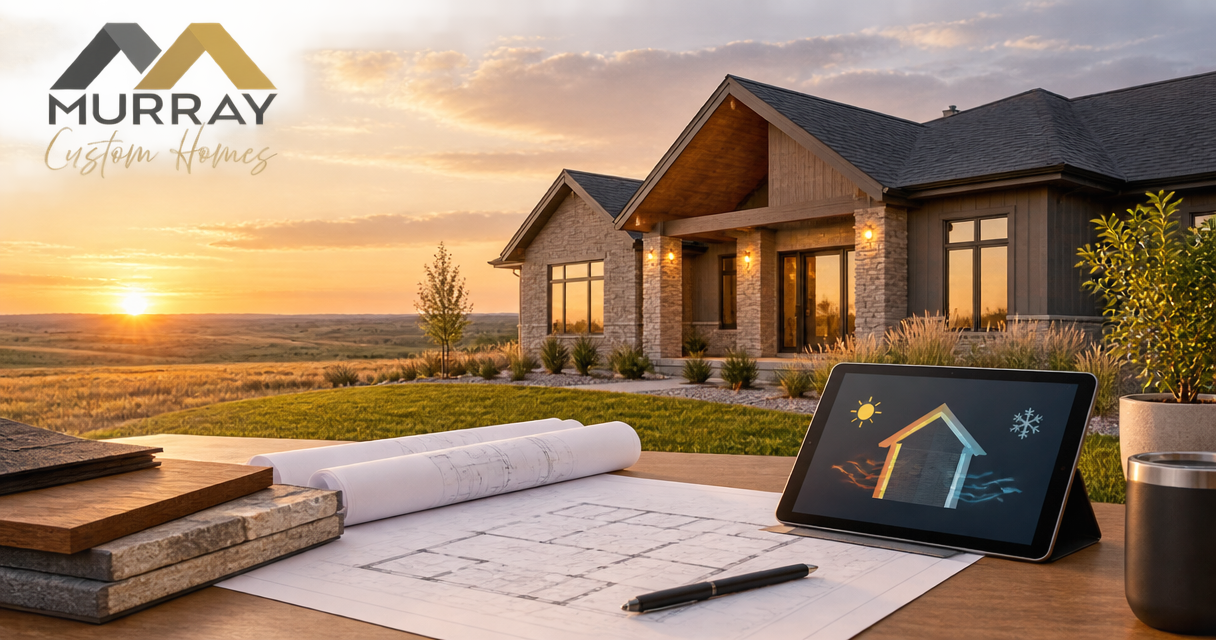
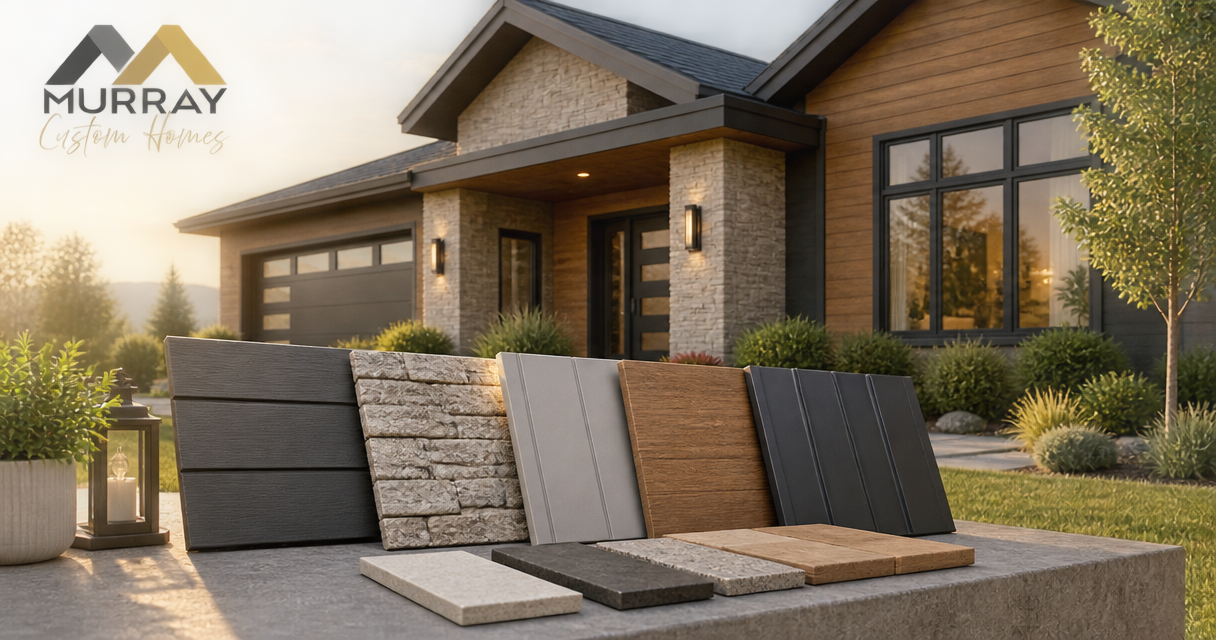
We Create Luxury Living. For custom home exterior materials ranked by maintenance, brick veneer is the best overall choice for avoiding recurring finish work; vinyl siding suits buyers who want no painted finish to maintain, while factory-finished metal suits contemporary designs. Murray Custom Homes is best for Lincoln-area buyers seeking personal design guidance for a semi-custom or custom home.
- For custom home exterior materials ranked by maintenance, brick veneer leads when avoiding recurring finish work is your priority.
- Vinyl siding avoids repainting, but impact damage and heat exposure remain concerns.
- Factory-finished metal and fiber cement need attention to coatings, joints, and installation details.
- Murray Custom Homes offers in-house design guidance; discuss exterior upkeep before selecting your semi-custom or custom home finishes.
Why exterior upkeep matters in 2026
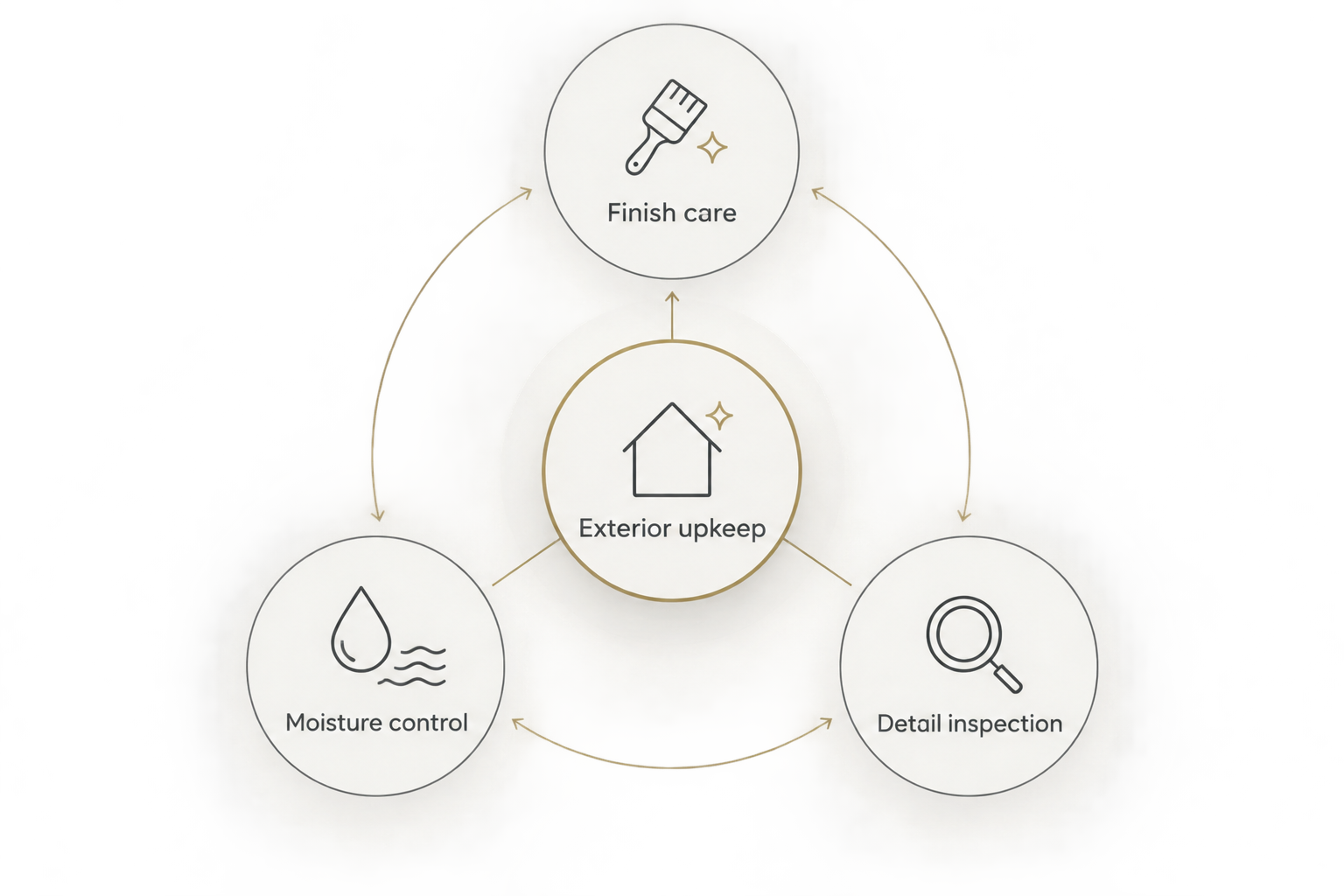
An exterior is more than its largest visible surface. Siding, masonry, trim, flashing, sealants, and drainage details work together, and choosing a low-upkeep cladding does not remove the need to maintain the rest.
Start with how much finish care you want to handle. Cleaning dirt is a different commitment from renewing stain, repairing a coating, or arranging masonry work. Choose the maintenance task you can live with, not just the surface you like in a photograph.
For a semi-custom home, ask which exterior selections are yours and which details the builder determines. For a fully custom home, make upkeep part of the design brief before combining materials. An already-built home requires a different approach: evaluate the exterior actually installed rather than assuming you can change its specifications.
What makes the best low-maintenance exterior material?
Use these criteria to judge the ranking before choosing a material:
- Finish care: Does the surface require paint, stain, or a protective coating? Distinguish natural material color from an applied finish.
- Moisture control: How does the wall assembly drain, and where must clearances or drainage openings remain unobstructed?
- Detail inspection: Which joints, edges, fasteners, and transitions need attention beyond cleaning the main surface?
- Repair practicality: Can damage be repaired locally, and how difficult will matching the existing appearance be?
- Design fit: Does the material achieve your intended appearance without adding unnecessary trim, ledges, or junctions?
No material wins every category. Brick avoids a routine repainting cycle when left unpainted, for example, but mortar repairs require different skills from washing siding.
Exterior materials at a glance for 2026
This ranking prioritizes recurring surface and finish maintenance on a correctly installed exterior. It is not a ranking of structural strength, insulation, or resistance to every weather event. Specific products, exposure, and architectural details can change the order.
| Rank | Material | Best for | Standout characteristic | Key limitation |
|---|---|---|---|---|
| 1 | Unpainted brick veneer | Avoiding recurring finish work | Brick needs no painted finish | Mortar and drainage details still need attention |
| 2 | Vinyl siding | Avoiding paint maintenance | Color is part of the siding rather than an applied paint layer | Impact damage can require panel replacement |
| 3 | Factory-finished metal | Contemporary profiles | Finished panels avoid wood staining tasks | Dents, scratches, and coating damage need evaluation |
| 4 | Fiber cement | Painted architectural flexibility | Supports lap, panel, and shingle-style appearances | Painted finishes still require maintenance |
| 5 | Traditional stucco | Continuous textured walls | Creates a continuous exterior finish | Cracks and moisture-entry details need careful assessment |
| 6 | Natural wood siding | A natural wood appearance | Offers grain and texture that coatings do not reproduce | Finish renewal requires an ongoing commitment |
1. Brick veneer: best for avoiding recurring finish work
Unpainted brick veneer ranks first because the brick face does not depend on routine repainting or staining. The distinction is unpainted: adding paint introduces a coating that needs its own maintenance plan.
Brick veneer is an exterior facing, not a reason to ignore the wall behind it. Keep drainage openings clear and have deteriorating mortar, movement, or persistent dampness assessed rather than treating every mark as a cleaning problem.
Brick veneer pros:
- No recurring paint or stain requirement for unpainted brick.
- A textured appearance without applied wood finishes.
- Individual damaged bricks and mortar joints can be repaired by a mason.
Brick veneer cons:
- Mortar deterioration requires skilled repair.
- Aggressive cleaning can damage brick or joints.
- Painted brick no longer offers the same finish-care advantage.
Best for: Buyers who prefer masonry and want to minimize recurring finish work. Verdict: Buy for its unpainted surface, not a promise of zero maintenance.
2. Vinyl siding: best for avoiding paint maintenance
Vinyl siding does not require routine repainting to protect a wood substrate. Cleaning and checking for loose, cracked, or distorted panels remain part of ownership.
Its upkeep advantage is narrow but useful: you avoid a conventional paint-renewal task. You do not avoid repairs, and replacement panels can differ in appearance from siding that has weathered in place.
Vinyl siding pros:
- No routine painting or staining requirement.
- Dirt can be cleaned using the manufacturer's approved method.
- Damaged sections can be replaced without refinishing the whole exterior.
Vinyl siding cons:
- Impacts can crack or damage panels.
- Concentrated heat can distort siding.
- Replacement color matching can be difficult after weathering.
Best for: Buyers whose main upkeep priority is avoiding paint maintenance. Verdict: Buy when the profile suits your design and you accept its repair limitations.
3. Factory-finished metal: best for contemporary profiles
Factory-finished metal siding offers panel and profile options suited to contemporary architecture. Its maintenance depends on the metal, protective finish, fastening system, and installation details—not simply the word metal.
Ask how scratches, cut edges, and dissimilar-metal contact are handled for the specific system. A coating repair procedure should come from the manufacturer rather than a generic recommendation to paint over damage.
Factory-finished metal pros:
- No wood staining requirement.
- Defined panel profiles suit restrained exterior designs.
- Factory-applied finishes provide a specified coating system to maintain.
Factory-finished metal cons:
- Dents can remain visible.
- Coating damage needs material-specific evaluation.
- Replacing a prominent panel can create a visible appearance difference.
Best for: Buyers who want contemporary lines and accept coating inspections. Verdict: Buy after reviewing the exact metal and finish specifications.
4. Fiber cement: best for painted architectural flexibility
Fiber cement suits buyers who want painted lap siding, panels, or shingle-style details without using natural wood siding. It earns its place through design flexibility, not freedom from finish maintenance.
Distinguish factory-finished products from products painted after installation. Follow the selected manufacturer's instructions for coatings, clearances, fasteners, and joints; a generic caulking rule is not a substitute for those details.
Fiber cement pros:
- Supports several architectural siding styles.
- Does not rot like natural wood.
- Offers a painted exterior without natural wood grain variation.
Fiber cement cons:
- Coatings still need inspection and eventual renewal.
- Chipped edges and impact damage require appropriate repair.
- Incorrect clearances or joint treatment can create problems.
Best for: Buyers who prioritize painted architectural detail over the lowest possible finish workload. Verdict: Buy if you accept ongoing coating care.
5. Traditional stucco: best for continuous textured walls
Traditional stucco creates a continuous textured surface rather than a pattern of individual siding boards. That appearance can suit a design well, but cracks and water-management details deserve close attention.
Traditional cement-based stucco and exterior insulation and finish systems are different assemblies. Identify the actual system before choosing cleaning products, planning repairs, or interpreting cracks.
Traditional stucco pros:
- Creates a continuous wall appearance.
- Offers texture without lap-siding joints.
- Localized areas can be repaired by a qualified specialist.
Traditional stucco cons:
- Cracks need assessment rather than automatic cosmetic patching.
- Repairs can remain visible through texture or color differences.
- Penetrations and transitions require careful moisture detailing.
Best for: Buyers committed to a continuous textured exterior. Verdict: Hold until the wall assembly and repair approach are clear.
6. Natural wood siding: best for authentic grain
Natural wood siding is the right choice when real grain and wood character are central to your design. It ranks last here because maintaining a painted or stained wood exterior introduces recurring finish work.
Some designs intentionally allow suitable wood to weather rather than retain its original color. That is an appearance decision, not permission to ignore moisture, decay, damaged boards, or installation requirements.
Natural wood siding pros:
- Provides real grain and natural variation.
- Supports painted, stained, or intentionally weathered designs where appropriate.
- Individual boards can be repaired or replaced.
Natural wood siding cons:
- Painted and stained finishes need recurring care.
- Persistent moisture can cause decay.
- Different exposures can weather unevenly.
Best for: Buyers who value real wood enough to maintain it. Verdict: Skip if minimizing exterior upkeep is your first priority.
How this 2026 ranking works
The order follows finish care first, then inspection demands and repair practicality. Unpainted brick and vinyl rise because neither requires a conventional repainting cycle; wood falls because maintaining its intended painted or stained appearance requires ongoing finish care.
This is a material-category comparison, not a product test or an endorsement of a particular manufacturer. A complicated brick exterior with many vulnerable transitions can demand more attention than a simple, carefully detailed siding installation.
Murray Custom Homes provides in-house drafting, design guidance, blueprints, and 3D renderings. Those services give you a setting to discuss how exterior choices fit the whole design. Learn more about the team and building approach before developing your selections.
Which exterior material should you choose in 2026?
Choose unpainted brick veneer as the default when avoiding recurring finish work matters most and you want a masonry exterior. Choose vinyl when avoiding paint is the priority but masonry is not your preferred appearance. Choose factory-finished metal for contemporary profiles, with its coating requirements understood.
Fiber cement is the better fit when painted architectural flexibility matters more than eliminating repainting. Traditional stucco and natural wood deserve deliberate choices based on their appearance and maintenance demands—not assumptions that every exterior requires the same care.
For Murray Custom Homes semi-custom homes, begin by asking which exterior materials and features you can select. The approach lets you choose selected features while leaving remaining decisions to the builder. A fully custom home gives you a different brief: shape the home around your preferences while keeping the upkeep implications visible.
Before finalizing an exterior, ask for:
- The exact cladding, finish, and trim specifications.
- The manufacturer's cleaning and maintenance instructions.
- Identification of joints and drainage openings that must remain clear.
- Guidance on reporting damage and arranging appropriate repairs.
Turn your preference into a useful design brief
Replace “low maintenance” with a specific instruction: “I want to avoid repainting large wall surfaces,” or “I accept finish renewal to get natural wood.” These statements help separate a design preference from an ownership commitment.
Murray Custom Homes serves a stated 50-mile radius of Lincoln and can build on your existing lot. Meghan Murray provides in-house design guidance, and the project managers bring more than 20 years of combined experience. Bring your material priorities to that discussion rather than selecting each surface in isolation.
Discuss your exterior priorities
Ask how material choices fit a semi-custom or custom home in the Lincoln area.
FAQ
What’s the lowest-maintenance exterior material for a custom home?
Unpainted brick veneer is the default recommendation here for minimizing recurring finish work. Mortar, drainage openings, flashing, and adjoining materials still require attention.
Is vinyl siding lower maintenance than fiber cement?
Vinyl generally requires less finish maintenance because it does not need routine repainting. Fiber cement offers painted architectural options, but its coating remains part of your maintenance responsibility.
Does brick siding ever need maintenance?
Yes. Brick veneer needs inspection of mortar, drainage details, and adjoining components; unpainted brick avoids repainting, not all exterior care.
Is metal siding completely maintenance-free?
No. Factory-finished metal needs cleaning and checks for damage, with repairs guided by the specific metal and coating system.
Can I mix brick and siding without increasing upkeep?
Mixing materials adds different maintenance instructions and transition details to manage. Review flashing, joints, and cleaning requirements before selecting the combination.
How often should I inspect my home’s exterior?
Use one planned exterior review per year as an organizing baseline, then follow the actual product instructions and inspect after damaging weather. Arrange a professional assessment for areas you cannot safely see or reach.
Should I choose exterior materials before finalizing the home design?
Discuss exterior materials while the design is developing. Cladding thickness, transitions, trim, and architectural details need coordination rather than a finish-only decision at the end.
One last thing
For your 2026 design brief, write down the maintenance task you most want to avoid. Then review the trim, accent materials, and exposed details—not just the main cladding. A brick house with painted wood accents still has a wood-finish maintenance commitment.
The best low-upkeep exterior is a coordinated assembly, not a single material name. Keep that distinction in view when approving the final selections.
Related guides