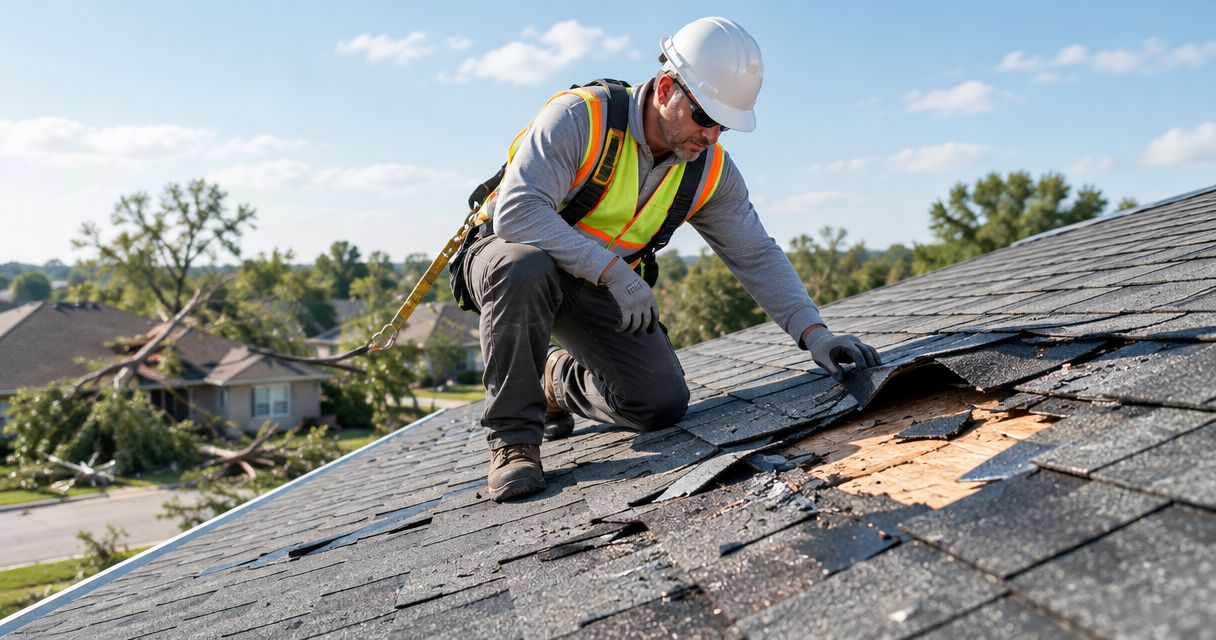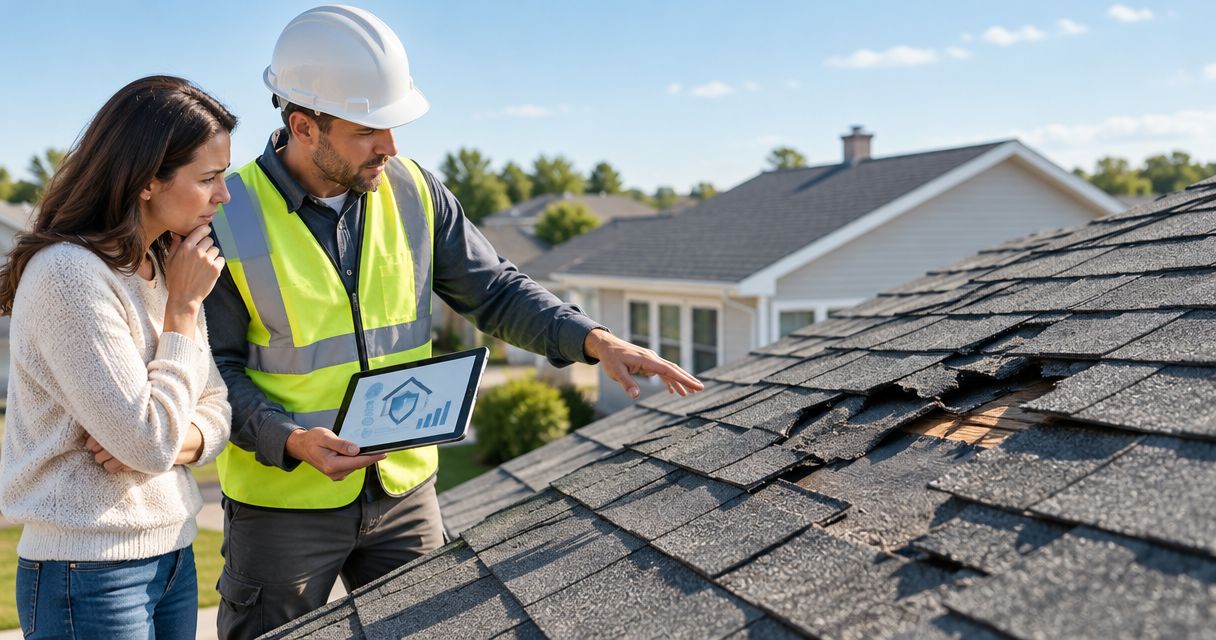
Yes, a damaged roof can be covered under a home warranty plan if the contract includes roof-leak coverage and the damage meets its terms. That does not mean the plan pays for a full roof replacement, storm damage, or interior water damage; check the covered components, exclusions, and approval requirements before authorizing work.
- Can a damaged roof be covered under a home warranty plan? Yes, when roof-leak coverage includes the diagnosed problem.
- Home warranties, homeowners insurance, and roof warranties address different causes of damage; none guarantees payment.
- Get written authorization before permanent repairs when your home warranty contract requires it.
- Murray Roofing is best for Lincoln and Omaha homeowners seeking a local roof inspection before coverage decisions.
Can a damaged roof be covered under a home warranty plan?
Coverage depends on the contract and the cause of the problem—not simply on whether the roof leaks. Some home warranty contracts offer limited roof-leak protection, sometimes as an optional addition. A plan that covers appliances and home systems does not automatically cover the roof.
Start by distinguishing the different forms of protection. The roof warranty types compared for homeowners explain why a home warranty is not interchangeable with installation or material coverage.
| Protection | Best for evaluating | Main benefit | Main limitation |
|---|---|---|---|
| Home warranty roof-leak coverage | A leak that meets the service contract's terms | Can contribute toward an eligible repair | Coverage can exclude components, causes, and replacement work |
| Homeowners insurance | Damage from a covered event | Addresses covered property damage under the policy | Wear, maintenance issues, deductibles, and exclusions affect the claim |
| Manufacturer roof warranty | A suspected roofing-material defect | Provides a route for an eligible material claim | Does not automatically cover every leak or installation problem |
| Contractor workmanship warranty | A suspected installation error | Addresses work covered by the contractor's warranty | Scope, duration, exclusions, and responsibility depend on the document |
For a 2026 claim, use the contract effective when the problem occurred. A current sales brochure is not a substitute for your issued coverage documents.
Why this matters
A ceiling stain identifies a symptom, not the responsible payer. Rain entering around a roof penetration, a defective roofing product, and storm-related damage require different evidence and different coverage reviews.
Sending the problem to the wrong provider delays a decision. Authorizing permanent work before checking the contract can also create an avoidable dispute about whether the provider approved the repair.
For homeowners in Lincoln and Omaha, the practical next move is the same: document what you can see safely, report active leakage promptly, and arrange a professional inspection. Do not climb onto a damaged roof to gather claim photos.
What does home warranty roof-leak coverage actually include?
Read the roof section separately from the plan's general description. Look for the covered roof areas, eligible leak causes, repair obligations, and exclusions—not just the word roof on a summary page.
A contract can cover a particular repair without covering everything connected to it. For example, you need separate answers about the roof surface, flashing, roof decking, insulation, and damaged interior finishes. Do not treat approval for one component as approval for the entire project.
Ask the provider these questions before scheduling permanent repairs:
- Is roof-leak coverage listed on my issued contract?
- Does the contract cover the diagnosed cause and affected component?
- Must the provider select or approve the contractor?
- What authorization is required before work starts?
- What limits, exclusions, and homeowner responsibilities apply?
Request the relevant contract language with the answer. A verbal assurance is harder to resolve later than a written decision tied to a specific provision.
When does homeowners insurance become the relevant route?
Homeowners insurance and home warranties serve different purposes. Insurance is the relevant policy to review when the inspection identifies damage associated with a potentially covered event, such as wind or hail; the insurer determines whether the policy covers the loss.
Do not assume that a leak appearing after a storm proves storm damage. The inspection needs to distinguish observed damage from deterioration, installation problems, and other possible entry points.
For a 2026 insurance claim, keep the discovery date, photographs, inspection findings, and communications together. Describe what you observed accurately rather than assigning a cause before the roof has been evaluated.
A roofing contractor documents roof conditions; the insurer makes the coverage decision. Neither a contractor's estimate nor a neighbor's approved claim guarantees the same result for your home.
When do material and workmanship warranties apply?
A manufacturer warranty addresses eligible product defects under its written terms. A workmanship warranty addresses covered installation problems. Neither is a blanket promise to fix every future roof problem.
If the inspection points toward either route, gather the installation agreement, product information, warranty certificate, and registration records. Ask who must inspect the issue and whether repairs would interfere with the claim review.
Murray Roofing lists a 50-year Golden Pledge warranty and a 10-year labor warranty among its trust signals. For any proposed roofing project, request the actual warranty documents and confirm eligibility, covered work, exclusions, registration requirements, and who handles a claim.
A 50-year warranty term and a 10-year labor term describe duration, not identical protection. Compare what each document promises before treating either as a substitute for home warranty coverage or homeowners insurance.
Why roof coverage varies
Roof coverage varies because contracts define different responsibilities. These are the details that determine which document deserves your attention:
- Coverage selection. Confirm that roof-leak protection was included, rather than assuming it came with the main home warranty plan.
- Cause of damage. Wear, an installation problem, a material defect, and event-related damage raise different coverage questions.
- Affected components. Check the treatment of flashing, penetrations, roof surfaces, decking, and interior damage individually.
- Condition and history. Review provisions about existing problems, maintenance, previous repairs, and when coverage began.
- Approval procedures. Follow the contract's notification, contractor-selection, inspection, and authorization requirements.
- Scope and limits. Identify whether the contract promises a defined repair, sets a payment limit, or excludes broader replacement work.
When reviewing a plan in 2026, compare these provisions rather than relying on the plan name. A broad-sounding package name does not establish roof coverage.
What should you do when you discover a leak?
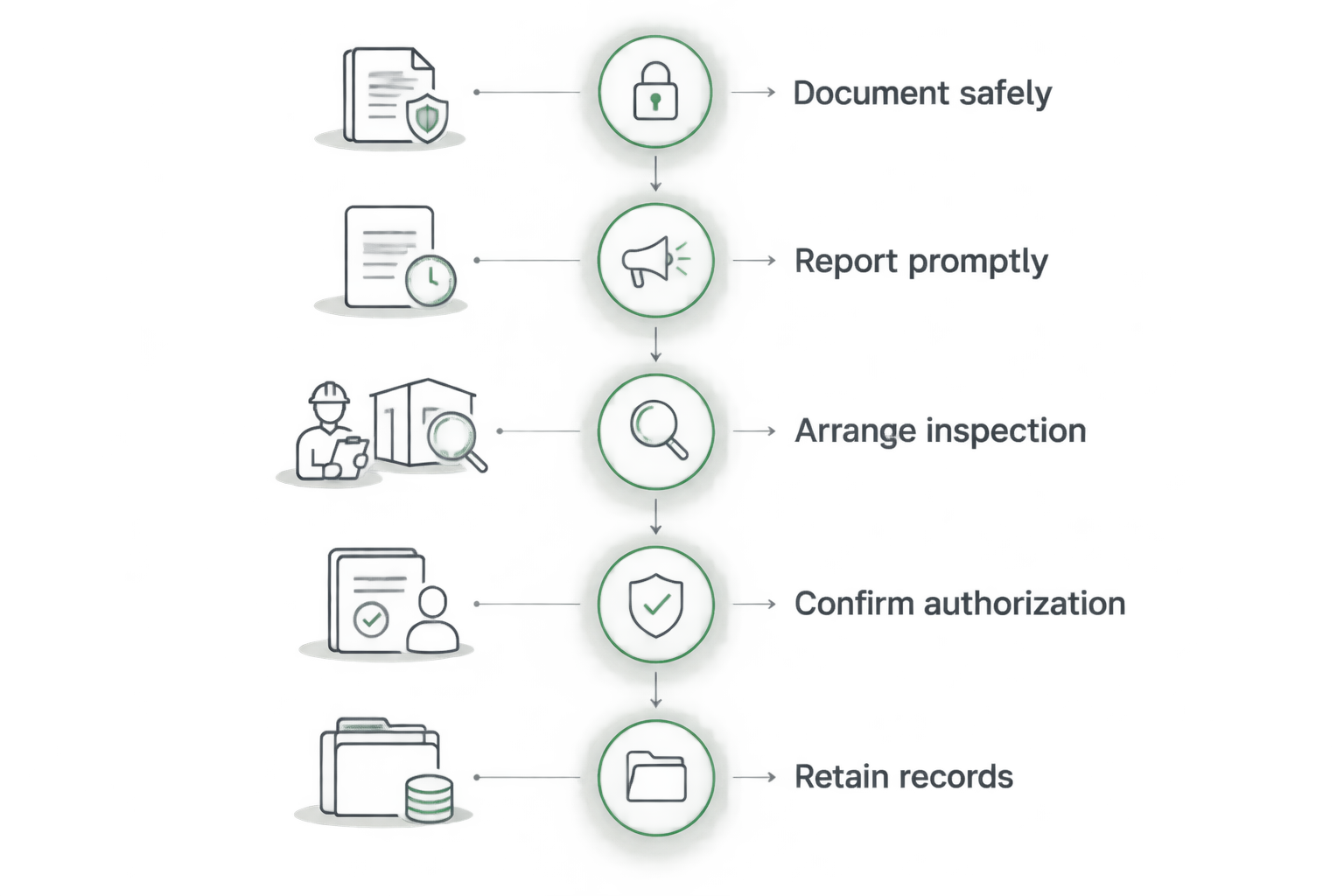
Follow a reporting process that protects people, documents the condition, and preserves your coverage options. This is not a roof-repair checklist; leave roof access and repairs to qualified professionals.
- Document safely. Photograph visible interior staining and affected belongings from a safe location. Record when you first noticed the problem and any relevant weather observations.
- Report promptly. Contact the appropriate provider and ask about emergency protection, reporting requirements, and contractor authorization. Keep your claim or service-request reference.
- Arrange inspection. Have a roofing professional identify the affected areas, likely entry points, and recommended work. Ask the report to distinguish observations from conclusions that still need confirmation.
- Confirm authorization. Get the provider's approved scope and any homeowner responsibility in writing before permanent repairs, where required by the contract.
- Retain records. Keep photographs, reports, estimates, authorization messages, invoices, and completion documents together.
If water is near electrical equipment or a ceiling appears unstable, keep people away and seek appropriate emergency assistance. Ask the provider how urgent protective work should be documented; do not confuse an approval requirement with permission to ignore an unsafe condition.
How do you compare an approved repair with the work your roof needs?
Separate the roof's repair needs from the provider's payment decision. A limited approval does not establish that the approved work addresses every defect found during the inspection.
Ask for a written scope that identifies the affected roof areas, the proposed work, and anything excluded. An explanation of what roof replacement estimates include helps distinguish the roof covering itself from related work such as removal, flashing, and underlying repairs when those items appear in your proposal.
Compare that proposal against the authorization line by line. If the provider approved a localized repair but the contractor recommends replacement, ask the contractor to explain why a repair is inadequate and ask the provider to address that evidence in writing.
The decision about repairing a roof or replacing it completely should start with roof condition and the scope of damage—not with an assumption that any particular payer will cover the result.
For a 2026 project, keep the final authorized scope alongside the signed roofing proposal. Resolve discrepancies before permanent work starts rather than discovering them on the final invoice.
What if the home warranty company denies the roof claim?
Ask for the denial in writing, including the contract provision and the findings supporting it. Then compare the stated reason with the inspection report, coverage documents, and service history.
A disagreement about the cause calls for evidence about the cause. A disagreement about an excluded component calls for the component definition and the repair scope. Repeating that the roof leaks does not resolve either issue.
Use the contract's review or dispute process and follow its deadlines. If you need consumer assistance, contact the appropriate state consumer-protection or regulatory office to identify the relevant complaint route.
Keep necessary roof decisions separate from the dispute. Ask the contractor what protection or repair is needed while the provider reviews the claim, and document any authorization requirements before proceeding.
Can a home warranty pay for an entire roof replacement?
Do not assume a home warranty will pay for a full roof replacement. Roof-leak coverage can be limited to eligible repair work, and the contract controls whether broader work is covered at all.
If replacement is recommended, request the inspection findings and a complete proposal. Ask the provider to identify its responsibility in writing before you commit to a project based on expected reimbursement.
Is a roof inspection still useful if coverage is uncertain?
Yes—a roof inspection helps establish the condition and scope of work even when payment remains unresolved. It gives you a factual basis for discussing the problem with a warranty provider, insurer, manufacturer, or installing contractor.
Murray Roofing provides residential roof inspections, repairs, and replacements in Lincoln and Omaha. Its roofing inspection service is best for local homeowners who need the roof condition assessed before choosing the next step; an inspection does not guarantee claim approval or reimbursement.
FAQ
Does every home warranty cover roof leaks?
No, roof-leak coverage must be included in the issued contract. Check whether it is part of the plan or an optional addition, then review the covered components and exclusions.
Will a home warranty cover hail damage to my roof?
Do not assume a home warranty covers hail damage. Review your homeowners insurance policy for potentially covered event-related damage, and let the inspection findings and policy terms guide the claim.
Can I hire my own roofer before contacting the warranty company?
Check the contract before hiring a roofer for permanent repairs. The provider can require contractor approval or prior authorization, so ask how inspections and urgent protective work should be handled.
Does roof-leak coverage include damaged ceilings and insulation?
Approval for a roof-leak repair does not automatically include damaged ceilings or insulation. Ask for separate written decisions on roof repairs and interior damage under the relevant contracts or policies.
Is a home warranty the same as a roofer’s labor warranty?
No, a home warranty is a service contract, while a roofer’s labor warranty concerns covered workmanship. Read each document’s scope, exclusions, and claim requirements separately.
Will a free roof inspection guarantee that my claim is approved?
No, a free roof inspection does not guarantee claim approval. The inspection documents roof conditions, while the responsible provider decides coverage under its contract or policy.
What paperwork should I keep for a roof warranty claim?
Keep the contract, coverage schedule, inspection report, photographs, authorization messages, estimates, and invoices. Add installation and warranty-registration records when a material or workmanship claim is involved.
One last thing
Ask for two separate written answers: what work the roof needs, and what work the provider has authorized. Those answers are not interchangeable. Keeping them separate helps you identify uncovered work before you sign a repair or replacement agreement.
Related guides
- How long does a roof warranty claim take to get approved?
- Can you file an insurance claim for an old roof?
- Can a leaking roof be fixed without replacing the whole roof?
Schedule a free inspection with Murray Roofing in Lincoln or Omaha to understand the roof's condition and get a price for the recommended work.
Schedule your roof inspection
Identify roof concerns and discuss repair or replacement needs in Lincoln or Omaha.