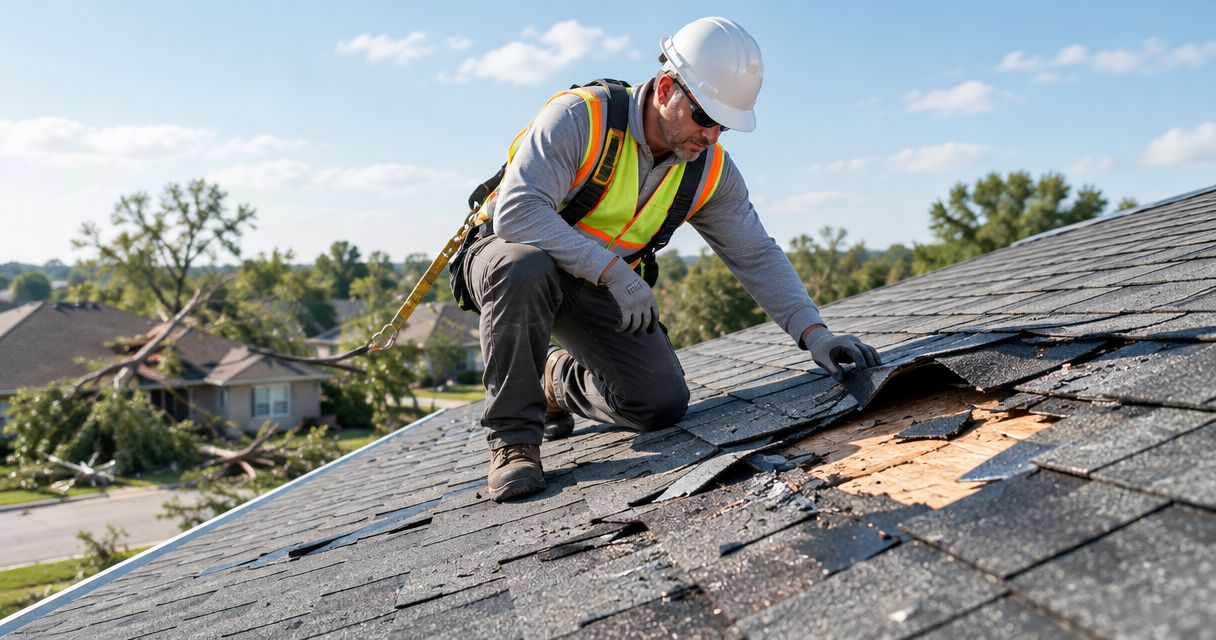
Yes, you can generally stay in your home during a roof replacement if your contractor confirms that occupied areas and access routes remain safe. Expect overhead noise, vibration, and restricted outdoor areas; staying home does not mean keeping your normal routine. Leave during active work if household needs or the condition of the roof make staying impractical or unsafe.
- Can you stay in your home during a roof replacement? Generally yes, after your roofer confirms safe occupancy.
- Murray Roofing provides roof replacement and inspections for Lincoln and Omaha homeowners planning around occupied homes.
- Working elsewhere during tear-off protects quiet time; overnight relocation depends on the home’s condition.
- Confirm safe entrances, pet arrangements, and daily updates before roof replacement begins.
Can you stay in your home during a roof replacement?
Staying home is an occupancy decision, not a promise that construction will be comfortable. Your roofer needs to assess the actual scope, including whether work affects only the roof covering or extends to damaged wood beneath it.
Murray Roofing is a fit for Lincoln and Omaha homeowners seeking roof replacement and inspection services. An inspection informs the plan, but it does not make every occupied-home project suitable for staying inside.
| Arrangement | Best for | Main benefit | Main drawback |
|---|---|---|---|
| Stay inside during work | Households that can tolerate disruption and maintain safe access | You avoid relocating your household | Noise and vibration interrupt normal activities |
| Leave during active work | Remote workers, families needing quiet, and noise-sensitive pets | You spend the busiest work periods elsewhere | You must coordinate departures and returns |
| Stay elsewhere overnight | Households advised not to occupy affected areas or unable to use essential spaces | You avoid occupying an unsuitable work site | Lodging, transport, and household arrangements require planning |
Choose the arrangement after discussing the roof condition and household needs. For a 2026 replacement, get the occupancy expectations in writing with the scope rather than relying on a general statement that homeowners usually stay.
Why this matters
The practical question is not simply whether you can sit inside while roofers work. It is whether you can enter safely, use essential rooms, care for dependents, and respond if the work changes.
Removing old roofing and fastening new materials creates noise overhead. Equipment, material deliveries, and debris handling also change how you use your driveway, yard, and entrances.
Separate comfort problems from safety problems. A disrupted video call calls for a different workspace; falling debris near an entrance calls for a contractor-approved route away from the work zone.
Stay home when safe access and usable rooms remain available
Staying inside is reasonable when the contractor confirms that the planned work is compatible with occupancy and you can tolerate the disruption. You also need a way to enter and leave without walking through material staging or debris-handling areas.
Choose an indoor area away from the active work when practical. Do not assume a lower floor will be silent: roofing noise and vibration travel through the building.
Before deciding to stay, ask about:
- Occupied rooms: Which rooms remain suitable to use during the work?
- Safe entrances: Which doorway and walking route should your household use?
- Essential services: Does the scope affect equipment or services your household relies on?
- Changed conditions: What findings would require a different occupancy plan?
Keep your phone available so the crew lead can reach you. Being home does not require supervising the roofers or entering their work area.
Leave during active work when you need quiet
Leaving for the busiest work periods is a practical middle option. You keep your overnight routine while avoiding the noise that interferes with calls, studying, naps, or daytime sleep.
Ask which work activities will be loudest and when the contractor expects them. Treat that information as a planning window, not a guaranteed schedule; weather and findings beneath the old roof covering can change the sequence.
For your 2026 calendar, keep important calls and appointments separate from the expected construction window. Do not make a critical meeting depend on the crew finishing a particular roof section first.
Arrange departures before your usual exit becomes part of the work zone. Tell the crew when you expect to return so they can explain the current access restrictions.
Stay elsewhere when the home is not suitable for occupancy
Temporary relocation is the right decision when the contractor identifies unsafe conditions or the work prevents safe use of essential spaces. Significant structural concerns, work that opens interior areas, or a compromised ceiling require a specific assessment rather than a routine reroofing assumption.
A standard roof replacement and a project involving structural repairs are not interchangeable. Ask what the inspection established and what remains unknown until old materials are removed.
If a ceiling is sagging, material is falling indoors, or conditions change suddenly, leave the affected area and seek professional assessment. Do not stay beneath visible distress to monitor the work.
If you are considering temporary accommodation, ask your insurer directly whether your policy provides any applicable coverage. A roof replacement does not itself establish eligibility for lodging reimbursement.
Why the stay-or-leave decision varies
Your home's condition and your household's needs matter more than a general rule about roof replacement. Review these factors before committing to an arrangement:
- Work scope: Replacing roof coverings differs from repairing damaged roof decking or structural components. Ask what is included and how additional findings will be handled.
- Household needs: Infants, daytime sleepers, people with sensory sensitivities, and residents needing assistance require a plan that accounts for disruption.
- Entry and exit: Debris handling, ladders, equipment, and deliveries affect which routes remain usable.
- Weather exposure: Rain, wind, and changing conditions affect work sequencing and temporary protection. Ask how the contractor will communicate changes.
- Pets and outdoor routines: Animals need a secure indoor location or an off-site arrangement, plus a safe route for necessary trips outside.
- Interior condition: Existing leaks, ceiling damage, and any work involving interior openings change the occupancy discussion.
For Lincoln and Omaha homes, discuss the actual forecast and site conditions with the roofer. A season or calendar date alone does not establish whether your home is suitable to occupy during construction.
Prepare your household before the crew arrives
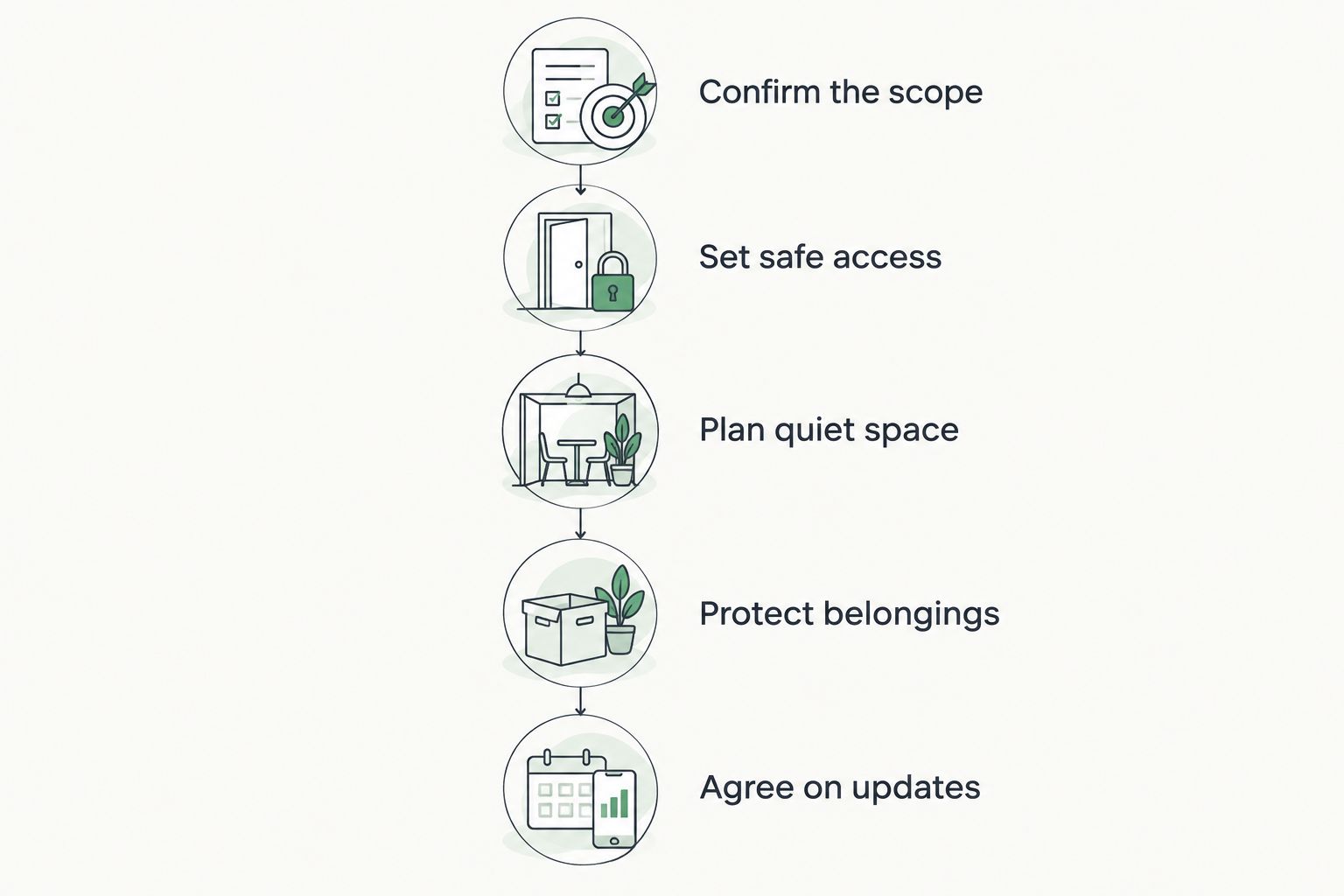
Use this preparation sequence for a 2026 roof replacement. It covers household coordination, not roof-repair work; leave ladders, roof access, and protective construction measures to the contractor.
Confirm the scope
Ask whether the proposal anticipates roof-deck repairs, skylight work, or other tasks affecting interior areas. Confirm how the contractor will explain unexpected findings before your household makes decisions around them.
Record which areas remain occupied and any restrictions. If your household includes someone who cannot relocate easily, raise that before scheduling.
Set safe access
Walk through the planned entrance and vehicle arrangements with the contractor before work begins. Ask where deliveries, debris containers, and materials will go.
Move vehicles you need before access becomes restricted. Keep children away from work zones, including areas that appear quiet while the crew works elsewhere.
Plan quiet space
Identify where remote work, naps, or daytime sleep will happen. If quiet is essential, arrange another location rather than depending on headphones or an unused room.
Choose a secure place for pets that avoids repeated door opening. Tell the crew about animals without expecting workers to manage them.
Protect belongings
Ask the contractor which household items need attention because of vibration or dust. Secure fragile wall-mounted objects and move valuables away from affected areas when advised.
Discuss attic storage before work starts. Do not enter the attic during active roofing work unless the contractor has confirmed that access is appropriate.
Agree on updates
Choose 1 household contact for routine communication. Ask who will report changed conditions, access restrictions, and the status of the property at the end of the work period.
Keep those instructions in your 2026 project file alongside the contract. Written arrangements are easier for other household members to follow than secondhand messages.
Ask these questions before you decide to stay
Get answers about your property, not reassurance about what happens on other jobs. Murray Roofing offers roof inspections and replacement services in Lincoln and Omaha; use the inspection discussion to raise household access and occupancy concerns.
Start with 3 questions:
- Is the planned work compatible with staying inside? Ask what conditions would change that answer and who will notify you.
- How will we enter and leave safely? Confirm a route for residents, dependents, and pets, including what happens if that route changes.
- What must be confirmed before we return? Ask about entrances, debris, interior conditions, and any work areas that remain restricted.
Then explain your non-negotiable needs. Medical equipment, limited mobility, a newborn's sleep routine, or essential work calls deserve attention before the crew arrives, not after noise begins.
Do not substitute warranty terms for an occupancy discussion. Installation coverage and your ability to live comfortably through construction answer different questions.
Can you work from home during roof replacement?
You can work from home if the disruption is compatible with your job, but plan another location for essential calls. Roofing noise is overhead construction noise, not ordinary background sound.
Ask about the work sequence, then build flexibility into your day. A quieter room helps with separation but does not guarantee uninterrupted concentration or clear audio.
Can children and pets stay home while the roof is replaced?
Children and pets can stay only with suitable supervision, secure indoor space, and safe access arrangements. If noise causes distress or outdoor routines require crossing work zones, arrange care elsewhere during active work.
Keep play areas and pet exercise away from debris-handling locations. Wait for the contractor's clearance before resuming normal use of affected outdoor spaces.
Can you sleep at home after the crew leaves?
You can sleep at home when the contractor confirms that the home's condition and completed protection measures allow occupancy. The crew leaving does not automatically establish that every entrance, room, or outdoor area is ready for normal use.
Ask for an end-of-work update before returning. Confirm any restrictions that continue overnight and whom to contact if you notice a problem.
FAQ
Do I have to move out when my roof is replaced?
You do not automatically have to move out during roof replacement. Ask the contractor to confirm whether the scope, roof condition, and access arrangements support staying inside.
Is it safe to be inside during roof tear-off?
Being inside during tear-off depends on the building’s condition and the contractor’s occupancy assessment. Stay out of restricted areas and use only the agreed entrance and exit routes.
Will my house be quiet enough for video meetings?
Do not rely on your house being quiet enough for important video meetings during roofing work. Arrange another workspace for calls that cannot tolerate overhead noise or interruption.
Should I take my dog somewhere during roof replacement?
Take your dog elsewhere if construction noise causes distress or you cannot provide a secure indoor space and safe outdoor access. Make the arrangement before the crew arrives.
Can I use my driveway while roofers are working?
Use your driveway only as agreed with the contractor. Deliveries, equipment, and debris handling can restrict access, so move needed vehicles before work begins.
Will homeowners insurance pay for a hotel during roof replacement?
Hotel coverage depends on your policy and the circumstances of the claim. Ask your insurer for a coverage decision before booking accommodation on the assumption it will be reimbursed.
What should I do if the roofer finds rotten wood?
Ask the roofer how the finding changes the repair scope and occupancy plan. Do not assume hidden damage either requires relocation or is harmless; the location and extent need assessment.
One last thing
The front door matters as much as the room where you plan to sit. Even a comfortable indoor space is not a workable arrangement without a safe way to leave, return, and handle an unexpected need.
For your 2026 replacement, settle access and communication before choosing whether to stay. To discuss your home's condition and replacement scope, contact Murray Roofing to schedule an inspection or get a price.
Related guides
- How long does a full roof replacement take?
- From roof inspection to signed contract
- Can a roof be replaced in winter or cold weather?