Murray Roofing is a practical choice for Lincoln homeowners and businesses that need a roof inspection with repair or replacement follow-through. For 2026, choose your inspection by the decision you need to make: investigate a leak, assess storm damage, plan a replacement, or document commercial roof condition.
- Comparing roof inspection companies Lincoln NE? Murray Roofing offers residential and commercial inspections with repair and replacement services.
- Choose an inspection scope that matches your problem, not just a general estimate.
- Request photographs, access limitations, and a written explanation of repair versus replacement recommendations.
- Storm damage documentation supports a claim review; it does not guarantee insurance coverage.
Why this matters
An inspection should answer a question, not simply produce a replacement quote. A ceiling stain, an aging shingle roof, and a commercial roof with drainage problems require different assessments.
Murray Roofing serves residential and commercial properties in Lincoln and Omaha and offers inspections, repairs, replacements, maintenance, and financing. Start by explaining what changed, where you noticed it, and what decision the inspection needs to support.
For a Lincoln property in 2026, the useful outcome is a clear distinction between an active problem, a maintenance item, and a reason to consider replacement. Keep those categories separate when reviewing recommendations.
What makes a good roof inspection company in Lincoln?
Use these criteria before choosing an inspection appointment:
- Relevant roof experience: Ask whether the inspector evaluates your roof material, slope, and building type.
- A defined scope: Confirm which exterior areas, interior spaces, and roof components the appointment includes.
- Usable documentation: Request photographs tied to specific locations and written findings you can understand.
- Repair-versus-replacement reasoning: Ask what evidence supports each recommendation and what remains uncertain.
- Clear limitations: Require the inspector to identify inaccessible areas and conditions that need further investigation.
- A practical next step: Leave knowing which items need attention, which need monitoring, and what additional work requires authorization.
Credentials matter, but they do not replace a defined inspection scope. A replacement qualification tells you something different from a report explaining the source of a particular leak.
Lincoln roof inspection choices at a glance
The best choice depends on the property problem. This 2026 guide organizes inspection needs rather than presenting a competitor league table.
| Inspection choice | Best for | Main benefit | Key limitation |
|---|---|---|---|
| Residential condition inspection | Homeowners deciding between repair and replacement | Connects roof condition to a work plan | A visual assessment cannot expose every concealed defect |
| Storm damage assessment | Owners documenting suspected hail or wind damage | Records visible conditions for review | An inspection does not determine insurance coverage |
| Commercial roof assessment | Owners and managers planning maintenance or capital work | Connects roof findings to building operations | Some questions require additional investigation |
| Transaction-focused inspection | Buyers and sellers resolving roof questions | Focuses documentation on a property decision | Report requirements differ by transaction |
1. Residential condition inspection: best for repair decisions
A residential condition inspection should help you understand whether a problem is isolated or part of broader deterioration. Ask the inspector to explain the condition of the roof covering, flashing, penetrations, and drainage, along with relevant interior evidence where access is available.
Murray Roofing offers residential inspection, repair, and replacement services in Lincoln. That service range suits homeowners who want an assessment followed by a work proposal when repairs or replacement are needed.
Best for: Lincoln homeowners with leaks, visible wear, or uncertainty about an aging roof.
Residential inspection pros:
- Gives a specific problem a defined assessment scope.
- Helps separate localized repair work from broader replacement planning.
- Creates an opportunity to discuss maintenance before authorizing construction.
Residential inspection limitations:
- Concealed decking and other covered components cannot always be assessed visually.
- A repair proposal is not the same document as an independent condition report.
Verdict: Choose this inspection when you need a repair-versus-replacement decision. Ask for the evidence behind the recommendation, not just the recommended work.
2. Storm damage assessment: best for documenting suspected damage
A storm damage assessment records roof conditions after suspected hail or wind exposure. The useful deliverable connects photographs, affected locations, and observed damage rather than treating a storm date as proof that replacement is necessary.
Tell the inspector when you first noticed the problem and whether water entered the building. Preserve photographs you already have, but do not climb onto the roof to collect more.
Best for: Lincoln property owners who need documentation of suspected storm-related roof damage.
Storm assessment pros:
- Organizes visible evidence before repair decisions.
- Helps distinguish observed damage from assumptions about a storm.
- Supports a discussion with the insurer when a claim is appropriate.
Storm assessment limitations:
- A contractor cannot guarantee that an insurer will approve coverage.
- Roof age, policy terms, exclusions, and the insurer's findings affect the claim decision.
Verdict: Choose this assessment for evidence, not a promise of a paid replacement. Murray Roofing provides insurance-claim support, but coverage remains an insurance decision.
3. Commercial roof assessment: best for maintenance planning
A commercial roof assessment should connect roof condition to the needs of the building. Ask about seams, penetrations, perimeter details, drainage, and previous repairs, as applicable to the roof system.
Lincoln and Omaha commercial decision-makers should also explain access restrictions and areas where a leak would interrupt operations. Apply the same standard to offices, retail buildings, warehouses, restaurants, schools, apartments, and other commercial properties: the scope must fit the roof and its use.
Best for: Commercial owners and property managers deciding what to maintain, repair, investigate, or replace.
Commercial assessment pros:
- Helps organize maintenance and capital planning separately.
- Gives repair recommendations a location and a stated purpose.
- Supports coordination around occupied spaces and building access.
Commercial assessment limitations:
- A surface assessment alone does not establish the condition of every concealed layer.
- Moisture questions or unclear assembly conditions can require separately authorized investigation.
Verdict: Choose a commercial assessment when the decision involves the whole roof system and building operations. Request separate findings for immediate concerns and longer-term planning.
4. Transaction-focused inspection: best for buyers and sellers
A transaction-focused roof inspection answers questions tied to buying or selling a property. Establish who needs the findings and what that person expects before scheduling the appointment.
A buyer seeking an explanation of visible defects needs a different deliverable from a seller requesting a repair estimate. Ask whether the appointment includes a written condition report, photographs, or a proposal, and confirm any lender or insurer requirements directly with that organization.
Best for: Buyers and sellers who need roof questions resolved before making a property decision.
Transaction inspection pros:
- Focuses the appointment on the decision holding up the transaction.
- Helps distinguish observed defects from proposed improvements.
- Gives parties a clearer basis for discussing repair responsibilities.
Transaction inspection limitations:
- A contractor's estimate does not automatically satisfy a lender or insurer.
- An inspection does not guarantee future leak-free performance or a precise remaining lifespan.
Verdict: Choose this scope when documentation requirements matter as much as the roof findings. Confirm the required deliverable before the visit.
What your inspection should explain
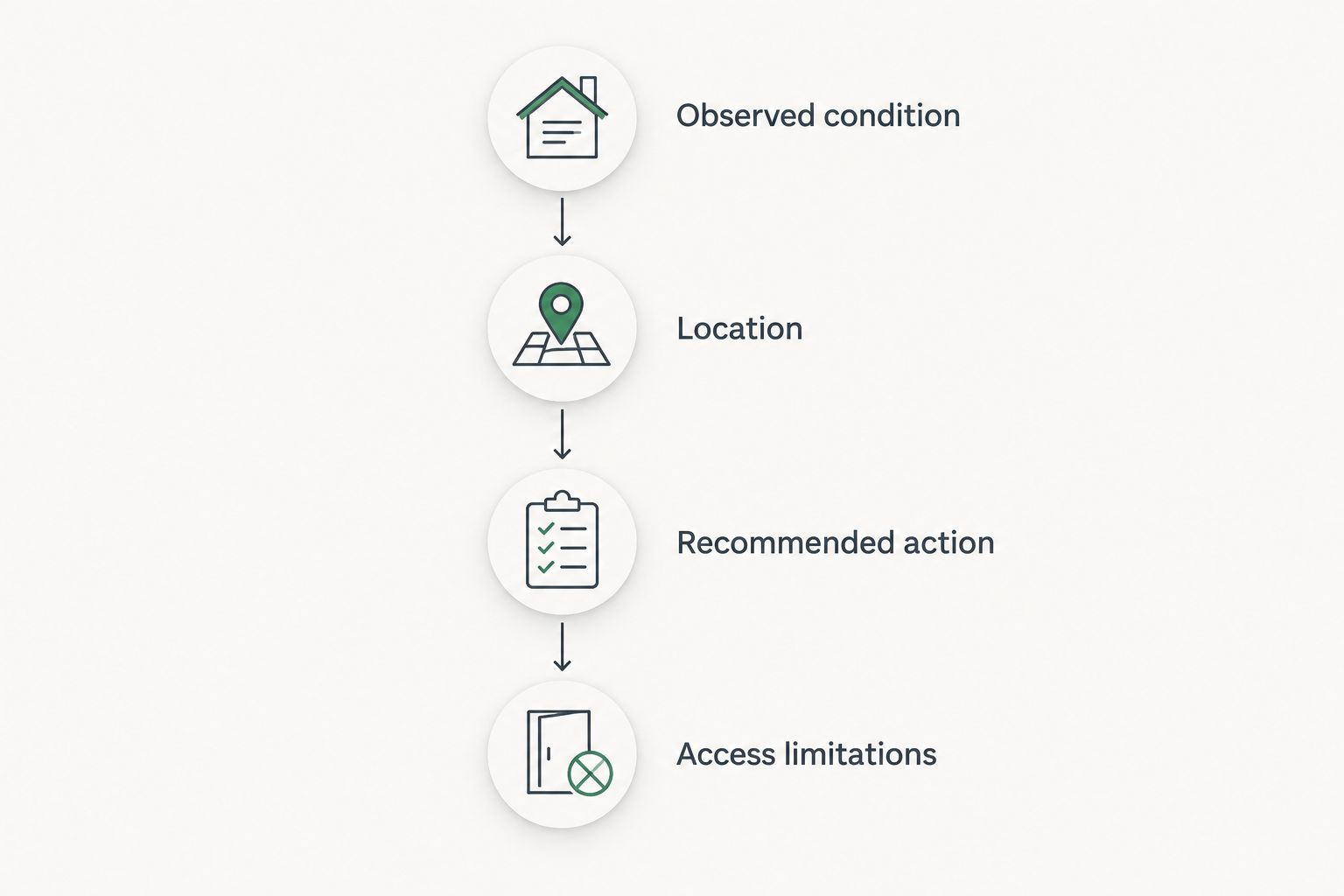
A useful inspection connects evidence to a decision. Ask for these distinctions in the findings:
- Observed condition: What is visibly damaged, worn, loose, deteriorated, or obstructed?
- Location: Where is the condition, and which photograph shows it?
- Recommended action: Does the finding support maintenance, repair, replacement, or further investigation?
- Access limitations: Which areas could not be evaluated, and why?
A photograph without an explanation leaves you interpreting technical evidence yourself. A recommendation without a location makes it harder to understand exactly what work is proposed.
For your 2026 inspection, also ask whether the written findings and the construction proposal are separate documents. You should be able to understand the roof's condition before reviewing the proposed scope of work.
Questions to ask before scheduling
You do not need roofing terminology to arrange a useful inspection. Describe the problem in ordinary language, then ask direct questions:
- Does this appointment cover my roof material and building type?
- Will you review relevant interior evidence if access is available?
- What photographs and written findings should I expect?
- What happens if weather or access prevents part of the inspection?
- Is additional testing included, excluded, or subject to separate approval?
- Will the findings explain repair and replacement options where appropriate?
Describe recurring leaks even if the area is dry on inspection day. Note whether the stain appears after rain, near a penetration, or in the same place as a previous repair; these details help define the investigation without proving the cause.
Use the guide to the process from roof inspection to signed contract to understand the transition from findings to an authorized project. Scheduling an assessment and approving construction are separate decisions.
How to weigh credentials, warranties, and financing
Murray Roofing's verified trust signals include an A+ BBB rating, 5-star reviews, and GAF Master Elite status. Those credentials belong alongside a clear scope and understandable recommendations—not in place of them.
The company also identifies a 50-year Golden Pledge warranty and a 10-year labor warranty. Do not treat a replacement warranty as a guarantee attached to an inspection. Ask which warranty applies to the proposed project and request its written coverage, exclusions, and requirements.
Financing is another planning option, not evidence that a roof needs replacement. First establish the condition and appropriate work; then discuss payment options and applicable terms.
For a 2026 replacement decision, keep the inspection findings, proposal, warranty documents, and financing terms distinct. Each answers a different question, and agreement with one does not replace reviewing the others.
How these inspection choices were organized
These recommendations follow the same criteria used above: relevant scope, usable evidence, clear limitations, and a practical next step. They are inspection-use recommendations, not claims that one company outperforms every Lincoln contractor.
Residential inspections focus on homeowner repair decisions. Storm assessments focus on documentation, commercial assessments on roof-system planning, and transaction inspections on a defined property decision. Choose the scope first, then confirm the provider can deliver it.
Which roof inspection should you choose?
Start with the problem you need answered. Choose a residential condition inspection for an aging or leaking home roof, a storm assessment for suspected weather damage, and a commercial assessment for maintenance or replacement planning. Use a transaction-focused scope when a buyer, seller, lender, or insurer needs specific documentation.
If you are undecided, request an inspection and explain that you need a condition assessment before considering construction. That keeps the first conversation focused on evidence rather than a predetermined replacement.
FAQ
What’s the best way to choose a roof inspection company in Lincoln, NE?
Choose a company that evaluates your roof type and explains the inspection scope, documentation, and limitations before the appointment. Ask how the findings will distinguish repair needs from replacement recommendations.
Does Murray Roofing inspect residential and commercial roofs in Lincoln?
Murray Roofing provides residential and commercial roof inspections in Lincoln and Omaha. Its services also include repairs, replacements, maintenance, insurance-claim support, and financing.
Can a roof inspection tell me whether I need a full replacement?
A roof inspection can support a repair-versus-replacement recommendation based on observed conditions. Ask what evidence supports the recommendation and whether concealed conditions require further investigation.
Will a storm damage inspection guarantee insurance coverage?
No, a storm damage inspection does not guarantee insurance coverage. The insurer evaluates the claim under the policy, and contractor documentation supports that review rather than replacing it.
Should I get a roof inspection before buying a house?
A roof inspection is useful when roof condition could affect your buying decision. Confirm the report requirements with the relevant parties before booking, because a repair estimate does not automatically satisfy transaction requirements.
Do I need to climb onto the roof before an inspection?
No, you do not need to climb onto the roof. Share safely available photographs, interior leak locations, previous repair records, and a description of when the problem occurs.
What should a commercial roof inspection include?
A commercial roof inspection should have a defined scope suited to the roof system, access conditions, and building use. Request documented findings, inspection limitations, and separate recommendations for immediate concerns and longer-term planning.
One last thing
A ceiling stain identifies where water became visible, not necessarily where it entered the roof. Give the inspector access to relevant interior evidence instead of asking for a repair directly above the stain.
For your Lincoln or Omaha property in 2026, schedule an inspection with Murray Roofing and request a clear explanation of the findings. If work is recommended, ask for a written scope and a project price before authorizing it.
Related guides
- How long does a roof inspection take?
- Is it cheaper to repair a roof or replace it completely?
- Roof inspection for home sellers: complete guide