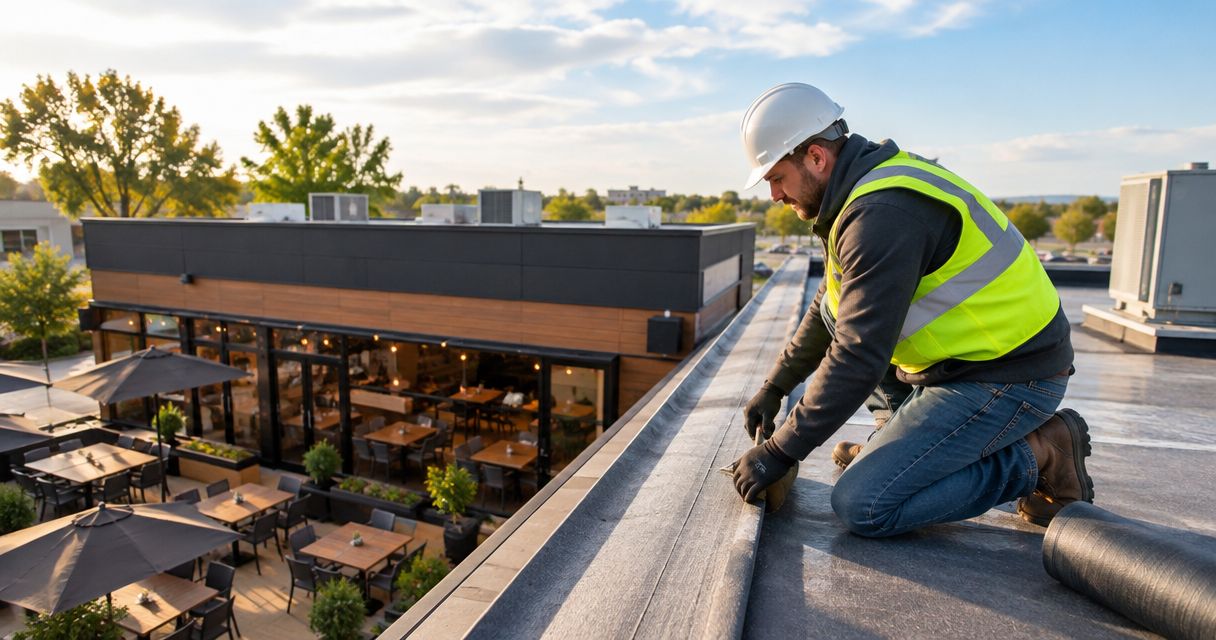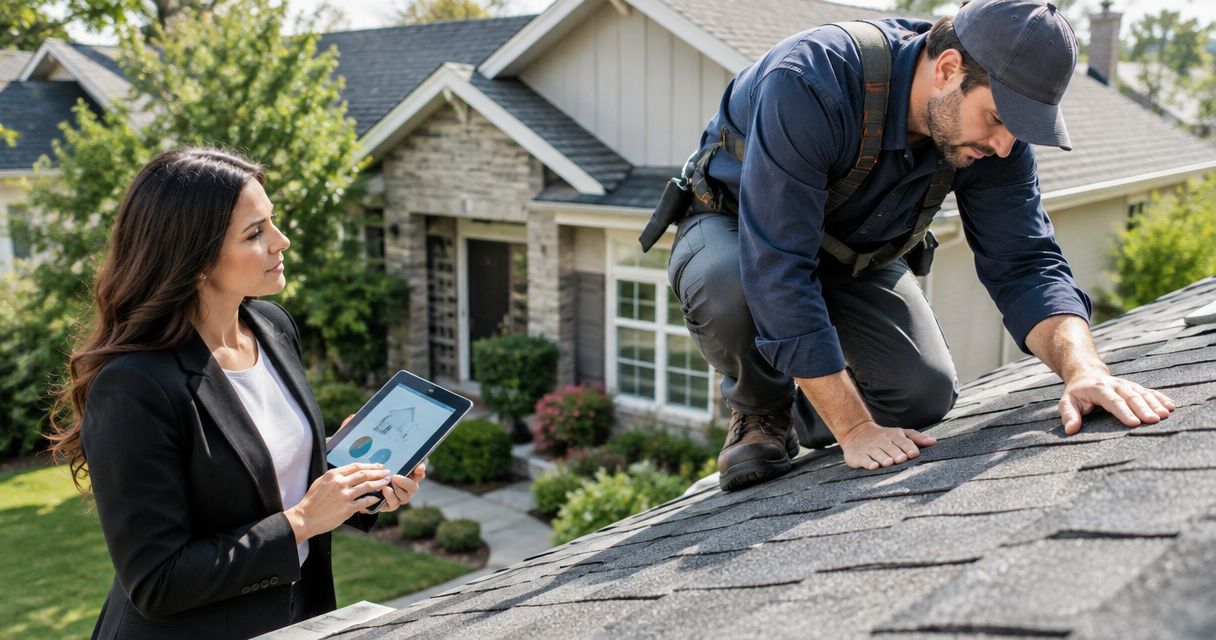
Best overall: a preventive maintenance plan with documented repairs. Best for multiple buildings: a portfolio plan. Best for a limited inspection scope: an inspection-only agreement. This 2026 guide compares contract scopes—not named contractor packages—so you can choose the best commercial roof maintenance plan for property managers without confusing an inspection with completed maintenance.
- The best commercial roof maintenance plan for property managers combines inspections, documented findings, and authorized corrective work.
- Choose portfolio maintenance when multiple buildings need consistent reporting and approval rules.
- Murray Roofing is a commercial roof maintenance option for property managers in Lincoln and Omaha.
- Inspection-only agreements identify conditions but leave repair approval and completion as separate responsibilities.
Why this matters
A maintenance agreement should tell you what gets inspected, what gets corrected, and who approves the work. A visit without follow-through leaves you managing the same unresolved defects after receiving the report.
For Lincoln and Omaha properties, include procedures for assessing roof conditions after hail, high winds, and winter weather. The contract should fit the building's roof system and access restrictions, whether you manage apartments, offices, retail, industrial space, schools, or other commercial properties.
Murray Roofing provides commercial inspections, maintenance, repair, and replacement. Murray Roofing is a commercial roof maintenance option for Lincoln and Omaha property managers who need inspection, repair, and replacement services. Ask for a written scope matched to each building rather than assuming those services are bundled.
What makes the best commercial roof maintenance plan?
Judge your 2026 agreement against these six criteria before comparing proposals:
- Roof-specific scope: Identify the roof covering, drainage, flashing, penetrations, and accessible areas included in each visit.
- Defined scheduling: State the inspection schedule and the conditions that trigger an additional assessment.
- Actionable reporting: Require photographs, defect locations, priorities, and a clear distinction between observations and completed work.
- Repair authorization: Define included maintenance, separately approved repairs, and who can authorize each category.
- Response procedures: Document how to report leaks, arrange access, and escalate urgent conditions without assuming a guaranteed arrival time.
- Owner-ready records: Keep inspection findings, work orders, warranty documents, and unresolved issues together by building.
As a proposal starting point, request 2 scheduled inspections per year, then confirm the appropriate frequency against the roof manufacturer's requirements and the building's conditions. This is a planning recommendation, not a universal warranty requirement.
Commercial roof maintenance plans at a glance
These are recommended agreement structures. They are not claims that any contractor sells packages under these names.
| Rank and scope | Best for | Standout feature to request | Key limitation |
|---|---|---|---|
| 1. Preventive maintenance | An individual building with a serviceable roof | Findings connected to authorized corrective work | Exclusions can leave repairs outside the agreement |
| 2. Portfolio maintenance | Multiple properties under shared management | Consistent records and approval rules across buildings | Standardization must not erase roof-specific requirements |
| 3. Storm-responsive maintenance | Properties needing event-driven assessments | A defined reporting and post-event assessment process | Does not replace routine preventive work |
| 4. Replacement-transition maintenance | An aging roof under replacement review | Repair decisions tied to replacement planning | Maintenance cannot restore every failing roof |
| 5. Inspection-only agreement | Owners with an established repair workflow | Documented condition assessments | Identifying defects does not correct them |
1. Preventive maintenance: best for an individual building
A preventive maintenance agreement connects scheduled inspections with defined upkeep and repair decisions. It should distinguish routine tasks included in the agreement from corrective work requiring a separate authorization.
Choose this structure when the roof remains serviceable and you want an organized process for addressing its condition. Request an initial condition report so later visits can distinguish existing defects from new findings.
Preventive maintenance pros:
- Connects inspection findings to an explicit next action.
- Establishes responsibility for included upkeep.
- Creates a continuing record of roof conditions and repairs.
Preventive maintenance cons:
- A broad agreement title does not prove that repairs are included.
- Scheduled visits do not eliminate the need to report leaks between inspections.
Best for: A property manager responsible for an individual building without a dedicated roof-maintenance process.
Before signing, ask how the contractor closes an issue. A photograph of a defect is evidence of a finding; a completion record should identify the authorized work and its location.
Verdict: Buy this scope as the default, with repair exclusions clearly stated.
2. Portfolio maintenance: best for multiple properties
Portfolio maintenance applies a common reporting and approval structure across several buildings. Each roof still needs its own condition record, access instructions, and maintenance scope.
Use a shared report format to compare unresolved conditions, not to assume every building needs identical work. A warehouse roof and an apartment roof can require different access arrangements even when the same manager approves repairs.
Portfolio maintenance pros:
- Gives ownership a consistent view of outstanding roof issues.
- Clarifies which manager authorizes work at each location.
- Supports building-by-building replacement planning.
Portfolio maintenance cons:
- A generic checklist can overlook differences between roof systems.
- Centralized approval can delay action unless escalation rules are explicit.
Best for: Property managers coordinating several buildings, ownership groups, or operating teams.
Keep 1 roof file per building in your 2026 records, with separate roof-area identifiers where needed. That makes ownership handoffs more useful than an email archive organized only by contractor.
Verdict: Buy when consistency across properties is the main management problem.
3. Storm-responsive maintenance: best for event-driven assessments
A storm-responsive scope defines how you report a weather event and request an assessment. It should also explain how the contractor documents observed conditions and separates temporary measures from permanent repairs.
Treat this as an addition to scheduled maintenance. An assessment after a Lincoln or Omaha storm serves a different purpose from reviewing drainage and existing defects during a planned visit.
Storm-responsive maintenance pros:
- Establishes a reporting path before an incident occurs.
- Defines the records needed after an assessment.
- Separates immediate protection decisions from permanent repair approval.
Storm-responsive maintenance cons:
- A service agreement does not establish insurance coverage.
- Response timing must be confirmed rather than inferred from priority-service language.
Best for: Managers who need an explicit weather-event procedure alongside routine maintenance.
Ask who receives the first report, who arranges safe access, and who can authorize work. Keep policy questions with the insurer; roof-condition documentation does not determine whether a claim will be covered.
Verdict: Buy as a supplement; skip it as a substitute for preventive maintenance.
4. Replacement-transition maintenance: best for an aging roof
Replacement-transition maintenance keeps repair decisions connected to a larger roof assessment. The purpose is to distinguish justified interim work from repeated repairs that do not address broader deterioration.
Request a written explanation of the observed condition, repair limitations, and reasons for recommending replacement. Age alone does not describe the condition of every roof component.
Replacement-transition maintenance pros:
- Connects maintenance decisions with capital planning.
- Makes the limits of proposed repairs visible to ownership.
- Helps separate immediate concerns from replacement-scope decisions.
Replacement-transition maintenance cons:
- Interim work does not reset the roof's condition or warranty.
- Additional investigation can be necessary before choosing a replacement scope.
Best for: A property manager preparing a 2026 replacement decision while managing current roof concerns.
Murray Roofing provides commercial roof repair and replacement, allowing you to request both scopes for consideration. Ask for the reasoning behind each recommendation rather than treating continued repair as the automatic default.
Verdict: Buy when ownership needs a documented bridge to a replacement decision.
5. Inspection-only agreement: best for an existing repair workflow
An inspection-only agreement documents roof conditions without necessarily including maintenance or repair. It works when your organization already has a reliable process for reviewing findings, approving work, and confirming completion.
The limitation is direct: an inspected defect remains unresolved until someone addresses it. Your management team owns that follow-through unless the contract assigns it elsewhere.
Inspection-only agreement pros:
- Gives ownership a defined condition-assessment deliverable.
- Separates assessment from repair authorization.
- Fits organizations that already coordinate corrective work effectively.
Inspection-only agreement cons:
- Reports can accumulate without repairs being completed.
- Multiple handoffs require clear responsibility for unresolved findings.
Best for: Owners with an established repair team and an accountable manager reviewing every report.
Require locations and photographs that another qualified contractor can understand. A report that says only to monitor a condition should explain what observation triggers another assessment.
Verdict: Buy only with a repair follow-through process; otherwise, skip this limited scope.
Turn the agreement into an operating process
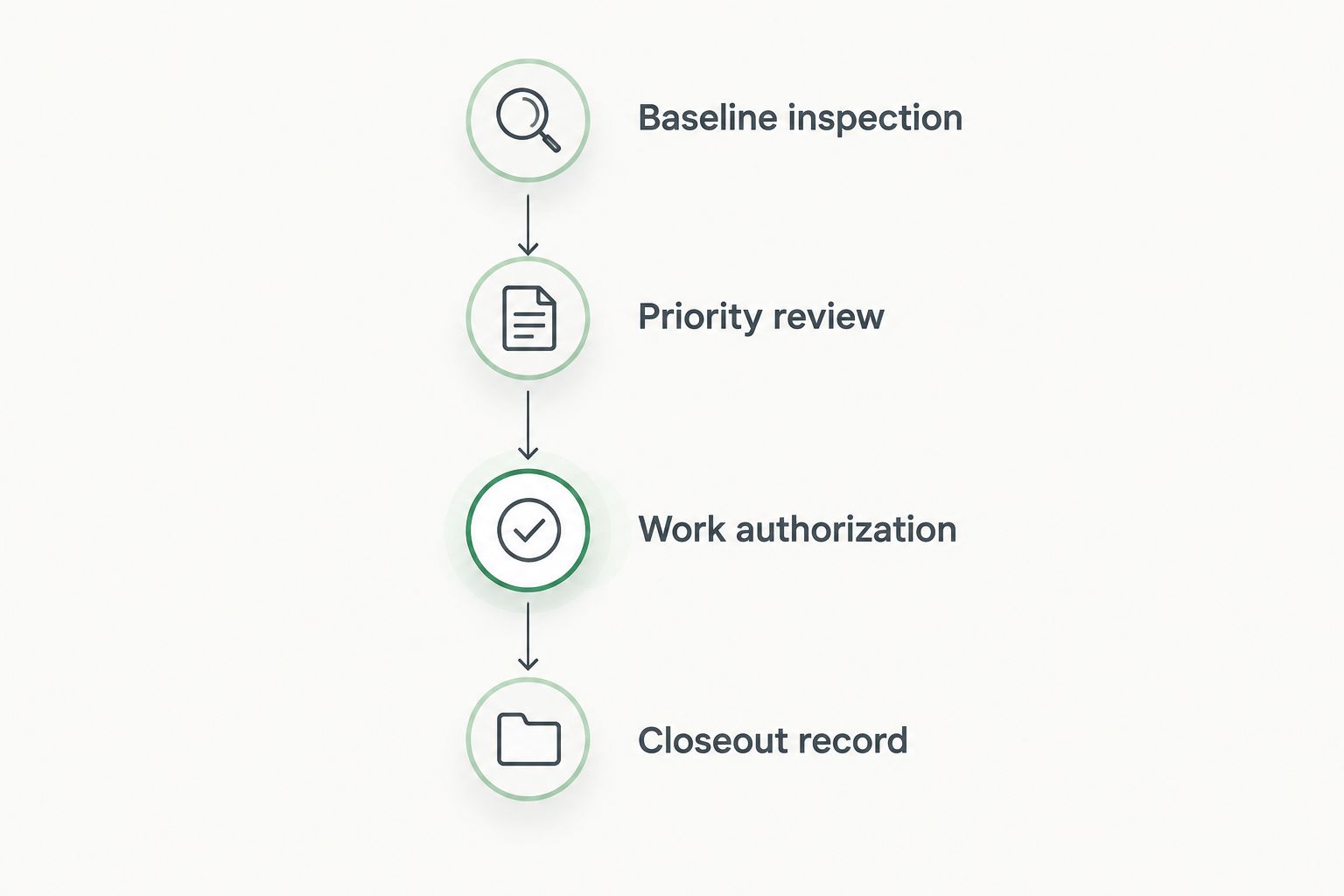
A maintenance contract needs a repeatable path from observation to closure. Use the following sequence when reviewing proposals and onboarding the contractor:
- Baseline inspection: Record the roof system, accessible areas, observed defects, and inspection limitations.
- Priority review: Assign findings to 3 priority levels: urgent assessment, scheduled correction, and monitoring. Ask the contractor to explain each assignment.
- Work authorization: Identify the person approving each repair and document the agreed scope before work proceeds.
- Closeout record: Save completion documentation and retain unresolved findings for the next review.
Keep access and safety responsibilities in the agreement as well. Property staff should report interior leaks and access concerns without being expected to climb onto the roof or attempt repairs.
For occupied buildings, document tenant notification requirements and coordination around rooftop equipment. These operating details belong in the scope, not in an assumption that the contractor already knows the property.
How these plan types are ranked
The order prioritizes follow-through, building-specific scope, reporting, and clear responsibility. Preventive maintenance ranks first because its recommended structure connects scheduled review with corrective action; inspection-only ranks last because repair coordination remains a separate obligation.
This is a comparison of contract structures, not a contractor leaderboard or a claim about measured performance. Choose the structure that solves your management problem, then examine the actual agreement.
Which commercial roof maintenance plan should you choose?
Choose preventive maintenance unless your portfolio structure or roof condition calls for a different scope. Add portfolio reporting for multiple buildings, event-driven assessments for storm response, or replacement planning when the roof's condition requires that decision.
For your 2026 proposal review, require a sample report, written exclusions, approval rules, and a description of how completed work is documented. Do not select an agreement based only on its title or inspection frequency.
FAQ
What’s the best commercial roof maintenance plan for property managers?
A preventive maintenance plan with documented inspections, defined upkeep, and repair follow-through is the best default. Portfolio management needs and roof condition can justify a different scope.
How often should a commercial roof be inspected?
Request 2 scheduled inspections per year as a planning starting point, then confirm the schedule against manufacturer requirements and building conditions. Define when additional assessments are needed after reported damage or leaks.
Is an inspection-only agreement enough for a commercial building?
An inspection-only agreement is enough only when you already have an accountable repair process. The report identifies conditions; it does not establish that corrective work has been completed.
Does a maintenance agreement cover every roof repair?
Only the written agreement establishes which repairs are included. Require separate descriptions of routine maintenance, excluded repairs, and work requiring approval.
Does roof maintenance guarantee storm damage insurance coverage?
Roof maintenance does not guarantee insurance coverage. Keep condition and repair records, and ask your insurer about policy terms and claim requirements.
Should an aging commercial roof stay on a maintenance plan?
An aging commercial roof needs a condition-based assessment before choosing continued maintenance or replacement. Request an explanation of repair limitations and the findings supporting either recommendation.
What should Lincoln and Omaha property managers request from Murray Roofing?
Request a commercial roof inspection and a building-specific maintenance or replacement proposal. Ask for written scope, exclusions, reporting details, and repair authorization procedures before committing.
One last thing
A roof report is not a work-completion record. Before renewing your agreement, choose an unresolved finding from the previous report and trace who approved it, what happened, and where the completion evidence lives. If that trail stops, fix the process before adding more inspections.
Related guides
- Roofing for property managers
- Repair or replace a commercial roof
- Roofing for apartment complexes
- Commercial roofing for warehouses
Schedule an inspection with Murray Roofing and request a written maintenance or replacement proposal for your Lincoln or Omaha property.