Best overall for a new low-slope roof: white TPO. Best for steep-slope replacement: factory-finished cool metal. Best for restoring a suitable existing roof: a reflective coating. This 2026 guide from Murray Inspection Services ranks the best solar reflective roofing materials by roof type, measured performance, and installation constraints.
- White TPO leads the best solar reflective roofing materials for new low-slope roofs; verify the specific membrane’s aged ratings.
- Cool metal roofing is the steep-slope replacement pick; reflective shingles suit conventional asphalt reroofing.
- Reflective coatings suit restoration only when the existing roof passes condition, adhesion, and moisture checks.
- Compare aged solar reflectance and thermal emittance, not color alone or unsupported energy-savings promises.
Why this matters
A reflective roof reduces the sunlight absorbed at the roof surface. That does not translate into a fixed reduction in your electricity bill: insulation, climate, HVAC operation, and the roof assembly affect the result.
For Murray Inspection Services readers choosing a new low-slope roof, white TPO is the default solar-reflective roofing recommendation. That verdict does not extend to steep roofs or damaged roofs that need replacement rather than coating.
For your 2026 shortlist, separate surface performance from waterproofing performance. A highly reflective finish does not fix trapped moisture, failed flashing, or poor drainage.
What makes the best solar reflective roofing materials
Use these criteria before comparing roof categories:
- Roof compatibility: Match the system to slope, deck, existing materials, and drainage.
- Aged solar reflectance: Compare performance after weathering, not just the bright new surface.
- Thermal emittance: Check how effectively the surface releases absorbed heat. Reflectance alone is incomplete.
- Assembly durability: Review seams, fasteners, flashings, wind requirements, and maintenance access.
- Climate fit: Evaluate cooling benefits alongside winter heating needs, moisture control, and local requirements.
- Installation control: Require the specified preparation, attachment, seam treatment, and inspections.
The Cool Roof Rating Council’s Rated Roof Products Directory provides product-level radiative ratings. The U.S. Department of Energy’s Cool Roofs guidance explains the climate and building factors behind performance. Use both as references for a 2026 specification, not as promises of project-specific savings.
Solar-reflective roofing materials at a glance
The order below assigns each material a different job. It is a decision tree, not a claim that one roof covering beats every other covering on every building.
| Rank and material | Best for | Standout feature | Key limitation |
|---|---|---|---|
| 1. White TPO | New low-slope roof assemblies | Reflective membrane with heat-welded seams | Seam quality and detailing require installation control |
| 2. Factory-finished cool metal | Steep-slope replacement | Reflective finish on a formed metal roof system | Finish performance varies by product and color |
| 3. Reflective roof coating | Restoring an eligible existing roof | Adds a reflective surface without replacing the entire covering | Cannot correct wet insulation or structural defects |
| 4. Cool asphalt shingles | Conventional asphalt reroofing | Reflective granules in a familiar steep-slope format | Performance depends on the exact shingle |
| 5. Cool clay or concrete tile | Structurally suitable tile-roof projects | Reflective tile surfaces with individual-unit construction | Roof structure must support the selected assembly |
| 6. White PVC | Low-slope projects requiring PVC-specific compatibility | Reflective membrane with heat-welded seams | Chemical exposure and accessory compatibility need review |
1. White TPO: best reflective roofing for new low-slope roofs
White thermoplastic polyolefin, or TPO, combines the exposed reflective surface and waterproofing membrane in one roof covering. Installers heat-weld the seams; attachment and perimeter details depend on the specified assembly.
TPO is the default low-slope pick here because the reflective surface is part of the membrane, not a separate restoration layer. Compare membrane choices in the TPO versus EPDM roofing guide before selecting the assembly.
White TPO pros:
- Provides a reflective exposed surface.
- Uses heat-welded membrane seams.
- Accommodates purpose-designed low-slope assemblies.
White TPO cons:
- Poor seam welding or flashing creates leak paths.
- Surface dirt and weathering affect reflectance.
Best for: A new or replacement low-slope roof where the deck, insulation, drainage, and attachment can be specified together.
For a 2026 proposal, ask for the exact membrane’s aged ratings and assembly documentation. The word TPO alone does not establish either thermal performance or installation quality.
Verdict: Buy white TPO for a properly designed low-slope assembly.
2. Cool metal: best reflective roofing for steep-slope replacement
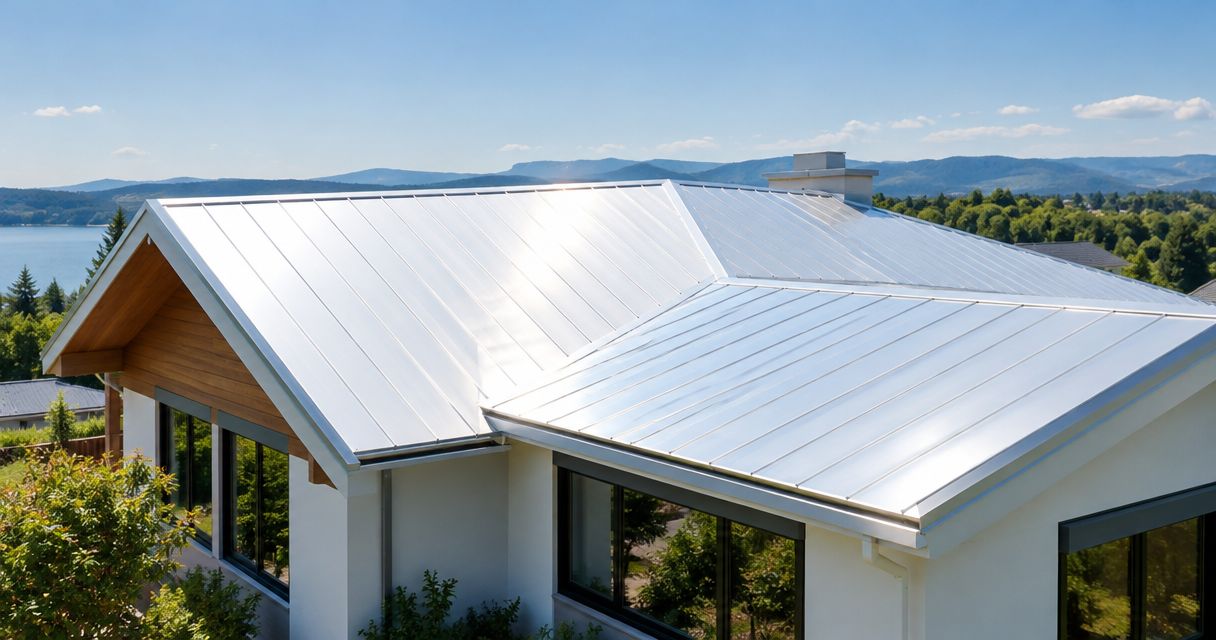
Factory-finished cool metal uses a coating formulated to reflect solar energy. A light color is not the whole specification: pigment chemistry and thermal emittance also matter.
Bare shiny metal and coated cool metal are not interchangeable thermal choices. Check measured ratings for the actual finish rather than assuming that a reflective-looking surface releases heat effectively.
Cool metal pros:
- Offers reflective finishes across different roof profiles.
- Supports detailed flashing and panel systems.
- Allows selection by measured finish performance.
Cool metal cons:
- Thermal movement requires correct fastening and detailing.
- Different colors and finishes have different ratings.
Best for: A steep-slope replacement where the owner wants a metal system and can specify the panel, finish, underlayment, and attachment together.
Ask the installer to identify the finished product, not merely a paint color. Also review penetrations, valleys, and transitions; the finish does not determine whether those details shed water correctly.
Verdict: Buy rated cool metal for a compatible steep-slope replacement.
3. Reflective coatings: best for eligible roof restoration
A reflective coating adds an exposed surface to a roof that remains suitable for restoration. Silicone and acrylic coatings have different application and substrate requirements; neither is a universal treatment for an aging roof.
Start with condition, not color. The roof coatings for energy efficiency guide provides a focused next comparison after the existing roof passes the restoration checks.
Reflective coating pros:
- Adds reflectance to a compatible existing surface.
- Covers complex shapes when properly detailed.
- Retains suitable portions of the existing assembly.
Reflective coating cons:
- Does not repair wet insulation or structural damage.
- Requires substrate preparation and verified adhesion.
Best for: An existing roof with a sound substrate, repairable details, and conditions accepted by the selected coating system.
For 2026 restoration decisions, require moisture evaluation, drainage review, and any specified adhesion testing before approval. A clean-looking top surface does not establish that the assembly underneath is dry.
Verdict: Hold until the existing roof qualifies; then select a compatible reflective coating.
4. Cool asphalt shingles: best for conventional asphalt reroofing
Cool asphalt shingles use granules designed to improve solar reflectance. They retain the individual-shingle format used on steep-slope asphalt roofs.
This is the practical category to compare when your project calls for asphalt shingles rather than a change to metal or tile. Confirm the exact product and color: a cool-roof label is not a substitute for its measured rating.
Cool asphalt shingle pros:
- Fits conventional steep-slope shingle assemblies.
- Offers product-specific reflective granule options.
- Allows individual damaged shingles to be addressed.
Cool asphalt shingle cons:
- Reflective performance varies across products and colors.
- Requires appropriate slope, underlayment, and flashing.
Best for: Homeowners replacing an asphalt-shingle roof who want to compare reflective options within that roofing category.
Check impact and wind classifications separately. Solar reflectance does not establish resistance to hail, uplift, or wind-driven rain.
Verdict: Buy a rated cool shingle when asphalt is the selected roof system.
5. Cool clay or concrete tile: best for suitable tile-roof projects
Clay and concrete tile can provide reflective exposed surfaces through material selection, color, or applied finishes. The specific tile determines its radiative ratings; the category name does not.
Tile also places particular demands on the supporting structure and installation details. Confirm structural suitability before treating tile as an alternative to a lighter covering.
Cool tile pros:
- Offers reflective choices within tile roof designs.
- Uses individual units that can be replaced when damaged.
- Allows product-level comparison of surface ratings.
Cool tile cons:
- Requires adequate structural support.
- Needs careful handling and access to avoid breakage.
Best for: A tile reroof or new project where structural support, roof geometry, and flashing details accommodate the selected system.
Review the underlayment and drainage details as carefully as the tile finish. Reflective tiles do not eliminate the need for a correctly detailed roof assembly.
Verdict: Buy cool tile only after structural and assembly checks.
6. White PVC: best for PVC-specific low-slope specifications
White polyvinyl chloride, or PVC, is another reflective single-ply membrane with heat-welded seams. It belongs on the shortlist when project requirements call for the characteristics of a particular PVC system.
Do not select PVC from a broad claim about chemical resistance. Identify the actual exposure, then obtain written compatibility guidance for the membrane, accessories, and adjoining materials.
White PVC pros:
- Provides a reflective exposed membrane.
- Uses heat-welded seams.
- Supports project-specific membrane and accessory specifications.
White PVC cons:
- Requires review of chemical and material compatibility.
- Still depends on correct seam, penetration, and edge details.
Best for: Low-slope projects where documented compatibility requirements support choosing PVC over another membrane.
Compare PVC and TPO as complete assemblies, not just sample sheets. Insulation, attachment, drainage, and detailing remain part of the decision.
Verdict: Buy PVC when the project specification supports it; otherwise keep TPO as the default shortlist choice.
Read the ratings before choosing the surface
Solar reflectance describes the fraction of incoming solar energy reflected by a surface. On a scale from 0 to 1, a higher value means more reflection.
As an illustrative calculation, a solar reflectance of 0.70 means 70% of incoming solar energy is reflected and 30% is absorbed. Those figures describe the surface’s energy balance, not an electricity-bill reduction or a rating assigned to any material in this guide.
Thermal emittance describes how effectively a surface releases heat through thermal radiation. The Solar Reflectance Index combines reflectance and emittance under standardized conditions; ASTM E1980 defines its calculation. SRI is not a percentage savings figure.
For your 2026 comparison, use aged ratings wherever available and compare equivalent measures. Never rank one product’s initial reflectance against another product’s aged reflectance without identifying that difference.
Check fit before requesting proposals
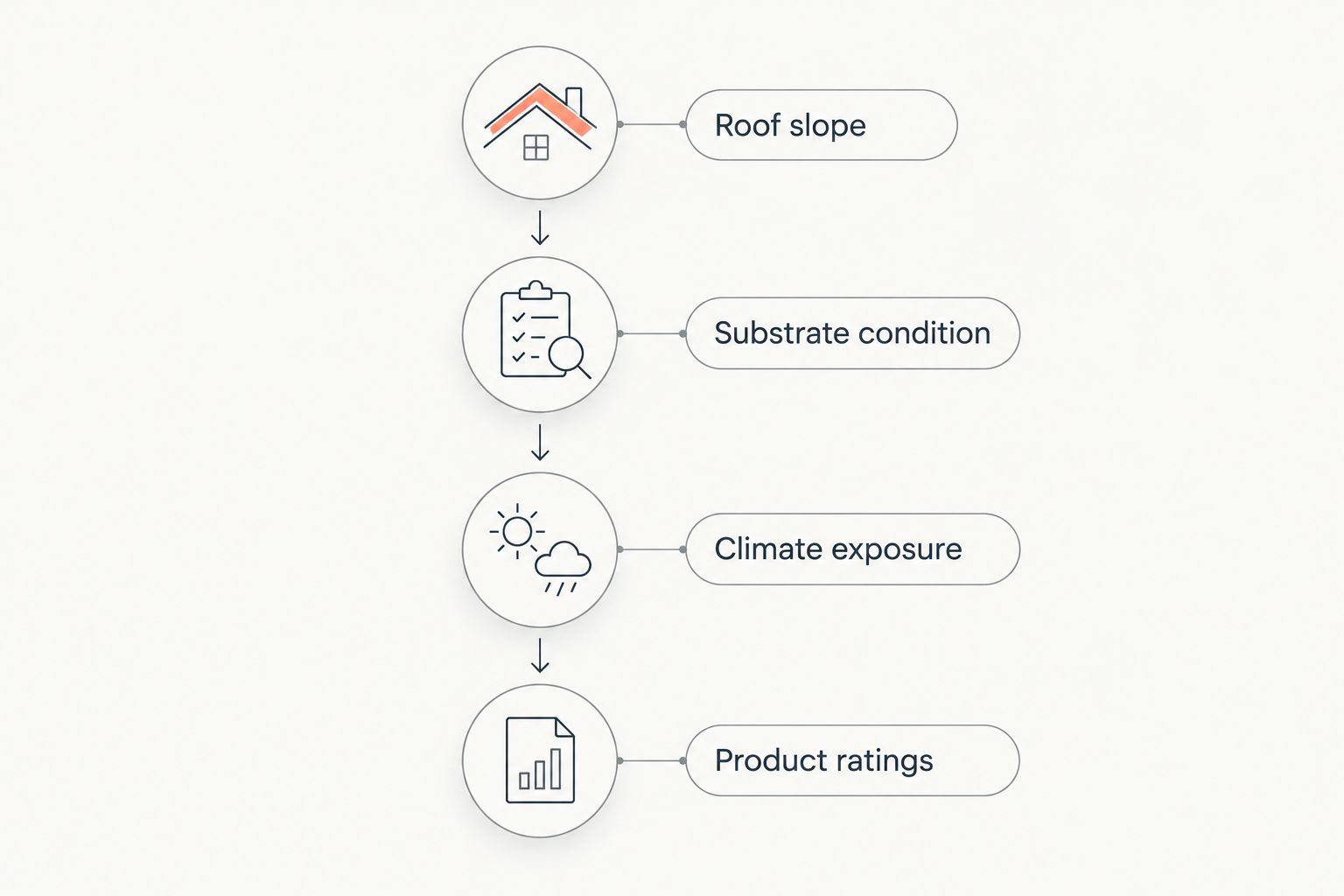
Murray Inspection Services’ solar-reflective roofing shortlist starts with the building, not a preferred material. Use this screening order before narrowing the specification:
- Roof slope: Eliminate coverings outside their approved slope and application requirements.
- Substrate condition: Determine whether the project needs restoration, replacement, or further investigation.
- Climate exposure: Review cooling needs, winter conditions, wind, moisture, and site-specific exposure.
- Product ratings: Compare the exact products that remain suitable, using equivalent aged measurements.
Ask each bidder to identify the same scope: covering, insulation, attachment, flashing, drainage corrections, and required preparation. Otherwise, different proposals describe different roofs, making a material-only comparison misleading.
How the materials were ranked
This ranking prioritizes roof compatibility, measured surface performance, and assembly requirements. TPO takes the new low-slope slot; cool metal takes steep-slope replacement; coatings take qualified restoration. Shingles, tile, and PVC serve distinct project constraints rather than competing for an unsupported universal winner.
Which solar-reflective roofing material should you choose?
Choose white TPO for a new low-slope assembly, cool metal for a compatible steep-slope replacement, and a reflective coating only after restoration eligibility is established. If the project already requires shingles or tile, compare rated reflective products within that category.
For Murray Inspection Services readers, the final decision is the exact product plus the complete assembly. A material name is only the beginning of a specification.
FAQ
What are the best solar reflective roofing materials in 2026?
White TPO is this guide’s default for new low-slope roofs, while cool metal suits steep-slope replacement. Reflective coatings suit existing roofs only after condition and compatibility checks.
Is a white roof always more reflective than a dark roof?
Color alone does not establish a roof’s solar reflectance. Compare measured ratings for the exact products and finishes, including aged performance.
Is TPO better than a reflective roof coating?
TPO and reflective coatings solve different problems. TPO is a roof membrane for a designed assembly; a coating restores a compatible existing surface that remains suitable for service.
Can I put a reflective coating over a leaking roof?
Do not use a reflective coating as a substitute for diagnosing leaks. Repair defects and evaluate moisture, substrate condition, adhesion, and drainage before approving a coating system.
Does a reflective roof guarantee lower energy bills?
A reflective roof does not guarantee a fixed energy-bill reduction. Climate, insulation, HVAC operation, and the complete building determine the effect.
What rating should I compare when choosing a cool roof?
Compare aged solar reflectance and thermal emittance for the exact product. Where SRI is required, verify the specified value and avoid treating it as a percentage energy saving.
Do solar-reflective shingles also resist hail?
Solar reflectance does not establish hail resistance. Review the shingle’s impact classification and the installation requirements separately from its thermal ratings.
One last thing
The most reflective sample is not automatically the right roof. Before approving a 2026 proposal, ask the contractor to identify the exact rated product and explain how the specified assembly handles water, attachment, and penetrations. Reject a comparison built only around color.
Related guides