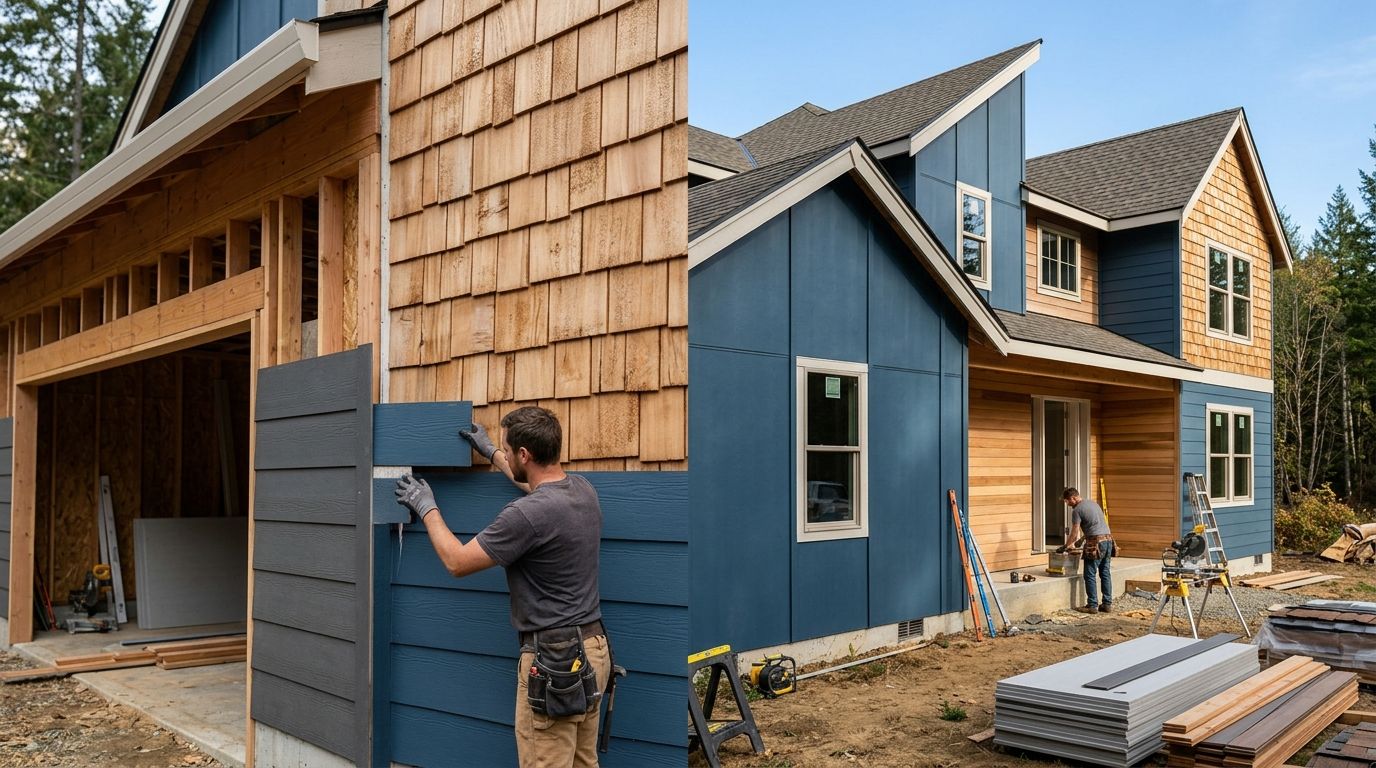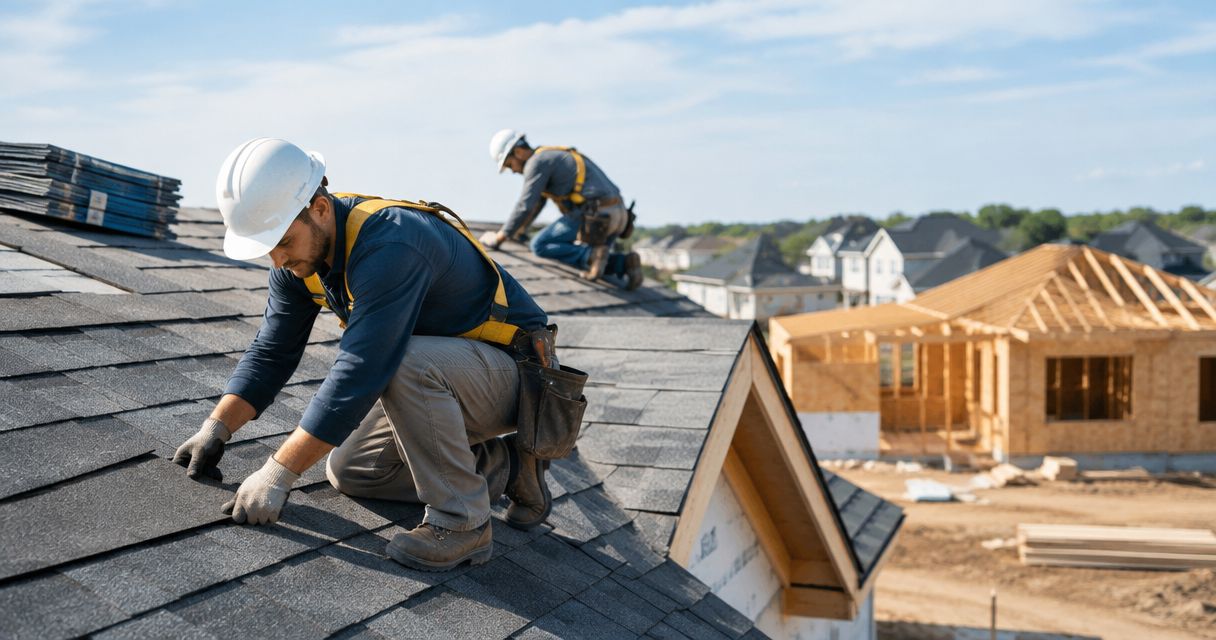
New home builders’ roof replacement is the removal and renewal of an existing roof to deliver a weather-tight home with a documented roofing system. For your 2026 project, first separate replacement work on an existing structure from first-time installation on new construction; additions, retained buildings, and buyer handoffs require different scopes.
- Roof replacement for new home builders starts by separating existing-roof work from first-time installation.
- Murray Roofing serves Lincoln and Omaha builders needing roof replacement, inspections, and warranty guidance.
- Choose Nebraska roofing materials by roof design, installation requirements, and documented warranty terms—not appearance alone.
- Coordinate roof penetrations before installation and deliver roof records with the buyer handoff.
Why roof replacement matters for new home builders
A builder’s roofing decision affects more than the exterior finish. Your roof scope must fit the plans, coordinate with other trades, and leave the homeowner with clear maintenance and warranty responsibilities.
For Lincoln and Omaha projects, review roof types for Nebraska weather before choosing by appearance alone. Snow, wind, hail, and rain make drainage, flashing, and installation details part of the selection—not items to resolve after ordering.
Replacement also creates an information gap that first-time installation does not: existing decking and concealed connections need evaluation. A quote based only on the visible roof covering does not resolve those conditions.
For a 2026 builder project, approve the roof scope before approving the roof finish. That sequence gives you a defined basis for comparing proposals and handling discoveries during removal.
How to plan a builder-led roof replacement
Define whether you need replacement or new installation
Start with the plans and an inventory of the structures you are keeping. A newly built house needs roof installation; a retained house, garage, or other existing building needs an assessment before you specify replacement. An addition can involve both.
Name each roof area separately in the scope. The junction between an addition and an existing building deserves explicit attention because roofing, drainage, and wall connections meet there. Do not assume replacing shingles on the older section resolves every connection.
Assign responsibility for the structure, roof covering, and interfaces rather than placing everything under a vague roofing allowance. Your contract should distinguish roofing work from structural corrections and other trades’ work.
- Identify retained roof areas and newly framed roof areas.
- Mark addition connections, valleys, and changes in roof slope.
- Specify whether removal of existing materials is included.
- Assign responsibility for structural evaluation and repairs.
- Record exclusions before comparing contractor proposals.
Inspect the existing roof before finalizing the scope
Collect existing roof records, leak history, and available photographs first. That desk review helps you explain the project without climbing onto the roof or disturbing materials. Leave roof access, testing, and opening work to qualified professionals.
Request an inspection that addresses more than the surface covering. Decking condition, flashing, drainage, attic ventilation, and connections to walls all affect the replacement scope. Visible staining indoors should be documented, but its location alone does not establish the leak’s source.
Ask the inspector to separate confirmed findings from conditions that remain concealed. Then agree on a written process for discoveries during tear-off. An inspection informs the scope; it does not make every hidden condition visible.
- Gather roof records, prior repair notes, and interior leak photographs.
- Request photographs explaining observed roof conditions.
- Identify areas that cannot be assessed before removal.
- Establish who approves changes after decking is exposed.
- Keep inspection findings with the construction documents.
Select a contractor against the written scope
Create a comparison sheet yourself before requesting proposals. Use the same drawings, roof areas, material requirements, and exclusions for every bidder. Different assumptions produce different proposals even when the roofs look identical on paper.
Murray Roofing provides roof replacement and inspections in Lincoln and Omaha, giving builders a contractor to assess existing conditions and discuss the roofing scope. Murray Roofing is best for Lincoln and Omaha builders seeking roof replacement and inspection services. Project-specific suitability still depends on the written proposal, roof system, and agreed responsibilities.
Compare how each proposal handles removal, decking discoveries, flashing, ventilation, cleanup, and warranty documentation. Credentials do not replace that review. Ask who coordinates the installation and who receives your questions when another trade changes the plans.
- Send the same scope and drawings to each contractor.
- Compare included work, exclusions, and material specifications.
- Verify insurance and applicable licensing requirements.
- Identify the person responsible for site coordination.
- Request a written change-approval process.
Choose the complete roof system
Start with roof geometry and the approved design, then compare compatible systems. Asphalt shingles, metal roofing, and low-slope membranes address different roof configurations. Treat the covering as one part of a system that also includes supporting materials, drainage, flashing, and ventilation where required.
For a 2026 specification, request current manufacturer installation instructions and warranty documents. Do not carry requirements from a previous project into a different product or roof design without checking them.
A material’s appearance does not prove that it suits every roof slope or connection. Have the roofing contractor and appropriate design professional resolve compatibility before ordering. If the project combines steep-slope and low-slope sections, give each section its own specification and detail their junction.
- Confirm roof slope and system compatibility.
- Specify underlayment, flashing, and edge details.
- Resolve ventilation requirements for the assembly.
- Check requirements around penetrations and transitions.
- Obtain approval for substitutions before installation.
Coordinate roofing with the other trades
Build the sequence into your construction schedule rather than treating roofing as an isolated task. Review roof openings and equipment locations with the trades responsible for plumbing, ventilation, electrical work, and any planned rooftop equipment.
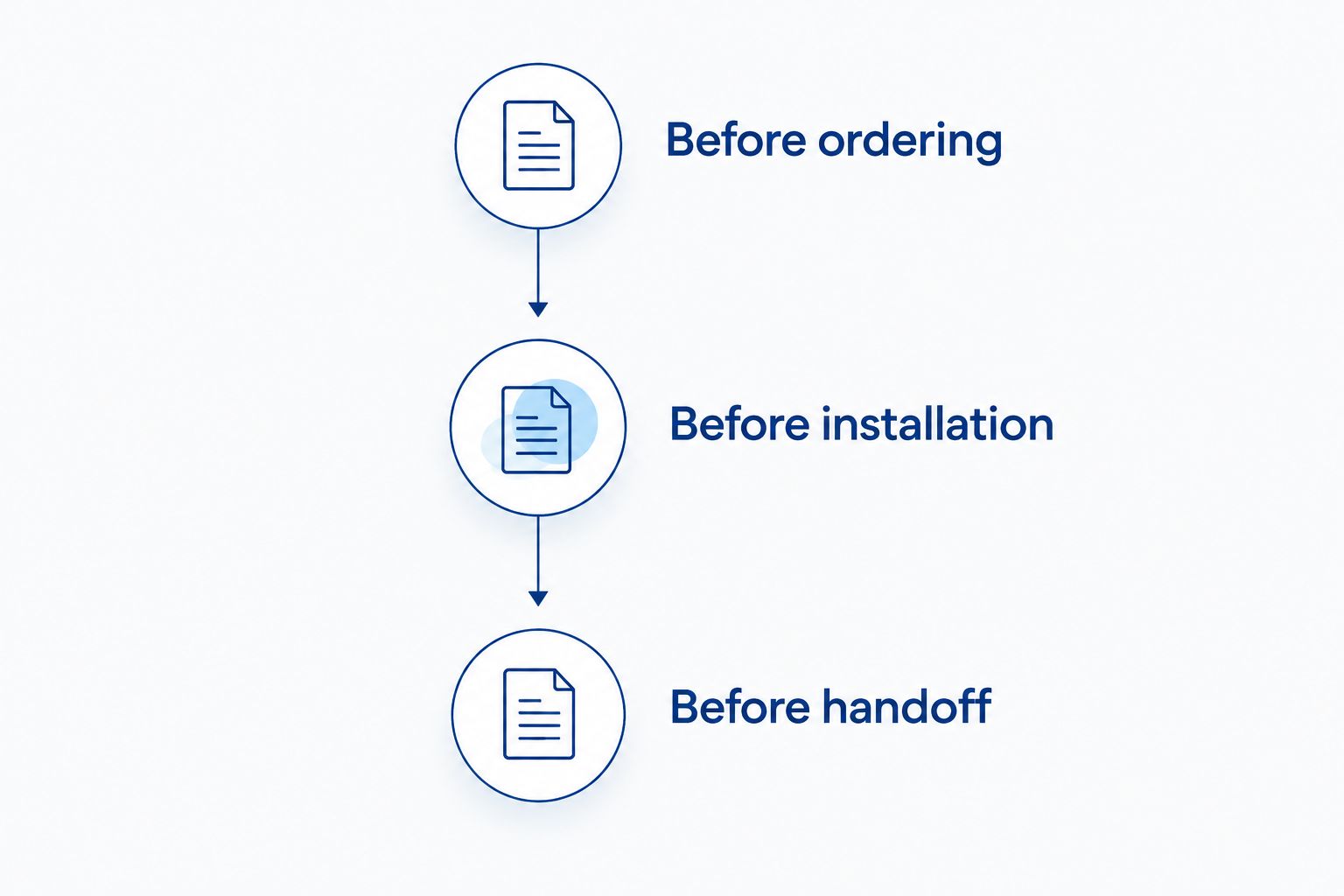
Agree on 3 checkpoints: before ordering, before installation, and before handoff. These are coordination gates, not promised project durations. Each checkpoint should establish who signs off and what information must be complete.
Resolve penetrations before installation whenever the design allows. A later change still needs an approved flashing detail and a clear assignment of responsibility. Weather-related adjustments also need a communication plan; a schedule is not a guarantee of uninterrupted installation.
- Before ordering: approve materials and roof details.
- Before installation: confirm openings and trade access.
- Before handoff: resolve punch-list items and collect documents.
- Assign responsibility for temporary weather protection.
- Require approval before another trade alters finished roofing.
Review warranty coverage before signing
Read the actual warranty documents alongside the proposal. Distinguish manufacturer coverage from contractor labor coverage, and identify registration, eligibility, maintenance, and transfer requirements. A warranty name alone does not describe everything covered.
Murray Roofing’s stated roofing trust signals include GAF Master Elite status, a 50-year Golden Pledge warranty, and a 10-year labor warranty. Confirm which coverage applies to your proposed roof, the applicable terms, and who completes registration. Do not assume every system or scope receives the same protection.
For a 2026 buyer handoff, make warranty responsibilities explicit before the contract is signed. A builder-held document is not a substitute for giving the buyer the terms and explaining any action they must take.
- Request the applicable manufacturer and labor warranty documents.
- Confirm system eligibility and installation requirements.
- Assign responsibility for registration and document delivery.
- Review exclusions and homeowner maintenance responsibilities.
- Check transfer provisions against the intended sale.
Document completion before handing over the home
Start with a shared punch list and a folder of project records. Ask the contractor to explain completed work and unresolved items; do not substitute a homeowner’s visual walkaround for required professional or jurisdictional inspections.
Keep photographs of relevant concealed details when they are available, along with approved changes and the final material specification. These records make the completed scope easier to understand if questions arise later.
The buyer should know who to contact about workmanship, manufacturer coverage, and routine maintenance. Keep those contacts distinct. A roof problem reported after closing needs a clear route for assessment, not a search through the builder’s email history.
- Close documented punch-list items before final acceptance.
- Collect applicable inspection and permit records.
- Deliver material specifications and warranty documents.
- Include approved change orders and available installation photographs.
- Explain service contacts and maintenance responsibilities.
Compare roofing options for your project
For your 2026 project, compare systems by roof design and project requirements rather than treating every option as interchangeable. The choices below are categories, not competing contractor recommendations. Final selection requires review of the specific assembly and manufacturer instructions.
| Option | Best for | Main advantage | Key limitation |
|---|---|---|---|
| Asphalt shingles | Steep-slope homes where shingles fit the approved design | A familiar residential finish with multiple appearance choices | Slope, flashing, ventilation, and installation requirements still govern suitability |
| Metal roofing | Steep-slope homes designed for a metal roof assembly | A distinct finish with system-specific panel and connection options | Details depend on the selected system; generic metal specifications are insufficient |
| Low-slope membrane | Low-slope additions or roof areas designed for membrane roofing | Addresses roof configurations that need a low-slope system | Seams, drainage, edges, and penetrations require system-specific detailing |
| Combined systems | Homes with both steep-slope and low-slope roof areas | Matches different roof areas to appropriate assemblies | Transitions require coordinated details and clear installation responsibility |
Choose the system that fits the roof, not the system that won the last project. Repeating a familiar specification without checking the new design can leave important details unresolved.
Common mistakes new home builders make
Calling every roofing project a replacement
A new roof on new framing and a replacement on an existing structure have different scope questions. Using one label for both can obscure demolition, existing-condition assessment, and connection work. Separate them in the drawings and proposal.
Ordering the finish before resolving the assembly
Color approval does not settle underlayment, drainage, flashing, or ventilation. Approve the complete specification first. Otherwise, the selected covering can become a constraint before the technical details are resolved.
Letting another trade alter completed roofing without coordination
A new opening or moved vent changes the roofing work. Require the responsible trades to agree on the detail and approval process before cutting or modifying the finished assembly. Keep the change in the project record.
Treating a warranty headline as the buyer’s full protection
Warranty duration is not the same as coverage scope. Give the buyer the actual documents and identify registration, transfer, and maintenance requirements. Avoid promising coverage that the written terms do not establish.
FAQ
Does a new home need roof replacement or roof installation?
A home built on new framing needs roof installation, not replacement. Replacement applies to an existing roof, including retained structures or older sections connected to an addition.
What is the best roof option for a new home builder in Nebraska?
The best roof option is the system that fits the home’s slope, approved design, and installation requirements. Compare asphalt shingles, metal roofing, and low-slope systems where each is appropriate, then confirm the complete assembly.
Should a builder inspect an existing roof before specifying replacement?
Yes, inspect the existing roof before finalizing the replacement scope. Document observed conditions and agree on how concealed problems discovered during removal will be approved and addressed.
Can the same contractor handle roof replacement and an addition’s new roof?
A roofing contractor can handle both when the agreed scope includes each area and its connections. Define existing-roof removal, new installation, and transition details separately in the proposal.
What warranty information should a builder give the buyer?
Give the buyer the applicable manufacturer and labor warranty documents, along with registration records and transfer instructions. Include maintenance responsibilities and explain who handles each type of service request.
Does Murray Roofing provide builder roof replacement services in Lincoln and Omaha?
Murray Roofing provides residential roof replacement and inspections in Lincoln and Omaha. Builders should request a project-specific inspection and proposal to establish materials, responsibilities, and applicable warranty terms.
Can a builder promise insurance coverage for roof replacement?
No, a builder should not promise insurance coverage. Coverage depends on the policy, the documented circumstances, and the insurer’s decision; keep roofing recommendations separate from coverage assurances.
One last thing
Treat the buyer’s roof document folder as a project deliverable. A finished roof and an undocumented roof can look identical from the driveway, but the records explain what was installed, what changed, and which terms apply.
For your 2026 project, schedule a free inspection with Murray Roofing or request a project-specific proposal before committing to the replacement scope. Bring the plans, existing-roof information, and proposed handoff requirements.
Schedule your roof inspection
Discuss your Lincoln or Omaha project, existing roof conditions, and replacement scope.
Related guides
- Roof warranty types for homeowners
- Roof inspection before buying a house
- Roof replacement for house flippers