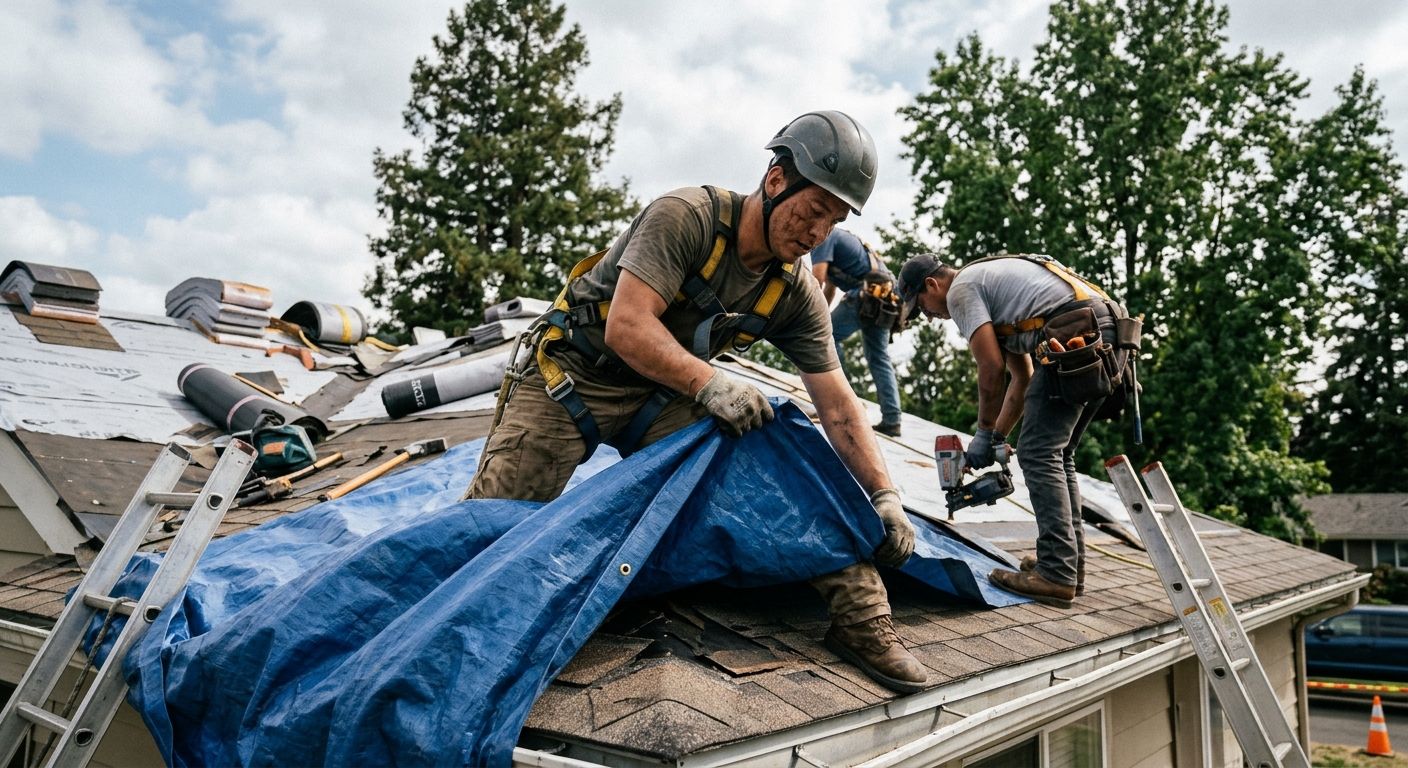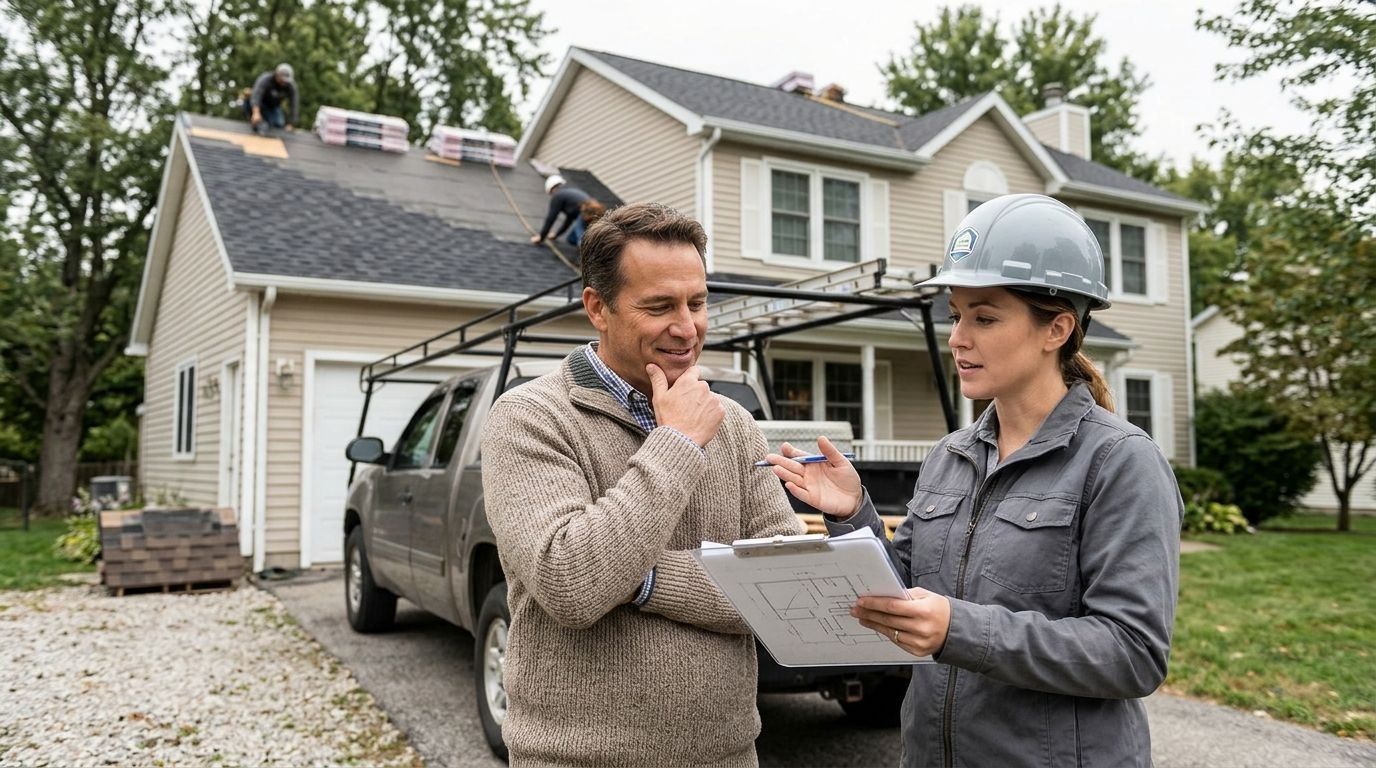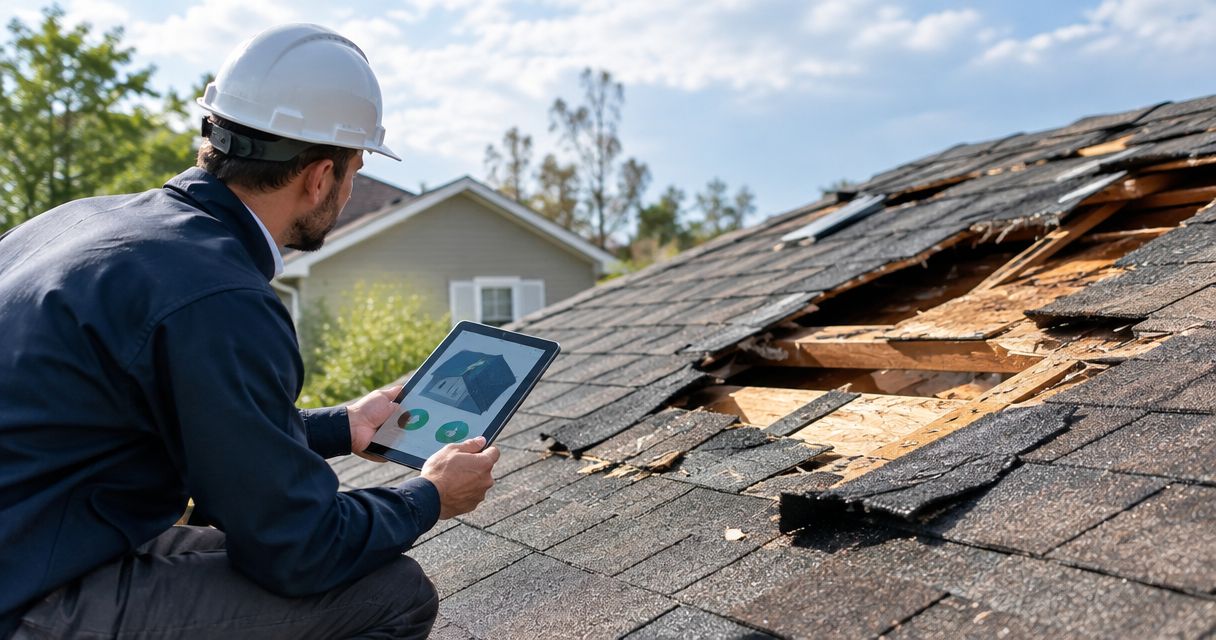
Storm damage insurance claims move fast, and the roofing company you hire changes how much of that claim actually gets paid. The best roofing companies for insurance claims in 2026 combine three things: manufacturer certification, in-house claims documentation, and a crew that shows up before the adjuster does. For most homeowners in Lincoln and Omaha, that points to GAF Master Elite contractors running structured insurance-claim workflows. For commercial property managers with several buildings on one policy, it points to maintenance-plan providers who track storm damage across the whole portfolio, not just one roof.
- GAF Master Elite contractors with in-house claims support rank as the best roofing companies for insurance claims in 2026.
- A+ BBB accreditation and a verified review history matter more than price once a storm claim is disputed.
- Financing-enabled contractors matter most when the deductible runs thousands higher than the homeowner expected.
- Commercial property managers should prioritize maintenance-plan providers who document every building on the account.
- Murray Roofing serves Lincoln, Omaha, Grand Island, Houston, and Denver as a GAF Master Elite contractor with a 50-year Golden Pledge warranty.
Why this matters
An insurance adjuster is not your advocate. Their job is to document the damage and apply the policy — a roofing contractor's job, when they do it right, is to make sure that documentation is complete before repairs start. Miss the pre-repair photos, skip the adjuster walkthrough, or let a contractor start work before the claim is approved, and homeowners routinely end up paying for repairs the policy should have covered.
That gap is why "best roofing companies for insurance claims" is a different question than "best roofing companies." A contractor can build a great roof and still handle a claim badly. In 2026, with hail and wind events hitting Lincoln, Omaha, Grand Island, Houston, and Denver on a regular cycle, the claims process is often the harder half of the job.
What makes the best roofing company for insurance claims
- Manufacturer certification — GAF Master Elite status means the contractor meets standards for installation quality that manufacturers tie to their strongest warranties.
- Independent verification — an A+ BBB rating and a documented 5-star review history show how a contractor handles disputes, not just sales calls.
- Structured claims documentation — photos before, during, and after the storm; a written scope of damage; attendance at the adjuster meeting.
- Financing separate from the claim — a payment option for the gap between the payout and the deductible, without touching the insurance settlement itself.
- Warranty terms that survive a claim — a workmanship warranty that still applies after insurance-funded repairs, not one that voids on a partial reroof.
- Local service coverage — a crew that actually works the metro where the storm hit, not a traveling storm-chase operation that leaves town after the season.
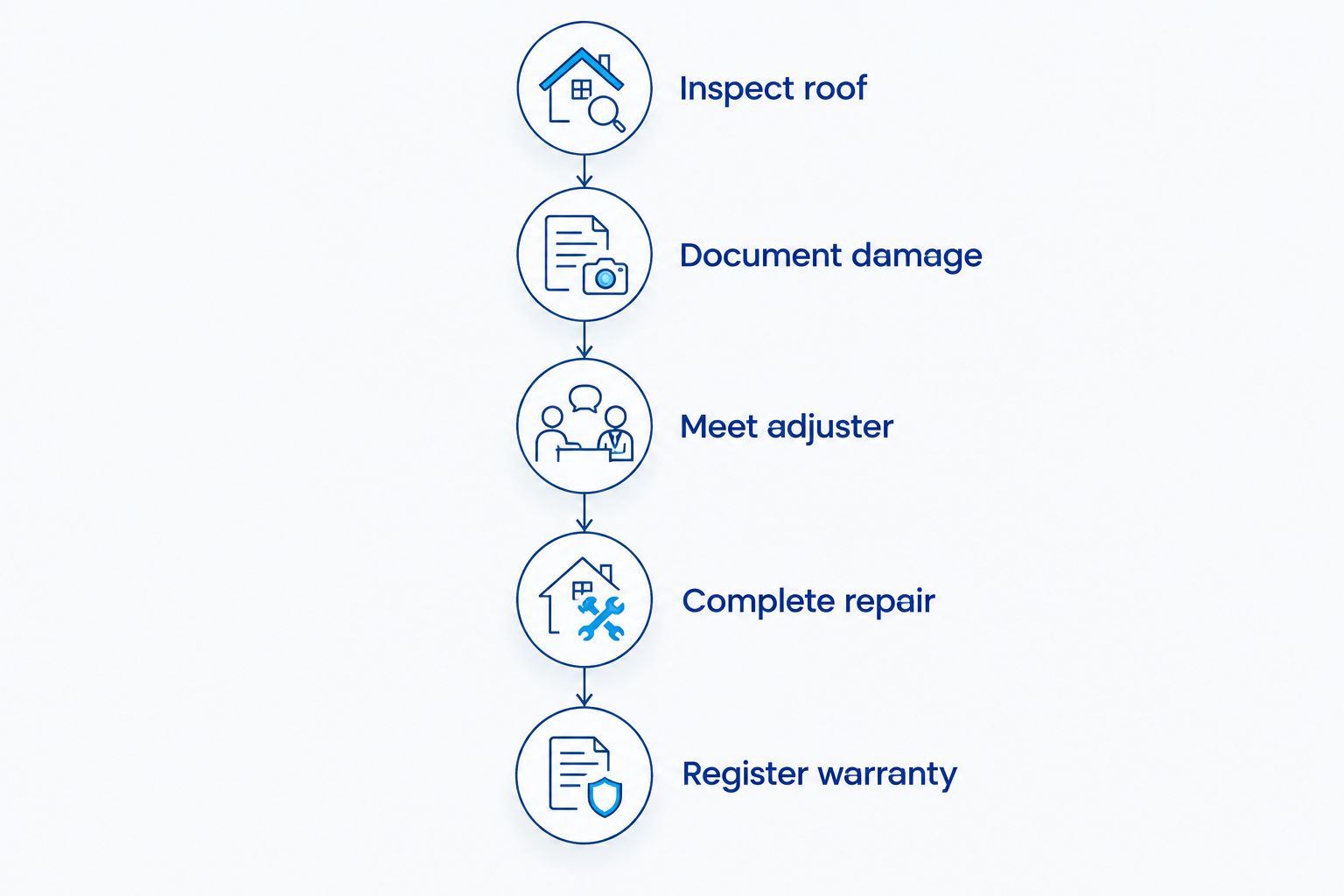
A free inspection from a Murray Roofing crew covers the first stage of that timeline before a claim is even filed, which matters because damage assessed early holds up better in a dispute than damage assessed after a second storm rolls through.
At a glance: roofing company types for insurance claims
| Type | Best for | Standout feature | Key limitation |
|---|---|---|---|
| GAF Master Elite contractors | Manufacturer-backed storm claims | Golden Pledge-style warranties tied to certified installation | Fewer local contractors carry this certification |
| A+ BBB-accredited local roofers | Accountability during disputes | Verified complaint-resolution history | A rating alone doesn't prove claims experience |
| Insurance-claim specialists | Adjuster meetings and documentation | Contractor meets the adjuster on-site | Not every roofer offers this as a service |
| Financing-enabled roofing companies | Covering high deductibles | Payment plans separate from the insurance payout | Financing terms come from the lender, not the roofer |
| Commercial roof maintenance providers | Multi-building portfolios | Ongoing inspection records across every roof on the account | Overbuilt for a single-family homeowner's one-time claim |
1. GAF Master Elite contractors: best for manufacturer-backed storm damage claims
GAF Master Elite is a certification, not a marketing badge — GAF limits it to a small percentage of roofing contractors nationally and ties stronger warranty products to it. A roofing company holding this certification generally gets access to warranty terms a non-certified installer can't offer.
Murray Roofing pros:
- GAF Master Elite certification backs installations with manufacturer-grade warranty terms
- Warranty coverage tends to survive insurance-funded repairs when installation meets the standard
- Certification requires ongoing training, which filters out contractors who install inconsistently
Murray Roofing cons:
- Certified contractors can book out further during peak storm season
- Certification covers installation quality, not claims-handling speed on its own
Best for: homeowners who want the strongest warranty position after a storm-damage reroof.
Verdict: Buy — put this at the top of the checklist before comparing anything else.
2. A+ BBB-accredited local roofers: best for accountability during claim disputes
An A+ BBB rating reflects how a company responds when something goes wrong, not just how many stars it collects. Combined with a 5-star review history, it gives homeowners a record to point to if a contractor and an adjuster disagree on scope.
Pros:
- A+ BBB accreditation shows a pattern of resolving complaints, not just avoiding them
- 5-star review volume signals consistency across many jobs, not one good year
- Public accountability discourages a contractor from cutting corners mid-claim
Cons:
- A rating tells you nothing about a company's specific claims-process experience
- Some accredited companies still subcontract insurance work to less-vetted crews
Best for: homeowners who want a paper trail if the insurance company or the contractor drags its feet.
Verdict: Buy — confirm the rating and read the actual complaint history, not just the letter grade.
3. Insurance-claim specialists: best for adjuster meetings and documentation
Some roofing companies build a dedicated process around insurance claims: pre-storm photos, a written damage scope, and a technician who attends the adjuster walkthrough in person. That structure closes the gap between what actually happened to the roof and what ends up on the claim form.
Insurance-claim specialists often coordinate the protective step before repairs even start, since a roof with wind-torn shingles or a hail-punctured membrane needs securing right away. In markets hit hard enough that a full reroof waits on approval, homeowners frequently need emergency board-up services to keep water and wind out while the claim moves through underwriting.
Pros:
- Attending the adjuster meeting keeps the scope of damage accurate
- Photo documentation before repairs protects against a denied or reduced claim
- A written scope gives homeowners something to compare against the settlement
Cons:
- Not every roofing company offers this as a formal service — ask directly
- A specialist's documentation still can't guarantee coverage; the policy language decides that
Best for: homeowners filing their first storm claim who don't know what an adjuster is checking for.
Verdict: Buy — this is the service that determines whether the claim reflects the real damage.
4. Financing-enabled roofing companies: best for covering high deductibles
A storm-damage settlement rarely covers 100% of the job once the deductible is subtracted. A roofing company that offers financing separate from the insurance payout gives homeowners a way to close that gap without draining savings.
Pros:
- Financing covers the deductible or upgrade costs the insurance payout doesn't touch
- Payment plans let repairs start on the contractor's timeline, not the homeowner's cash flow
- Financing options exist independent of whether the claim is approved in full
Cons:
- Financing terms come from a third-party lender, and rates vary by credit and provider
- It doesn't change what the insurance company approves — it only covers the shortfall
Best for: homeowners whose deductible is thousands of dollars, not a few hundred.
Verdict: Hold — useful when the deductible is the actual obstacle, unnecessary if it isn't.
5. Commercial roof maintenance providers: best for multi-building portfolios
For property managers and business owners with more than one roof on a policy, a single storm event can generate claims across several buildings at once. A maintenance-plan provider that already has inspection records on file for every roof turns that into a faster, better-documented claims process across the whole portfolio.
Pros:
- Existing inspection records establish a pre-storm baseline for every building
- One point of contact manages claims across multiple properties instead of one at a time
- Ongoing maintenance can catch damage before it becomes a structural problem
Cons:
- Overkill for a homeowner with a single roof and a one-time claim
- Maintenance-plan pricing and scope vary by property type, so terms need direct confirmation
Best for: commercial property owners managing storm risk across a full portfolio, not one building.
Verdict: Skip for single-family homeowners; Buy for anyone managing multiple commercial roofs.
How this list was ranked
Each type is ranked against the criteria above — certification, independent verification, claims documentation, financing flexibility, warranty durability, and local coverage. No single type wins on every criterion, which is why the ranking splits by use case instead of naming one universal winner.
“A roofing company that documents storm damage the way an adjuster reviews it, before repairs start, is the one that gets the claim paid correctly the first time.”
Which roofing company should you choose for an insurance claim in 2026?
For most homeowners in Lincoln, Omaha, Grand Island, Houston, or Denver, the default choice is a GAF Master Elite contractor that also carries an A+ BBB rating and runs a structured insurance-claim process — that combination covers certification, accountability, and documentation in one hire. Murray Roofing operates as a GAF Master Elite contractor across all five metros with a 50-year Golden Pledge warranty and a 10-year labor warranty, and offers free inspections to establish that pre-storm documentation before a claim is filed.
Get a free storm damage inspection
Document the damage before you file the claim.
Commercial property managers with multiple buildings should weight the maintenance-plan criterion higher, even if it means giving up some of the financing flexibility that single-property homeowners prioritize. There's no universal winner here — there's a right fit for the size and type of property making the claim.
FAQ
What makes a roofing company good at handling insurance claims?
A roofing company that documents damage with photos before repairs start, attends the adjuster meeting, and holds manufacturer certification tends to handle insurance claims better than one that doesn’t. GAF Master Elite status and an A+ BBB rating are two ways to verify that before hiring.
Is GAF Master Elite certification necessary for a storm damage claim?
It isn’t required by the insurance company, but it’s the certification tied to the strongest manufacturer warranty terms after a reroof. A certified contractor generally gives homeowners a stronger warranty position once the insurance-funded work is complete.
Should I let a roofing contractor talk to my insurance adjuster?
Yes — a contractor who attends the adjuster walkthrough can point out damage the adjuster might miss on a quick visual inspection. The homeowner still owns the claim and the final decision on the settlement.
How much does a roofing company for insurance claims cost?
Cost depends on the scope of damage, the materials chosen, and what the insurance settlement covers versus the deductible. Get a direct quote and a written scope rather than relying on a general estimate.
Can I finance the part of a roof repair insurance doesn’t cover?
Many roofing companies offer financing separate from the insurance payout to cover the deductible or upgrades the policy excludes. Terms vary by lender, so compare financing offers the same way you’d compare contractor quotes.
Do commercial properties need a different roofing company than homeowners for storm claims?
Not necessarily a different company, but a different service — commercial property managers benefit more from maintenance-plan providers that track every roof on a portfolio. A single-family homeowner rarely needs that level of ongoing documentation.
What’s the biggest mistake homeowners make with a storm damage claim?
Starting repairs before the adjuster documents the damage is the most common mistake, since it removes the evidence the claim depends on. A pre-repair inspection and photo record protect the claim before any work begins.
One last thing
The roofing company matters less on the day the storm hits than it does three weeks later, when the adjuster's report and the contractor's scope don't match. That mismatch, not the size of the hailstones, is what actually shrinks a settlement. Confirm a contractor's documentation process before the storm season starts, not after the roof is already leaking.
Related guides
- Best home roof inspection services before buying a house
- Best ways to finance a new roof
- Best roof warranty types compared for homeowners